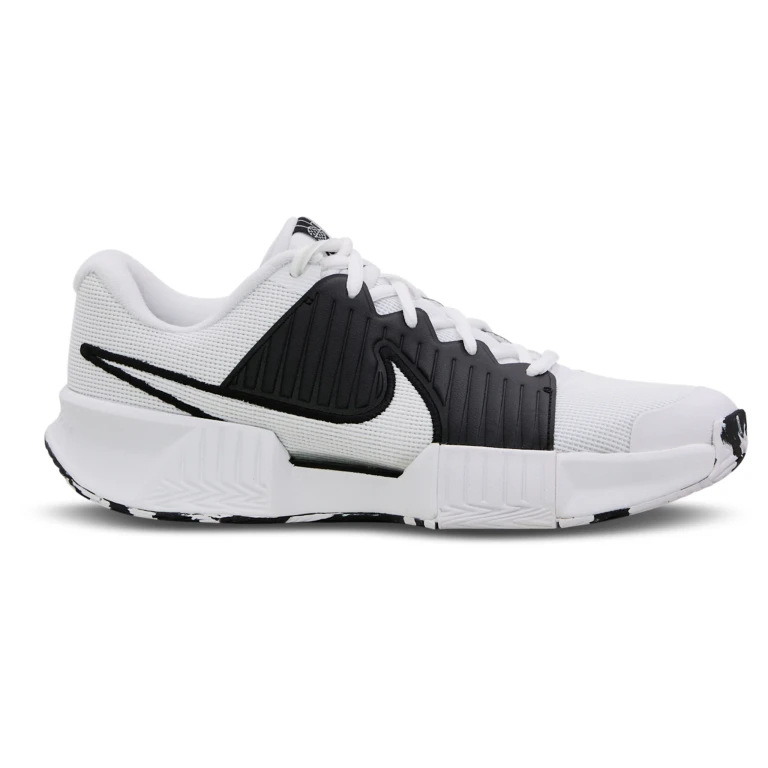

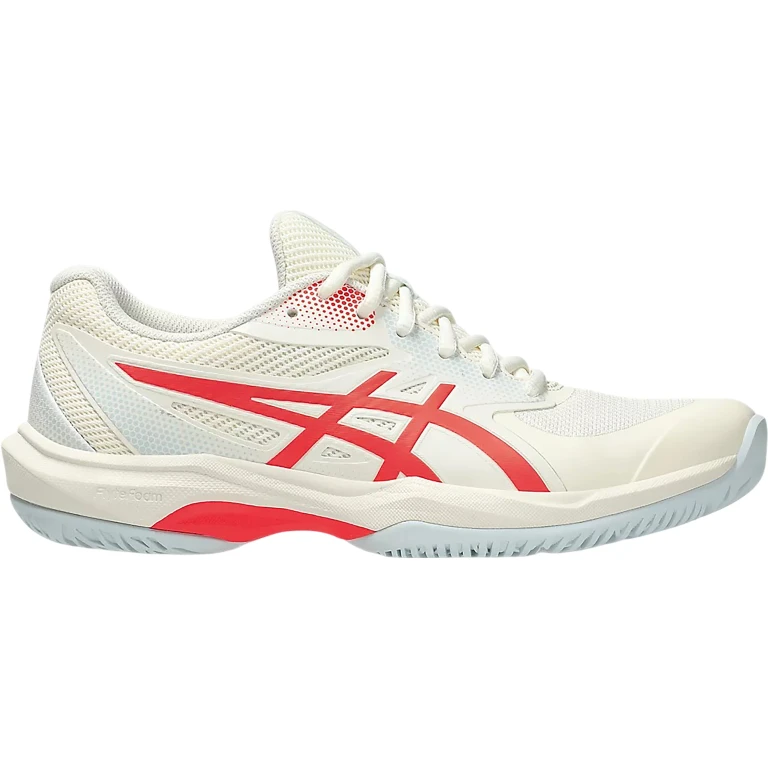
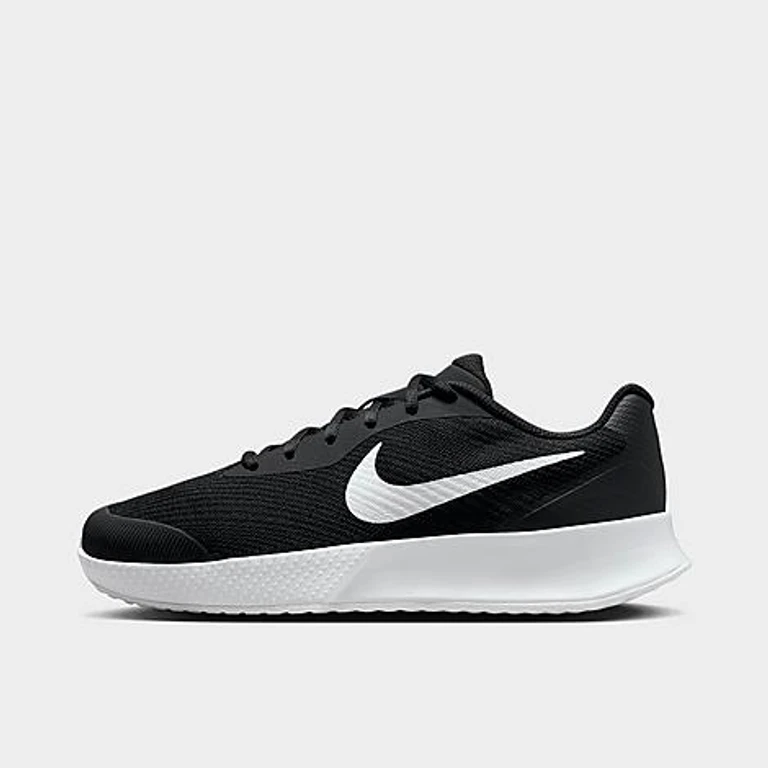
Start with court shoes, including tennis shoes
You do not need to rule out a good tennis shoe just because the box does not say pickleball. Selkirk's footwear guide recognizes tennis shoes as an option because both sports involve side-to-side movement.
- Already own tennis shoes? Check their intended surface and fit before buying another pair.
- Buying from scratch? Compare pickleball shoes and hard-court tennis shoes using the same checks below.
- Only own running shoes? Start your shortlist with court footwear. Many running shoes prioritize forward movement and offer less support sideways, as ASICS explains.
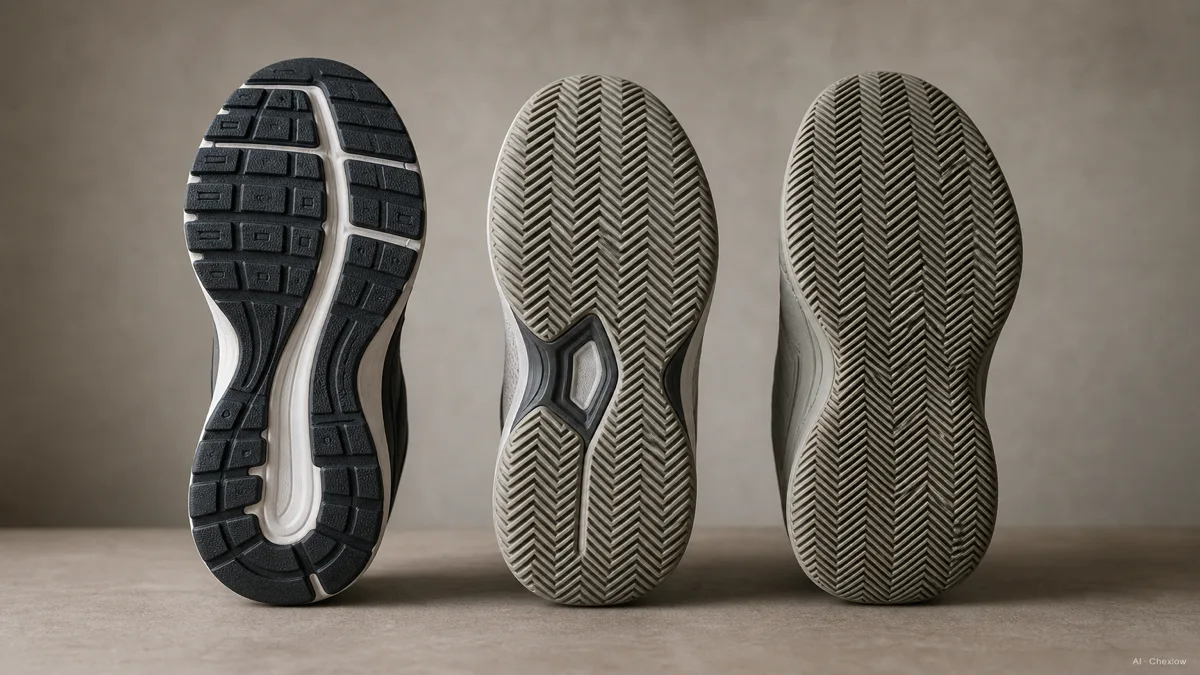
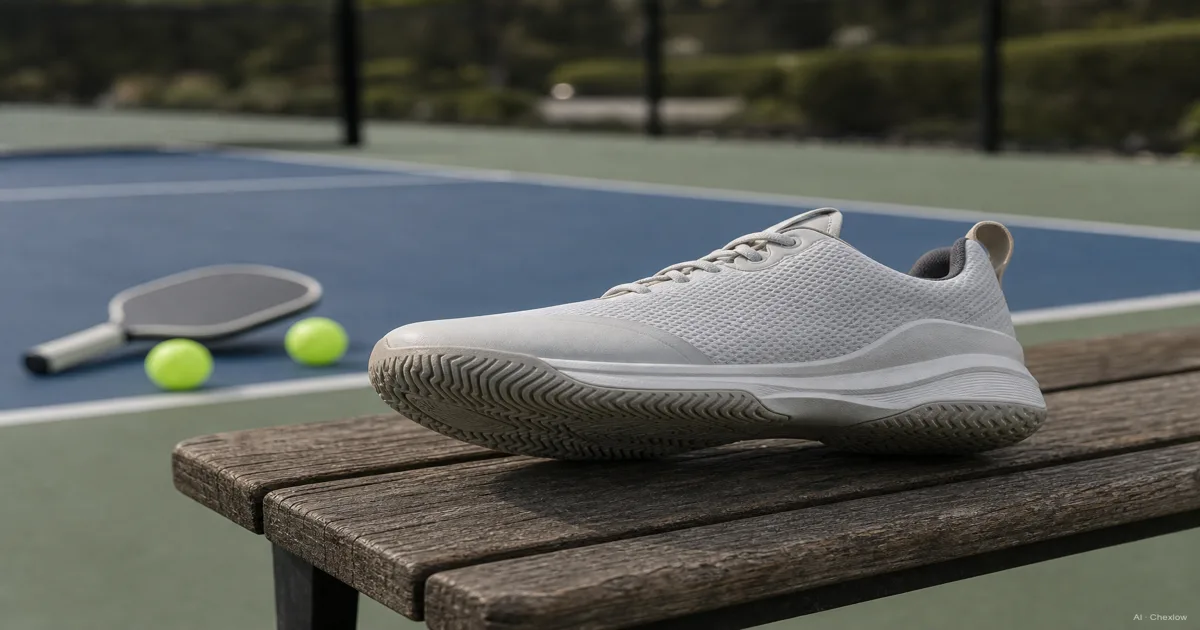
Use this illustration to locate the tread, not to rank shoes by groove density. It is not a grip test.
Match the sole to the actual surface
Before browsing, ask your venue what the floor is and which shoes it permits. “Indoor” is not a complete surface description.
For a gym floor, check non-marking requirements; for an abrasive outdoor court, look for outdoor durability. Softer indoor soles can wear faster outdoors. Selkirk's surface guide also allows outdoor shoes indoors when they will not scuff the floor.
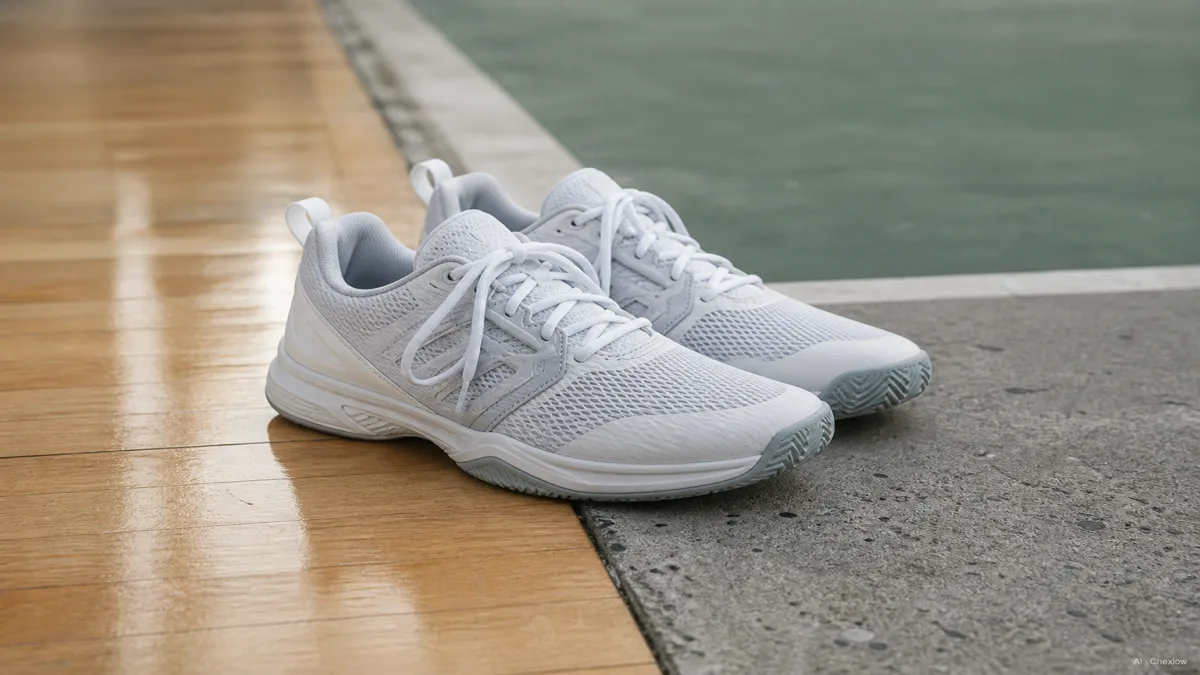
If you play on both, shortlist a model whose maker explicitly lists both uses, then confirm the venue accepts it. Do not infer compatibility from rubber color or the word “court” alone.
Look for support beyond the tread
Traction concerns contact with the floor; lateral support concerns how the shoe supports your foot during sideways movement. Selkirk describes multidirectional tread and reinforced uppers, while ASICS recommends supportive uppers or reinforced sidewalls.
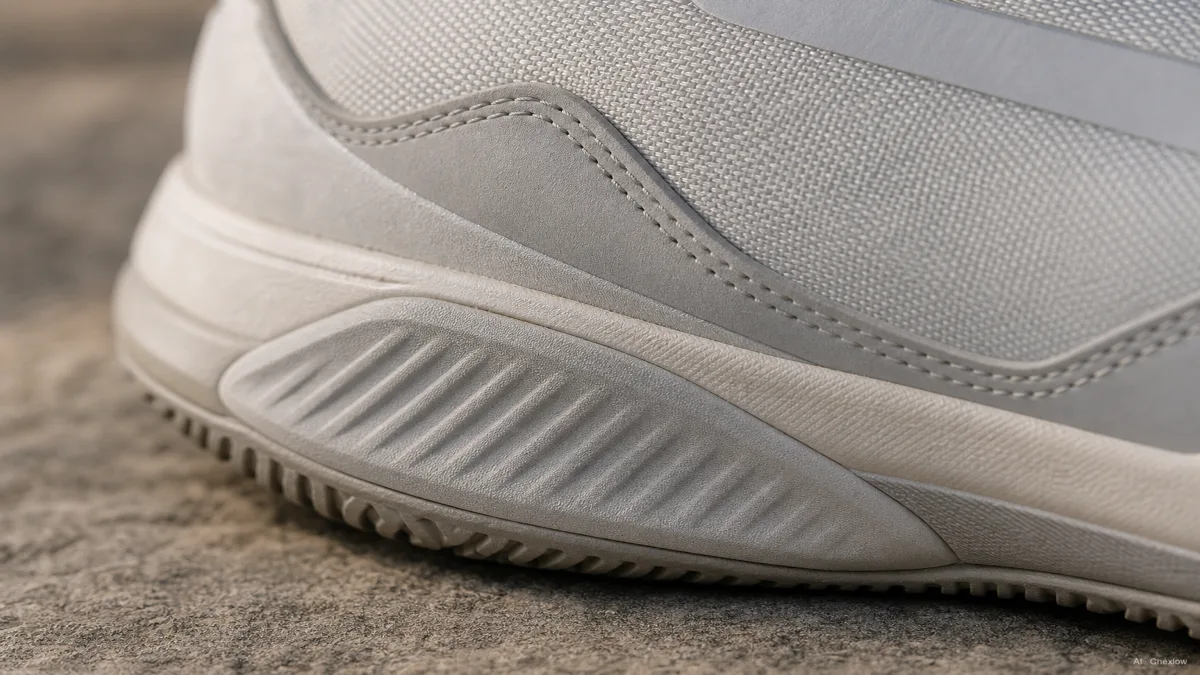
The side view helps you locate reinforcement. Ask what the specific model uses rather than treating a wide edge or a technology name as proof of performance.
Try them on, then decide what to buy
Selkirk's fit guidance calls for toe room and a heel that does not slip or rub. Its footwear FAQ recommends controlled stops and lateral shuffles when checking fit.
In the space and conditions the shop allows, compare how each candidate feels when moving, not just standing. Reject a pair that pinches or lets your foot slide inside. If neither candidate feels right, widen the shortlist rather than choosing the less uncomfortable one.
A roomy toe box is not automatically a formal wide size; Selkirk makes that distinction for its own models. Check the exact model's width information. If length seems right but shape does not, read why the same size can fit differently.
Before paying, make sure you can answer three questions: Is this model suitable for my surface? Does it describe support for court movement? Does it fit when I move? Check the seller's try-on and return conditions before taking it onto a court. These are buying checks, not a promise that a shoe will prevent injury.
How this guide was built
Written by Chexlow's AI editor using ASICS and Selkirk footwear guidance. The article organizes manufacturer information into first-purchase checks for surface, construction and fit; it does not report product testing or individual medical assessment.
Edited by the Chexlow team · Images are AI-generated illustrations