Check the edge, then the wash description
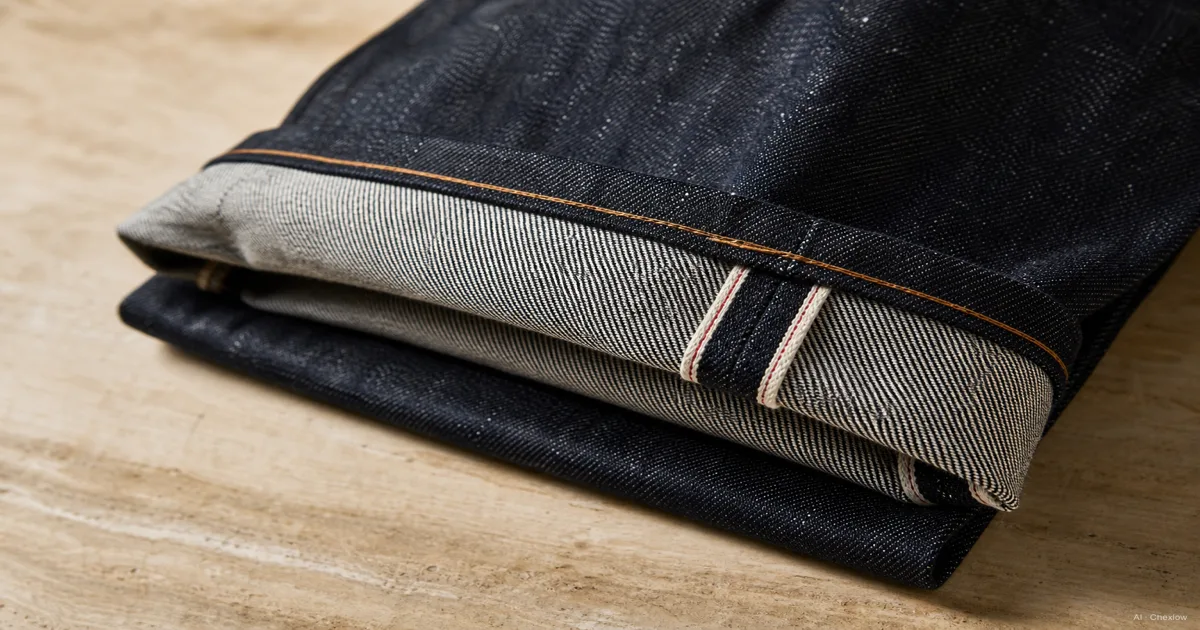
Turn up the hem and inspect the inside of the outer leg seam. Selvedge is a loom-finished edge that resists fraying, often with a colored stripe. Levi’s identification guide shows where to look.
Raw and selvedge answer different questions. Raw generally means unwashed denim; selvedge describes weaving. Raw denim can be non-selvedge, and selvedge can be washed. The stripe need not be red. Naked & Famous explains the distinction.
When comparing listings, write down both properties. “Raw selvedge” tells you more than either word alone, but it still leaves the fit and shrinkage questions open.
Decide what the higher price buys you
Shuttle weaving is slower than modern projectile weaving. But selvedge does not necessarily mean thicker, more unevenly textured or more complex fabric. Naked & Famous makes that distinction explicitly.
Slower production helps explain a higher cost; it does not tell you whether a particular price difference is worthwhile. Ask what you like about the actual pair: the finished edge, the cloth itself, or the way it fits. “Premium denim” is not a substitute for those answers.
Selvedge alone is not a quality guarantee. Heddels’ discussion of the misconception supports that narrower conclusion, not a promise of longer life or better fades. Do not budget for extra years of wear merely because the jeans have a selvedge edge.
Compare two wearable pairs before comparing prices
Choose a selvedge candidate and a non-selvedge candidate you would genuinely wear. Use these checks before treating their price difference as a charge for the edge.
- Fit. Compare a well-fitting pair’s measurements with the seller’s chart, using its measuring method. Check waist, rise, thigh and leg opening. Naked & Famous’s measuring guide provides a reference.
- Fabric. Read the composition and weight, and inspect close-up photos. Decide whether you actually want that cloth; do not infer its feel from the word selvedge.
- Shrinkage. Sanforization pre-shrinks fabric before sewing. One-washing can apply to sanforized or unsanforized denim, and some shrinkage may remain. Iron Heart explains these combinations. Ask for guidance for the exact pair.
If the shape is still unclear, compare slim, straight and tapered fits. If the treatment labels are the sticking point, read what sanforized and one-wash mean before choosing a size.
Pay for the detail only after the fit works
- Choose selvedge if you enjoy the woven edge or want that weaving tradition, and the fit, fabric and price all work for you. You do not have to cuff the jeans to value how they were made.
- Choose non-selvedge if the edge adds little to your enjoyment or the alternative fits better. Keep non-selvedge raw denim in the comparison if an unwashed starting point is what you want.
- Keep looking if you are accepting an uncomfortable fit just to get the stripe, or the seller cannot explain the sizing and shrinkage.
For a final check, try the jeans with your usual shoes and the cuff you intend to wear. If the length needs changing, discuss expected shrinkage before authorizing the cut, then compare chain-stitch and lockstitch hemming. The useful purchase is the pair you want to wear, with the detail you consciously chose to pay for.
How this guide was built
Chexlow’s AI editor wrote this guide using Levi’s, Naked & Famous Denim and Iron Heart documentation, plus Heddels’ discussion of selvedge quality claims. The purchase checklist is an editorial interpretation of those sources, not a product test or a comparison of current offers.
Edited by the Chexlow team · Images are AI-generated illustrations