Check the whole bag before adding water
Empty the bag, open its pockets and find the care label or the instructions for the exact model. Check the outer fabric, lining, coated surfaces and any removable base separately. A material name such as cotton or polyester does not answer every cleaning question.
Albury Enviro Bags advises checking the label even for cotton bags and notes that canvas may contain other fibres needing special care. Treat a coating or mixed construction as a reason to check the instructions, not as automatic permission or a blanket ban on washing.
A removable bottom needs its own decision. Albury generally recommends taking inserts out and cleaning them separately; semi-rigid inserts may need hand washing, and some inserts contain cardboard under fabric. A fabric covering does not establish that the board underneath can be soaked.
Remove only parts designed to come out. If the instructions do not identify the base material or its cleaning method, set it aside and ask the maker before wetting it. Do not pull apart a sewn-in base to follow this guide.
Choose machine washing, hand washing or wiping
Sort the bags by their permitted method rather than washing the whole shopping set together. Lotus provides a useful example: its described mesh-bottom trolley bags can use a cold, gentle machine cycle after removing the rods, while the insulated bag must not be machine-washed. These instructions belong to those components, not every mesh or insulated bag.
- Machine washing permitted. Follow the exact bag’s temperature, cycle and preparation instructions. Use a laundry detergent compatible with those instructions and follow its dose; a suitable detergent you already own is enough.
- Hand washing permitted. Follow the stated temperature and cleaning-agent instructions for each washable part. Hand washing is not a workaround for a component that must not be immersed.
- Wipe cleaning specified. Use the maker’s stated cleaner and method. A clean, suitable soft cloth can support that task, but neither the cloth nor a generic cleaner establishes compatibility with a coating.
- Instructions missing or contradictory. Pause before immersion, machine washing or applying a new chemical. Give the manufacturer the model name and a description of the lining and base.
If you need a cloth and are unsure what to choose, the microfiber and cotton cleaning-cloth guide explains how to compare the intended task and care requirements. Keep using an existing suitable cloth if you have one.
Dry before replacing the base or folding
Plan the drying space before washing. Albury warns that tumble drying can shrink cotton bags and says canvas bags should dry completely. Do not assume that a dryer is permitted simply because machine washing is.
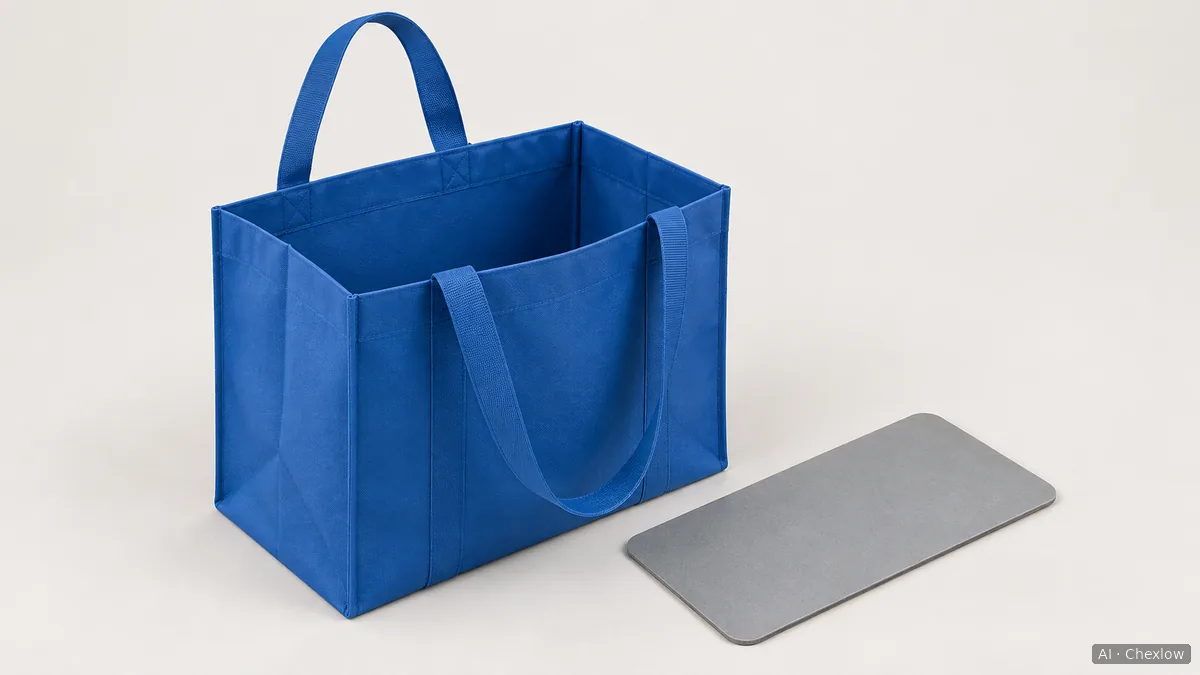
The illustration separates the bag and insert so you can consider each part’s care. It does not show their materials or establish that either part can be immersed. Keep a removable insert out while the bag dries; clean and dry the insert only by its own permitted method.
Use the bag’s specified drying position. Where air drying is permitted, arrange the bag so its opening and folds are accessible rather than leaving it bundled up. Before reassembly, check the inside, bottom corners, handle attachments and any cleaned insert for remaining dampness. This is a practical inspection, not a fixed drying-time rule.
Lotus says to hang its bags to dry and replace the rods when the bags are clean and dry. Apply that sequence only where your own bag’s construction and instructions allow it. Fold or pack it after all the cleaned parts are dry.
Decide whether it is ready for groceries again
Health Canada says to wash bags thoroughly before reuse after food juices leak into them. It also advises washing bags used for non-food items before returning them to grocery duty and separating produce from raw meat, poultry and seafood.
If a leak reaches a base or lining whose cleaning method is unknown, keep that bag out of grocery use while you ask the maker how to clean the affected component. A quick surface wipe is not evidence that inaccessible contamination has been removed.
Stop and assess a split lining, peeling coating or damaged base rather than trying progressively hotter water or stronger products. Ask about an approved cleaning method or replacement component; replace the bag if it cannot be made suitable for its intended use. This guide covers cleaning and drying decisions, not a validated sanitizing procedure.
How this guide was built
This guide was written by AI for Chexlow, using care guidance from Albury Enviro Bags and Lotus Sustainables alongside Health Canada’s grocery-bag advice. Product-specific instructions are kept within their stated scope; the component checks are editorial guidance, not original product testing or a sanitization guarantee.
Edited by the Chexlow team · Images are AI-generated illustrations