Check both surfaces before choosing a method
Open the strap with the shoe off your foot. The rough side carries tiny hooks; the softer side has loops that catch them. Start-Rite explains that the hook side collects most debris, but look at both surfaces before deciding what needs attention.
Separate loose hair and lint from the fastener’s own fibres. Also look at the strap and its stitching. For this home-cleaning guide, torn fabric, separating attachment edges or an uncertain strand are reasons to pause and ask the maker or a shoe repairer, rather than pull harder.
Check your particular shoe’s care instructions. Start-Rite’s advice for its shoes provides useful cleaning options, not permission to use every method on every material. If the surrounding leather also needs cleaning, use the separate leather sneaker care guide to choose a suitable method.
Lift out debris without reshaping the hooks
Start with a clean, dry manual toothbrush you already own, if brushing is permitted for the shoe. Start-Rite describes brushing debris out of the hook surface. Our cautious starting point is short, light strokes on a small area: support the opened strap, brush the exposed hooks and lift away loosened debris with your fingers.
Do not keep increasing force to chase every speck. Stop if the fastener fibres, attachment or stitching start to pull.
For a visible hair or thread that remains, tweezers offer more control. HookandLoop advises lifting debris without bending or damaging the hooks. Grip only the foreign material you can identify, not the soft loops or the shoe’s sewing thread. Leave anything you cannot distinguish for assessment.
A manual toothbrush and small precision tweezers are supporting tools, not a required kit. Reuse suitable ones you have; consider buying only the tool you lack for this action. Keep scissors out of this routine: the same supplier warns that trimming can damage hooks.
Refasten once, then decide whether to seek repair
Bring the two surfaces together in their normal position and press them closed. Check whether they remain engaged during ordinary handling. This is a practical recheck, not a measured strength test or a guarantee that the shoe is ready for every activity.
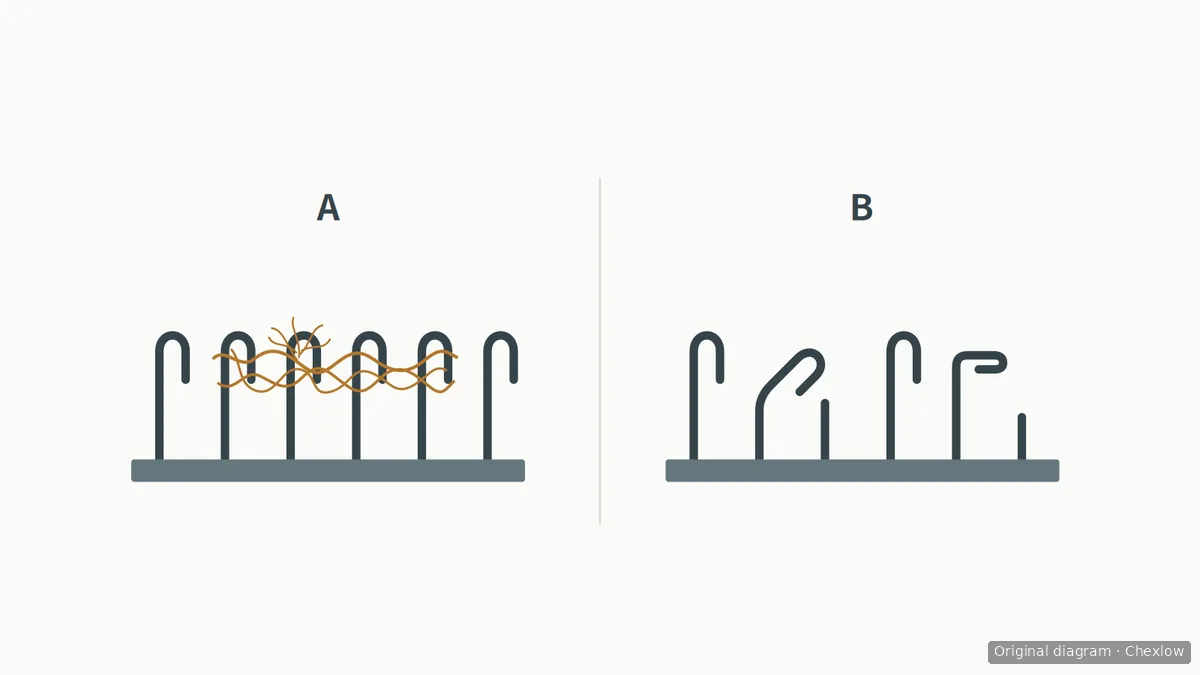
A shows debris obstructing the hooks; B shows damage to the hooks themselves. The drawing is enlarged and simplified, not a before-and-after cleaning result or a scale for diagnosing your shoe. Inspect the loop side too: HookandLoop lists bent or broken hooks, flattened loops and trapped debris as different causes of poor fastening.
- Debris is gone and the strap holds normally. Stop cleaning; there is no reason to keep working the surface for appearance alone.
- The clean strap still releases, or the hooks or loops look damaged. Ask the shoe maker or a repairer whether the fastening can be replaced. Persistent poor grip after cleaning is also the replacement threshold described in the supplier’s cleaning guide.
- The strap or its attachment is torn or coming away. Have the whole attachment assessed. Cleaning the contact surfaces does not resolve that separate problem.
Take the pair and model details, and explain what you removed and whether anything changed. Ask which side needs replacement, whether the strap and stitching can support the repair, and how the repaired fastening should be checked. This guide stops at assessment rather than prescribing glue, sewing or replacement tape for an unidentified shoe. If the closure cannot hold the shoe securely, use another suitable pair while the problem is assessed.
If the fastener holds but the shoe still pinches or slips, move to the separate question of sneaker size, width and shape.
Keep the hooks covered; decide on washing separately
Once cleaning is finished and the shoe is dry, fasten the strap for storage. VELCRO’s care guidance recommends covering the hooks to prevent unwanted snagging. Check again when visible debris builds up or the fastening changes, rather than treating a fixed calendar as a repair schedule.
Closing the strap before washing helps prevent snagging, but does not make the shoe washable. Follow the exact shoe’s instructions first; Start-Rite specifically advises against machine washing leather or patent shoes. If washing is allowed, close the hook-and-loop fastening and follow that shoe’s washing and drying directions. Do not escalate from unsuccessful lint removal to soaking the whole shoe.
How this guide was built
AI wrote this guide for Chexlow using footwear-maker, fastener-manufacturer and specialist-supplier guidance. It separates documented cleaning methods from an editorial decision to refer persistent failure or attachment damage for repair assessment; no original shoe testing was performed.
Original SVG diagrams created for Chexlow