Unpack first, then separate what you can
A wet tent packed for the journey home still needs attention. Outwell treats wet packing as temporary and says to unpack and dry it as soon as possible after returning.
Open the carry bag and follow your tent’s instructions to remove the poles and detach any removable flysheet, inner tent and footprint. The flysheet is the outer rain cover; the footprint is a separate sheet beneath the tent floor. Leave permanently attached parts attached. This separation is a practical way to expose wet surfaces, not a requirement to dismantle every tent in the same way.
Remove loose dirt and rubbish before arranging the fabric. REI’s care guide recommends clearing debris and rules out machine washing and machine drying. If dirt needs more than brushing off, use the tent maker’s cleaning method before the final drying check.
Make room for the fabric, not a fully pitched tent
REI explicitly allows draping or hanging when pitching space is unavailable. Choose a place with enough room and ventilation to spread the sections instead of leaving them in a bundle.
Use suitable supports you already own. Arrange the detached sections separately, leave space between hanging surfaces and reposition the fabric to expose areas folded against each other or resting on a support. Follow the tent’s handling instructions rather than pulling it taut to fit the room.
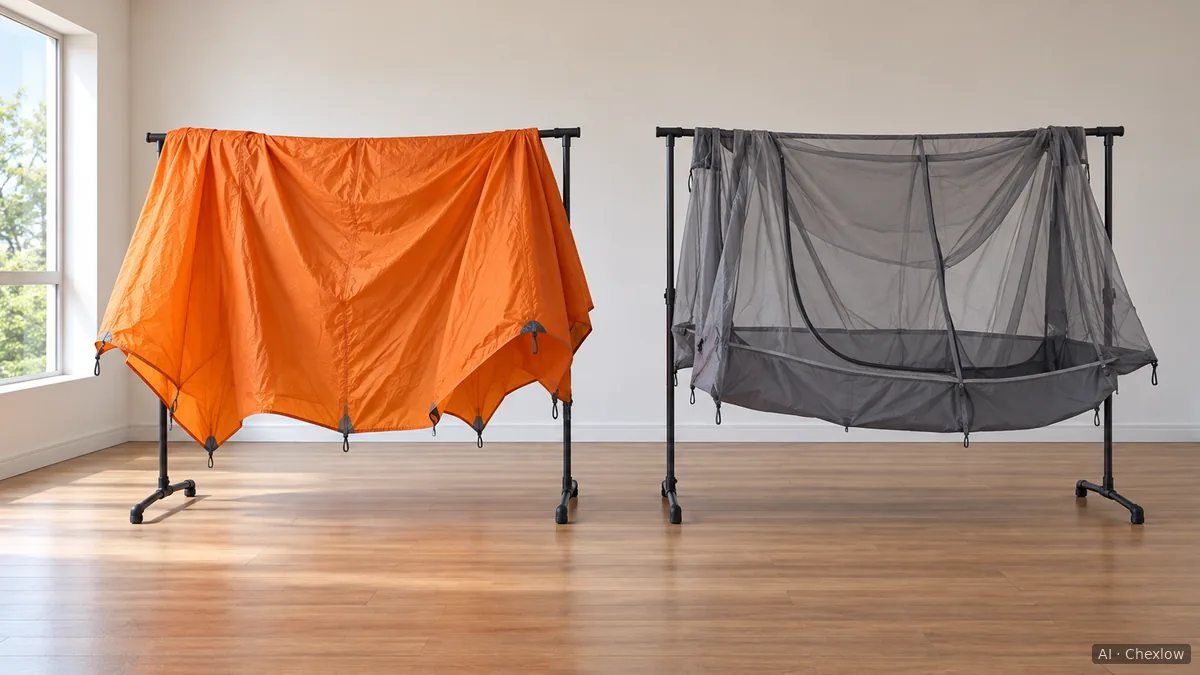
The illustration shows one way to separate the fabric; it does not establish that the tent is dry. If your room cannot accommodate the sections without bunching them together, arrange a larger drying space rather than closing the bag again.
If the room itself stays damp between trips and you are considering moisture-control equipment, continue with choosing a dehumidifier for the room’s conditions. A new appliance is not a prerequisite for this drying routine.
Check the tucked-away areas before packing
Do not judge the whole tent by one dry-looking panel. Outwell’s checklist includes fabric, seams, straps and the groundsheet. Work through those parts, opening folds so you can inspect both sides and the places that were touching supports. Keep drying if any area remains damp; an elapsed number of hours is not the packing criterion.
Drying also gives you a chance to notice a different problem. MSR explains that prolonged moisture exposure can break down its tents’ waterproof coating. REI flags flaking, tackiness and odor as reasons for more substantial attention. If these remain, or you find damage, ask the maker for assessment before treating the tent as ready for its next trip. This guide does not prescribe a coating repair or a mildew treatment.
Give the dry tent room in storage
Check the storage instructions for your particular tent. MSR recommends an oversized breathable cotton bag or mesh duffel instead of its compact stuff sack; a pillowcase can also work. REI likewise suggests a pillowcase or similarly sized mesh bag for loose storage.
Use a clean, roomy bag you already have if it fits that guidance. If you lack one, a large mesh gear storage bag is a supporting purchase: choose enough space for the fabric to sit loosely, without compression straps. Do not use this advice as permission to vacuum-pack a tent.
Choose a cool, dry location and pack poles and other components as the manufacturer directs. Judge the actual conditions, not the room’s name: a garage is useful only if the storage spot is dry and suitably cool. A breathable bag does not replace complete drying before storage.
How this guide was built
This guide was written by AI for Chexlow, using Outwell and MSR manufacturer guidance and REI’s tent-care articles. It turns those sources into an indoor drying sequence; it does not report hands-on testing or approve a method for every tent material and construction.
Edited by the Chexlow team · Images are AI-generated illustrations