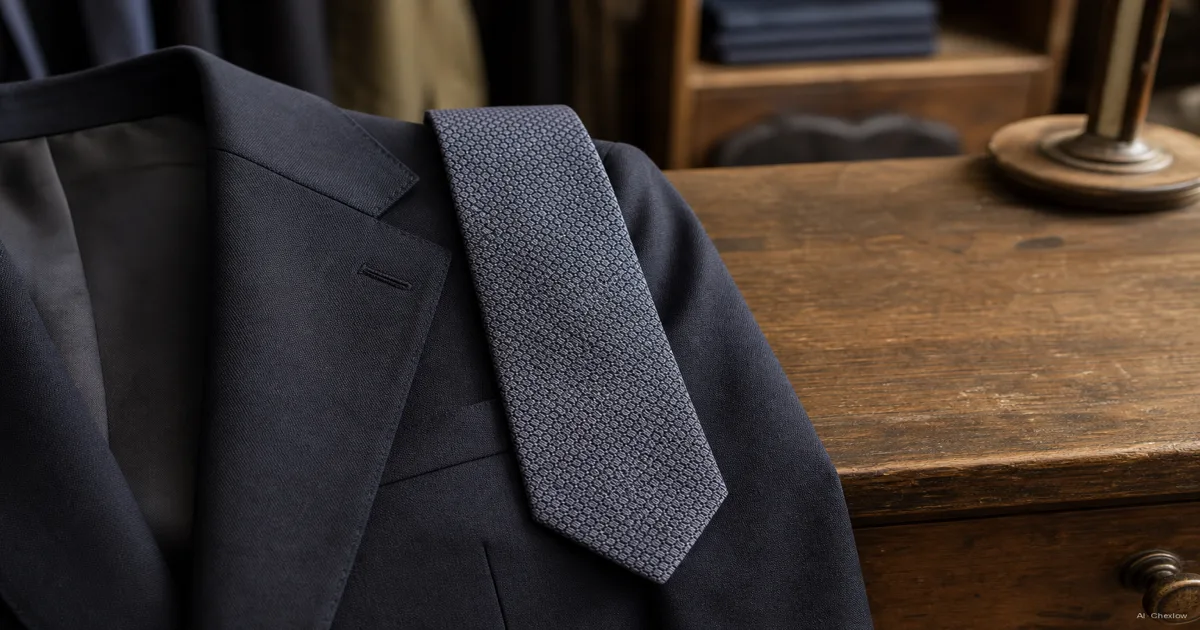

Start with the jacket you will actually wear
Take that jacket shopping, or keep it beside you while comparing measurements. Its lapels are the folded fabric panels on either side of the chest. Black Lapel suggests matching their widest point to the tie’s widest point, with roughly a quarter inch of flexibility either way.
Treat that as a starting comparison, not a pass-or-fail test. If two jackets have very different lapels, choose for the one you will wear most rather than trying to average them.
Still choosing the suit? Work through first-suit fit and fabric choices before committing to the tie.
Measure the blade, not the knot
Lay the tie flat and use a ruler or tape across the broad front blade, just before its edges taper into the point. That is the width quoted in a size description, as TieMart’s measuring guide explains.
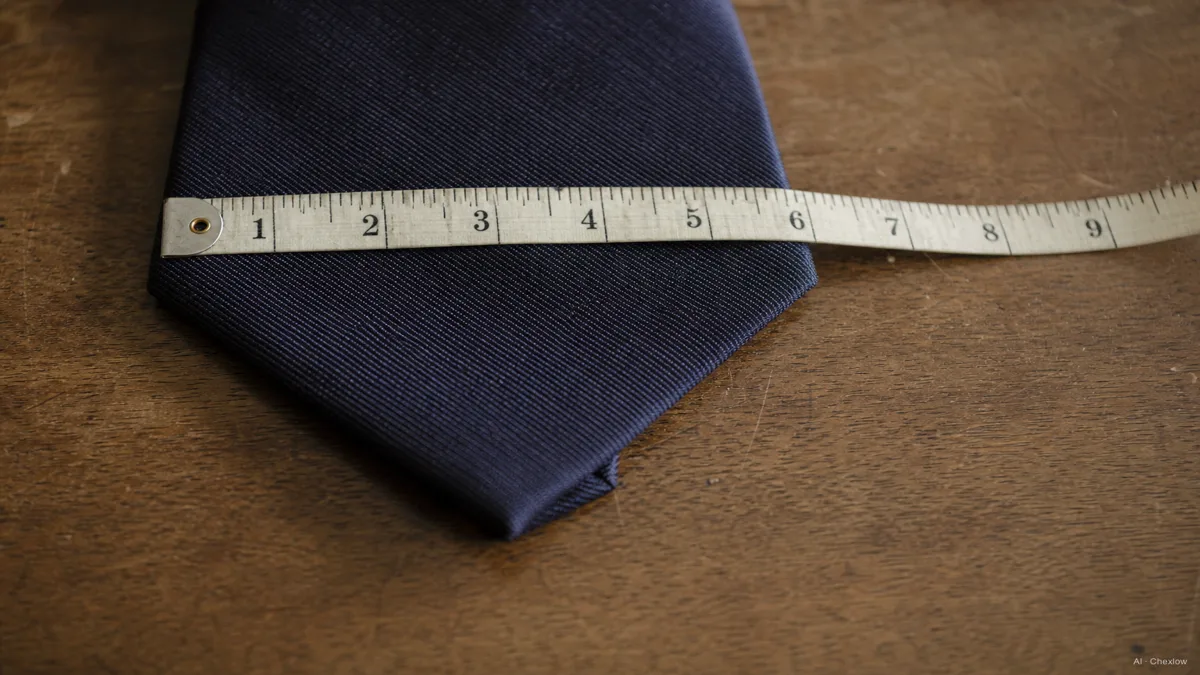
Keep these conversions handy: 2.5 inches is 6.35 cm; 3 inches is 7.62 cm; 3.25 inches is about 8.26 cm; 3.5 inches is 8.89 cm. Compare both items in the same unit.
If a listing only says “classic,” ask for the blade width. A photograph without a scale cannot settle whether it meets your target measurement.
Choose a width to try, not a body-type rule
The names are inconsistent: TieMart calls 2.5 inches slim, while The Tie Bar calls it skinny. Use the number to compare candidates.
- Around 2–2.5 inches. Try this narrower option with narrow lapels or when you deliberately want a slim tie.
- Around 3–3.25 inches. Start here if you want a moderate width. The Tie Bar specifically suggests 3 inches for an undecided first choice.
- Around 3.5 inches and above. Compare this option with broader lapels. Henry A. Davidsen calls this “wide,” while TieMart includes 3.5 inches in its traditional range.
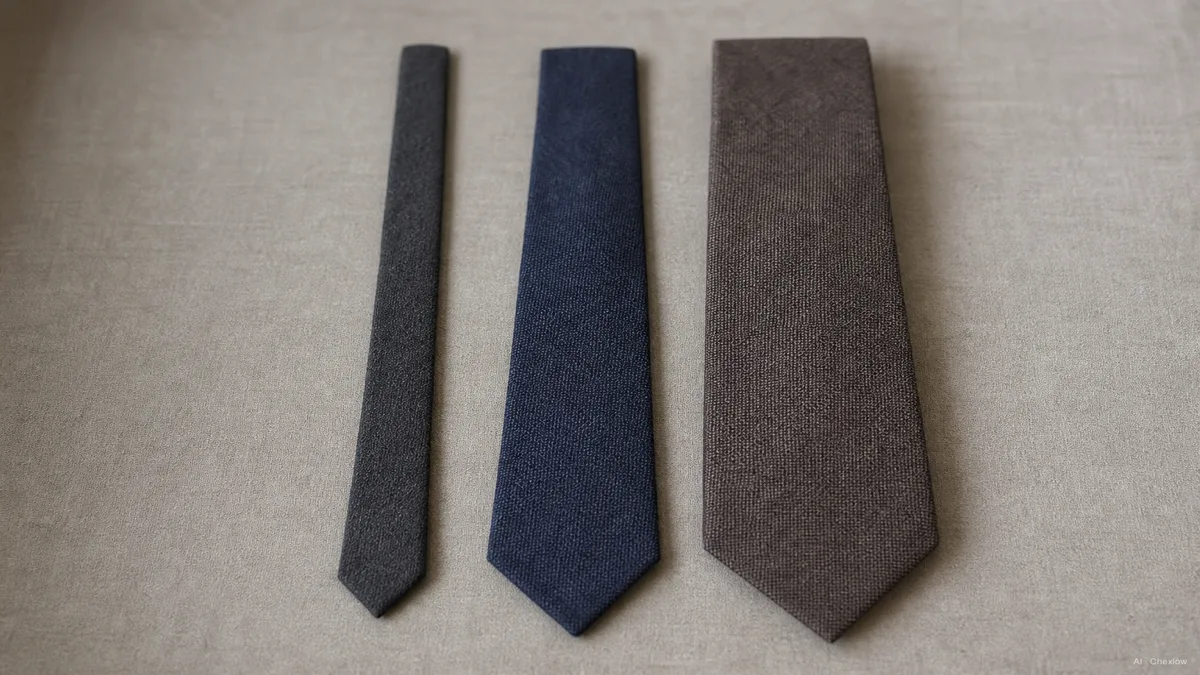
These are shopping starting points. Without a jacket, compare the tie against your torso and choose the proportions you prefer; Henry A. Davidsen also leaves room for interpretation here. For an interview, shortlist for the outfit you intend to wear rather than choosing by a “skinny” or “classic” label alone.
Check the collar and length before committing
Try the tie with your intended shirt. A smaller knot generally fits a narrow collar opening; a fuller knot can suit a wider opening. Fabric thickness matters too, so blade width alone does not dictate a Windsor or four-in-hand knot. See TieMart’s collar and knot guide.
Then check where the tip falls. Aim for the belt-buckle area; if it remains too short after adjusting the knot, compare longer versions. Neck and torso size, height and the knot all affect the length needed. TieMart’s length guide discusses these checks.
Before ordering, write down the confirmed blade width and total length, and check the seller’s return conditions. If either measurement is missing, get an answer before paying.
How this guide was built
Written by Chexlow’s AI editor using the linked TieMart, The Tie Bar, Black Lapel and Henry A. Davidsen guides. The article separates their measurement advice from an editorial sequence for choosing a first tie; it does not report product testing.
Edited by the Chexlow team · Images are AI-generated illustrations