Check the label and choose where to stop
Decide what needs attention: a folded-over collar, a rumpled front, or simply the small creases you would rather leave alone. For a relaxed finish, make the collar and front your optional targets instead of aiming for a completely flat shirt.
Read the washing, drying and ironing instructions together. GINETEX explains the role of garment care symbols: they help you follow the care appropriate to the item. Treat those instructions as the gate for each method below, rather than choosing heat from the word “linen” alone.
If water, ironing or steam is prohibited, leave that method out. If the label is missing or unclear, ask the garment maker before wetting or heating the shirt; do not assume a steamer bypasses an ironing restriction.
Smooth by hand before adding heat
For a washable shirt, use the opportunity after its permitted wash. UNIQLO’s linen guide recommends removing its linen promptly after spinning, reshaping it and drying indoors or in shade. It singles out shoulders, collars and seams for smoothing. Follow your own shirt’s drying instructions if they differ.
Already dry? If water treatment and hanging are permitted, lightly mist the rumpled area with water, smooth it by hand and hang it. This is another method in UNIQLO’s guide. A clean water spray bottle is useful for this branch; reuse a suitable one rather than buying a care kit.
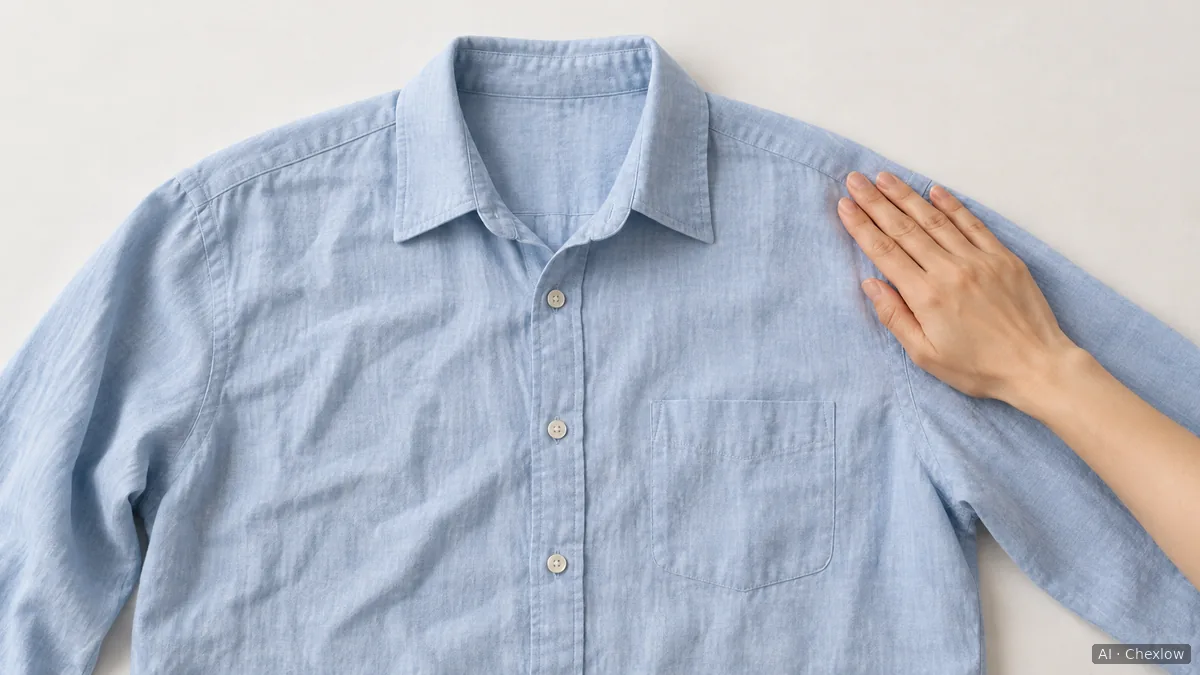
Assess the shirt after drying. UNIQLO describes wrinkles as part of linen’s character, so keeping some is a reasonable finish choice. If the collar sits as you want and the remaining creases suit the outfit, stop here.
Choose steam for the remaining wrinkles
Consider a garment steamer only if the shirt permits steam and you still want to smooth its surface. There is no need to add this step when hand shaping gives you the finish you want.
Take the shirt off and hang it for treatment. Conair’s steaming guidance recommends trying a small, inconspicuous area on a low setting and using gentle, short strokes while keeping the steamer moving. A successful trial does not override the garment label.
Follow your particular appliance’s instructions for water, nozzle contact and handling. If it has no adjustable low setting, check its instructions rather than inventing one. Stop if the trial changes the fabric’s colour or surface, and ask the garment maker before continuing.
Press selected areas when you want more definition
If you want a flatter collar or button placket, consider an iron after checking that pressing is permitted. For a relaxed result, choose those areas deliberately; you do not have to press every crease out of the body.
UNIQLO recommends ironing noticeable wrinkles while the fabric is slightly damp and placing a cloth over it. Use that approach only where your shirt allows both moisture and ironing. Its general medium-to-high heat advice is not a setting to copy onto every linen shirt: stay within your garment’s instructions and the appliance manual.
Use a suitable pressing cloth between the iron and shirt, as the guidance describes, and reuse an appropriate cloth and iron you already own. The cloth is a precaution against gloss or damage, not permission to exceed the label’s limits.
Stop when the areas you chose look tidy enough. If neither appliance is available and this is a recurring need, compare a garment steamer with an iron before buying either.
Wie dieser Guide entstand
AI wrote this guide for Chexlow using UNIQLO’s linen-care guidance, GINETEX’s explanation of care symbols and Conair’s steaming instructions. The suggested stopping points are editorial choices for a relaxed finish, not results from testing a shirt or appliance.
Vom Chexlow-Team redigiert · Die Bilder sind KI-generierte Illustrationen