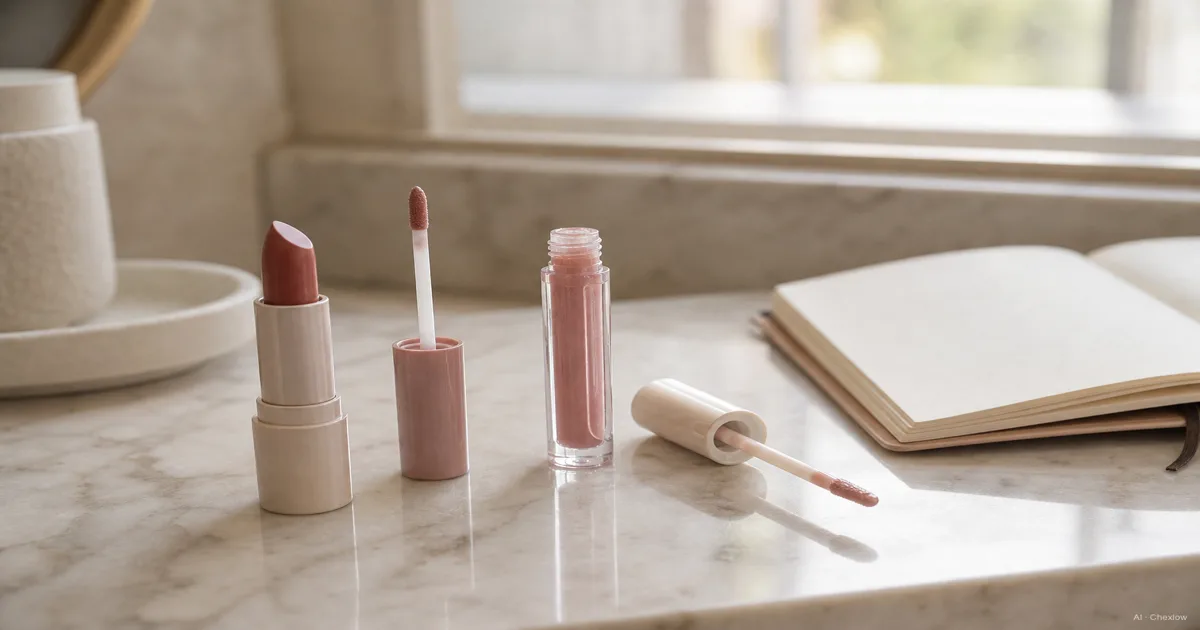


Pick the result you want first
Choose one priority before comparing shades:
- Color and finish. Start with lipstick if you want to choose the finish as carefully as the shade. Lipstick includes sheer, satin and matte formulas; it does not always mean opaque color (MAC).
- Color left behind. Look at staining tints if that is your priority. For example, Benefit describes Benetint as sheer and buildable, so a stain need not mean a single fixed intensity (Benefit).
- Visible shine. Start with gloss if you want a reflective finish. Compare clear, shimmer and tinted versions according to whether you also want color (L’Oréal Paris).
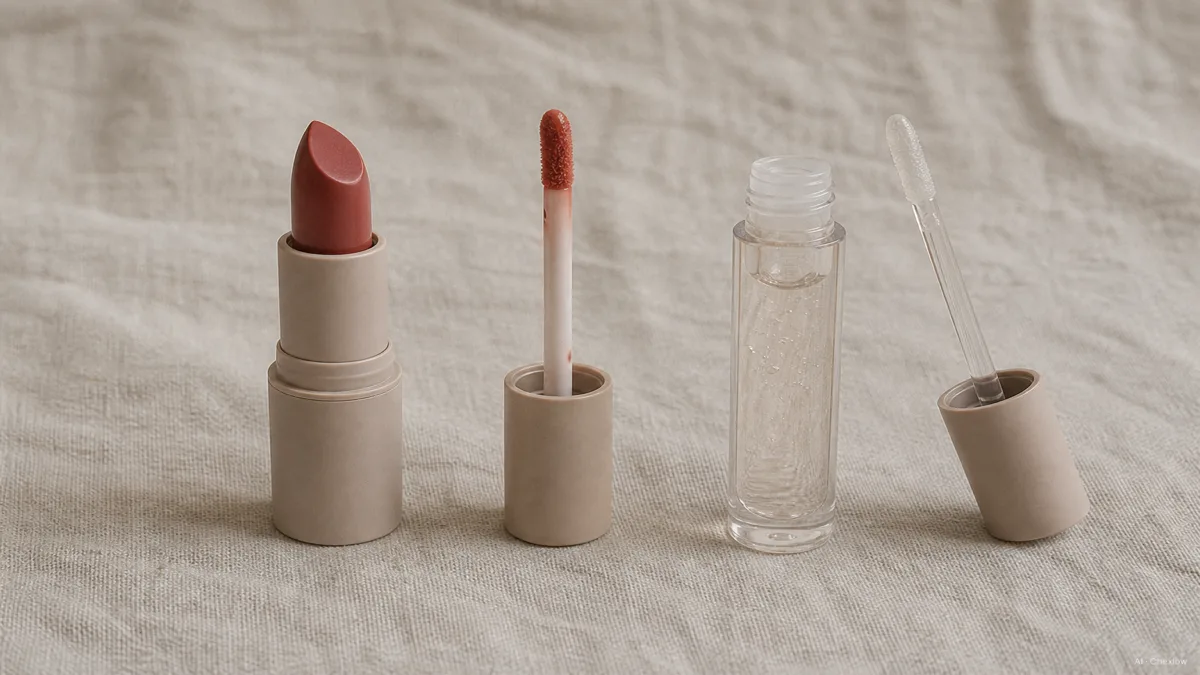
The containers illustrate the familiar formats, not a performance ranking. A wand alone does not tell you what to buy: NYX’s Lip I.V., for example, combines gloss with a residual stain (NYX). Read the finish and stain description together.
Decide what you are willing to touch up
Ask whether you want to preserve shine, color, or both. Gloss usually needs refreshing, while some long-wearing lipsticks can rival stains (NYX). A universal hours-per-category chart is not a useful promise for your particular purchase.
Creamy stick lipstick may need touching up after meals; liquid lipstick often trades reduced transfer for a potentially drier feel (L’Oréal Paris). When comparing two candidates, check the application directions and what the wear claim actually describes. Color remaining is not the same goal as an unchanged freshly applied finish.
If comfort matters more than makeup, make that a separate decision: lip balm or lip treatment. You do not need to buy all three color formats to cover that need.
Compare shades without turning undertone into a rule
Shortlist two shades in your chosen formula, perhaps a berry and a coral. Compare the amount you intend to wear, not just the darkest swatch. Benefit’s buildable-stain example is a reminder to check both a light application and a layered one (Benefit).
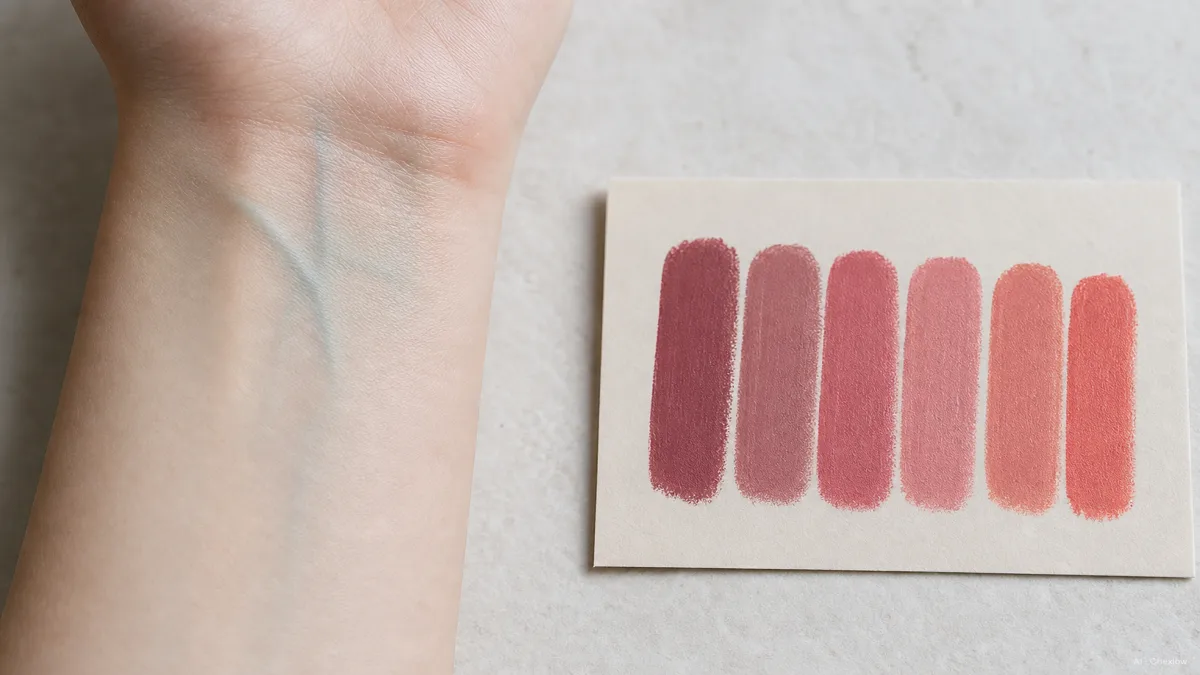
Use the swatch image to compare cooler and warmer color directions, not as a wrist-vein diagnosis or a prediction of your lip result. For this first purchase, favor the shade you want to wear with your everyday look over a color you feel obliged to choose.
For an on-lip trial, use your own product or an individual sample rather than shared makeup; the FDA advises against sharing cosmetics (FDA). If you cannot try a shade, check the brand’s swatches and return terms before committing.
Buy one formula and learn its routine
Write a small buying brief: desired coverage, finish, tolerance for touch-ups, and one shade. Compare products against those four points instead of adding a second format just because it is shown alongside the first.
With a stain, work on the edges before it sets. Check removal instructions too: a gentle micellar or oil-based remover can help lift persistent color without harsh rubbing (L’Oréal Paris). Choose a remover labeled for lip use if you do not already have a suitable one.
Try the color on its own before deciding what is missing. If you want a more deliberate outline, choosing your first lip liner is the next question; liner is used for definition (MAC). It is an optional later purchase, not part of the minimum first buy.
Wie dieser Guide entstand
AI wrote this Chexlow guide using official guidance from MAC, NYX, Benefit, L’Oréal Paris and the FDA. The editorial focus is choosing a first lip-color format and a manageable routine; manufacturer examples explain differences, rather than report hands-on testing or promise availability.
Vom Chexlow-Team redigiert · Die Bilder sind KI-generierte Illustrationen