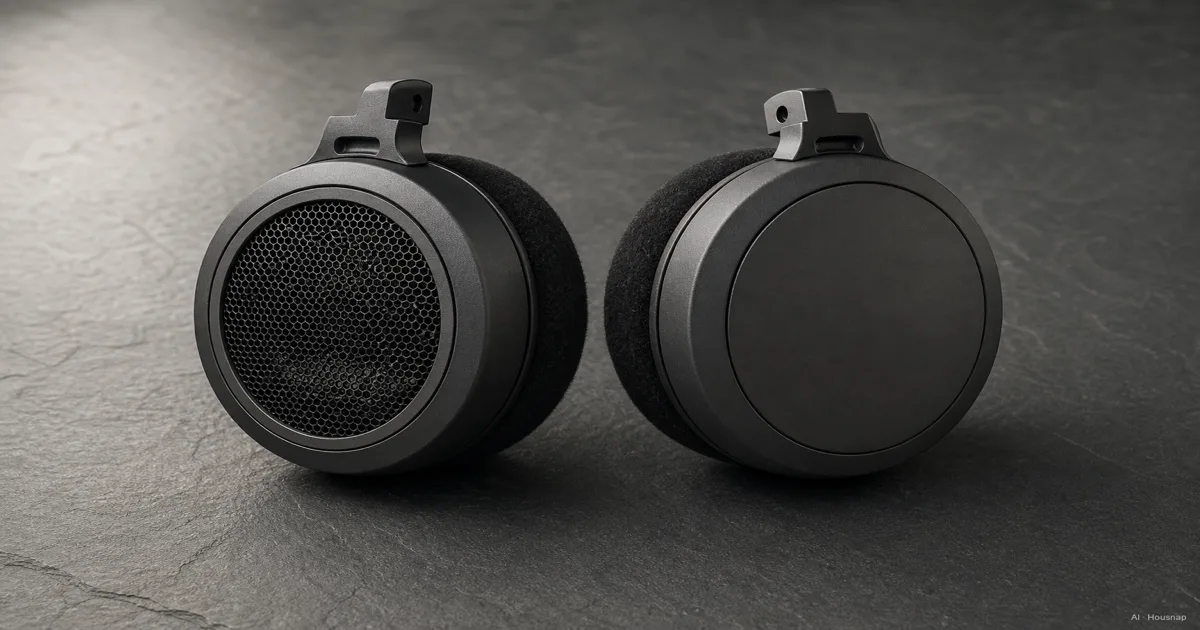
Choose the places this pair must work
Picture your usual listening spot, then the least forgiving place you still need to use these headphones. A quiet bedroom and a shared office ask different things of the same purchase.
Open-back cups have sound-permeable backs; closed-back cups use an enclosed housing to reduce sound passing in and out. That is the practical difference shown below. beyerdynamic explains the construction.
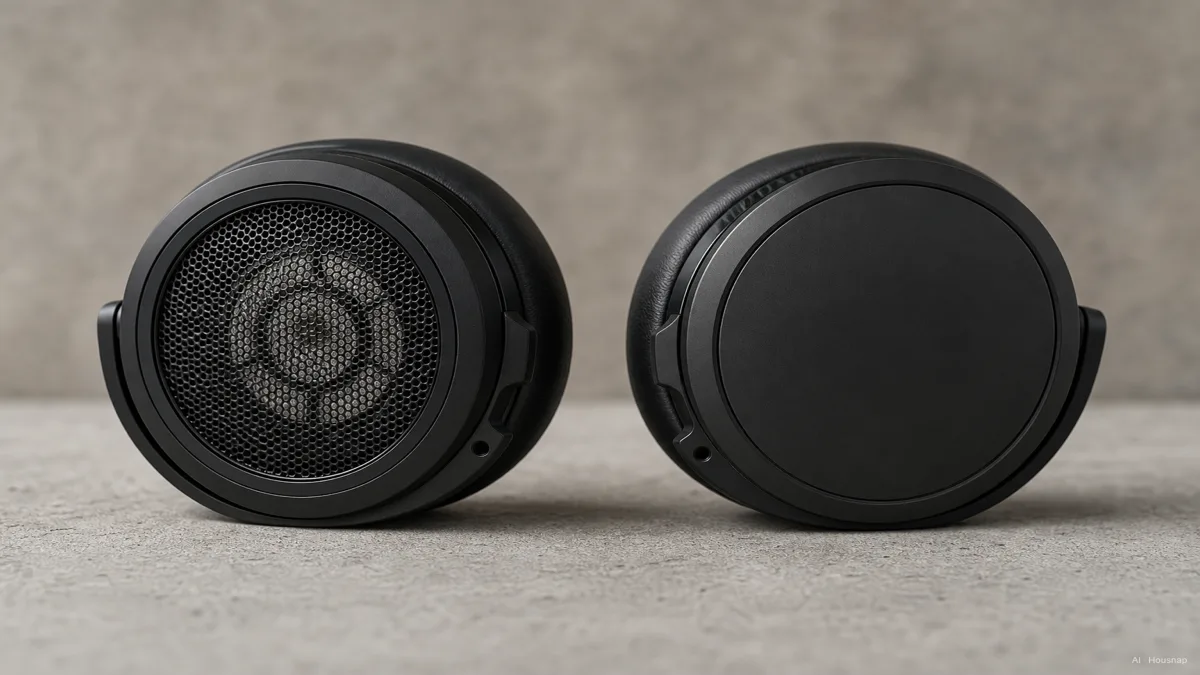
- Shared room, library or commute. Start with closed-back. Before buying, ask someone nearby to check leakage while you wear the candidate at your usual comfortable volume.
- Quiet room with no one to disturb. Keep open-back on the shortlist. Decide whether that room is where you will actually use this pair.
- One pair for both. Prioritize the shared or noisy setting unless you already have another pair for it.
Closed-back is not the same as active noise cancellation, or ANC. Passive isolation blocks sound physically; ANC uses electronics and is especially useful against low-frequency hum. Sennheiser explains the distinction.
If commuting has made ANC a requirement, continue to the Sony WH-1000XM6 and Bose QuietComfort Ultra comparison.
Compare the sound you want, not a winner on paper
Neither enclosure is an automatic sound-quality upgrade: Sennheiser says both can reproduce accurate audio. Do not choose open-back solely for “neutral bass,” or closed-back solely for “more bass.”
Open designs can give a spacious presentation. Soundstage means the space you perceive around voices and instruments; the illustration conveys that impression, not a measured result for every model. Ear shape and pad seal also influence tonal balance. Sennheiser's listening guide explains these variables.

Use the same familiar passage for each candidate at a comfortable, similar perceived volume. Listen separately for bass weight, vocal clarity and instrument placement. Write down which you prefer; “wider” need not be your deciding criterion.
If outside noise keeps interrupting the comparison, return to the enclosure choice before spending more on sound.
Let the fit veto the shortlist
Open cups can release heat, but ventilation is only one part of comfort. Over-ear pads surround the ear; on-ear pads sit on it. These are fit categories, separate from the back of the cup. beyerdynamic's guide distinguishes them.
Try your candidates with the glasses you normally wear and with the headband adjusted. Check pressure at the temples, contact with the ears, headband soreness and warmth over a realistic listening session. Put aside any pair you keep wanting to remove, even if its sound impressed you.
If cup size or pressure is still the sticking point, compare over-ear and on-ear fit before choosing a model.
Check the connection before adding equipment
For a wired candidate, bring the phone, laptop or other source you plan to use. Confirm its headphone connection, the supplied plug and any necessary adapter before paying.
Impedance is electrical resistance to an alternating signal, expressed in ohms. beyerdynamic defines it here. It does not tell the whole power story: sensitivity describes output for a stated input. Check both specifications and their units against the source's output, rather than treating “open-back” as an amplifier requirement. beyerdynamic's output guide also uses nominal sound pressure level in its calculations.
If the intended source cannot provide the needed output, use the DAC and headphone amp guide to investigate before adding equipment.
Keep the candidates that pass your location, listening and fit checks. Then compare the exact model and version across sellers, including required adapters and return conditions, so you can assess the whole purchase.
Wie dieser Guide entstand
Written by Chexlow's AI editor using Sennheiser and beyerdynamic documentation on enclosure design, isolation, fit and electrical requirements. The place-first shortlist and audition steps are editorial guidance for a first purchase, not hands-on product test results.
Vom Chexlow-Team redigiert · Die Bilder sind KI-generierte Illustrationen