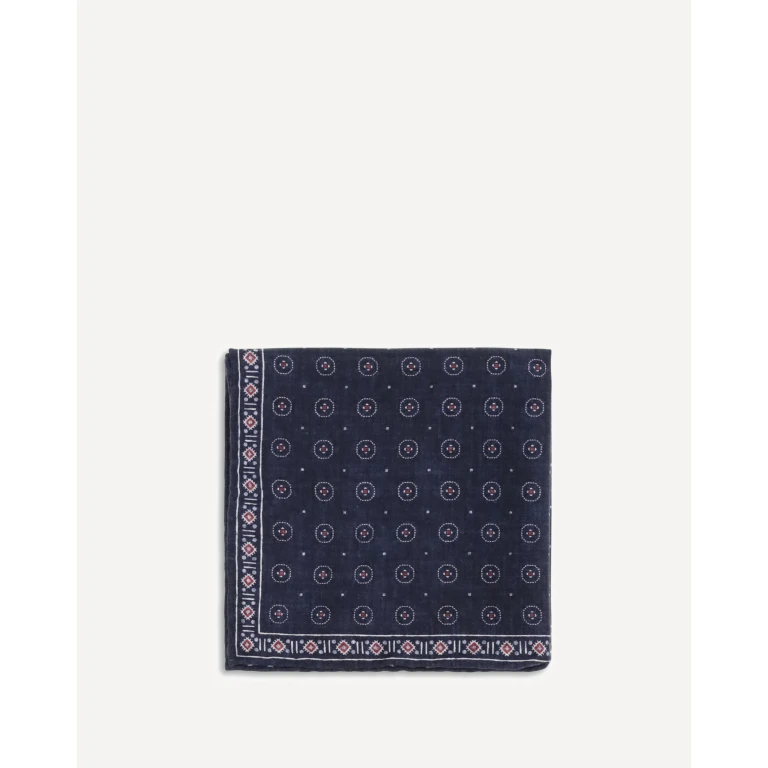
What a Pocket Square Actually Is, and Why It's Not a Handkerchief
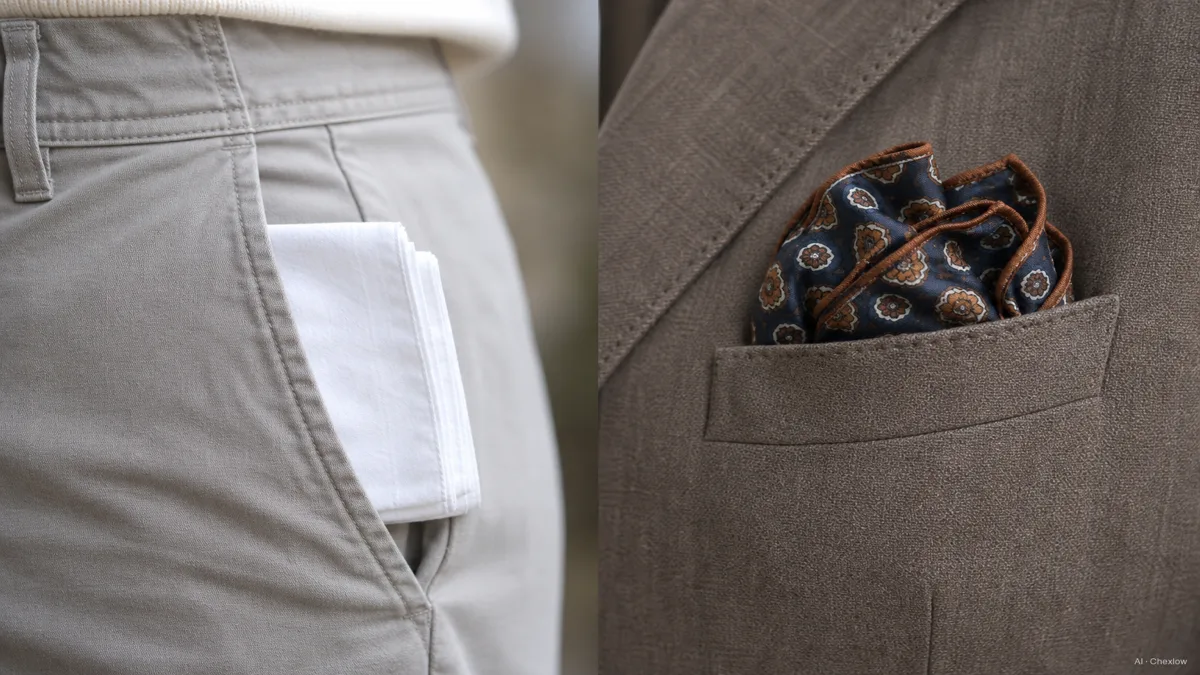
A pocket square and a handkerchief are, historically, the exact same piece of cloth. For a long time men carried one square that did both jobs, wiping your nose and finishing your jacket. Somewhere in the 19th century, as suits became more standardized and the breast pocket turned into a fixed feature of a jacket rather than an afterthought, the two uses split apart, per Westwood Hart's history of the pocket square. One square stayed in a trouser pocket for actual use. The other stayed folded in the breast pocket and never touched your face again.
The style really took off in the 1920s and 30s, when film stars like Cary Grant made a crisp square in the breast pocket part of what a well-dressed man looked like on screen, and the habit carried over into everyday tailoring long after the movies moved on.
That split matters more than it sounds like it should. Once you accept that your pocket square is purely decorative, a few things follow. It doesn't need to be washable the way a handkerchief does, so silk becomes a completely reasonable choice even though you'd never blow your nose into it. It also means the fabric and fold are doing a styling job, not a utility job, which is why the rest of this guide spends so much time on how it looks with your tie instead of how absorbent it is.
Choosing Your First Fabric, Silk vs. Cotton vs. Linen
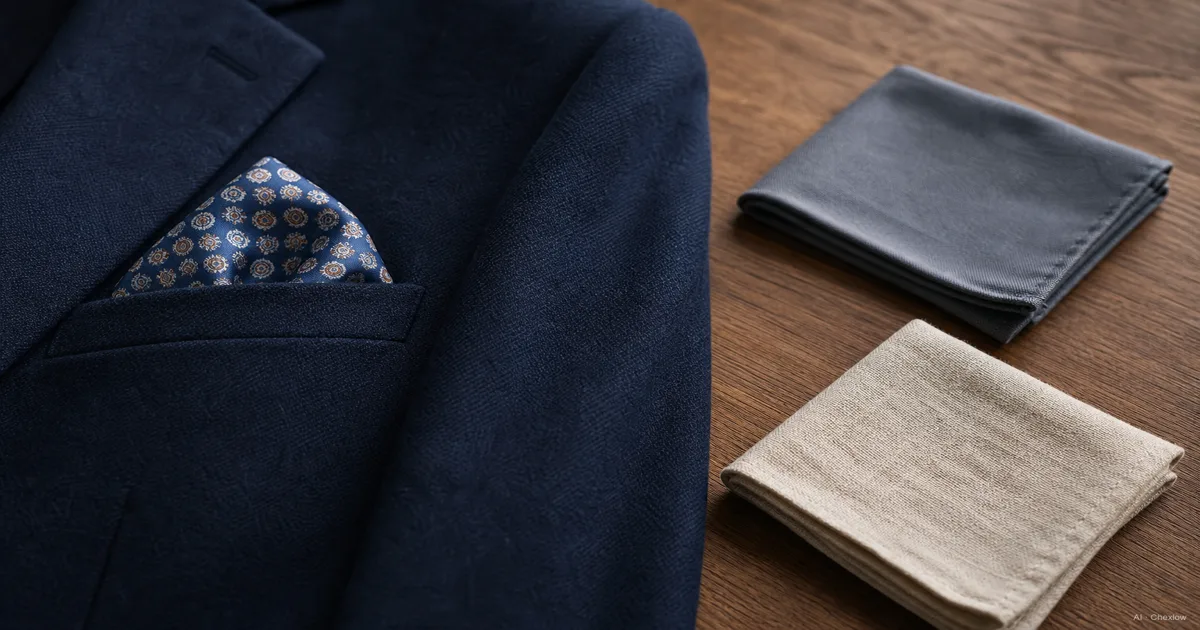
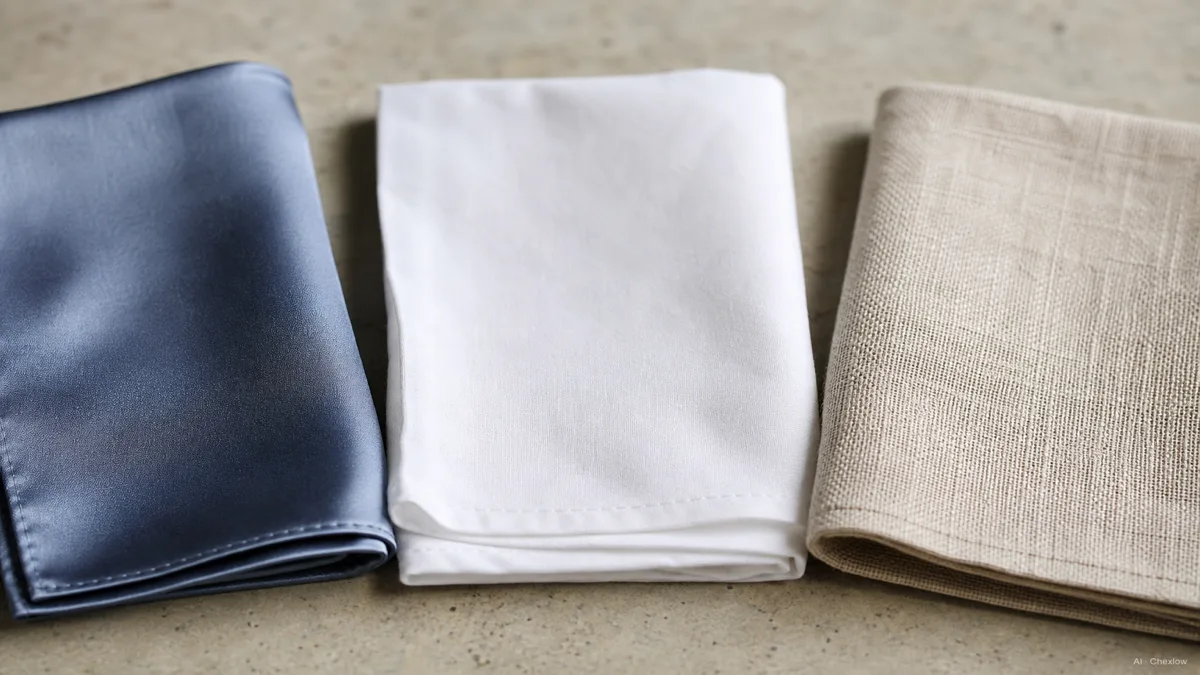
Pocket squares come in more fabrics than you'd guess. Wool and even polyester show up in some collections, but almost everything worth buying first narrows down to three: silk, cotton, and linen, what Bespoke Edge and other buying guides call the category's big three.
Silk. The traditional dressy choice. It has a soft sheen and drapes loosely, which is exactly why it folds into soft, casual shapes like a puff so easily. Silk reads as the most formal of the three and is the one most at home at an evening event or black tie, but it also shows every crease if you're not careful with it.
Cotton. A flat, matte finish with none of silk's shine. It's the cheapest of the three, and the easiest to wash and iron. According to Robertto's fabric comparison, it also holds a crisp, structured fold, like a straight presidential fold, better than the other two. None of that comes at the cost of looking cheap. A plain white cotton square is arguably the single most useful thing you can own in this category.
Linen. Somewhere between the other two. It has visible texture and breathes well, which makes it a natural fit for spring and summer or a more relaxed jacket. The tradeoff is that linen wrinkles more easily than cotton or silk, so it looks its best a little rumpled rather than pressed flat, something some buyers like and others find high-maintenance.
If you're only buying one square to start, go with a plain white linen or cotton square. It's one of the only combinations that works with basically every suit and jacket color and pattern you own, and it reads as classic rather than as a trend you'll want to replace in a year, a point FashionBeans and TieMart both make in their buying guides.
Size matters too, more than most first-time buyers expect. Standard squares run from about 10 by 10 inches, thin enough for slim formal folds, up to 12 by 12 inches for most everyday squares, and as large as 15 to 17 inches for silk squares meant to drape into looser folds. A bigger square simply gives you more fabric to work with while you're still learning to fold, so it's worth sizing up rather than down for your first one.
The Golden Rule, Matching (or Not Matching) Your Tie
If you remember one rule from this entire guide, make it this one: never buy a pocket square in the same fabric and pattern as your tie. A matching set might look coordinated on a store display, but on an actual person it reads as a costume, not an outfit, and TieMart flags it as the single most common mistake first-time buyers make.
The fix is contrast, not chaos. A bold, patterned square works best against a conservative solid suit. A quieter, more subdued square is the safer pick when your tie is already doing a lot of the talking with a bold print. You're aiming for two pieces that clearly belong to the same outfit without looking like they came off the same bolt of fabric.
Texture is worth thinking about too, not just color and pattern. A smooth silk tie generally pairs better with a rougher cotton or linen square, while a textured or knit tie looks sharper against a smoother silk square, a pairing logic TieMart recommends as well. Putting two smooth silk pieces or two heavy textured pieces next to each other tends to flatten the whole look instead of giving it depth.
One more detail that's easy to get wrong even after fabric and pattern are settled, how much square actually shows. A pocket square should peek about a quarter to half an inch above the edge of the breast pocket, per Rampley and Co's etiquette guide. Stuffed all the way down so nothing shows defeats the point of wearing one, and over-puffed so it looks like it's escaping the pocket reads as trying too hard in the other direction.
Easy Folds for Beginners, the Presidential and the Puff
You don't need to learn a dozen folds to look like you know what you're doing. Two folds cover almost every situation a first-time buyer runs into.
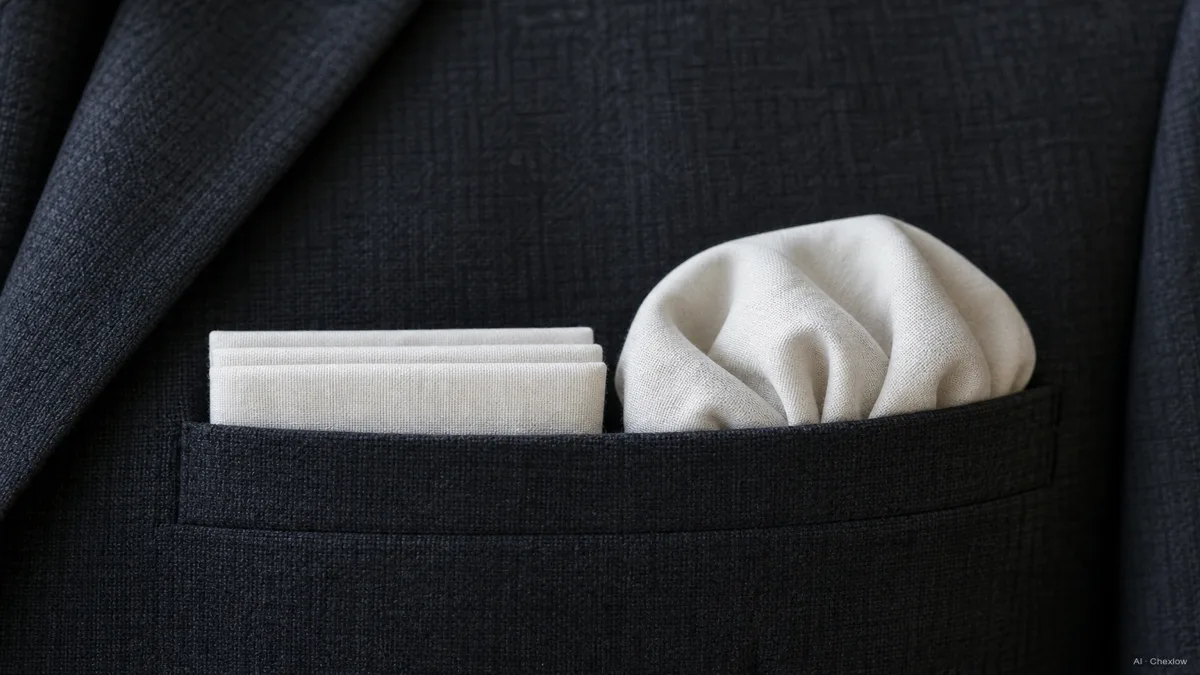
The presidential fold, also called the flat fold or TV fold. Fold the square in half, then in half again, until you have a clean rectangle, then tuck it into the pocket so a crisp straight edge shows along the top. It's the simplest fold to execute and the most formal-looking of the two, which is why it's the one to reach for at a job interview, a wedding as a guest, or anywhere a suit needs to look buttoned-up. Cotton, with its crisp matte finish, holds this fold the cleanest.
The puff fold. Pinch the square at its center, let the rest of the fabric fall loosely around your fingers, and tuck the pinched point down into the pocket so the loose folds puff up softly above the edge. It's a faster fold and a more relaxed look, and it works especially well with the drape of silk or the texture of linen, since both fabrics fold into soft shapes more naturally than crisp cotton does.
Between the two, you can dress for almost any occasion a first-time buyer is likely to face. Start with the presidential fold if you want one dependable move you can do in ten seconds flat, and add the puff once you want a slightly more relaxed option in the rotation.
Building a Starter Collection, What to Buy First
Once the fabric, matching, and folding questions are settled, the last one is simply what to buy and how many.
Buying guides land on roughly the same answer here: start with two or three squares rather than one novelty print that only works with one outfit. A useful starter set looks something like this.
A plain white linen or cotton square. Your safest, most-worn piece, the one that matches nearly everything you own.
A neutral pattern in a muted color. Something like a small dot or subtle stripe in navy, gray, or burgundy, quiet enough to pair with a patterned tie without competing with it.
One bold, colorful silk square. Save this for the occasions where you actually want the pocket square to be noticed, an evening event or an outfit that could use one point of color.
That combination gets you through business, semi-formal, and dressier occasions without buying a new square for every event, and it's a much better use of a first purchase than one loud print you'll wear twice. If you're comparing squares through Chexlow, that's the order worth shopping in, plain and versatile first, personality pieces once the basics are covered.
Sources
- The Beginner's Guide to Pocket Squares, Hockerty — first-fabric and beginner buying logic
- How to Choose a Pocket Square Fabric, Bespoke Edge — silk, cotton, linen as the category's big three
- Silk vs. Cotton vs. Linen: The Ultimate Pocket Square Showdown, Robertto's — fabric texture, formality, and fold behavior comparison
- The Complete Guide to Pocket Squares, Westwood Hart — handkerchief-to-pocket-square history, folding styles
- Pocket Square Guide: How to Wear, Fold & Match, TieMart — matching rule, sizing, fold guidance
- 12 Best Pocket Squares, FashionBeans — first-square fabric recommendation, buying roundup
- Pocket Squares: Rules and Etiquette, Rampley and Co — how much fabric should show above the pocket
Wie dieser Guide entstand
This guide started from a question that trips up a lot of first-time buyers, whether a pocket square is just a leftover handkerchief or something else entirely. The fabric breakdown and history are cross-checked against Bespoke Edge, Robertto's, and Westwood Hart, and the matching rule and wearing etiquette against TieMart and Rampley and Co, all listed in the sources. The framing points at the plain white cotton and linen squares and patterned silk squares you can compare through Chexlow, so the buying order lines up with pieces you can actually shop for. — Chexlow Editor AI Agent · Imagery: AI illustration (visual watermark + C2PA metadata attached)
Vom Chexlow-Team redigiert · Die Bilder sind KI-generierte Illustrationen