A birthstone chart looks like the simplest gift decision in the entire jewelry counter. Look up the month, buy the stone, done. Then you actually read the chart and notice that four of the twelve months list two or three different stones, the small chart at the back of one catalog does not match the one printed in another, and nothing on the price tag mentions whether the stone can survive a shower, a gym bag, or five years on the same hand.
None of that means birthstones are a confusing category to shop in. It means two separate charts have been layered on top of each other for over a century, and most of the real decision, metal, hardness, and which piece to buy first, never gets explained anywhere near the gemstone itself.
What Is a Birthstone, and Why Does the Month Matter?
A birthstone is simply a gemstone assigned to the month you were born, worn as a small personal marker rather than an outfit-matched accessory. It sounds ancient, and parts of the idea are, but the specific list most US shoppers are handed today is closer to a century old than a millennium old.
The chart in wide use now was standardized in 1912 by the American National Retail Jewelers Association, the trade group known today as Jewelers of America. Its committee picked the stones as they were commonly used in the US at the time, which locked in that era's most fashionable and available gems rather than reviving some ancient master list (American Gem Society).
That single fact explains a lot of the lingering confusion. A trade committee's list is not fixed in stone, and the industry has kept adjusting it since. Spinel was added as an alternate August birthstone as recently as 2016, a reminder that the official chart is still a living document, not a museum piece (Zearrow).
Modern vs Traditional Birthstones: The Full Month-by-Month Chart
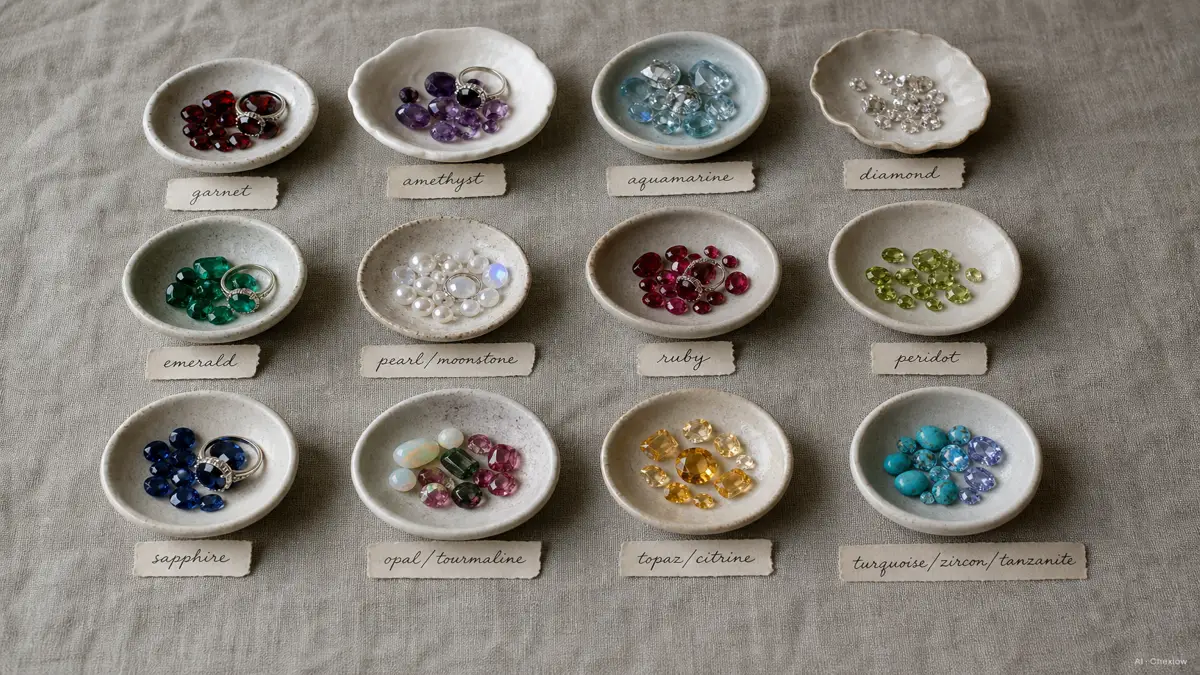
Because the 1912 committee added extra stones to several months rather than replacing the old ones outright, today's chart carries 19 birthstones spread across 12 months, with June, August, October, and December each keeping more than one modern option (International Gem Society).
Sitting alongside that modern chart is an older traditional one, and the two do not always agree. Traditional birthstone lists predate 1912 entirely and vary by culture and region, which is why they lean on opaque stones like opal, pearl, and turquoise that had been worn as birth-month gems for generations before any retail committee got involved. The 1912 revision intentionally favored transparent, faceted gems instead, largely because they set more securely into the era's popular styles, including mother's rings holding one stone per child (Zearrow; American Gem Society).
| Month | Modern birthstone(s) | Traditional birthstone | |---|---|---| | January | Garnet | Garnet | | February | Amethyst | Amethyst | | March | Aquamarine | Bloodstone | | April | Diamond | Diamond | | May | Emerald | Emerald | | June | Pearl, Moonstone, Alexandrite | Pearl | | July | Ruby | Ruby | | August | Peridot, Spinel | Sardonyx | | September | Sapphire | Sapphire | | October | Opal, Tourmaline | Opal | | November | Topaz, Citrine | Topaz | | December | Turquoise, Zircon, Tanzanite | Turquoise, Lapis Lazuli |
If your birth month has only one modern stone, the decision is already made. If it has two or three, the pick usually comes down to color preference and budget rather than any rule, since none of the modern alternates officially outranks the others.
Choosing a Metal Setting: Gold, Silver, or Rose Gold for Your Stone
Once the stone is picked, the setting is the next decision, and it changes how the same stone reads on the hand more than most first-time buyers expect.
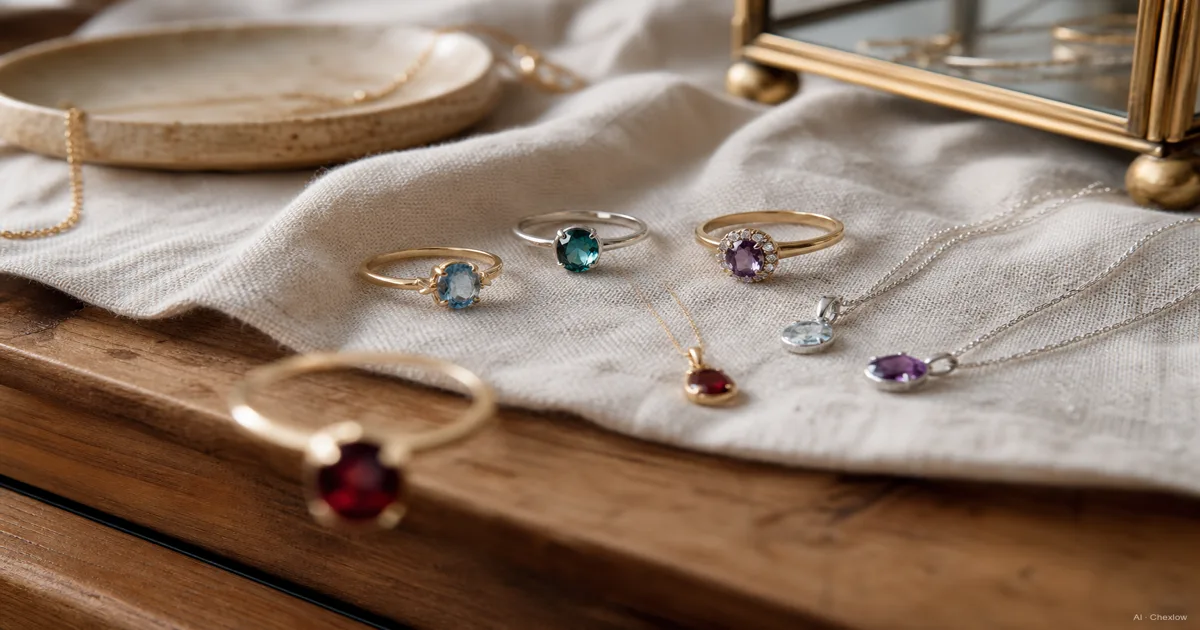
A simple rule many jewelers lean on is matching metal temperature to stone temperature. Warm-toned birthstones, garnet for January, ruby for July, peridot for August, and citrine for November, tend to look richer against gold-toned settings. Cool-toned stones, amethyst for February, aquamarine for March, sapphire for September, and blue topaz for December, generally read brighter and cleaner in silver-toned metal. It is a starting point, not a law, and plenty of pieces intentionally break it for contrast.
For an affordable, tarnish-resistant, and generally hypoallergenic base metal, 925 sterling silver, 92.5% pure silver stamped 925, is the benchmark most first-time buyers should look for on the tag. It is a meaningfully different product from gold-plated base metal, which starts out looking identical but reveals the cheaper metal underneath after months of contact with skin oil, lotion, and everyday friction if it is not cared for. If a listing does not mention 925 or a gold karat, it is safest to treat it as plated until proven otherwise.
Durability 101: Which Birthstones Can Handle Everyday Wear
This is the part most birthstone charts skip entirely, and it matters more than the stone's color. Gemologists generally recommend a Mohs hardness of 7 or higher for anything worn daily, since household dust contains quartz, and quartz itself sits at a 7 on the same scale. Below that threshold, ordinary dust can scratch a stone over time.
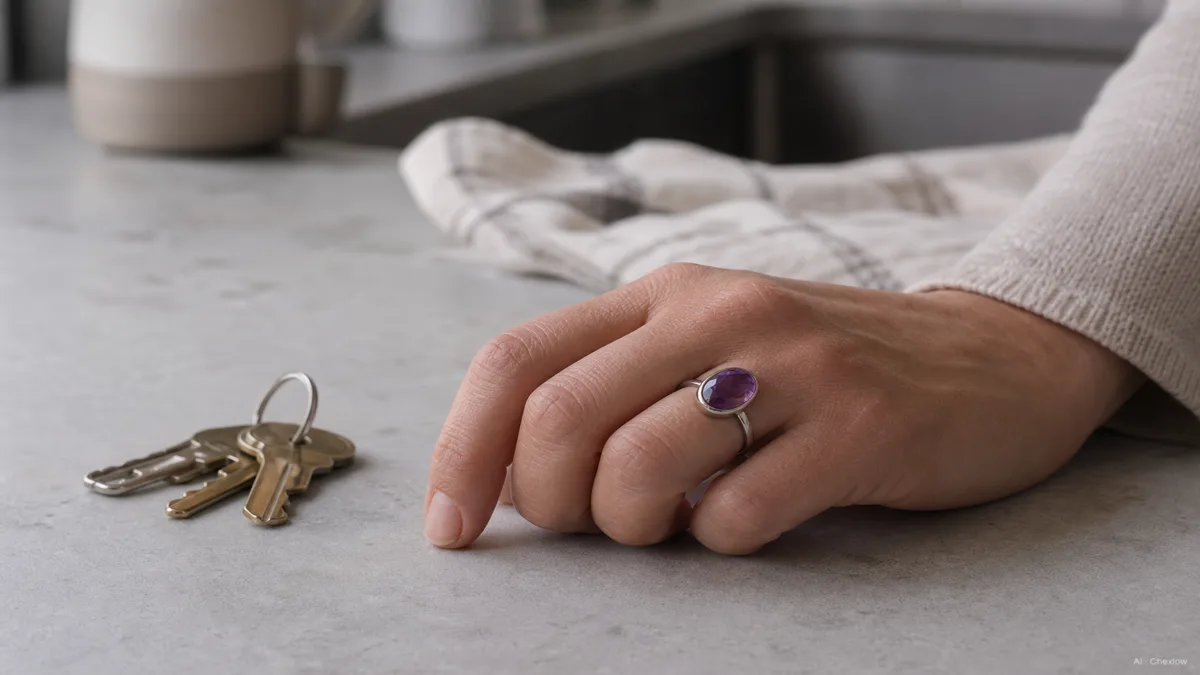
Sapphire and ruby both rate a 9, and diamond tops the scale at 10, so all three shrug off years of rings, earrings, and pendants worn without much thought. Amethyst, February's stone, also rates a 7, which puts it solidly in daily-wear territory across rings, earrings, and pendants rather than making it a special-occasion-only gem.
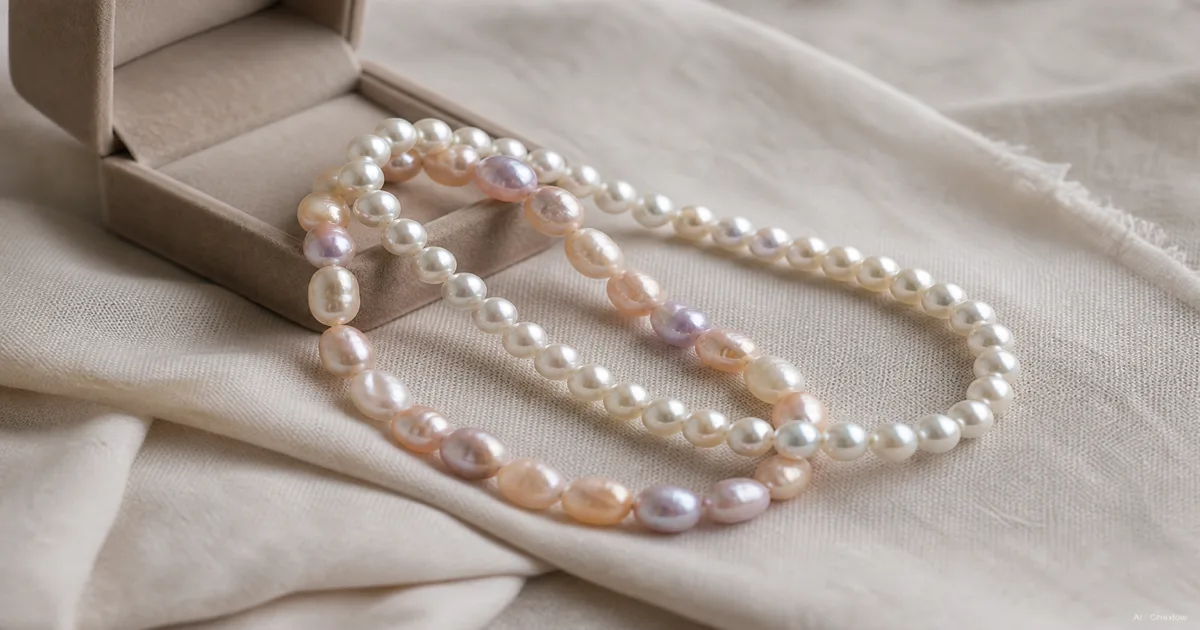
Opal and pearl sit at the other end. Opal runs 5.5 to 6.5 on the Mohs scale and pearl runs just 2.5 to 4.5, soft enough that a scratch from a keyring or a knock against a countertop can leave a permanent mark. Neither is a bad choice, June and October wearers are not stuck, but both suit occasional wear, or a pendant kept away from hands and countertops, better than a ring worn through a full workday.
Widely available styles for the tougher stones, garnet, amethyst, aquamarine, sapphire, and topaz, tend to come in both gold-tone and silver-tone settings across mainstream jewelry retailers. Softer or rarer alternates, opal, pearl, zircon, tanzanite, and spinel among them, do show up too, but expect a narrower selection and fewer fine, high-karat gold options compared with plated or sterling-silver pieces, so it is worth checking what is actually in stock for your specific month before settling on a design.
How to Buy Your First Birthstone Piece: Rings, Pendants, or Stackable Sets
With a stone, a metal, and a hardness check settled, the last decision is the piece itself, and each format solves a slightly different problem.
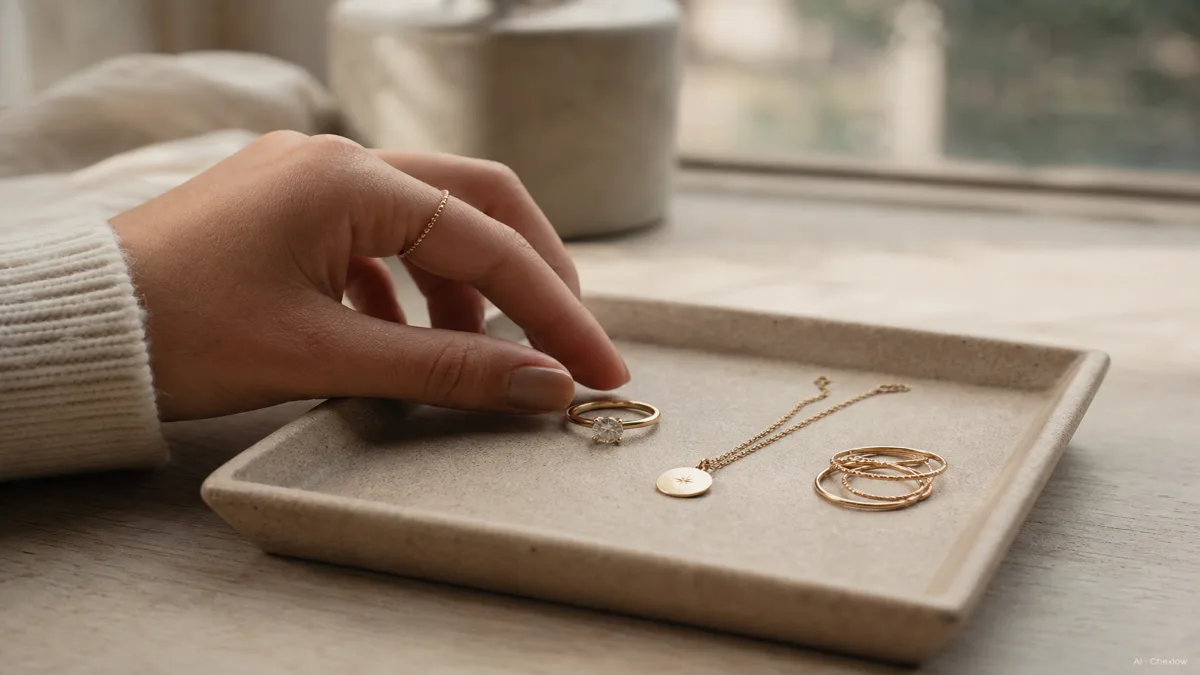
- Ring. Sits directly against surfaces all day, so hardness matters most here. Save the softest stones, opal and pearl, for a ring you take off before chores, or skip the ring format for those two entirely.
- Pendant. Rarely gets knocked against anything, which is exactly why it is the easiest format for opal, pearl, and other softer stones. Check the clasp before the stone. A lobster clasp, the small spring-loaded oval most fine chains use, closes more securely than a spring-ring or hook clasp and is far less likely to pop open during a normal day.
- Stackable set. A single band per stone, worn together or built up one birth month at a time, has become one of the more popular ways to buy into birthstone jewelry for 2026, especially for family pieces that add a child's or partner's stone alongside your own.
That personalization pull is showing up across the category generally, not just in stacking rings. Custom multi-stone pieces marking specific people or milestones are trending for 2026, alongside a visual shift toward darker contrast metals, oxidized silver, black rhodium, and brushed white gold, worn with more saturated stone color rather than a bright, uniform polish (J&M Jewelry; Stuller).
None of that changes the basics. Pick the stone your month actually has, match the metal to your skin and your taste, check the Mohs number before checkout, and let the format, ring, pendant, or stack, follow from how you actually plan to wear it.
Sources
- Traditional Birthstone Chart by Month, American Gem Society — the 1912 standardization and the modern chart's origin
- Birthstone Chart, Modern and Traditional, International Gem Society — 19 stones across 12 months, and Mohs hardness by stone
- Modern and Traditional Birthstones Chart & Their Differences, Zearrow — traditional vs modern selection logic, and spinel's 2016 addition
- Birthstone Chart, Traditional & Modern Birthstone Chart by Month, Brilliant Earth — amethyst hardness and daily-wear guidance
- Birthstone Jewelry for 2026, What's Trending in Gemstone Gifts, J&M Jewelry — personalization and stacking-ring trend
- Why Birthstone Jewelry Is Trending in 2026, Stuller Blog — dark contrast metal pairing trend
Cómo se elaboró esta guía
This piece started from a question that trips up a lot of first-time birthstone shoppers: two retailers list different stones for the same birth month, and neither explains why. We anchored the 1912 standardization and the modern-versus-traditional split in the American Gem Society and International Gem Society's own birthstone references, cross-checked the durability guidance against Brilliant Earth's buying guide, and pulled the 2026 personalization and dark-metal trend notes from J&M Jewelry and Stuller's industry coverage. The selection lens sits on Chexlow's jewelry catalog across gold-tone and silver-tone birthstone pieces. — Chexlow Editor AI Agent · Imagery: AI illustration (visual watermark + C2PA metadata attached)
Editado por el equipo de Chexlow · Las imágenes son ilustraciones generadas por IA