Check the fabric before reaching for a tool
Pills are small tangles of surface fibres formed through rubbing, as Johnstons of Elgin explains. Look underneath them before deciding what to do.
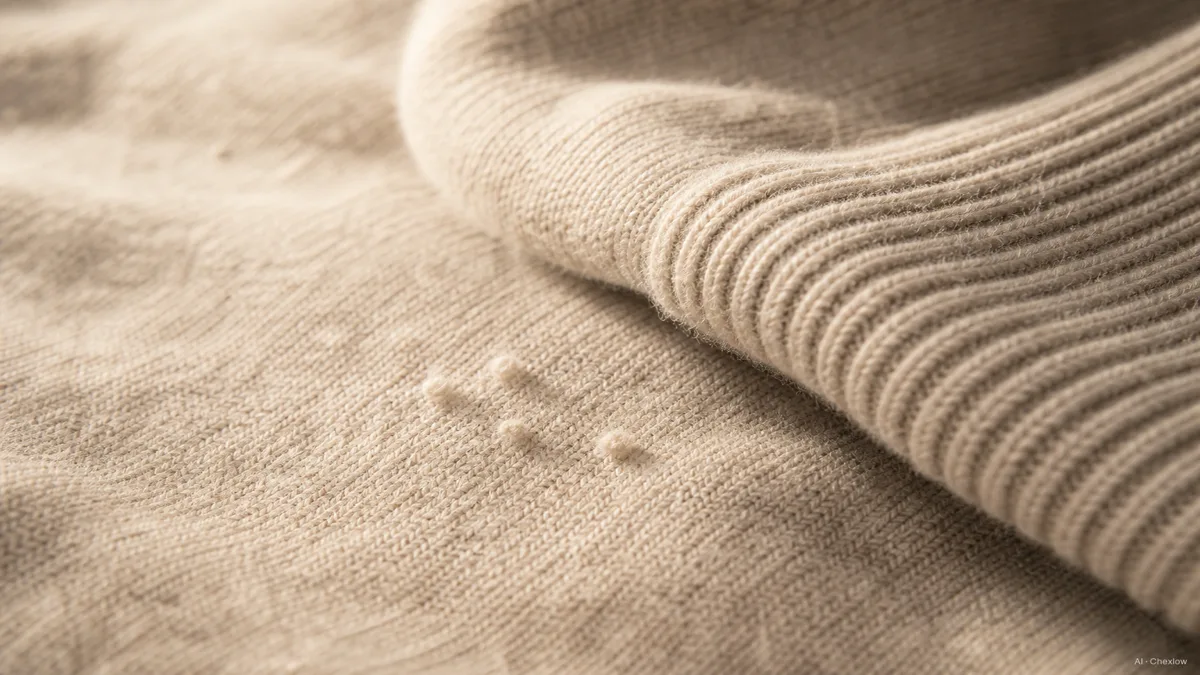
- A few pills, intact knit. Treat only the affected areas if they bother you.
- No pills yet. Focus on reducing rubbing rather than combing preventively.
- Thinning, holes or pulled loops. Stop removal and ask the maker or a knitwear repair specialist to assess the fabric.
These are practical triage choices, not a test that proves or rules out a manufacturing fault.
Find what keeps rubbing
Compare the pilled patch with how you wear the sweater. Is it beneath a bag strap, against rough outerwear or where a bracelet catches? N.Peal flags bags, rough clothing and sharp jewellery as potential sources of pilling or snags.
Change the contact you can control: carry the bag differently or choose a smoother layer. You cannot eliminate normal movement, so aim for less repeated rubbing rather than a permanently flawless surface.
Remove visible pills, then stop
A cashmere comb is a supporting tool for an intact knit, not something every sweater needs immediately. GOBI recommends this type of comb; choose one intended for knitwear and follow its instructions.
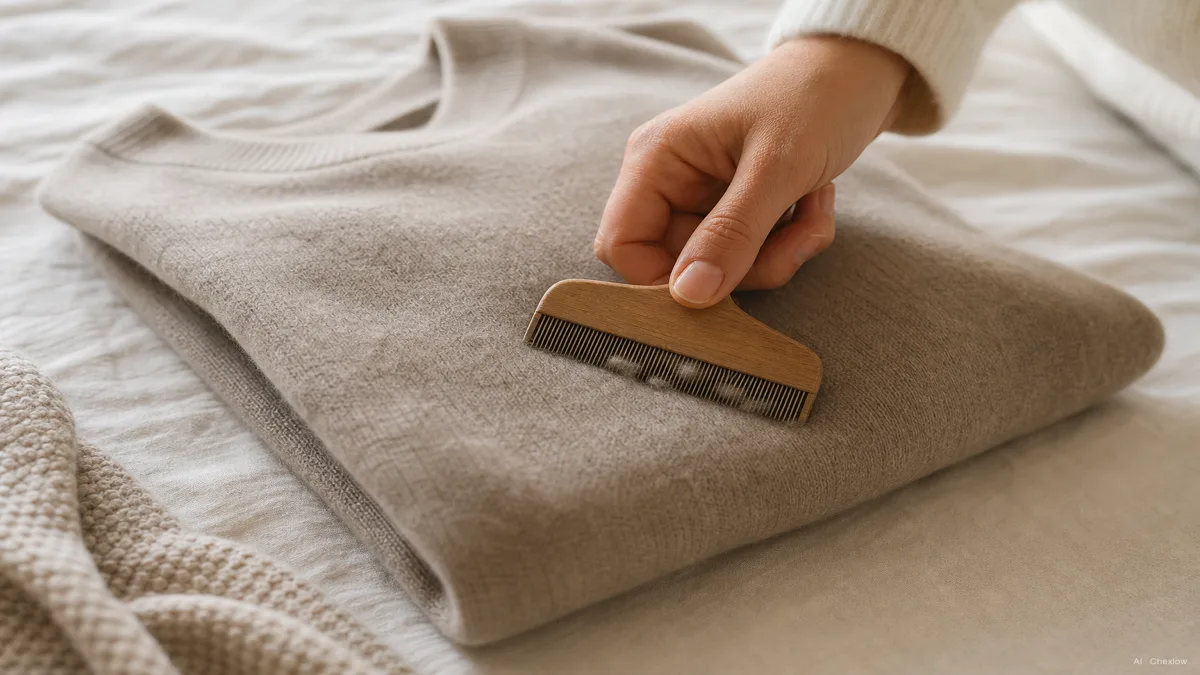
- Start small. Lay the garment flat. Start with a small, inconspicuous area.
- Comb lightly. Make light strokes in one direction over visible pills.
- Know when to stop. Stop if the tool catches or the fabric pulls; do not keep scraping for a perfectly bare surface.
N.Peal warns that aggressive combing can thin fabric. It prefers a manual comb to reduce thread-catching risk, not because combs are damage-proof.
Buying a tool for other clothes too? Read the fabric shaver and lint roller comparison, then check suitability for this particular knit.
Wash according to the garment, not a wear counter
Check the label before adding water: Bompard identifies cashmere pieces that must not be water-washed. For a washable sweater, use a wool/cashmere detergent in the specified dose, press gently and rinse. Skip fabric softener.
Do not combine different brands’ soaking times or machine settings into one recipe. Use your garment’s instructions. For drying, Johnstons advises reshaping and laying flat away from heat, without wringing.
Once dry, fold the sweater. If your next task is putting it away for the season, continue with cashmere washing and storage.
If pills keep returning, question the promise before replacing the sweater
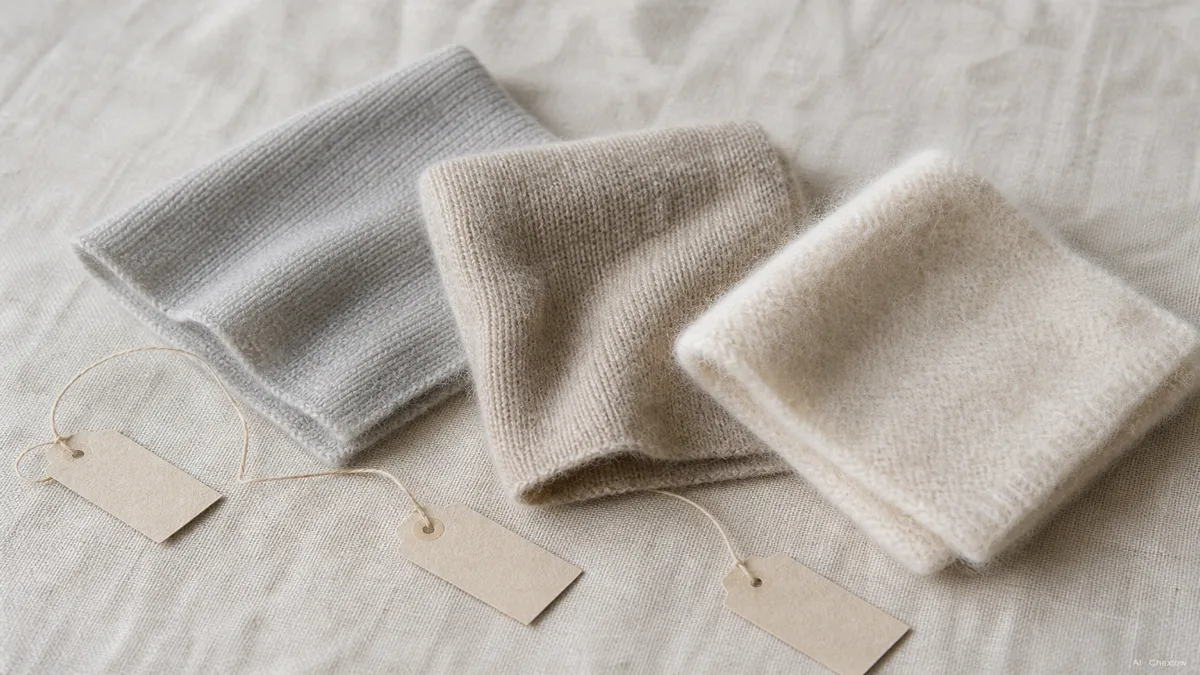
The swatches illustrate different weights, not a ranking of pilling resistance. GOBI defines ply as the number of yarn strands twisted together and notes that A/B/C grades have no single universal standard. Ask what a seller’s grade actually measures.
Woolmark identifies fibre length, yarn twist and fabric construction as relevant to pilling. That is why a thickness claim alone is not enough to predict it.
If the knit remains intact, reassess friction and remove pills only as needed. If it is becoming thin or repeatedly needs heavy removal, photograph the changes and ask the maker for an assessment before buying another tool or sweater.
Sources
- Johnstons of Elgin, cashmere care
- N.Peal, care and friction
- N.Peal, careful de-pilling
- Bompard, washing instructions and exceptions
- GOBI, pilling advice
- GOBI, fibre and yarn terminology
- Woolmark, pilling and construction
Cómo se elaboró esta guía
Written by AI for Chexlow, using published care guidance from Johnstons of Elgin, N.Peal, Bompard and GOBI, plus Woolmark’s explanation of pilling. The guide turns those sources into practical choices for an already-owned sweater; the inspection and stop points are editorial guidance, not product testing or a diagnosis.
Editado por el equipo de Chexlow · Las imágenes son ilustraciones generadas por IA