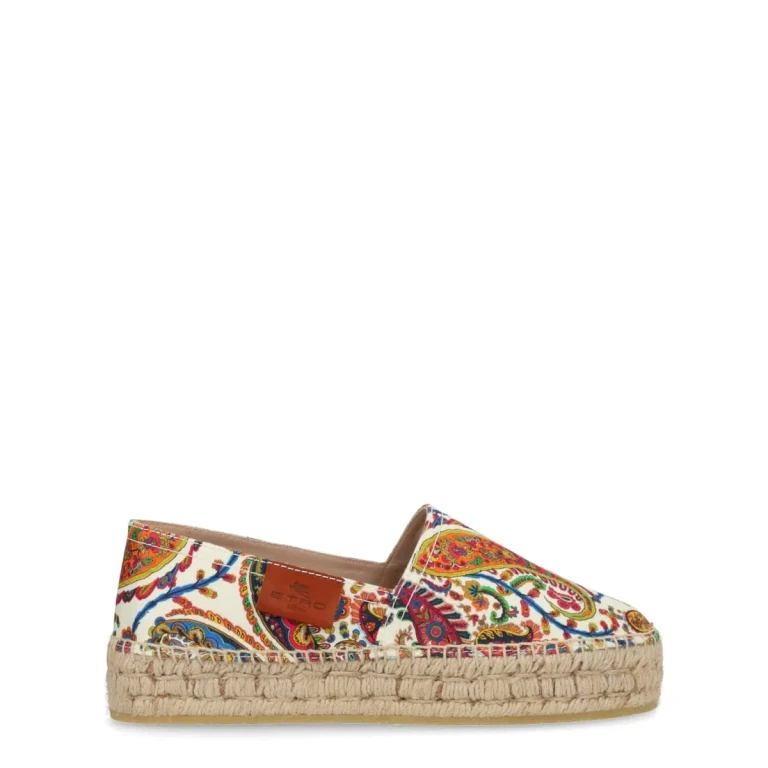
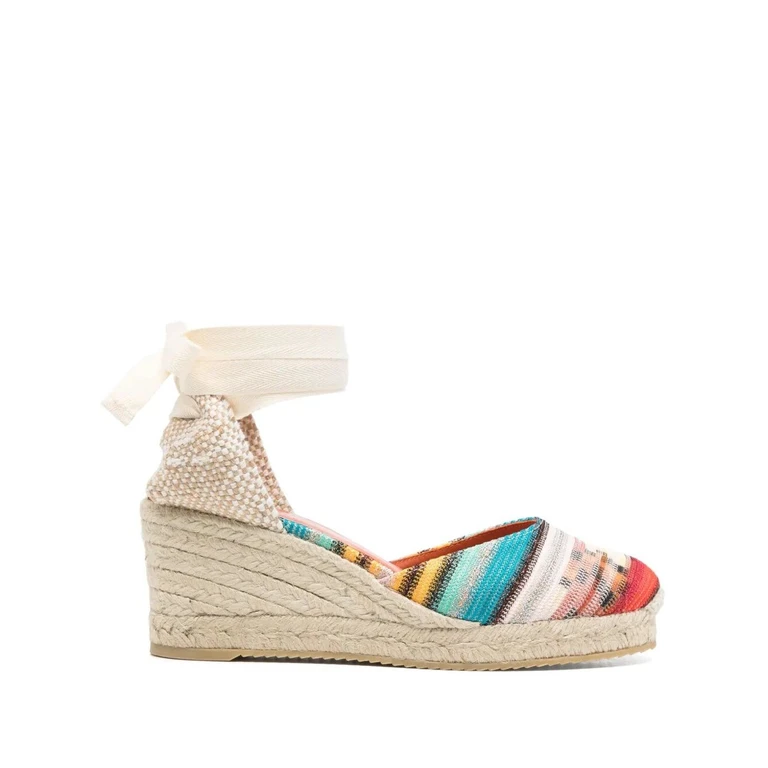
Espadrilles and boat shoes both read as "easy warm-weather shoe" from across the room, but they were engineered for opposite jobs, and that gap explains almost everything about how each one wears, ages, and fits into your closet.
Let's start with what's actually under your foot.
Espadrilles vs. Boat Shoes: What's Actually Different
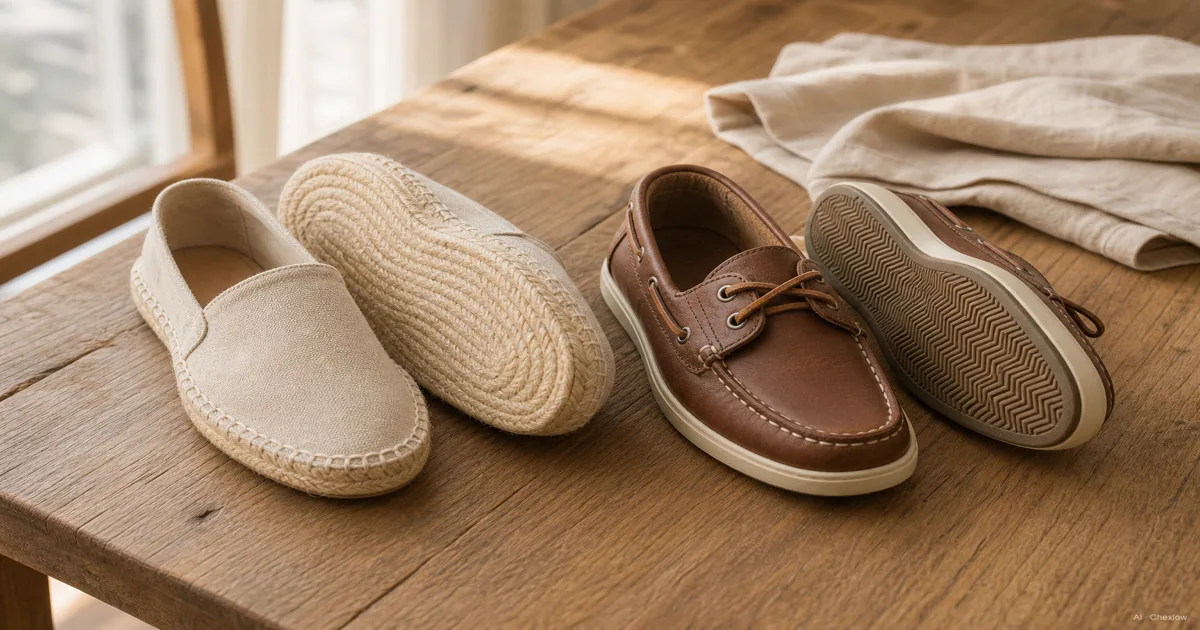
An espadrille is built around a laceless, slip-on last with a flexible rope sole and a soft canvas or suede upper. There's no lacing system and usually no rigid heel counter, which is why it goes on and off like a slipper (He Spoke Style, what are espadrilles).
A boat shoe is a different animal structurally. It has separate leather quarters laced around the foot with a rawhide lace, sitting on a molded and siped rubber sole. The lacing and firmer construction give it more structure and a snugger, more secure fit than an espadrille ever aims for (readysleek, boat shoes vs camp moccasins vs espadrilles).
So before you even get to material, the two shoes are answering different questions: one wants to disappear on your foot, the other wants to stay put no matter what you're doing.
Materials and Construction Compared: Rope Soles vs. Siped Rubber
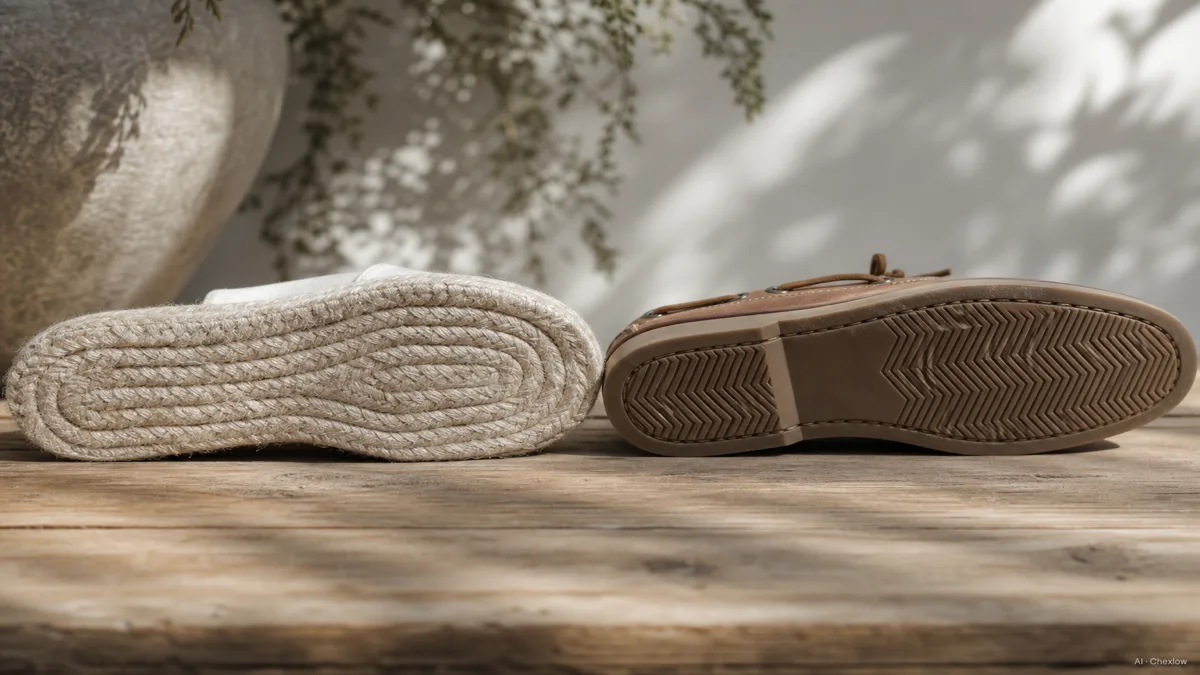
The espadrille's rope sole traces back to esparto grass, native to southern Spain and the Mediterranean, and the word itself comes from the Catalan espardenya (Wikipedia, Espadrille). Modern espadrilles have almost entirely switched to jute rope instead of true esparto, mostly because jute is cheaper and easier to source. That switch is also why the classic espadrille sole reads as bright, natural white. It's jute's own color, not a dye job (Viscata, how jute changed shoemaking).
The boat shoe's sole has a completely different origin story, and a much more recent one. In 1935, Paul A. Sperry of New Haven, Connecticut, watched his dog run across ice without slipping and noticed the grooves in its paw pads. He copied that pattern into rubber, cutting a herringbone groove design into it, a technique called siping, to create a sole that grips a wet boat deck (Heddels, Sperry and the siped sole). The design that became the Sperry Authentic Original was finalized by 1937, and the U.S. Navy contracted Sperry to supply sailors with Top-Siders starting in 1939 (Wikipedia, Sperry brand)).
That marine job also shapes the upper. Boat shoe leather is specifically tanned with oils and tallows so it can handle repeated contact with saltwater without breaking down, a level of water-resistance an espadrille's canvas or suede was never asked to have (Heddels, Sperry and the siped sole).
Which One Fits Your Summer Plans: Beach and Pool vs. Boating and Prep Casual
Espadrilles are lightweight, breathable, and casual almost to the point of feeling like a slipper, which makes them a strong fit for the beach, the pool deck, or lounging somewhere warm. Boat shoes carry a thicker, more durable, grippier sole and a slightly more structured build, so they read as smart casual rather than pure beachwear, and they can comfortably sit under chinos with an oxford cloth button-down shirt (readysleek, boat shoes vs espadrilles; Ask Andy About Clothes, espadrille ocean alternative thread).
There's also a useful style shorthand worth knowing before you shop. Espadrilles tend to get framed as the more grown-up, European summer shoe, while boat shoes are the archetypal American prep and nautical staple (readysleek, boat shoes vs espadrilles). Neither framing is a rule, but it's a fast way to sort which one matches the rest of your summer wardrobe.
If your summer is mostly sand, water, and doing as little as possible in the heat, the espadrille is the more natural first buy. If you're spending real time around boats, docks, or just want one shoe that pairs with shorts and a polo without looking like beachwear, the boat shoe earns its keep.
How to Style Each for Your First Pair
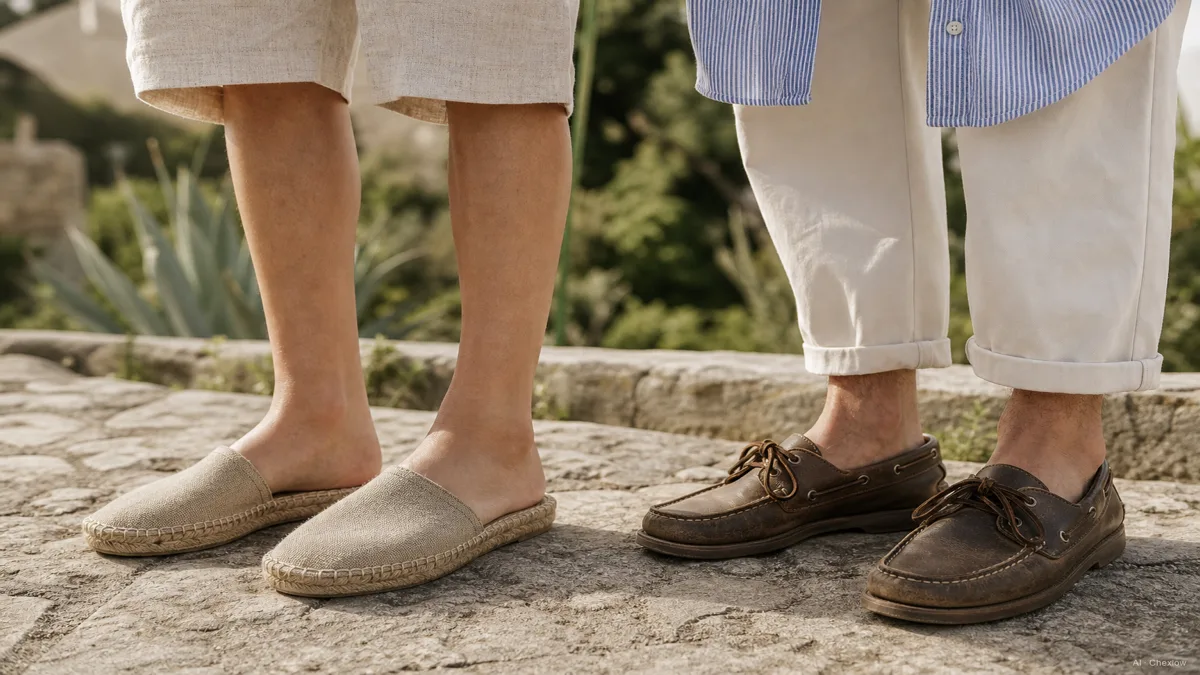
For 2026, espadrilles, including espadrille wedges, are showing up as one of the season's bigger women's shoe trends. Neutral, jute-toned pairs are the most versatile pick, and navy-and-white is the go-to "nautical classic" option if you want a bit more contrast. Styling guidance is consistent on one point: skip socks with classic espadrilles, since the whole design is meant to be worn barefoot for the breathability (Who What Wear, summer shoe color trends 2026; Glamour & Gains, 2026 espadrille roundup).
Boat shoes are having their own moment this summer, with a worn-in, vintage-brown finish reported as the look to reach for. The classic pairing is shorts and a button-down shirt, which keeps the shoe in its natural prep-and-nautical lane rather than pushing it toward beachwear (Outfit Narrative, guide to summer footwear).
Either way, the shoe should read as effortless. If you're reaching for dress socks or a stiff dress pant with either of these, you've picked the wrong shoe for that outfit.
Buying Tips: Sizing, Break-In, and Care
Rope-soled footwear in this general shape has roots going back roughly 9,500 years in primitive form, and rope-soled shoes are documented on soldiers of the Kingdom of Aragon about 800 years ago. From at least the 14th century onward, espadrille-type shoes were standard working footwear across Catalonia, Aragon, and the Basque Country (Wikipedia, Espadrille). That long working-shoe history is part of why the modern espadrille still fits loose and relaxed rather than precise, so most first-time buyers do better sizing true to their usual shoe size rather than sizing down for a snugger fit.
Boat shoes run differently. The leather upper needs a short break-in period, and the rawhide lace will loosen slightly as it's worn, so a fit that feels snug in the store is usually the right call rather than a mistake. Because the upper is oil-tanned for water resistance, boat shoes also tolerate the occasional splash or wet dock far better than an espadrille's canvas or suede ever will.
Care is where the two diverge again. Espadrilles are casual, low-maintenance shoes, best kept dry and out of standing water since a soaked jute sole won't hold its shape. Boat shoes can take more moisture exposure, but still benefit from an occasional leather conditioner to keep the oiled upper from drying out over a full summer of wear.
How this piece was built
This piece started from a first-buy question a lot of warm-weather shoppers land on: espadrilles and boat shoes both look like the same easy summer slip-on until you learn what each was actually built to do, and the wrong first pick tends to show up as either a beach shoe that's too structured or a deck shoe that falls apart in salt water. The construction comparison is anchored on readysleek's side-by-side breakdown and He Spoke Style's espadrille explainer, the espadrille history and etymology on Wikipedia's Espadrille entry and Viscata's piece on jute, and the boat shoe origin story on Heddels' account of Paul Sperry and the siped sole plus Wikipedia's Sperry brand entry. Styling context for 2026 draws on Who What Wear's summer shoe color trend coverage and Outfit Narrative's footwear guide. The selection lens sits on Chexlow's footwear catalog, brand-agnostic, across the price tiers where a first pair of either shoe actually gets bought.
Sources
- He Spoke Style, what are espadrilles — laceless slip-on construction, rope sole, canvas/suede upper
- readysleek, boat shoes vs camp moccasins, espadrilles, and Top-Siders — construction comparison, comfort and formality trade-off
- Wikipedia, Espadrille — Catalan etymology, esparto grass origin, 9,500-year history, Aragon soldiers
- Viscata, how natural jute changed shoemaking forever — jute replacing esparto, white rope sole color
- Heddels, Sperry and the siped sole — 1935 invention story, siping technique, oil-tanned leather
- Wikipedia, Sperry (brand)) — Authentic Original finalized 1937, 1939 U.S. Navy contract
- Ask Andy About Clothes, espadrille ocean alternative thread — reader discussion on comfort and formality
- Who What Wear, summer shoe color trends 2026 — 2026 espadrille trend, neutral/navy styling
- Outfit Narrative, guide to summer footwear — 2026 boat shoe trend, vintage-brown styling
Cómo se elaboró esta guía
This piece started from a first-buy question a lot of warm-weather shoppers land on: espadrilles and boat shoes both look like the same easy summer slip-on until you learn what each was actually built to do, and the wrong first pick tends to show up as either a beach shoe that's too structured or a deck shoe that falls apart in salt water. The construction comparison is anchored on readysleek's side-by-side breakdown and He Spoke Style's espadrille explainer, the espadrille history and etymology on Wikipedia's Espadrille entry and Viscata's piece on jute, and the boat shoe origin story on Heddels' account of Paul Sperry and the siped sole plus Wikipedia's Sperry brand entry. Styling context for 2026 draws on Who What Wear's summer shoe color trend coverage and Outfit Narrative's footwear guide. The selection lens sits on Chexlow's footwear catalog, brand-agnostic, across the price tiers where a first pair of either shoe actually gets bought.
Editado por el equipo de Chexlow · Las imágenes son ilustraciones generadas por IA