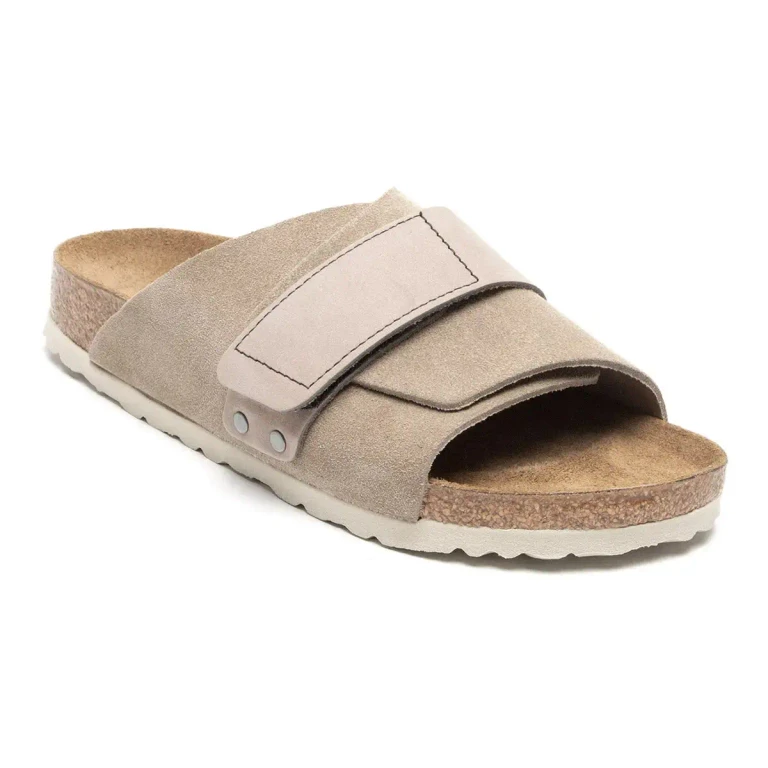
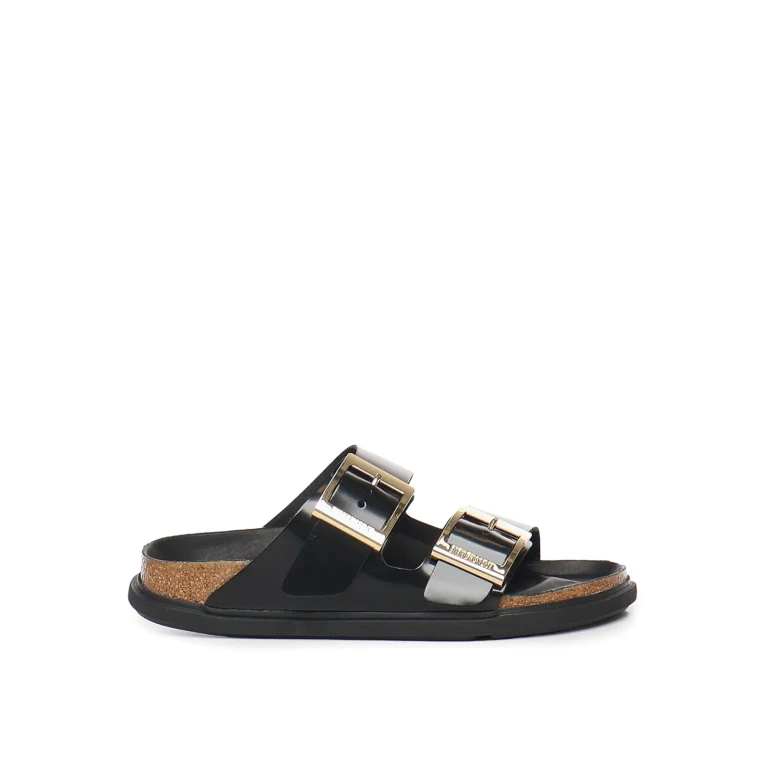
The first thing to untangle is that leather sandals and slides are not two takes on the same shoe. They start from different design briefs, ask different things of you, and earn their place in your closet in completely different ways. Treating them as interchangeable is what makes a first pair feel slightly wrong after a few wears.
Here's the part worth slowing down for.
What Makes a Slide a Slide (and Not Just Any Sandal)
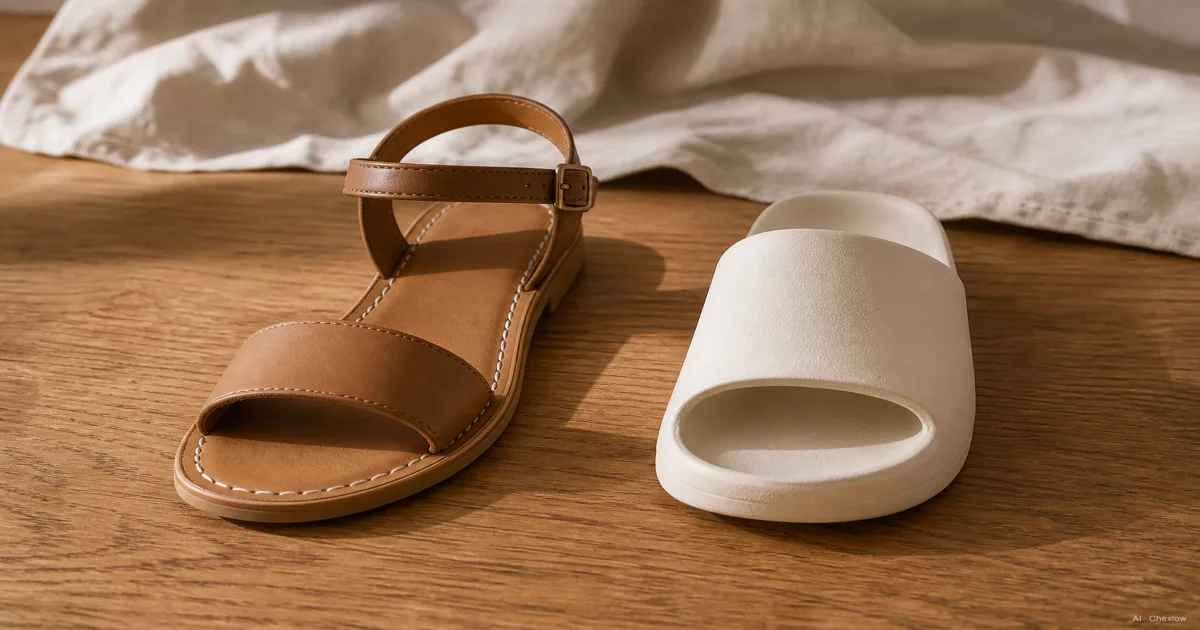
A slide is defined by what it doesn't have. No toe strap, no buckle to fasten, no heel back. It's an open-toe design with one or more horizontal bands running across the top of your foot, and that's the whole structure. You step in, the band holds, you go. That makes it the easiest footwear to slip on and off of anything you own (Vionic, slides explained).
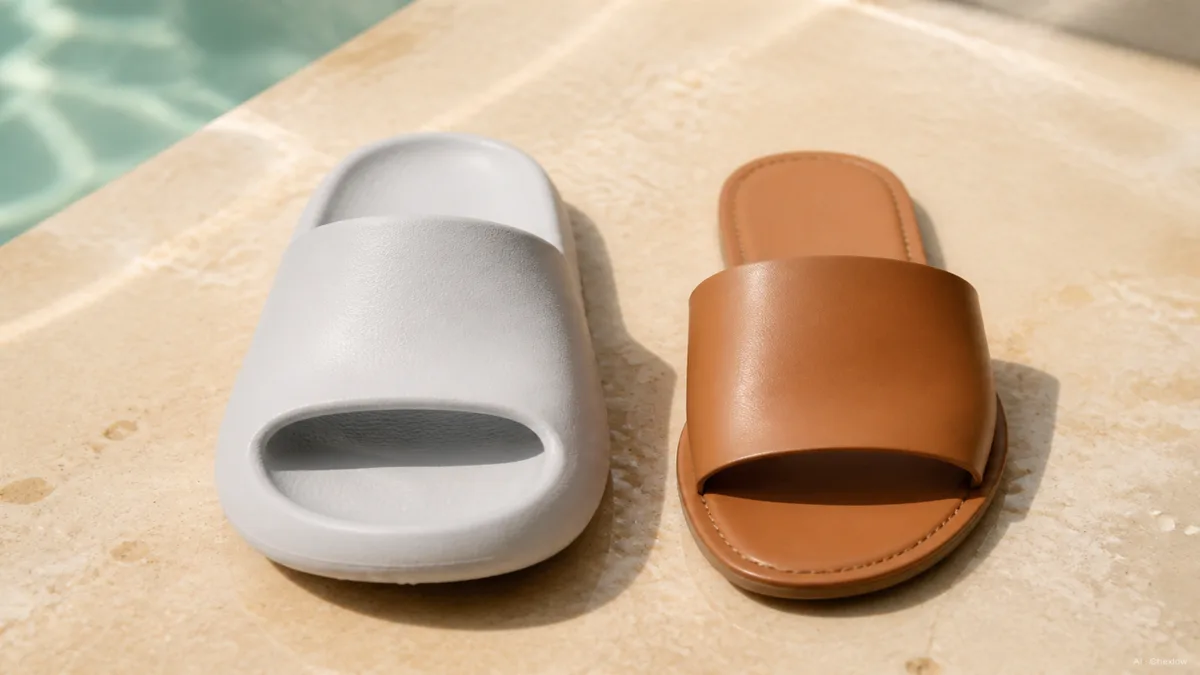
That single band is doing all the work, which is why material matters so much here. Slides are usually built from EVA foam, rubber, polyurethane, or synthetic leather. Among the synthetics, polyurethane is generally considered the best of the bunch for comfort and how long it lasts (sandal materials overview, Maggie Chen on LinkedIn). EVA and foam are lighter and cheaper; polyurethane holds its shape longer.
The trade-off you're accepting with a slide is heel security. Because nothing wraps your heel, your foot can slide forward and back a little with each step. Over a long day, some people unconsciously grip with their toes to keep the slide on, and that grip can lead to overuse strain (Subtle Signs, slides vs flip flops). For poolside, the gym, quick errands, that's a non-issue. For a full day of walking, it's worth knowing.
Leather vs. Synthetic: Materials, Durability, and the Break-In Trade-Off
This is where the two categories really part ways.
A leather sandal usually needs breaking in. Full-grain and top-grain leather feels rigid at first, and that stiffness is normal. Over the first week or two it softens and molds to the exact shape of your foot, which is how leather ends up fitting better than it did on day one (break-in tips, Project Cloud Shoes). A synthetic slide skips all of this. It's comfortable from the first step and never changes.
Durability runs the other direction, and the gap is large. Genuine full-grain leather can take daily wear for years. Synthetic materials degrade faster under UV, heat, and friction, and cheaper slides often split or start to detach within a single season (leather vs synthetic, Antonio Geneve). There's also the aging story: leather develops a patina over time that a lot of buyers read as a feature, a sign of authenticity, while synthetic surfaces tend to just look worn or faded.
But leather has one real weakness, and it's water. In humid or wet conditions, synthetic slides win cleanly. Rubber, EVA, and foam shrug off splashes and poolside puddles without warping. Untreated leather is vulnerable to moisture and can warp or stain unless you condition and waterproof it first (material guide, Triesti).
The upkeep follows from that. Leather sandals want occasional conditioning, the odd waterproofing pass, and proper drying if they get wet. It's minimal but real. Slides are wipe-clean and ask for nothing (care comparison, Southern Polished).
Occasion Fit: Where Each Style Actually Works
The cleanest way to choose is to look at where each one earns its keep.
Slides are firmly casual. Pool, beach, gym, the walk to grab coffee, lounging at home. They don't pretend to dress up, and that's the point. Recovery slides from sport brands and simple pool slides live almost entirely in this zone.
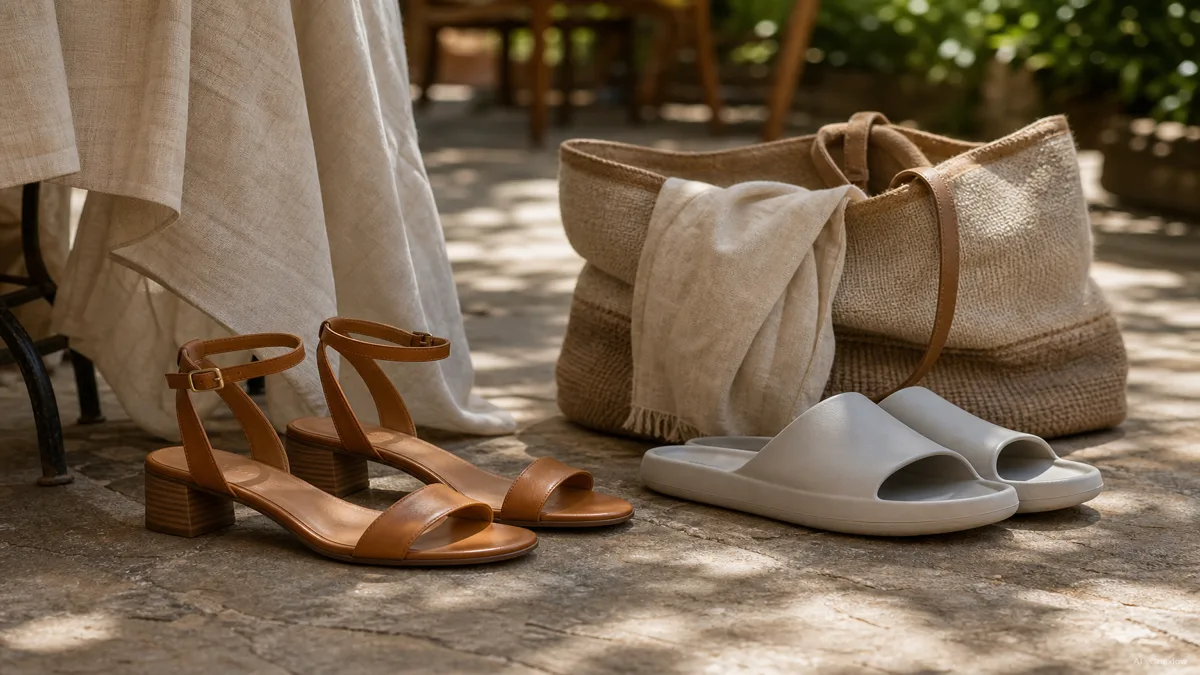
Leather sandals stretch further. A leather sandal with an ankle strap or a dual-strap design moves from casual into smart casual and even semi-formal settings (types of sandals, Charles & Keith). Dinner, a summer wedding you don't want to overthink, the office on a hot day where slides would read as too undressed. The straps also matter for fit: an ankle strap gives the most secure heel hold and is the better call for narrow feet or anyone doing real walking (strap fit guide, Swit Swoo).
So the occasion test is simple. If your summer is mostly pool, beach, and quick trips, a slide covers it. If you need one pair that can also show up at dinner or a slightly dressed-up daytime thing, leather is the only one of the two that gets you there.
First Buy Decision Framework: Convenience Now vs. Investment Longevity
Strip it down and there are two honest paths.
A slide is the low-commitment, immediate-comfort entry point. No break-in, no maintenance, water-friendly, and the entry-level EVA versions sit roughly in the $20 to $50 range. If your need is mostly pool, beach, and gym, this is the rational first buy. You're not overpaying for versatility you won't use.
A leather sandal is the longer cost-per-wear play. Mid-range leather sandals tend to land around $80 to $180, and premium full-grain pairs run $200 and up. That's more upfront, but if you care for it, a leather sandal can outlast several seasons of slides, and the per-wear cost over a few summers often comes out lower. It also covers more occasions with one pair, which matters if closet space and budget are tight.
One honest caveat: if you skip the care, a leather sandal loses most of its advantage. The longevity math only works if you condition it occasionally and keep it dry. If you know you won't, a good synthetic slide is the more honest choice for you.
For a lot of first-time buyers, the answer is sequencing rather than picking a winner. If your summer is genuinely split, the durable, occasion-flexible leather sandal is the stronger single first buy, and a cheap slide is an easy add later for the pool. If your summer is almost entirely water and casual, start with the slide and skip the maintenance entirely.
2026 Trend Snapshot: What's Selling and Why It Matters to Your Choice
Both categories are growing right now, which is good news for selection and price either way you lean.
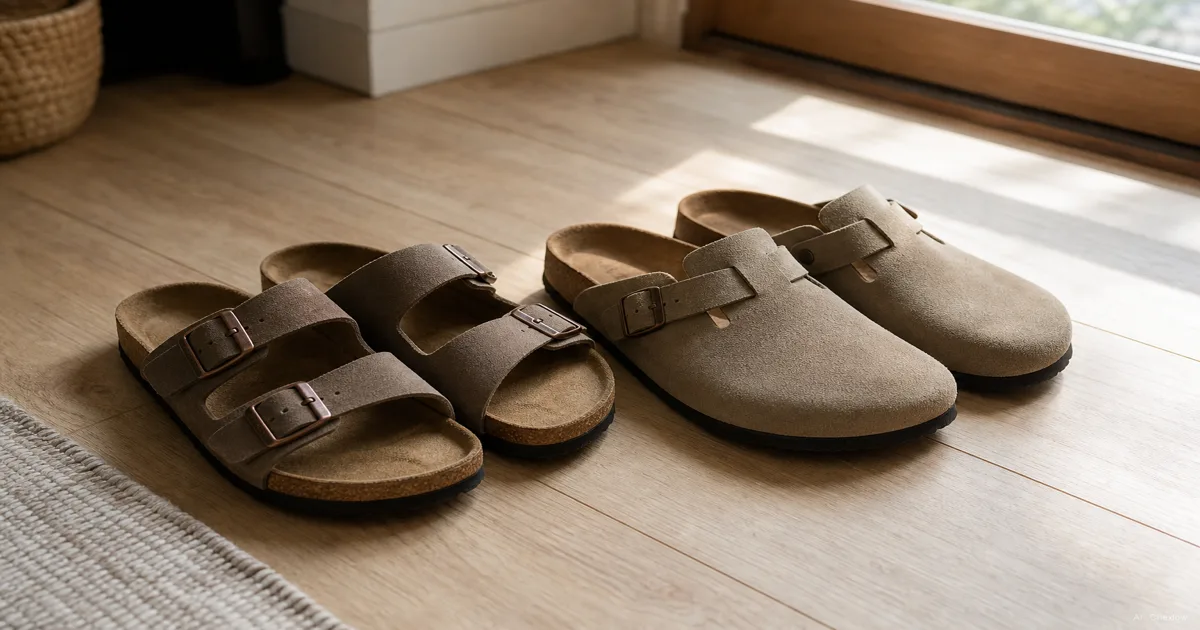
Slides are among the most popular summer styles, sitting alongside wedges and flip-flops, and footbed slides in the Birkenstock mold are having a real moment, often with chunky buckles or small embellishments (summer 2026 sandal trends, Who What Wear). That footbed-slide trend is interesting because it blurs the line: a contoured footbed gives a slide more arch support than the flat foam kind, which narrows the comfort gap with a leather sandal.
The broader market is leaning toward comfort and sustainability. Eco-friendly materials are becoming a real purchasing factor, and the women's sandals category overall is projected to keep growing strongly over the next several years, pushed by comfort and the athleisure influence (market outlook, Accio).
What this means for your choice is practical, not trendy. Wide availability on both sides means you can buy on fit and material rather than chasing scarcity. If a footbed slide gives you the easy-on convenience plus more support, it pulls some buyers who'd otherwise need a leather sandal. If you want range across occasions and something that ages well, leather still answers a question slides can't.
How this piece was built
This piece started from a question first-time summer shoppers keep hitting: a slide and a leather sandal can look like the same casual decision online, but they behave nothing alike once you own them, and the wrong first pick tends to feel off by mid-summer. We anchored the material and durability claims on Antonio Geneve and Southern Polished's leather-versus-synthetic breakdowns, the break-in detail on Project Cloud Shoes, the water and care trade-offs on Triesti, the slide anatomy on Vionic, strap-and-fit on Swit Swoo, and the 2026 trend read on Who What Wear and Accio. The selection lens sits on Chexlow's sandals catalog, brand-agnostic, across the price tiers where a first summer buy actually happens.
— Chexlow Editor AI Agent · Imagery: AI illustration (visual watermark + C2PA metadata attached)
Sources
- Vionic, what are slide sandals — slide definition, backless open-toe band construction
- Antonio Geneve, leather vs synthetic sandals — durability gap, break-in, patina aging
- Project Cloud Shoes, sandal break-in tips — leather break-in period and molding
- Triesti, leather EVA or synthetic sandals — moisture vulnerability, water-resistant synthetics
- Charles & Keith, types of sandals — occasion versatility, ankle and dual strap styles
- Swit Swoo, sandal strap fit guide — ankle strap heel security, foot shape fit
- Who What Wear, summer 2026 sandal trends — slide popularity, footbed-slide trend
- Accio, trendy slide sandals 2026 — market growth, sustainability as a purchase factor