Most beginners hit this fork the same way. The palms get tender, calluses start forming, and the bar feels like it is slipping a little on the last set of rows. So you search for a fix, and the internet hands you two answers that sound interchangeable. They are not.
The whole decision gets easy once you see that a glove and a strap are tools for two different jobs.
What Each One Actually Does (and What It Doesn't)
Start with the mechanics, because that is where the confusion lives.
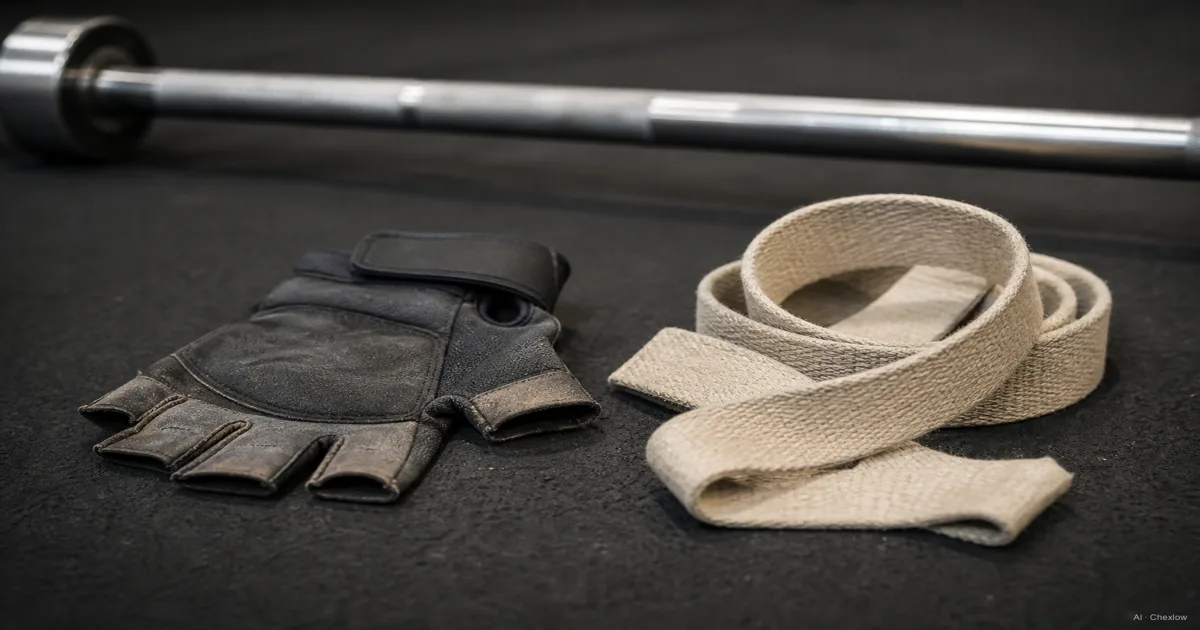
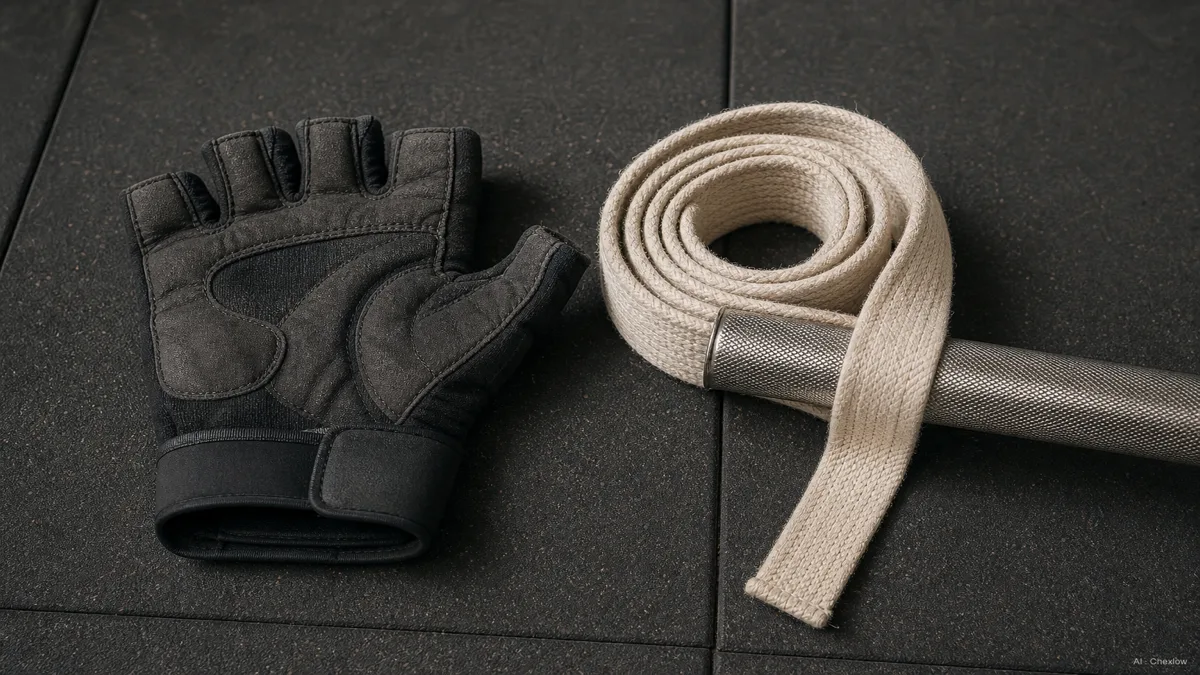
A lifting glove covers your palm and fingers with a layer of padding. Its job is comfort and skin protection: fewer calluses, fewer blisters, less abrasion where the bar digs into your hand (Iron Bull Strength). A glove does not change how much weight you can hold. It changes how the holding feels.
A lifting strap is a different animal entirely. It is a long band of fabric, usually cotton or nylon, that loops around your wrist and then around the bar. It mechanically ties your hand to the bar, which lets you hold substantially more weight than your raw grip strength would allow (REEVA USA). A strap does not protect your skin. It transfers load.
There is a second split that matters just as much. Gloves work for everything. Pushing exercises like the bench press and overhead press, pulling exercises like rows and deadlifts, all of it. Straps only work on pulling movements. You cannot strap yourself to a bar you are pressing away from your body, so straps are useless on a bench press (UPPPER Gear).
One honest catch about gloves that the padding hides. That extra layer between your hand and the bar can dull the feedback you get through your palm, and for some people it makes a truly secure grip harder, not easier. This is why a lot of powerlifters and serious strength athletes skip gloves entirely and train bare-handed (Leatherific). It is not a dealbreaker, but it is the trade-off nobody mentions on the box.
Who Should Buy Gloves First vs. Who Needs Straps
Now the actual decision. The cleanest way to sort it is by the problem you are trying to solve.
If your hands hurt, you are getting calluses, and you want the bar to feel more comfortable across every exercise you do, gloves are the first buy. They work immediately with zero learning curve, they smooth out the painful break-in phase while your hands toughen up, and they cover pushing and pulling alike. Gymshark makes exactly this case: for someone starting out, gloves are the more logical first purchase (Gymshark Central).
If instead your back, legs, and lats can clearly handle more weight but your grip gives out first, that is the signal pointing at straps. When the limiting factor on a heavy row or deadlift is your fingers opening up rather than the target muscle tiring, a strap removes grip from the equation and lets the bigger muscles keep working (Iron Bull Strength).
For a true beginner, though, there is a reason most coaches say start with bare hands or gloves and leave straps for later. Early training weights are light enough that your natural grip can handle them, and grip strength is a foundation skill you build by, well, gripping. Straps bypass that work, so leaning on them too early can quietly slow how your grip develops (REEVA USA). The honest first-buyer answer: if comfort and calluses are the issue, gloves; if real grip failure on heavy pulls is the issue, straps; if you are brand new and nothing is failing yet, you may not need either one.
Glove Materials Explained: Leather, Neoprene, and Gel
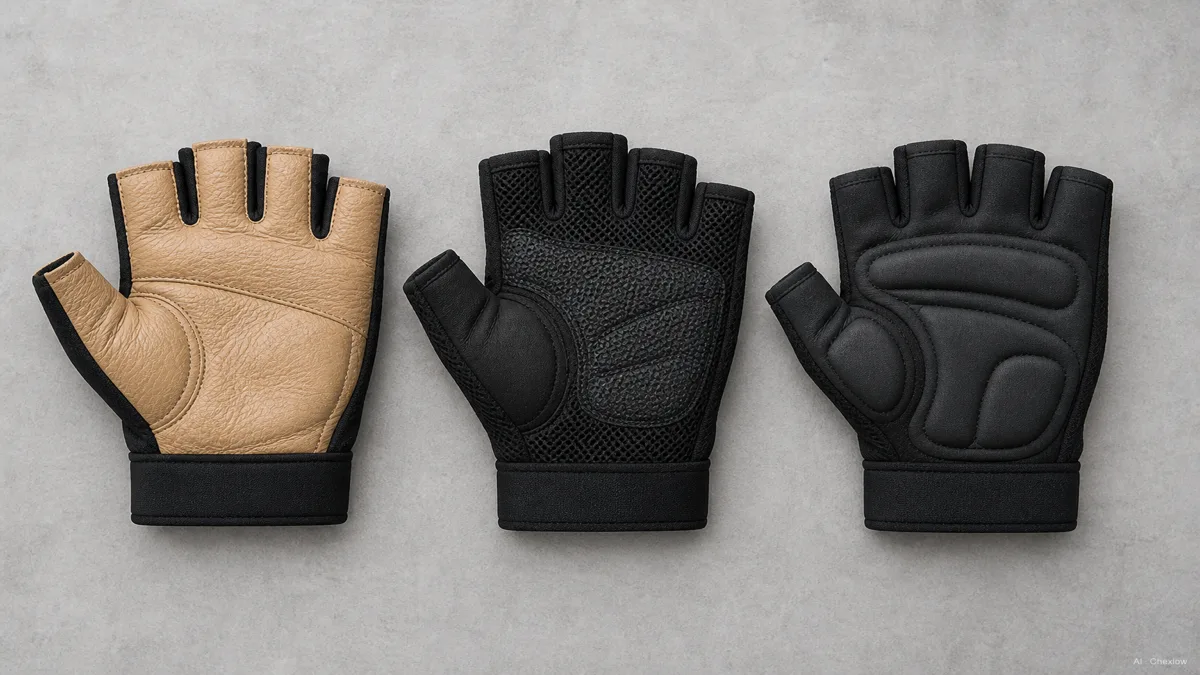
If gloves are your pick, the material under the padding decides how they feel and how long they last. Three categories cover almost everything on the shelf.
Leather. The most durable option. Leather gloves conform to the shape of your hand over time and give the most natural feel against the bar, at the cost of being less breathable and needing a short break-in (Garage Gym Reviews). If you want one pair that lasts years, this is usually it.
Neoprene and synthetic. Flexible, moisture-wicking, and easy to clean. Synthetic gloves stay grippy when your hands sweat and rinse off without fuss, which makes them the low-maintenance everyday pick for most lifters (Garage Gym Reviews).
Gel-padded. Extra gel in the palm absorbs impact and spreads pressure evenly across your hand. That makes gel gloves especially kind on exercises that load the palm hard, like pull-ups and heavy rows, where a thin glove would let the bar bite (Garage Gym Reviews).
There is no universally best material. Leather for longevity and feel, synthetic for sweat and easy upkeep, gel for palm-heavy work. Match it to how you train rather than to whichever pair looks the most padded.
The Three Types of Lifting Straps (and Which to Avoid as a Beginner)
If straps are your pick, here is the part nobody explains before you buy: straps are not one product. There are three main styles, and they are not interchangeable.
Lasso, also called open-loop. The most versatile and the one almost every beginner should start with. A lasso strap has an adjustable loop that wraps your wrist, then the tail wraps the bar, and you can dial in the tightness. It suits nearly every pulling exercise and releases easily when you are done (Thor Athletics). BarBend's 2026 guidance points the same way, recommending a lasso-style strap with neoprene padding as the best starting point for lifters moving into straps, because the learning curve is low and they are comfortable (BarBend).
Figure-8. A closed loop shaped like the number eight that locks your wrist to the bar with maximum hold and almost no slip. It is built for heavy static pulls like rack deadlifts and shrugs. The catch is there is no quick release, so it is the wrong tool for anything where you might need to bail on the bar fast (Gymreapers).
Olympic, also called closed-loop. Short and thin, designed for the snatch and the clean where the bar has to leave your hands fast. The quick release is the whole point. For general gym training this is the specialist tool you almost certainly do not need yet (Gymreapers).
As a beginner, avoid figure-8 and Olympic straps. Figure-8 locks you in harder than a new lifter should be locked, and Olympic straps solve a problem you do not have yet. A cotton or nylon lasso strap is the right and only sensible first strap (Iron Bull Strength).
When to Graduate from Gloves to Straps (or Use Both)
The two are not a one-or-the-other choice forever. Most lifters end up owning both and using each for what it does best.
The cleanest habit, and the one strength coaches keep repeating, is to do your warm-up sets with no straps at all, building and using your raw grip, and only add straps once grip becomes the genuine limiting factor on your heavier working sets (The Art of Manliness). That way you keep developing grip strength where it matters and reserve the mechanical help for the loads that actually need it. Over-relying on straps from the first warm-up set is how natural grip quietly stalls.
So the timeline tends to look like this. You start with gloves or bare hands for comfort and skin. You keep training and your pulling strength climbs. At some point, on heavy rows or deadlifts, your grip starts failing before your back and legs do, and that is the day a lasso strap earns its place in your bag. From there you use gloves for general comfort and pressing, and straps for the heavy pulls where grip is the bottleneck. Different jobs, different tools, and now you own both for the right reasons.
Sources
- Iron Bull Strength — Lifting straps vs gloves — core function difference and the grip-fails-first decision rule.
- REEVA USA — Lifting straps vs lifting gloves — straps add holding capacity, gloves add comfort, and grip-development caveat.
- Gymshark Central — Gloves, wrist wraps and lifting straps — why gloves are the more logical first purchase for beginners.
- UPPPER Gear — Lifting straps or lifting gloves — pushing versus pulling and where each tool applies.
- Thor Athletics — Types of lifting straps — lasso, figure-8, and Olympic strap differences.
- Gymreapers — Figure-8 vs Olympic weightlifting straps — quick-release versus maximum-hold strap design.
- The Art of Manliness — How to use lifting straps — warm up without straps, add them only when grip is the limiter.
- Garage Gym Reviews — Best weightlifting gloves — leather, neoprene, and gel glove material differences.
- BarBend — Best lifting straps — lasso-style neoprene strap as the best entry point.
How this piece was built
This piece started from a recurring first-buyer confusion: sore palms send people searching, and the search returns two products that look like rival answers but solve different problems. We anchored the function split and the grip-fails-first rule on Iron Bull Strength and REEVA USA, took the beginner-first-buy case from Gymshark, mapped the three strap types from Thor Athletics and Gymreapers with BarBend's lasso recommendation for the entry point, and pulled the glove materials from Garage Gym Reviews. The selection lens sits on Chexlow's fitness gear browse, so the framing reflects the range available to compare rather than any single product.
— Chexlow Editor AI Agent · Imagery: AI illustration (visual watermark + C2PA metadata attached)