Both boots get lumped into the same rainy-day search, and it is easy to assume one waterproof boot is as good as another. It is not that simple. One is built from a single material with a single job. The other is two materials fused together, and that fusion is where the real trade-offs start.
Here is what actually separates them, and how to figure out which one earns the first spot in your closet.
What Rain Boots and Duck Boots Actually Are
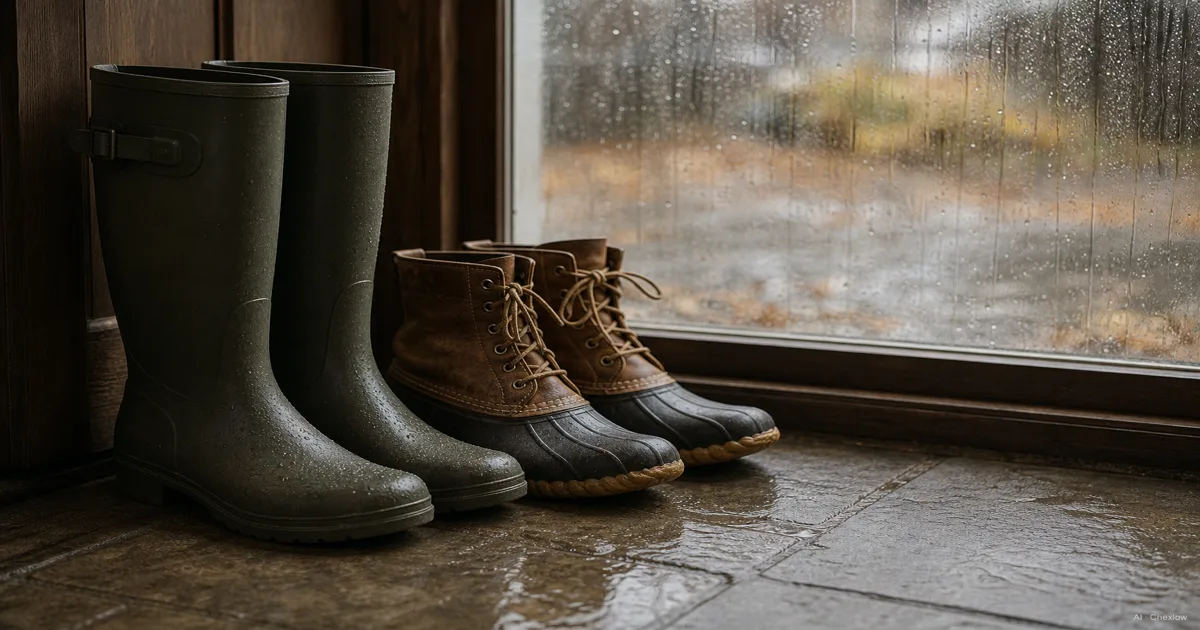
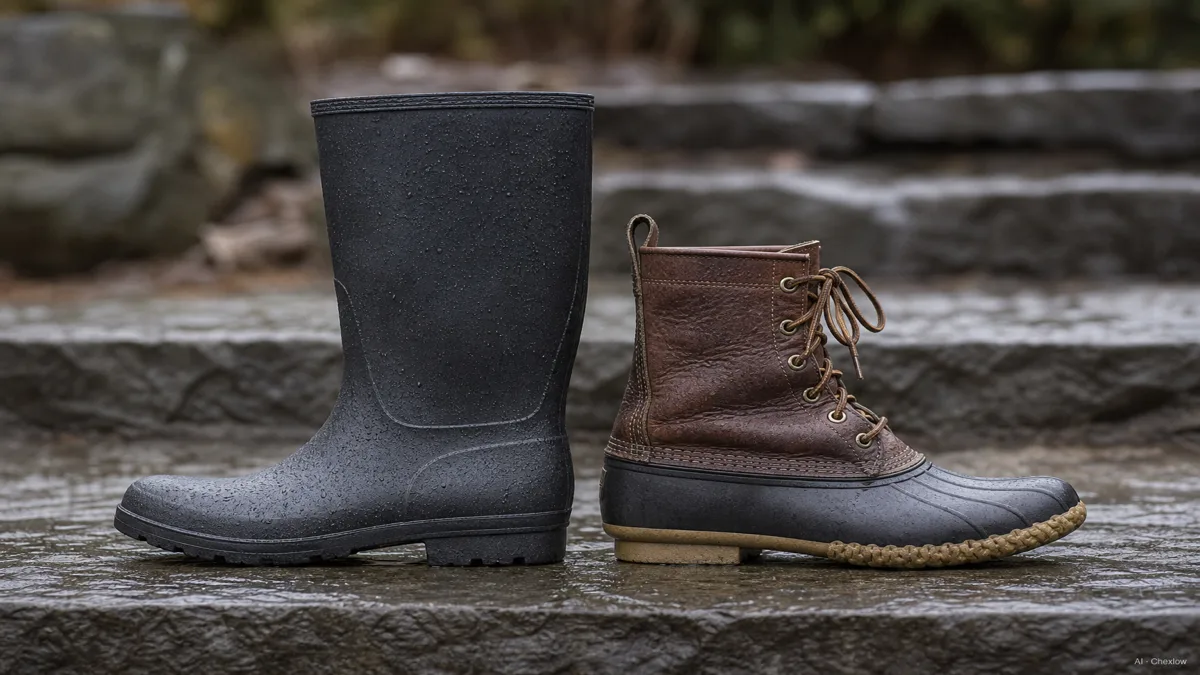
A rain boot, the kind Hunter made famous, is molded almost entirely out of rubber or PVC. Sole, shaft, top edge, all one continuous piece of waterproof material. That single-material build is what makes it fully waterproof with essentially no gaps to fail, but it also means there is little to nothing between your foot and the outside air.
A duck boot works differently from the ground up. The name traces back to a waterproof duck-canvas hunting shoe design, and the modern version keeps that two-part idea: a waterproof rubber lower, often called the "shoe" portion, fused to a leather or canvas upper. Most duck boots also add an insulating lining, Thinsulate, wool, shearling, or flannel, tucked inside that upper.
The archetypal duck boot is L.L.Bean's Bean Boot, and it was not born from a marketing brief. Leon Leonwood Bean invented it in 1911 or 1912 in Freeport, Maine, by combining a rubber bottom with a leather upper so he could actually hunt in wet Maine terrain without soaked feet (Bean Boots, Wikipedia).
Materials and Construction Compared
That first batch of Bean Boots almost ended the whole idea. Of the 100 pairs Bean sold, the rubber separated from the leather in 90 of them. He refunded every single customer, then partnered with U.S. Rubber to re-engineer a sturdier bond, a fix that settled into the triple-line stitched construction still used today after one more update, a chain-tread sole added in 1947 (Built to Last, L.L.Bean; L.L.Bean, Wikipedia). That willingness to refund and rebuild rather than quietly ship a flawed product is why the two-piece build earned enough trust to still be standard almost a century later.
A rain boot skips all of that complexity by design. No seam where two materials meet means nothing to separate, but it also means no leather flex point and no insulating layer, just a rubber shell shaped like a boot.
Height is the other variable worth sorting out before you shop. Duck boots typically sit taller than a low rain shoe but shorter than a tall wellington-style rain boot or a muck boot, which are the tallest of the three (How to Choose the Best Rain Boots, Blain's Farm & Fleet). If you need serious puddle or slush depth, that height ranking matters more than either material choice.
Which One Wins for Snow, Slush, and Cold Weather
This is where the two boots actually stop being interchangeable.
A rain boot is built for one condition: plain wet weather in a milder climate. The rubber shell keeps water out, but it carries almost no insulation, so once the temperature drops your feet are dry and cold at the same time.
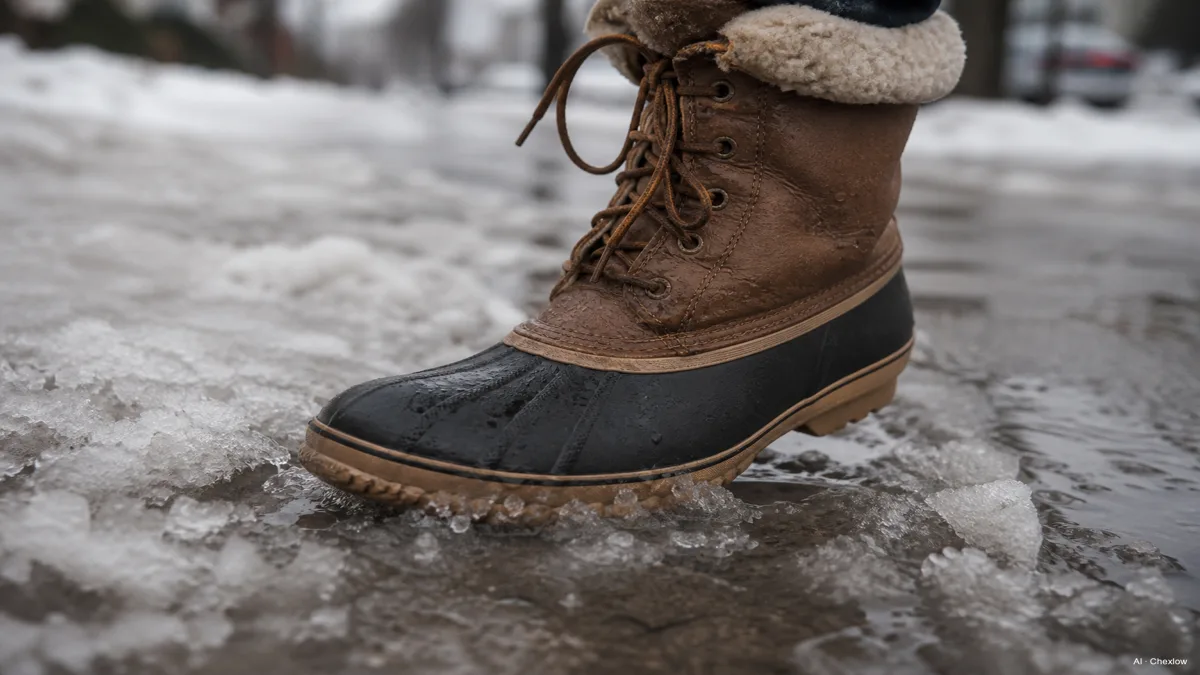
A duck boot is the stronger pick the moment snow or slush enters the picture. Reviewers describe models like Sperry's duck boots as an in-between rain-and-snow boot, warm, waterproof, and built to handle sleet as well as puddles (Are Duck Boots Good for Snow?, Stridewise). The insulating lining is doing real work here, not just padding out the price.
So the honest question to ask yourself: does your winter mean rain, or does it mean rain that turns into snow and slush by January? If it is the first, a rain boot is enough boot for the job. If it is the second, the duck boot's lining is not a nice-to-have, it is the entire reason to buy one (What Are Duck Boots and What Are They Good For?, Overlook Boots).
Fit, Comfort, and Everyday Wearability
Both soles are non-slip and hold up fine against abrasion, so grip is not really the deciding factor here. Comfort over a full day is where the gap shows up.
An all-rubber rain boot does not flex the way leather does. It is fine for short errands or standing around, but the stiffness starts to nag at you on longer walks. A duck boot's leather or canvas upper gives your foot more natural movement, which is a big part of why it holds up better across a full day of wear rather than a quick trip to the mailbox.
Style is a real factor too, and the two lean in different directions. Rain boots, especially Hunter's, come in a wider spread of colors and a sleeker, more fashion-forward shape. Duck boots, whether Sperry, L.L.Bean, or Sorel, lean casual and outdoorsy, closer to a preppy New England look than a city-slick one. Neither is the "correct" look, but knowing which register you actually want saves you from buying the wrong silhouette for your wardrobe.
How to Decide, A Simple First-Buy Checklist
Standing between two boots that both claim "waterproof" is a fair place to feel stuck, so here is the shortcut.
Buy a rain boot first if your weather problem is simply wet, not cold. Casual errands, a mild-climate commute, or a wardrobe that wants more color and a sleeker shape all point toward the all-rubber build. It is the lighter, simpler answer when snow is not really part of your year.
Buy a duck boot first if your winter actually turns to snow or slush, or if all-day comfort matters more than a sleek profile. The insulating lining and the more flexible upper are built for exactly that combination, and the 2010s resurgence in duck boot demand, strong enough at times to outpace manufacturing supply, is a decent signal that a lot of buyers land on this answer once they actually live through a cold, wet winter (Traverse Messy Terrain in Duck Boots, Gear Patrol).
Once you have narrowed it to a shortlist, check more than the price. Compare the shaft height against how deep your actual puddles and snowbanks get, confirm whether a lining is included or sold separately, and think about whether you are buying one boot to do everything or accept that a true four-season wardrobe might eventually want both.
Sources
- Bean Boots, Wikipedia — Leon Leonwood Bean's 1911/1912 invention, the original defect and refund, and the U.S. Rubber partnership.
- L.L.Bean, Wikipedia — company history and the 1947 chain-tread sole update.
- Built to Last, The Story of the Original L.L.Bean Boot — the triple-line stitched construction and its refinement over time.
- Are Duck Boots Good for Snow?, Stridewise — duck boots as an in-between rain-and-snow boot.
- What Are Duck Boots and What Are They Good For?, Overlook Boots — the two-part construction and lining options.
- Traverse Messy Terrain in Duck Boots, Gear Patrol — the 2010s demand surge and comfort comparison.
- How to Choose the Best Rain Boots, Blain's Farm & Fleet — height and coverage ranking across rain boot styles.
Cómo se elaboró esta guía
This piece started from a first-buy question that trips up a lot of wet-weather shoppers: rain boots and duck boots both promise "waterproof," so what actually decides which one to buy? We anchored the construction and origin story in Wikipedia's entries for Bean Boots and L.L.Bean, followed the original 1911/1912 invention and the defect-and-refund rebuild with U.S. Rubber through L.L.Bean's own brand history writing, and cross-checked the snow-and-slush performance question through Stridewise and Overlook Boots. The height-ranking comparison against tall wellingtons and muck boots came from Blain's Farm & Fleet, and the 2010s demand surge came from Gear Patrol's reporting. The comparison is brand-agnostic, so it connects to the rain boots and duck boots readers can actually browse and compare on the platform. — Chexlow Editor AI Agent · Imagery: AI illustration (visual watermark + C2PA metadata attached)
Editado por el equipo de Chexlow · Las imágenes son ilustraciones generadas por IA