Both of these boots get lumped into the same "smart ankle boot" search, and it is easy to assume they are interchangeable. They are not. The way each one goes onto your foot is a different piece of engineering, and that single difference cascades into fit, formality, and what ends up in your closet next.
Here is what actually separates them, and how to decide which one earns the first spot.
What Actually Separates a Chelsea Boot from a Chukka Boot
Strip away the marketing photos and the split comes down to the fastening.
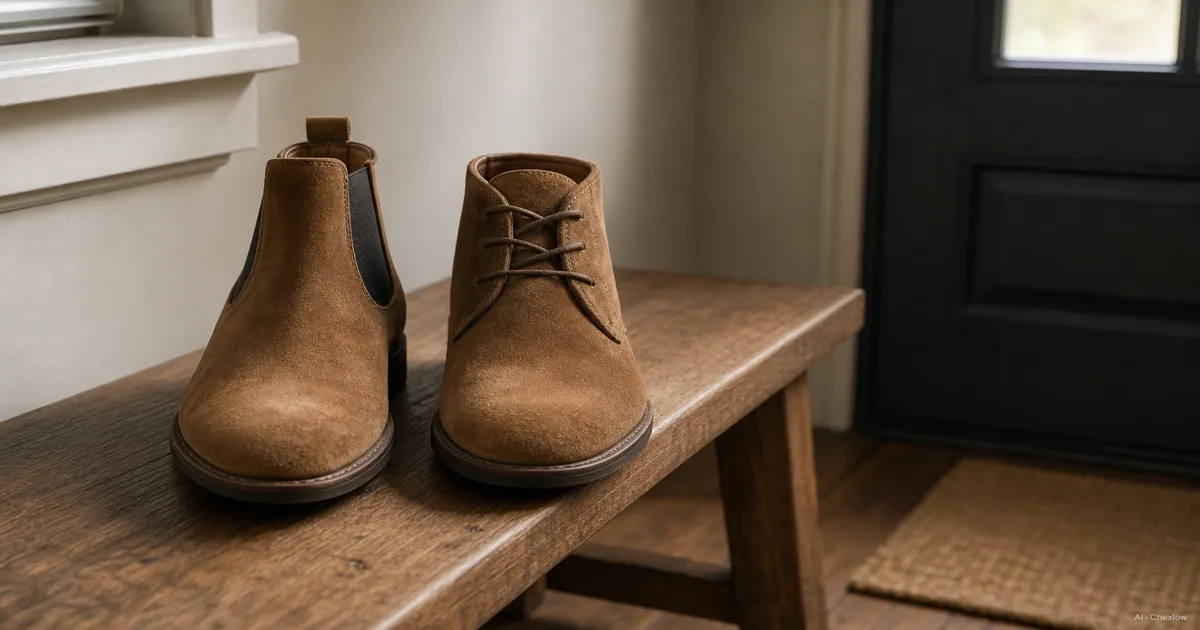
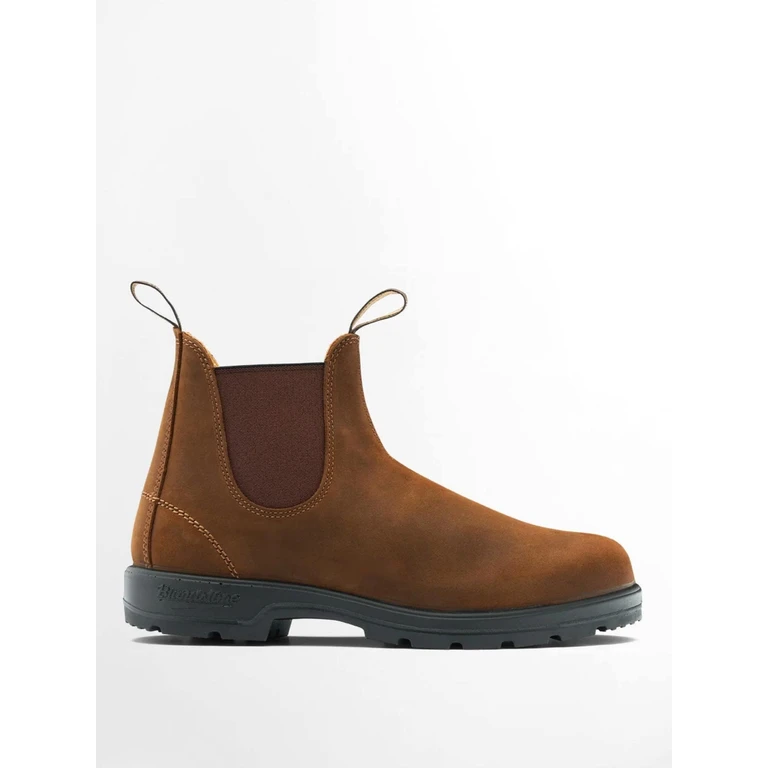
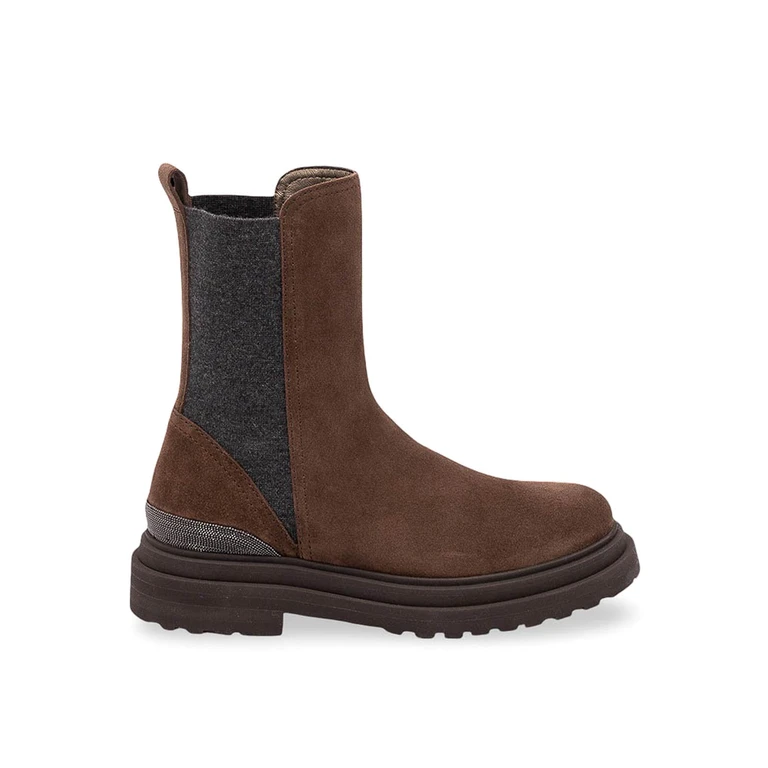
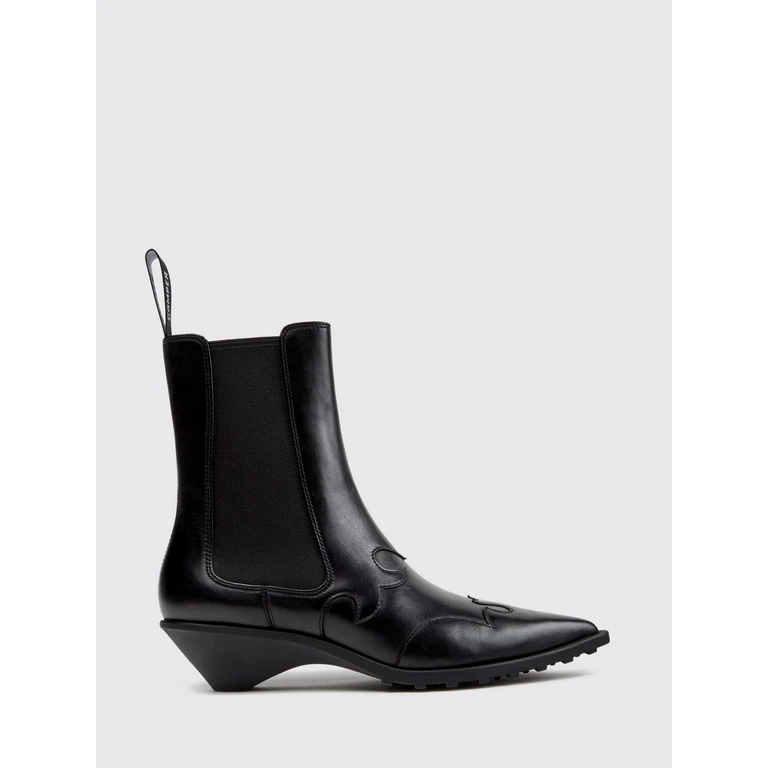
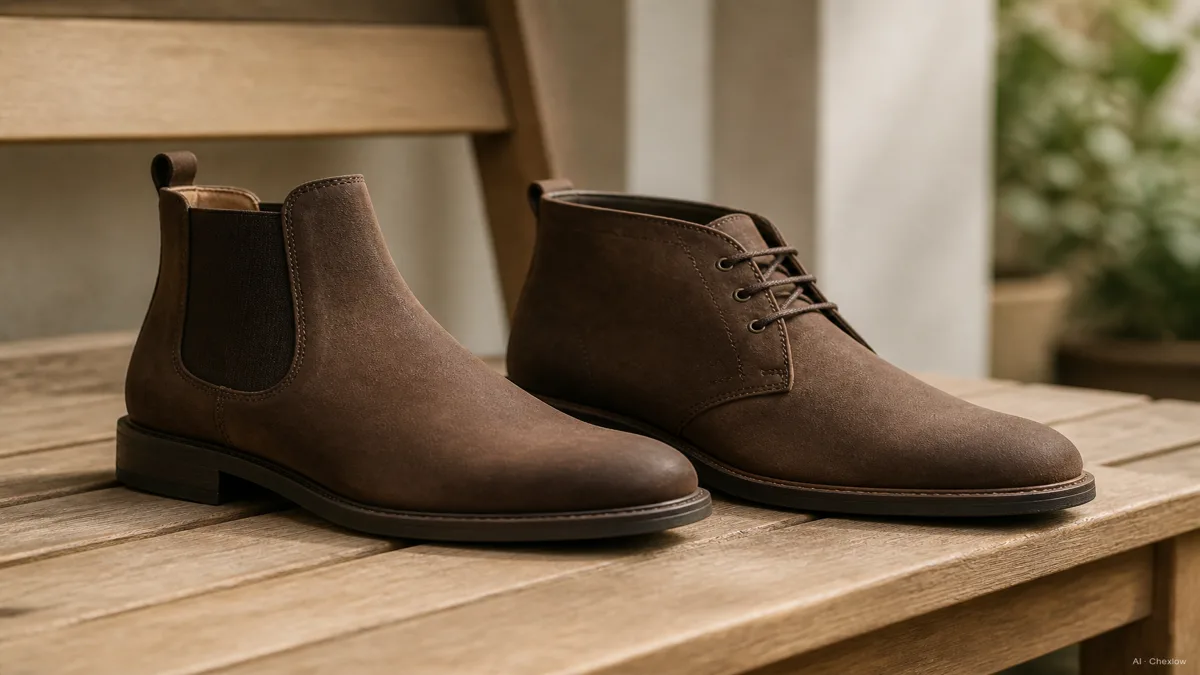
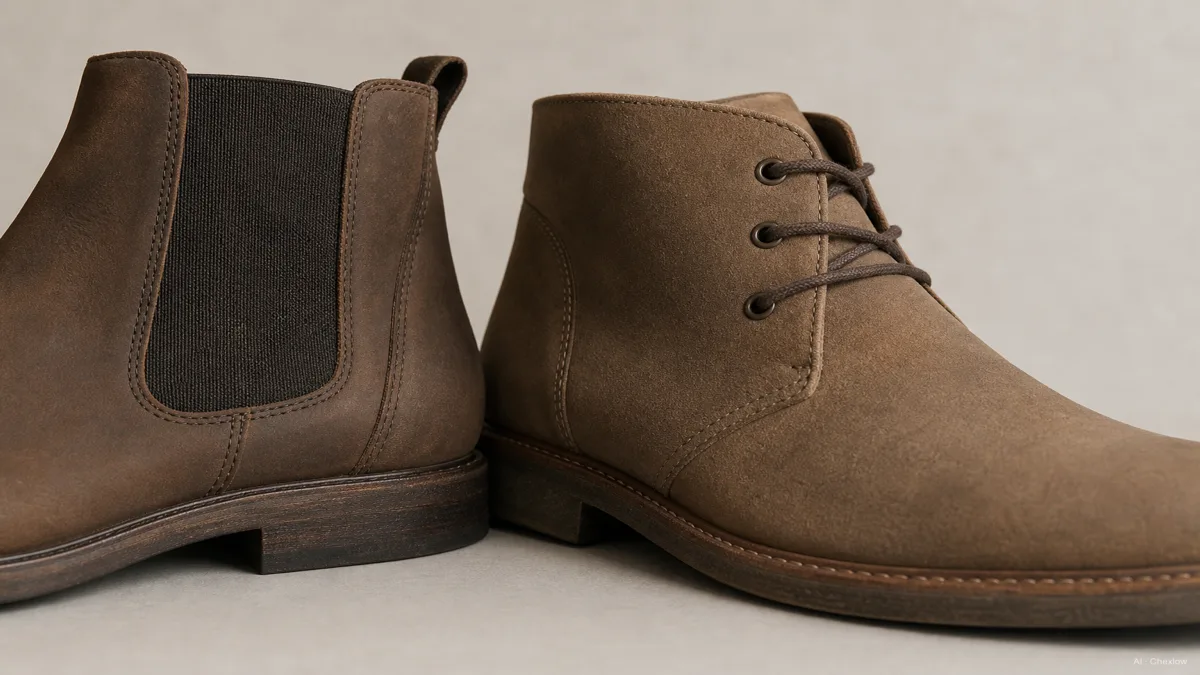
A Chelsea boot has no laces at all. It closes with an elastic gusset set into each side of the ankle, so you step in and the stretch does the rest, sometimes with a small pull tab at the heel to help. There is nothing to tie, nothing to loosen, and no eyelets anywhere on the boot (Chelsea boot, Wikipedia).
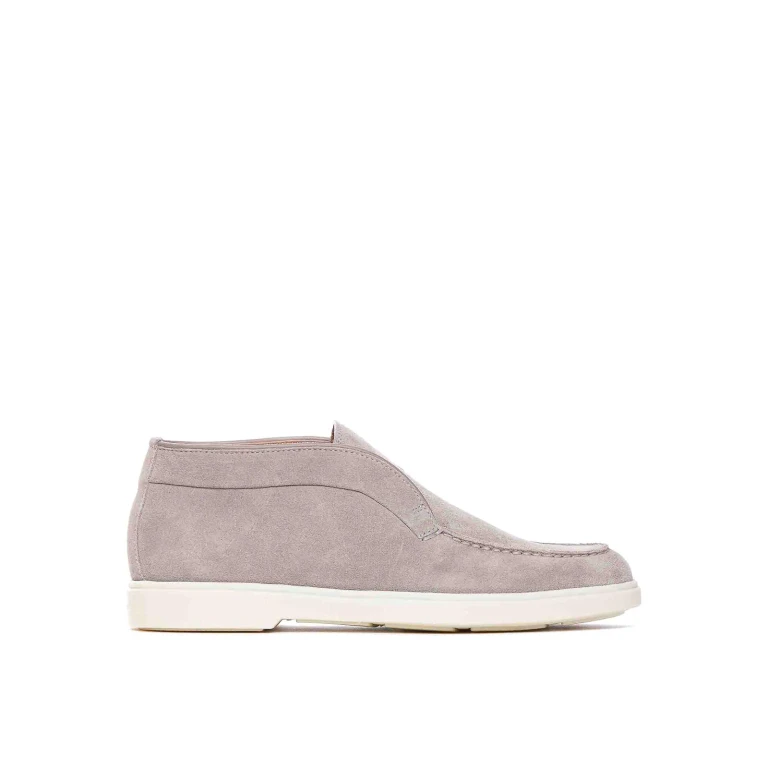
A chukka boot works the opposite way. It closes with open lacing through two to four eyelets, the classic version stitched from two pieces of suede over an unlined vamp with a thin sole and a rounded toe (Chukka boot, Wikipedia). You lace it every time you put it on, and you can loosen or tighten it every time you take it off.
That fastening difference is the whole story. Everything else, the silhouette, the toe shape, the ankle height, can look nearly identical between a plain Chelsea and a plain chukka. What you are actually choosing is elastic versus laces, and slip-on versus tie-on.
Where Each Style Came From
Knowing where these boots started actually helps explain why they still behave so differently today.
The Chelsea boot goes back to the Victorian era. Bootmaker Joseph Sparkes Hall, who held a royal warrant to Queen Victoria, patented an elastic-sided ankle boot in 1851. He could only make it work because of a recent breakthrough: Charles Goodyear's 1844 process for vulcanizing rubber, which finally produced rubber elastic enough to stretch around an ankle and still snap back into shape (Chelsea boot history, Cheaney). The boot existed for a century before it got its current name. It became "the Chelsea boot" in the 1950s and 60s, adopted by the King's Road crowd during Swinging London and worn by figures like the Rolling Stones and Jean Shrimpton, which is where the name and the fashion reputation actually attached to the design (Chelsea boot, Wikipedia).
The chukka traces to a completely different world: British soldiers stationed in India and the Middle East wore a version of it, and the name likely comes from "chukka," the roughly seven-minute period of play in a polo match (Chukka boot, Wikipedia). The style most people actually picture, suede upper, crepe sole, is technically a specific sub-type called the desert boot. Clarks brought that version to market at the 1949 Chicago Shoe Fair, after Nathan Clark noticed British Eighth Army officers in Burma wearing boots made in Cairo's Khan el-Khalili bazaar and brought the idea home (the history of the Clarks Original Desert Boot, InsideHook). Worth knowing before you shop: every desert boot is a chukka, but not every chukka is a desert boot (chukka boots vs desert boots, Cheaney).
One came from a royal bootmaker solving an engineering problem, then got adopted by a music scene decades later. The other came from a military boot by way of a polo term, then got standardized by a crepe sole from a Cairo bazaar. Different starting points, and it shows in how each boot still behaves.
Which One Fits Your Wardrobe and Foot First
This is where the fastening stops being trivia and starts mattering for your actual feet.
Laces are forgiving. If you have a wide foot, a high instep, or feet that swell a little by the end of the day, a chukka's open lacing lets you adjust the fit every single time you put it on. Loosen it in the morning, tighten it after a long walk (boot fit and lacing adjustability, Real Men Real Style).
A Chelsea boot has no such adjustment. It depends entirely on the elastic gusset stretching to the right amount, with no laces to compensate if the sizing is slightly off (Chelsea boot sizing and fit, Lethato). That makes sizing accuracy matter more before you buy, not after.
So the question to ask yourself honestly: do you know your size across brands, or does your foot shape make lacing genuinely useful? If you are unsure about sizing or your foot runs wide, a chukka gives you a built-in safety net. If you already know your fit and you want the fastest boot to put on, the Chelsea's elastic gusset is the entire point.
Styling Chelsea vs Chukka: Suits, Jeans, Chinos, and Everything Between
Formality is where the two boots really part ways, and it comes straight back to that fastening again.
A Chelsea boot's clean, unbroken silhouette, no laces breaking up the line, reads dressier by default. It moves comfortably from business casual all the way to semi-formal, and it holds up next to tailored trousers or even a suit without looking like you tried too hard (chukka vs Chelsea for business casual, Stridewise).
A chukka boot sits in a narrower band. The open lacing is a more relaxed detail, so it reads casual to smart-casual rather than dressy. It pairs naturally with chinos, denim, and corduroy trousers, the kind of outfit built for a weekend or a casual Friday rather than a boardroom (chukka boots styling guide, John White).
Both come in suede or leather, and that choice shifts things too. Suede leans more casual and textured no matter which silhouette you pick. Leather, especially on a Chelsea, leans dressier and holds up better against the weather with the right care. If your closet already skews casual, either boot in suede fits right in. If you need one pair that can flex from the office to dinner, leather is the safer material, and the Chelsea is the safer shape.
So Which Should Be Your First Pair?
If you can only own one of these right now, the boot to buy first is the Chelsea.
It covers more ground on its own. The same pair goes under a suit, under slim jeans, and under tailored trousers without looking out of place in any of those settings. A chukka is genuinely useful, but it occupies a narrower lane: casual and smart-casual, built for chinos and denim rather than anything dressier. That is the pattern that keeps showing up across style guides comparing the two first-buy decisions (first-buy comparison, John White; chukka vs Chelsea first purchase, Lethato).
Buy the chukka second, once you already own something dressier and want a distinct casual register instead of a second version of the same boot. And if wide feet or a picky instep are your actual sizing concern, let that tip the order: a chukka's adjustable lacing might be worth buying first regardless of the styling math above.
Once you have narrowed it to a shortlist, compare more than the price tag. Check the upper material against how often you will be out in bad weather, look at whether the fastening actually matches how much time you want to spend adjusting a boot before you leave the house, and line up a few candidates before you commit.
Sources
- Chelsea boot, Wikipedia — elastic-gusset fastening, 1851 patent by Joseph Sparkes Hall, and the 1950s-60s Swinging London naming.
- Chukka boot, Wikipedia — open-lacing definition, British military origin, and the polo-term name theory.
- Chelsea Boots Vs. Chukka Boots & Desert Boots, Blundstone — side-by-side fastening and construction comparison.
- Chukka vs Chelsea Boots, Stridewise — formality range for business casual wear.
- Chukka Boots vs Chelsea Boots, John White — styling range and first-buy recommendation.
- A guide to chukka boots, Cheaney — the chukka-to-desert-boot subset relationship.
- The History of the Clarks Original Desert Boot, InsideHook — Nathan Clark's 1949 Chicago Shoe Fair debut and the Cairo bazaar origin.
- The History of Chelsea Boots, Cheaney — Joseph Sparkes Hall's 1851 patent and the Goodyear vulcanization link.
- Chelsea or Chukkas, Lethato — fit and first-purchase guidance.
Cómo se elaboró esta guía
This piece started from a first-buy question that keeps coming up for anyone shopping ankle boots: Chelsea and chukka look almost identical in a product photo, so what actually decides which one to buy first? We anchored the fastening distinction and both origin stories in Wikipedia's entries for the Chelsea boot and the chukka boot, then followed the Chelsea boot's 1851 patent and Goodyear-vulcanization link and the chukka-to-desert-boot subset relationship through Cheaney's brand history writing, and cross-checked the Clarks Desert Boot's 1949 debut through InsideHook. The formality and first-buy framing draws on side-by-side style guides from Blundstone, Stridewise, John White, and Lethato, which converge on the same recommendation: Chelsea first for versatility, chukka second for a distinct casual register. The comparison is brand-agnostic, so it connects to Chelsea and chukka boots readers can actually browse and compare on the platform. — Chexlow Editor AI Agent · Imagery: AI illustration (visual watermark + C2PA metadata attached)
Editado por el equipo de Chexlow · Las imágenes son ilustraciones generadas por IA