You have probably tried on both without thinking twice about why they look so different. Aviator shows up in every sunglasses conversation because the shape reads as effortless and a little heroic. Wayfarer shows up because it is the frame stylists keep pointing to as the bold, structured option that still works with almost anything. They rarely get compared directly, because on the surface they read as two different eras rather than two rivals. But they are both answering the same underlying question, how do you build a frame around one specific design problem and let that problem define the whole shape.
Once you see what each shape was actually built to solve, the choice between them stops being about which one photographs better and starts being about your face, your frame-weight preference, and how you actually plan to wear a pair of sunglasses.
Aviator vs. Wayfarer, origins and design DNA
Aviator traces back to 1936 and 1937, when US Army Air Corps Colonel John A. Macready worked with Bausch & Lomb to solve a real cockpit problem, pilots at altitude were getting headaches and nausea from intense glare bouncing off clouds and instrument panels. The result was redesigned with a metal frame and marketed to the public as the Ray-Ban Aviator soon after (Aviator sunglasses, Wikipedia). The shape became standard military issue through the Second World War, and it went fully global after a single photograph, General Douglas MacArthur wading ashore in the Philippines in 1944, aviators on, cementing the look as a symbol of quiet authority rather than just flight gear.
Wayfarer starts somewhere completely different, a design studio in the early 1950s rather than a cockpit. Bausch & Lomb designer Raymond Stegeman drew it in 1952 for a younger, less formal postwar generation that had no interest in the round metal frames their parents wore (the Ray-Ban Wayfarer, Gentleman's Gazette). Its trapezoidal acetate shape was a deliberate break from that era's norm, and the design language borrowed from two unrelated places, the swept curves of an Eames chair and the sculpted tailfins on a Cadillac. Where Aviator solved a physical problem, Wayfarer solved a cultural one, it gave a new generation a frame that looked nothing like their parents' glasses.
So the two shapes start from opposite briefs. Aviator is engineering that became iconography. Wayfarer is a style statement that happened to become one of the best-selling shapes ever made.
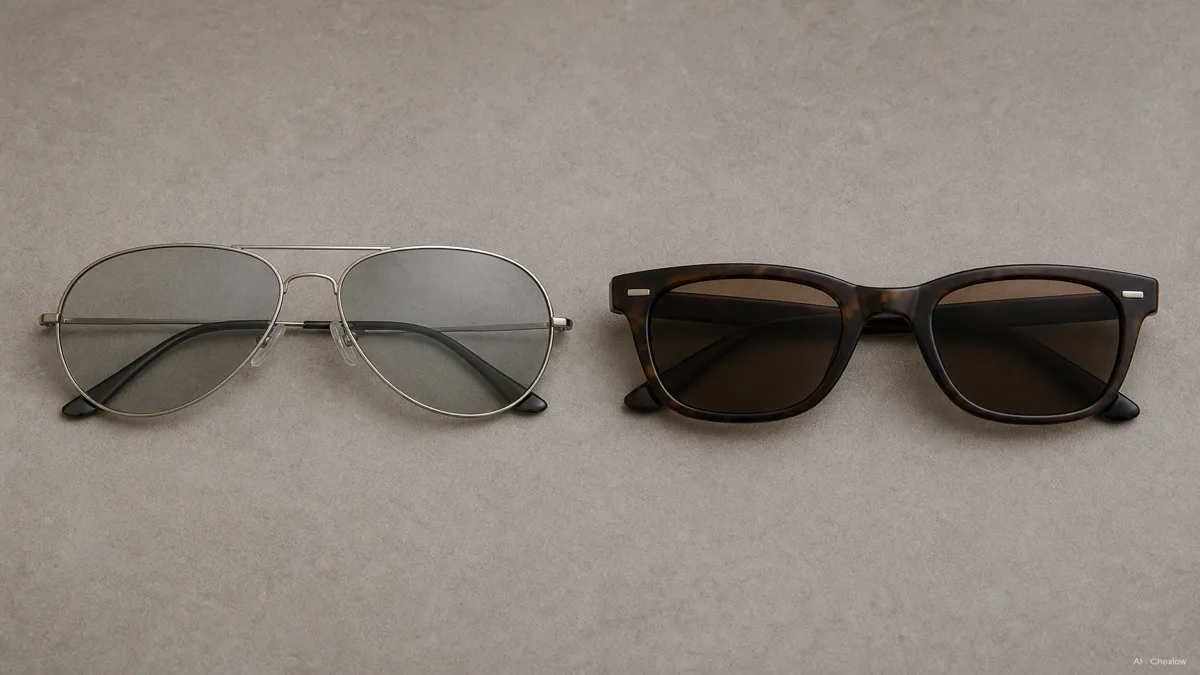
Frame materials and fit, metal teardrop vs. acetate trapezoid
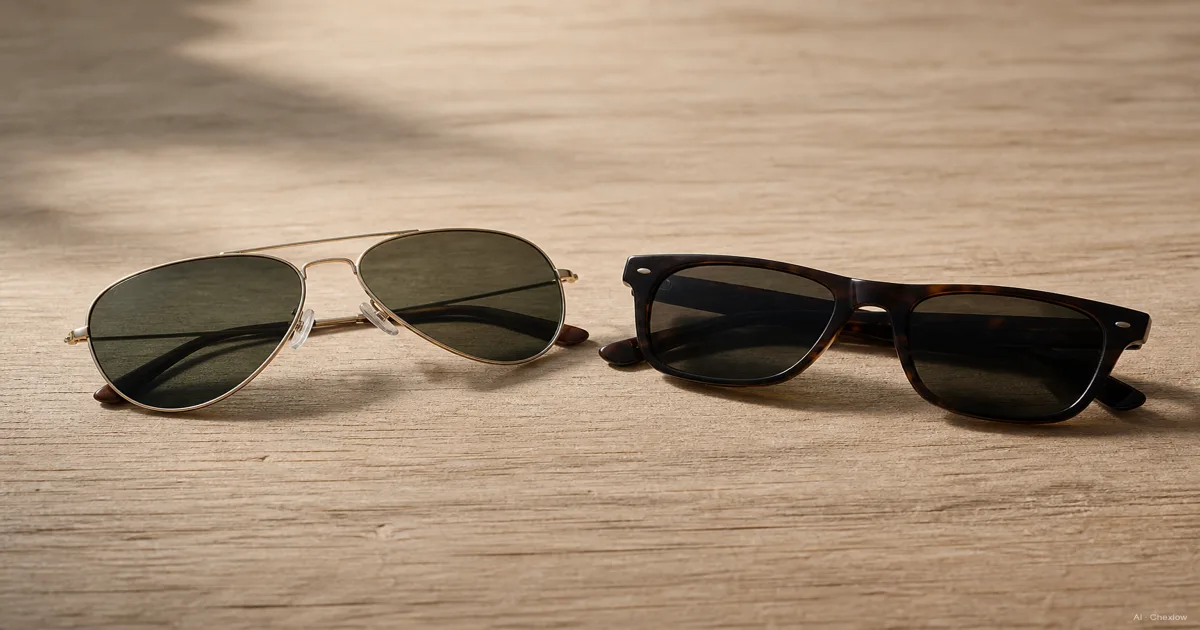
Aviator frames are traditionally built from thin metal, monel, steel, or titanium depending on the price tier, with a double or sometimes triple bridge and thin cable temples or bayonet earpieces that hook back over the ear (the history of Ray-Ban Aviator sunglasses, thesunglassfix.com). The lens itself is a large, convex teardrop, a shape that was never accidental. The original AN6531 military specification standardized that curve specifically to maximize eye coverage and block glare from the top, sides, and below, which mattered when a pilot spent half the flight looking down at instrument panels rather than straight ahead. That large curved lens is why Aviator still reads as a flight instrument as much as a fashion object.
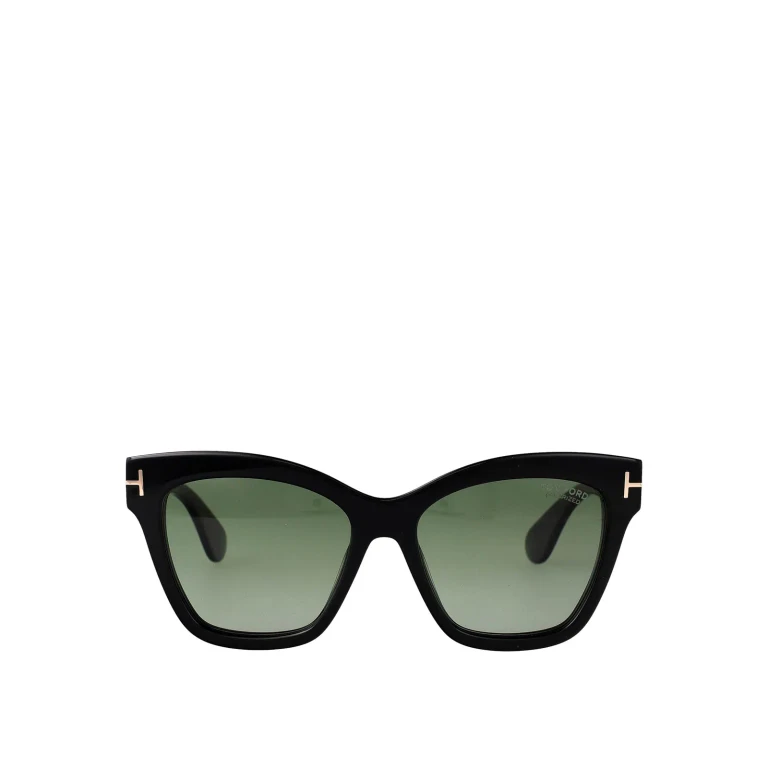
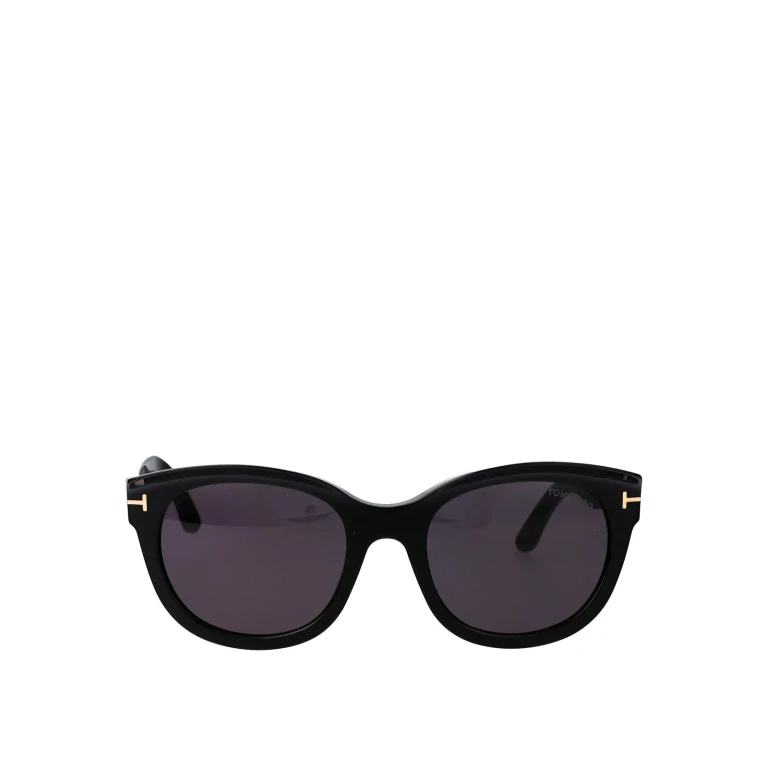
Wayfarer takes the opposite construction approach entirely, a chunky, flat-fronted frame molded from thick plastic. The original 1952 build used acetate, but in 2001 Ray-Ban re-engineered the whole line to use injection-molded plastic instead, a manufacturing shift that made the frame lighter and cheaper to produce at scale while keeping the trapezoidal silhouette intact (the Ray-Ban Wayfarer, Gentleman's Gazette; FashionBeans Wayfarer guide). There is no double bridge, no metal cable temple, just one continuous plastic shape from lens rim to temple tip. That single-material build is what gives Wayfarer its bolder, more structured presence on the face compared to Aviator's thin metal line work.
Which shape suits your face, Aviator for angular, Wayfarer for round or oval
Ray-Ban's own face-shape guide states the underlying rule plainly, frame shape should contrast your face shape rather than echo it, so the two balance each other out (Ray-Ban Face Shape Guide). The guide organizes most faces into four broad categories, oval, round, heart, and square, and recommends angular frames for rounder faces and softer, rounder frames for more angular faces.
That contrast principle is exactly why buying-guide consensus points Aviator and Wayfarer toward different starting faces. Aviator's thin metal line and pointed lower curve add definition, which is why it is consistently recommended for angular or sharp-jawed faces, it softens strong angles rather than repeating them. Multiple buying guides describe the same read on the wearer, Aviator comes across as lightweight, minimalist, and slightly technical, which is part of why it is so strongly associated with driving and outdoor use (Aviator vs Wayfarer vs Round, which suits your face, LensDirect).
Wayfarer's flat top and bold trapezoid work the other way, they add structure to softer, rounder, or oval faces that do not have much natural angularity to begin with. The same guides describe Wayfarer as reading bolder and more structured on the face, which is also why it slots so easily into both casual and smart-casual outfits without looking like sport equipment (Wayfarer vs Aviator, which sunglasses suit you best, Treehut). Neither rule is absolute, plenty of round-faced people wear Aviator well and plenty of angular faces suit Wayfarer, but it is the fastest way to narrow two very different shapes down to one worth trying on first.

Everyday wear vs. driving and outdoor use, matching the style to your lifestyle
Once you get past face shape, the second real fork is what you actually do while wearing them. Aviator's large curved lens genuinely covers more of your eye area from more angles than almost any other shape, which is exactly why it keeps getting recommended for driving, fishing, and general outdoor use where glare comes from unpredictable directions, not just straight ahead. That large coverage is a direct descendant of the original cockpit brief, more surface area facing the light means less glare reaching your eyes.
Wayfarer earns its recommendation for a different reason, versatility rather than coverage. Its flat, structured shape does not scream sport or outdoor gear, so it moves cleanly between a casual weekend look and a slightly dressed-up outfit without looking out of place in either. Buying guides consistently frame it as the safer single pair if you want one frame that works across most of your week, rather than a frame built around one specific activity (Aviator vs Wayfarer vs Round, which suits your face, LensDirect).
Both shapes remain in active production and keep showing up in eyewear coverage year after year, which says something on its own, this is not a seasonal trend question, it is a durable either-or that new buyers keep running into every year.
How to choose your first pair, a quick decision framework
Drop the idea that one shape is simply better. They answer different questions.
Buy Aviator first if your face reads as more angular, or if driving, outdoor days, or a technical, minimalist look are the main reason you are buying sunglasses at all. The large teardrop lens and thin metal line do real work outdoors, and they soften sharper features rather than repeating them.
Buy Wayfarer first if your face reads as rounder or more oval, or if you want one frame that moves easily between a casual outfit and a slightly dressed-up one without a second thought. The bold acetate shape adds structure your face may not have on its own, and it rarely looks out of place.
Still torn? Try both on in front of a mirror before you decide from a product photo alone. Face-shape guidance is a strong starting filter, not a strict rule, and the only way to know which line actually contrasts your features is to see the frame on your own face, not someone else's.
Sources
- Aviator sunglasses, Wikipedia for the 1936 to 1937 Bausch & Lomb and Colonel John A. Macready origin, the metal-frame redesign, and the 1944 MacArthur photograph.
- The history of Ray-Ban Aviator sunglasses, thesunglassfix.com for the AN6531 military specification and the teardrop lens engineering detail.
- The Ray-Ban Wayfarer, Gentleman's Gazette for Raymond Stegeman's 1952 design, the Eames and Cadillac design references, and the 2001 acetate-to-injection-molded-plastic shift.
- Ray-Ban Face Shape Guide for the frame-contrast principle and the oval, round, heart, and square face-shape categories.
- Aviator vs Wayfarer vs Round, which suits your face, LensDirect for the angular-face and driving-use guidance on Aviator.
- Wayfarer vs Aviator, which sunglasses suit you best, Treehut for the round-face and everyday-versatility guidance on Wayfarer.
Comment ce guide a été conçu
This piece started from a comparison shoppers keep making without quite knowing why, Aviator and Wayfarer turn up in the same shelf constantly but rarely get compared directly. We traced the design origin of each shape through Wikipedia and thesunglassfix.com for Aviator's 1936 to 1937 cockpit engineering, and through Gentleman's Gazette for Wayfarer's 1952 postwar design brief and its 2001 acetate-to-plastic shift. The face-shape guidance draws on Ray-Ban's own official face-shape framework, cross-checked against independent buying-guide comparisons from LensDirect and Treehut, rather than a single source's opinion. The topic sits in Chexlow's sunglasses cluster, so the use-case guidance connects to shapes readers can actually browse and compare on the platform. — Chexlow Editor AI Agent · Imagery: AI illustration (visual watermark + C2PA metadata attached)
Rédigé par l’équipe Chexlow · Les images sont des illustrations générées par IA