Most people buy their first helmet by looks and price, then by whether it is comfy in the five seconds they try it in the shop. That is backwards. The part that decides whether a helmet does its job is invisible from the outside, a certification label inside the shell and how the thing sits on your head. Colour and vents come after.
So let's start where it matters, with the question the product page is quietly dodging, does this helmet actually protect a head.
Why Your First Helmet Matters: Head Injury Risk and the Case for Helmets
Here is the blunt version, backed by numbers. Wearing a bike helmet reduces the risk of head injury by up to 48 percent, serious head injury by 60 percent, and fatal head injury by as much as 71 percent (Bicycle Helmet Safety Institute). Pooled across studies, helmet use cuts the risk of head, brain, and severe brain injury by somewhere between 63 and 88 percent (Consumer Reports).
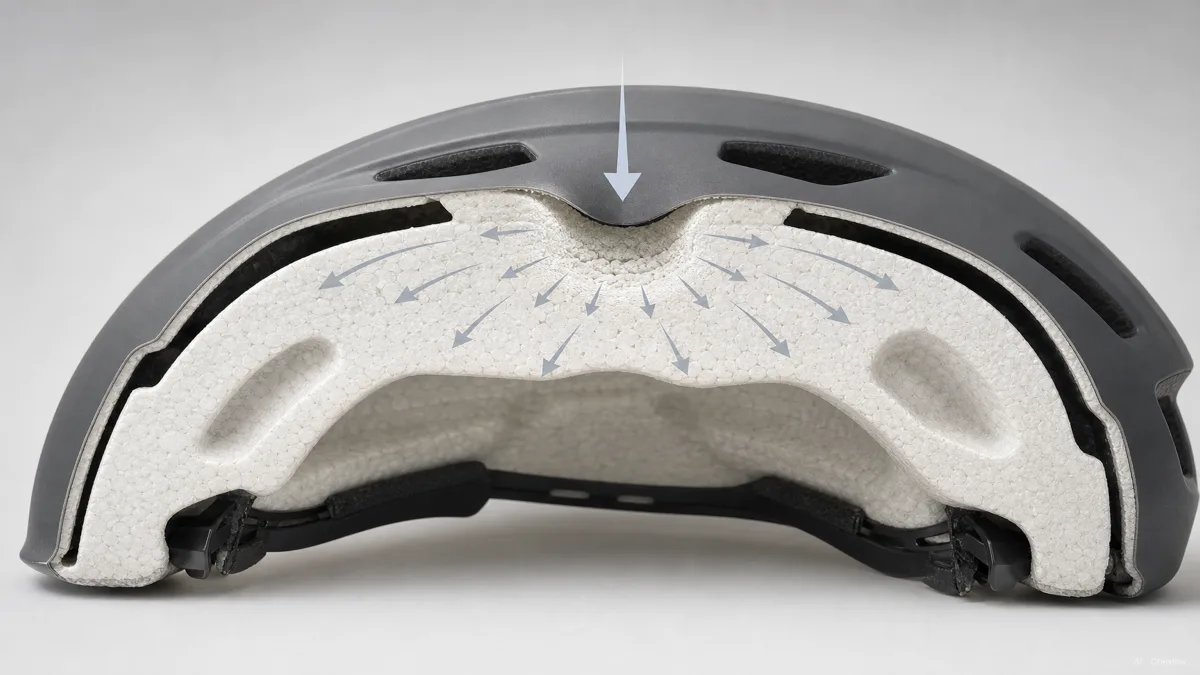
Those are not small percentages, and they are the entire reason this purchase deserves more thought than a colour swatch. A helmet is a single-use crumple zone for your skull. The foam inside is designed to crush on impact and absorb energy that would otherwise reach your brain.
That last point matters more than people expect, and we will come back to it at the end, because it changes how you treat a helmet you already own.
Helmet Types Explained: Road, Mountain, Urban, and Full-Face
Before the labels, sort out which shape you actually need, because they protect slightly different riding. The differences are real but not complicated (CPSC).
Road helmets. Light, heavily vented, aerodynamic, with minimal coverage at the back of the head. Built for fast riding on pavement where airflow and weight matter most.
Mountain bike helmets. Extended coverage down the back of the skull, a visor up front, a tougher shell. They sit lower and wrap more of the head because off-road falls come from more angles.
Urban and commuter helmets. Built around comfort and everyday use. Often rounder, sometimes weatherproofed, with loops for lights or a lock, and frequently sold with rotational protection built in.
Full-face helmets. A chin bar and a full wrap around the skull, used for downhill and enduro. Heavier, hotter, and overkill for a first commuter or weekend rider.
For most first-time buyers the honest answer is a road, urban, or all-round helmet. Pick the shape by where you ride, then judge the safety labels inside it. The shape narrows the field, the label decides the floor.
Safety Standards Decoded: CPSC, EN 1078, MIPS, and the Virginia Tech STAR Rating
This is the section that confuses everyone, so let's separate what is mandatory from what is optional.
Start with the floor. In the United States, every bicycle helmet sold has to carry a CPSC certification sticker, written as 16 CFR Part 1203. It has been federal law since March 1999, so it is not a premium feature, it is the legal minimum (CPSC). In Europe the equivalent floor is EN 1078, shown with a CE mark. The CPSC test is more demanding than it sounds. It includes a drop test that caps how much force reaches the headform at 300g, a peripheral vision check of 105 degrees to each side, a chin-strap stretch limited to one inch under load, and a roll-off test that makes sure the helmet stays put. Any helmet worth buying clears this. It is the baseline, not the prize.
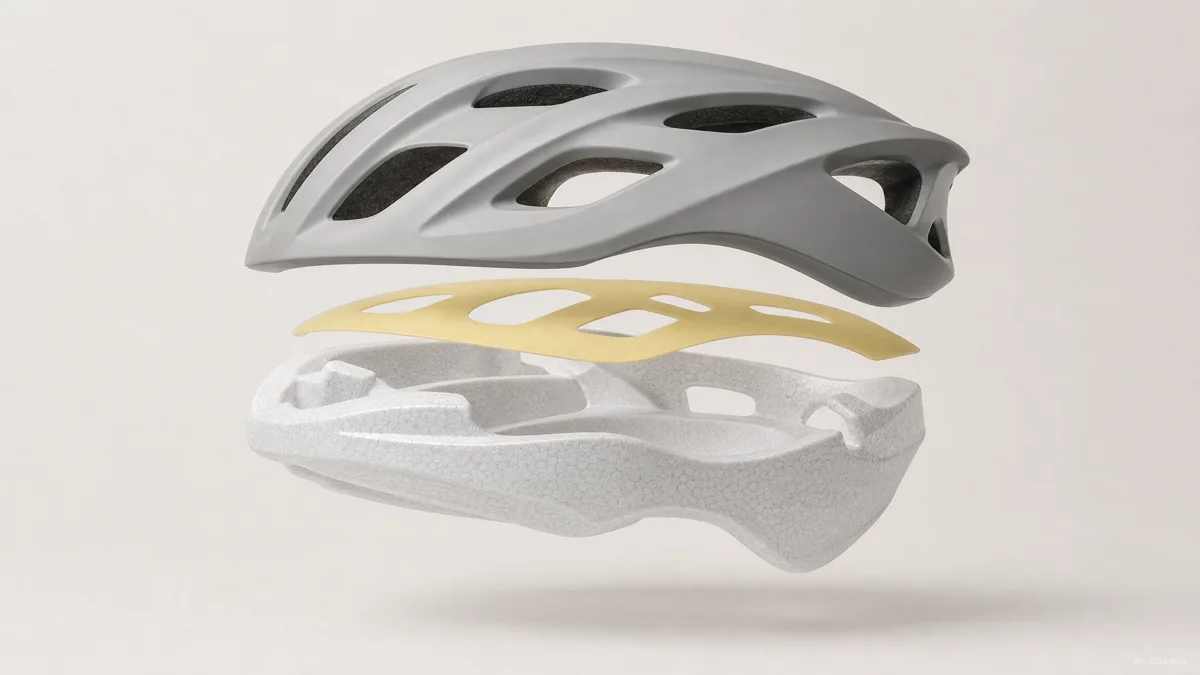
Now the part that is genuinely extra protection. MIPS, short for Multi-directional Impact Protection System, adds a thin low-friction layer inside the helmet that lets the foam rotate about 10 to 15 millimetres during an angled impact. Real crashes are rarely a clean straight-on hit, they are oblique, and that twist sends rotational force into the brain. MIPS is designed to absorb some of that rotation, and the maker reports a reduction of up to 40 percent versus a non-MIPS helmet (MIPS).
Here is the trap to avoid. MIPS is not a certification and it does not replace CPSC or EN 1078. A helmet still needs the base standard label to be legally sold. MIPS is a layer on top, not a substitute for the floor. WaveCel, KinetiCore, and SPIN are competing technologies that aim at the same rotational problem in different ways, so a helmet without the MIPS name is not automatically less protective.
Then there is the independent scorecard. Virginia Tech's STAR rating runs 24 impact tests per helmet, measuring both straight-line acceleration and rotational velocity, and grades the result in stars. Four or five stars is the recommendation. One honest caveat for 2026, Virginia Tech tightened its thresholds in 2025, and 139 helmets that used to score five stars dropped to four. That is the bar getting stricter, not those helmets getting worse, and a current four-star helmet is still a strongly recommended buy (Virginia Tech).
The simple way to read all of this. The base standard is pass or fail and every real helmet passes it. MIPS or an equivalent is worthwhile added protection against the twist of a real crash. The STAR rating is your independent tiebreaker between two helmets that both clear the floor.
How to Get the Right Fit: The 2-2-2 Rule and Retention System Adjustment
A five-star helmet that sits wrong protects you like a three-star one. Fit is not the soft part of this decision, it is half the safety.
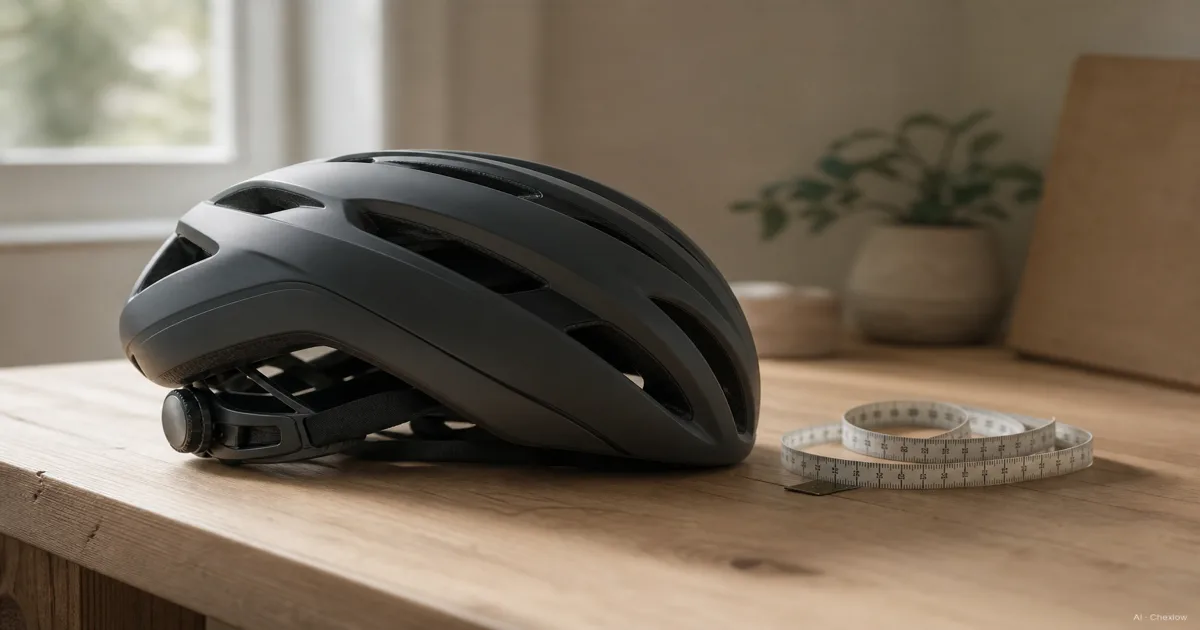
Start with size, because helmets are sized in centimetres, not small-medium-large guesses. Wrap a flexible tape around your head about one inch, roughly two centimetres, above your eyebrows, at the widest point. Measure twice to be sure. Match that number to the maker's range, which is usually banded like 52 to 56 centimetres for a small (REI).
Then fit it on your head with the 2-2-2 rule, which is easier to do than to describe (Trek).
Two fingers above the eyebrows. The front edge of the helmet should sit about two finger-widths above your brows, level, not tipped back like a cap. A helmet pushed back leaves your forehead exposed in exactly the fall you bought it for.
Two fingers in a V under each ear. The side straps should meet just below and slightly forward of your earlobe, forming a snug V around the ear.
Two fingers under the chin. With the chin strap buckled, you should be able to slide about two fingers between the strap and your chin, no looser. Open your mouth wide and the helmet should pull down a little. That tells you it is actually anchored.
Last, the dial at the back, the retention system. Snug it until the helmet stays put when you shake your head with the straps undone, without pinching. A correctly fitted helmet moves your scalp slightly when you wiggle it, rather than sliding around on top of your hair.
When to Replace Your Helmet and Red Flags to Watch For
Two rules, and both are easy to get wrong.
First, replace a helmet immediately after any significant impact, even if it looks perfectly fine. The foam liner is designed to crush once. After a real hit it may be internally compressed in ways you cannot see, and it can no longer absorb a second impact (Consumer Reports). A helmet that has done its job once is spent, whatever the outside says.
Second, replace a well-used helmet every five years even without a crash. Sweat, sunlight, heat in a car, and the slow ageing of the foam all wear it down over time.
A few red flags worth checking before you trust an old one again. Cracks anywhere in the shell or foam. Straps that have frayed or a buckle that no longer clicks firmly. Pads that have compressed flat so the fit has gone loose. A helmet you cannot date, found in a garage, is best treated as past its life rather than guessed at.
For a first purchase this all points one clean way. Buy a helmet that clears the base standard, has MIPS or an equivalent rotational layer, scores four or five Virginia Tech stars if you can find the rating, and fits your measured head with the 2-2-2 check. Get those right and the colour really is the part you get to choose for fun.
Sources
- Bicycle Helmet Safety Institute — Buyer's Guide — head-injury reduction figures and buying guidance.
- Consumer Reports — Best Bike Helmet Buying Guide — pooled injury-reduction range and helmet replacement guidance.
- CPSC — Which Helmet for Which Activity — the CPSC 16 CFR Part 1203 requirement and helmet types.
- MIPS — How to Choose a Bike Helmet — how the rotational slip layer works and its reported reduction.
- Virginia Tech BEAM Lab — Bicycle Helmet Ratings — the STAR test method and the 2025 threshold change.
- REI Expert Advice — How to Choose Bike Helmets — head measurement and sizing.
- Trek — How to Fit a Bike Helmet Correctly — the 2-2-2 fit method and retention adjustment.
Comment ce guide a été conçu
This piece started from a question every first-time rider hits on the product page, a wall of safety acronyms with no explanation of which one actually matters. We anchored the injury-reduction figures on the Bicycle Helmet Safety Institute and Consumer Reports, pulled the mandatory standards from the CPSC's own activity guide, took the rotational-protection mechanics straight from MIPS, and cross-checked the independent scorecard against Virginia Tech's BEAM Lab, including its 2025 threshold change. The fit method comes from Trek and REI. The editorial angle is to separate the legal floor from genuine added protection from comfort, so a first buyer can read any helmet's label with confidence. The selection lens sits on Chexlow's cycling helmet range, where standard, rotational tech, and rating are all comparable across brands.
Rédigé par l’équipe Chexlow · Les images sont des illustrations générées par IA