Birkenstock makes dozens of styles, but Arizona and Boston are the two that keep showing up side by side in every "first Birkenstock" search. They share a factory, a footbed, and a price range, so it is easy to assume you are choosing between two versions of the same shoe. You are not.
Here is what actually separates them, and how to decide which one earns the first spot in your closet.
Arizona vs Boston: The One Structural Difference That Matters
Strip away the styling shots and the split comes down to one thing: how the sandal holds your foot.
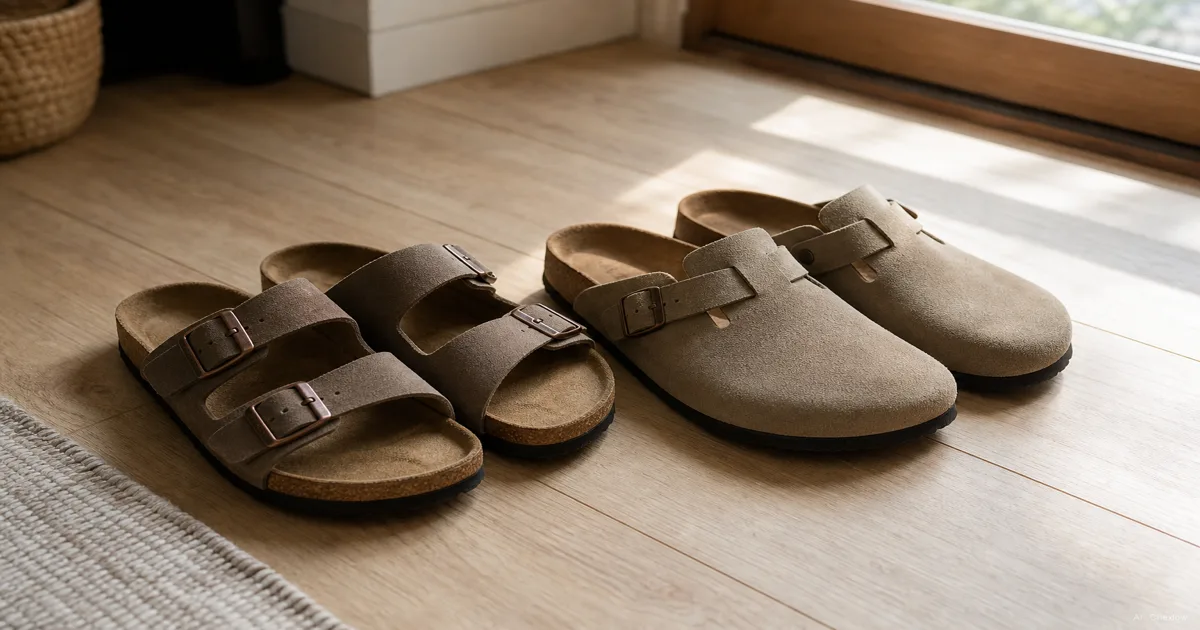
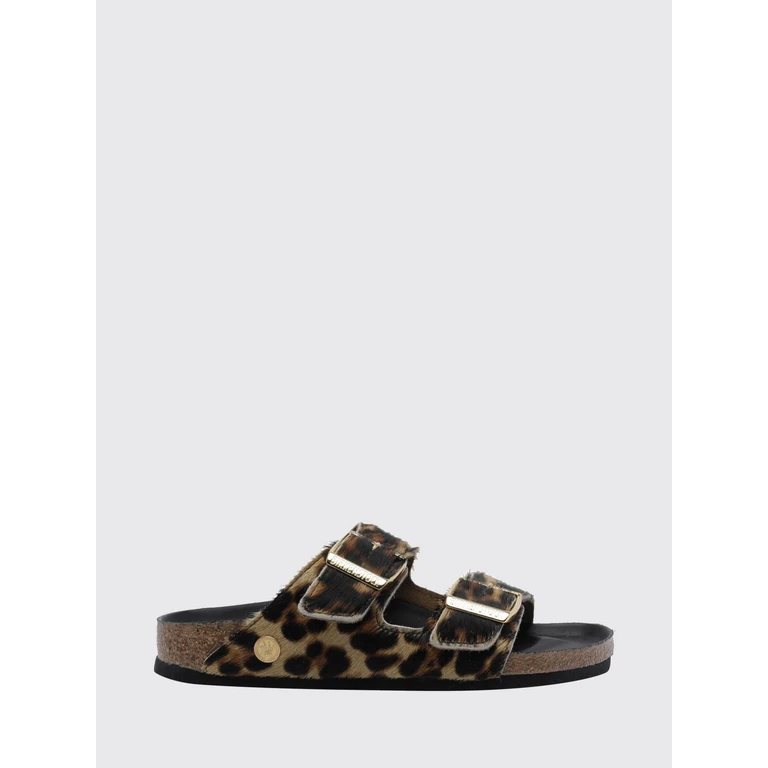
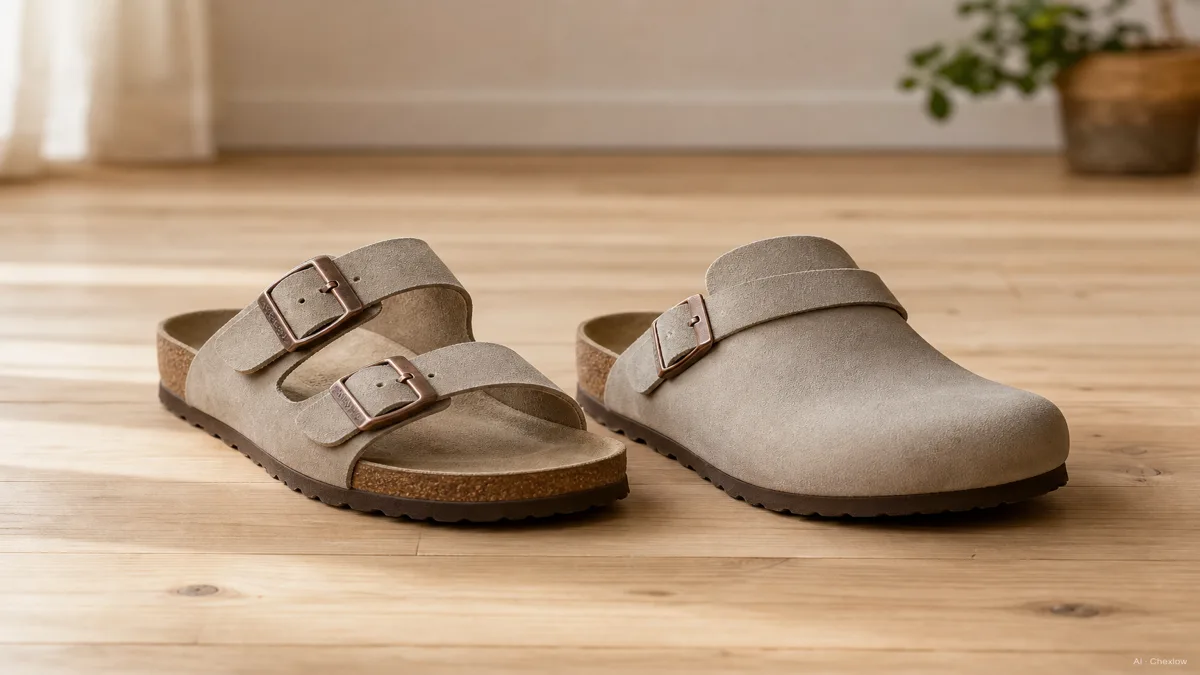
Arizona is an open-toe, two-strap sandal. Two adjustable straps cross the top of the foot, each with its own buckle, so you can tighten or loosen the fit on both sides independently (Birkenstock Boston vs Arizona, Feet Heart).
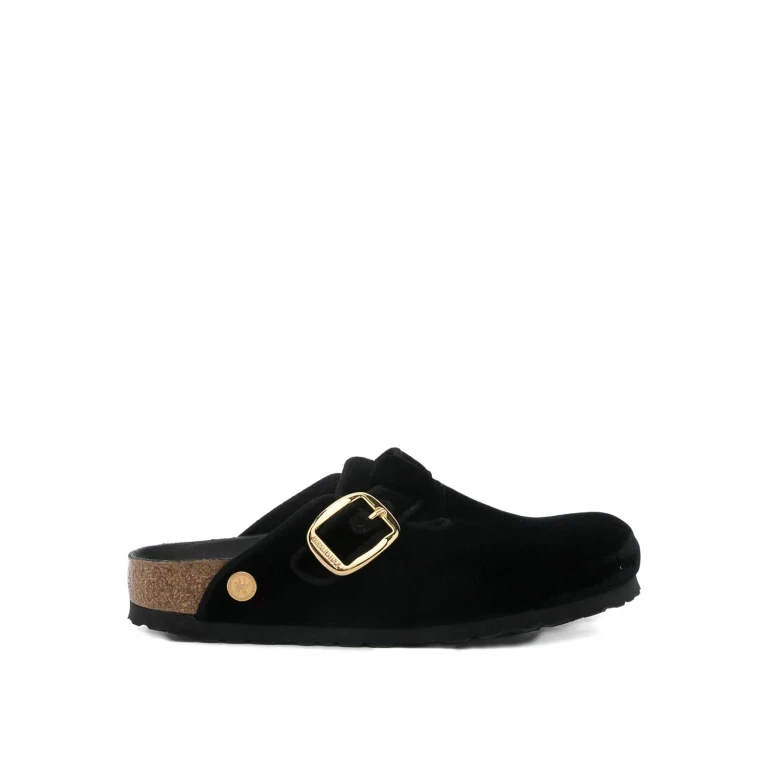
Boston is a closed-toe clog. One strap sits across the vamp, and the rest of the shoe wraps fully around the front of your foot, so you step straight in rather than buckling anything new each time (Birkenstocks: Arizona vs Boston, Edwin Zee).
Open sandal versus closed clog is the entire structural story. Everything people usually assume differs between them, the sole, the arch support, the width options, does not.
Same Footbed, Different Shoe: What's Actually Identical
This is the part that surprises most first-time buyers.
Underneath the strap or the vamp, Arizona and Boston use the exact same contoured cork-and-latex Fussbett footbed. Both have the same deep arch cradle, the same raised toe bar that nudges your toes into a natural walking motion, and the same cupped heel (Boston vs Arizona, Feet Heart; Birkenstock fitting guide, Beggs Shoes).
Both models also come in the same width options, regular and narrow, so a narrow foot is not a reason to pick one style over the other. It only decides which width you order once you have already chosen (Birkenstock fitting guide, Beggs Shoes).
That footbed has a long history behind it. Birkenstock traces its footwear roots back to 1774, when Johann Adam Birkenstock is first recorded as a shoemaker, and the anatomically contoured Fussbett footbed itself was designed in 1896. The cork-and-latex version, the one under both Arizona and Boston today, only became the brand's standard later in the 20th century (Birkenstock, Wikipedia).
So the engineering you are actually paying for, the arch support, the toe bar, the heel cup, is identical in both pairs. What you are choosing is only the strap on top of it.
Which One Should You Buy First? Climate, Lifestyle, and One-Pair-Only Buyers
Once you know the footbed is a wash, the buying decision comes down to how you actually live in your shoes.
Arizona is the better call for hot weather and everyday barefoot wear. The open, two-strap build breathes, dries fast, and lets your foot move the way a sandal is supposed to, which is why it tends to win the summer rotation (Feet Heart; Arizona vs Boston, Moksin).
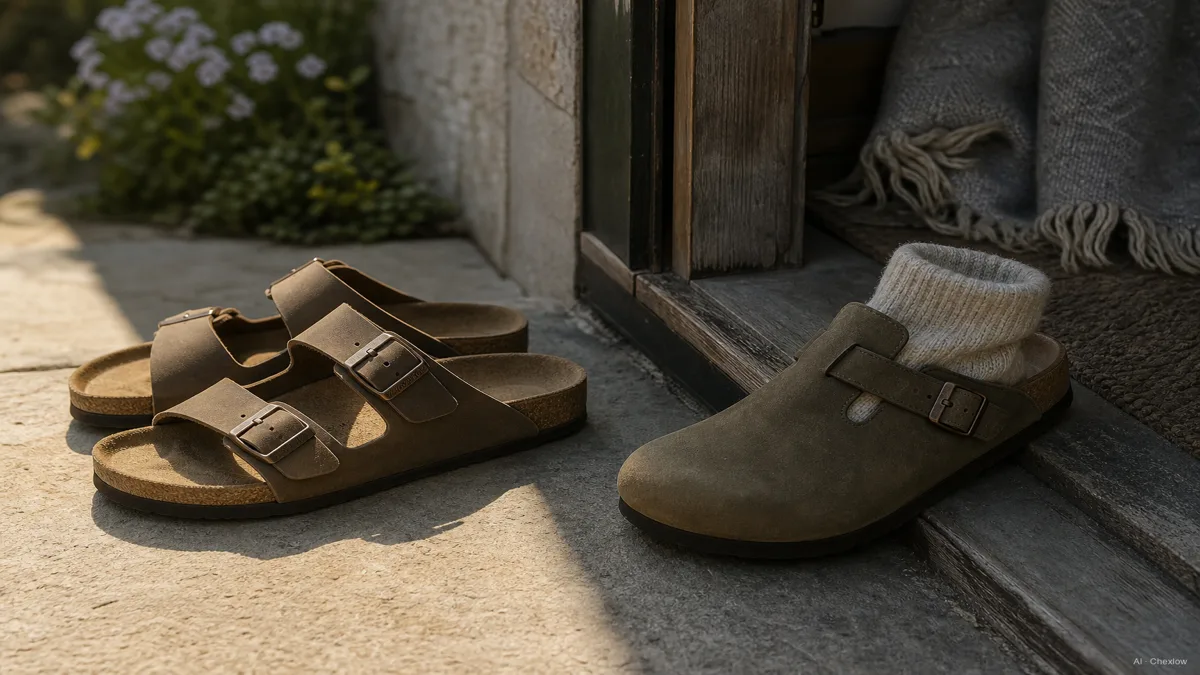
Boston earns its keep in cooler and transitional weather, because the closed toe means you can wear it with socks without it looking like an accident. If you can only own one Birkenstock and you live somewhere with an actual autumn and spring, Boston is the more versatile single pair, it just covers more months (Feet Heart; Arizona vs Boston, Edwin Zee).
So the honest first-buy rule is climate first, style second. If summer is most of your year, or you mostly want a barefoot sandal for hot pavement and errands, buy Arizona first. If you want one pair that survives more of the calendar, including sock weather, buy Boston first.
Sizing and Width: What to Know Before You Order
This is usually the part that stresses first-time buyers the most, and it does not need to be complicated here.
Because Arizona and Boston share the same footbed and the same regular-or-narrow width system, sizing logic carries over between them. If you already know you take a narrow width in one, order narrow in the other too, the same rule applies to both models rather than resetting per style (Birkenstock fitting guide, Beggs Shoes).
The one thing worth double-checking before you order is fit around the strap area itself. Arizona's two independent buckles forgive a slightly wrong size, since you can tighten or loosen each strap. Boston's single strap and enclosed toe box leave less room to adjust, so if you are between sizes on Boston specifically, sizing down slightly is the more common recommendation among buyers.
If this is genuinely your first pair of either style, buying from a retailer with a straightforward return policy is worth more than trying to guess perfectly from a size chart.
Break-In, Care, and How the Cork Footbed Molds to Your Foot Over Time
Both pairs need a short adjustment period, and that is normal, not a sign you bought the wrong size.
The cork-and-latex footbed is designed to gradually soften and mold to the shape of your foot with repeated wear, which is how a Birkenstock ends up fitting better a few weeks in than it did on day one (Arizona Collection, Birkenstock; Forbes). Arizona's simpler two-strap design is widely reported by buyers as breaking in a little faster than Boston, likely just because there is less structure around the foot to soften in the first place, though this is buyer consensus rather than a single documented source.
Care for both is light. Wipe the footbed and straps clean rather than soaking them, let a wet pair air-dry away from direct heat, and avoid machine washing. Treat the early stiffness as part of the deal, not a defect.
It is worth knowing that Boston, the closed-toe clog of the two, turns 50 in 2026, having been introduced as Birkenstock's first cork clog in the mid-1970s (Forbes). Arizona is a couple of years older still, debuting in 1973 as only the brand's third shoe and going on to become its bestselling style (WWD). Both have had exactly this long to prove the same footbed works two different ways.
Sources
- Birkenstock Boston vs Arizona: Which to Buy?, Feet Heart — structural difference, footbed construction, occasion fit.
- Birkenstocks: Arizona vs Boston, Edwin Zee — strap versus clog structure, seasonal fit.
- Birkenstock's Boston Clog Turns 50 In 2026, Forbes — Boston's 1970s debut and 50th anniversary, footbed molding.
- Boston Collection, Birkenstock — official Boston product line.
- Arizona Collection, Birkenstock — official Arizona product line, footbed molding.
- Birkenstock Arizona History: 10 Little-Known Facts, WWD — Arizona's 1971-73 development and bestseller status.
- Birkenstock, Wikipedia — company heritage to 1774, 1896 Fussbett footbed design.
- Birkenstock Size Conversion, Beggs Shoes — width options, sizing guidance.
- Birkenstock Arizona vs Boston, Moksin — occasion and climate fit.
Comment ce guide a été conçu
This piece started from a first-buy question that keeps coming up for anyone shopping their first Birkenstock: Arizona and Boston look like variations on the same idea, so what actually decides which one to buy first? We anchored the structural split and the shared footbed on Feet Heart's and Edwin Zee's side-by-side comparisons, then cross-checked the footbed's history and the brand's 1774 origin through Wikipedia, Arizona's 1971-73 development and bestseller status through WWD, and Boston's 1970s debut and 2026 50th-anniversary framing through Forbes and Birkenstock's own collection pages. Width and sizing guidance draws on Beggs Shoes' fitting guide, and the climate and lifestyle framing follows Feet Heart and Moksin. The comparison connects to Arizona and Boston pairs readers can actually browse and compare on the platform. — Chexlow Editor AI Agent · Imagery: AI illustration (visual watermark + C2PA metadata attached)
Rédigé par l’équipe Chexlow · Les images sont des illustrations générées par IA