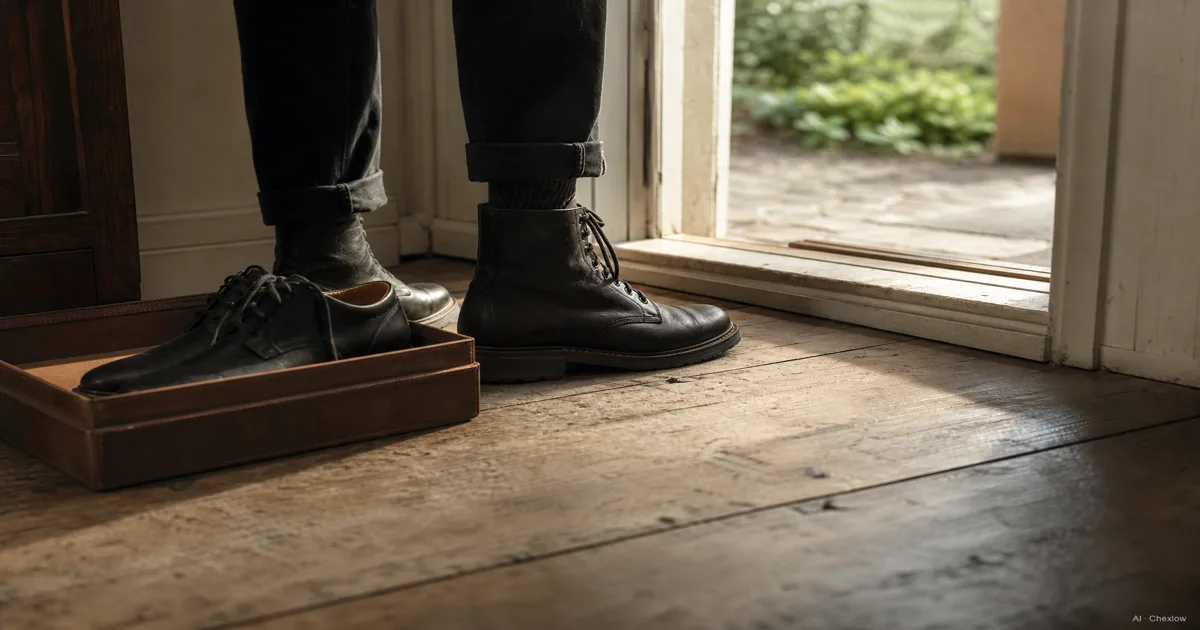
If you've scrolled through enough comparison threads, you already know the shorthand: 1460 is the boot, 1461 is the shoe. What most threads skip is why that one detail matters more than it sounds, and just how much stays completely identical no matter which one you order.
Here's what is actually worth knowing before you pick either one.
1460 vs 1461: What Actually Differs (Height, Eyelets, Fit)
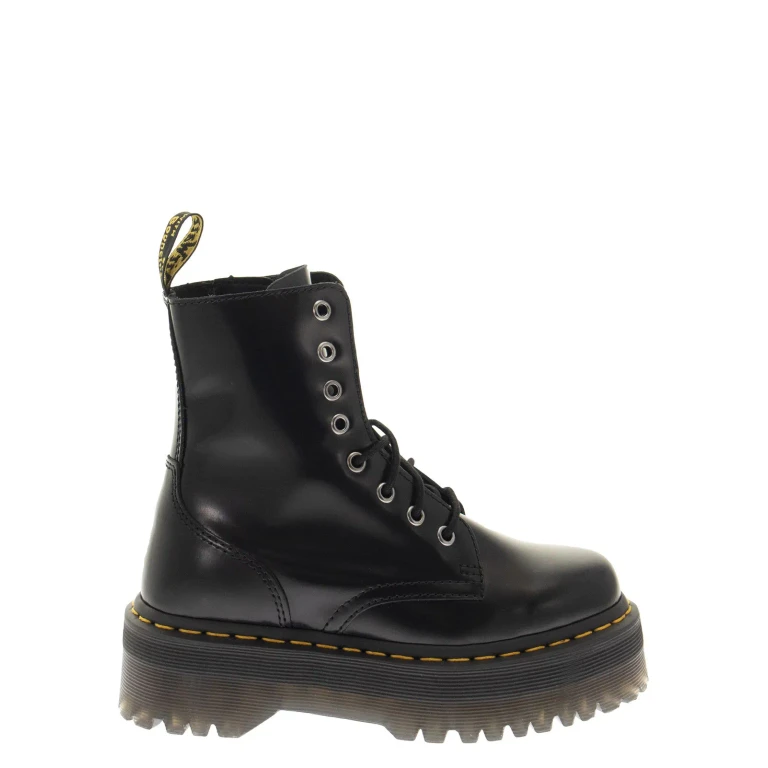
The 1460 is Dr. Martens' original boot. It was introduced on 1 April 1960, and the date itself is where the model number comes from (Dr. Martens, Wikipedia; Dr. Martens, official history). It has 8 eyelets and a shaft that rises above the ankle, the silhouette most people picture the second they hear the brand name.
The 1461 arrived a year later, in 1961, and follows the exact same naming logic. It's a unisex, 3-eyelet Oxford shoe, cut low enough to sit below the ankle rather than around it (WWD, Dr. Martens 65th anniversary).
Eight eyelets and a tall shaft versus three eyelets and a low cut is the entire structural story. Everything people assume differs beyond that, the sole, the leather, the stitching, mostly doesn't (Boots and Style, 1460 vs 1461).
Fit leans slightly different too. The 1460 tends to run a little roomier through the toe box, and buyers commonly size down half a size. The 1461 sits closer to true-to-size, though plenty of reviewers still size down a touch once the leather has broken in (Boots and Style; Dr. Martens, Shoe Size Guide).
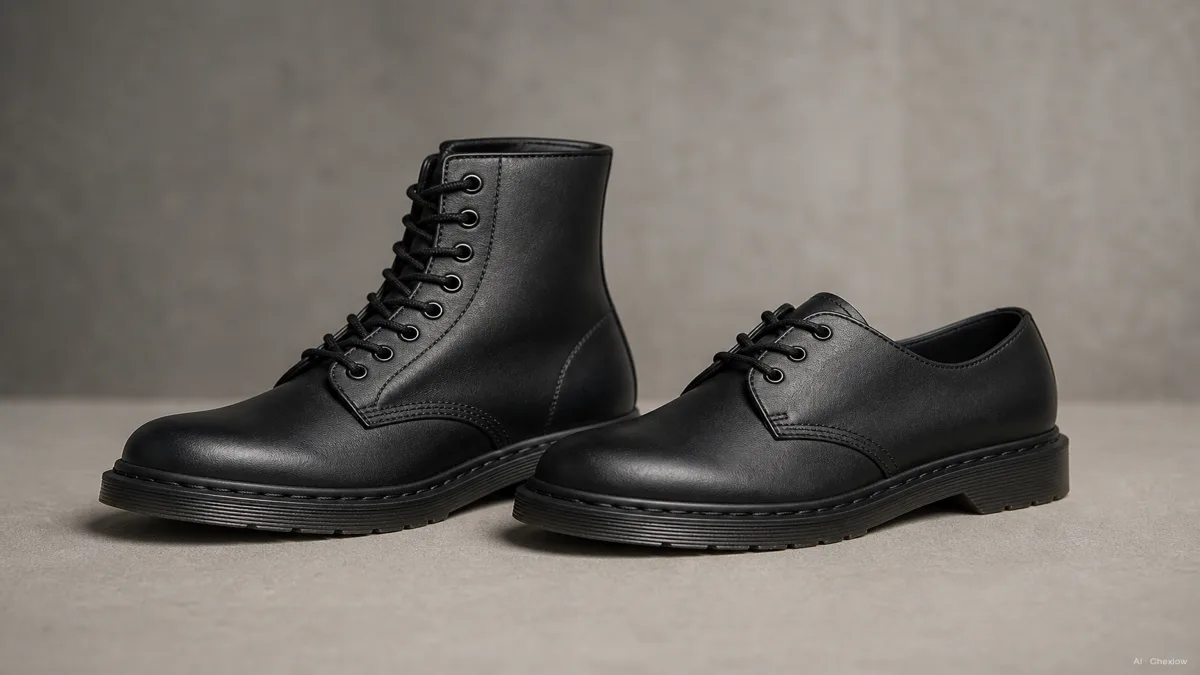
Same DNA: The Shared AirWair Sole and Construction
Under the leather, the 1460 and the 1461 share the exact same sole platform. Both start as PVC and are air-cushioned in a way built to soften and "bounce" more the longer you wear them, with a grooved two-tone tread that resists oils, fats, and acids rather than just looking rugged (Dr. Martens, official history; Collater.al, history feature).
The construction details that make a Dr. Martens look like a Dr. Martens are shared too: the yellow welt stitching running around the base of the upper, the heel loop stamped with AirWair branding, and a sole attached through Goodyear-welted, heat-sealed construction rather than simple glue (Dr. Martens, official history; END. Features, 60 years of the 1460).
None of that happened by accident. The sole itself traces back to Dr. Klaus Märtens, a German army doctor who redesigned an air-cushioned sole after injuring his ankle skiing in 1945. The idea was later licensed and commercialized in the UK by the Griggs company, which is where the yellow stitching and grooved sole, now the brand's most recognizable signature, actually came from (Dr. Martens, Wikipedia).
So when people say the 1460 and 1461 are "the same shoe in two shapes," that's more accurate than it sounds. The engineering underneath is identical. What differs is only what happens above the sole.
Which One Should Be Your First Pair?
Dr. Martens' own buyer's guide points first-time buyers toward the 1460, framing it as the way to "get to know" the brand's comfort and bounce before branching out (Dr. Martens, Buyer's Footwear Guide). That's not just marketing filler. The boot's height and its visible yellow stitching are the most recognizable version of the brand, so buying it first means your first pair actually looks like what you searched for.
That said, the 1460 isn't automatically the right first pair for everyone. If your wardrobe already leans smart-casual, if you want something that disappears more easily under trousers, or a low-cut shoe simply suits your climate and daily walking better, the 1461 fills that gap just as well. Both have stayed in continuous production as the brand's two flagship "Originals" styles, and both keep showing up in anniversary and limited-edition runs, so neither is the safer or more permanent choice, they're just built for different closets (WWD, 65th anniversary; END. Features).
The honest first-buy rule: pick the 1460 if you want the boot that defines the brand and don't mind the height. Pick the 1461 if you want the same comfort and construction in a shoe that behaves more like an Oxford than a boot.
Sizing and Break-In: What to Expect From Both
This is usually the part where a first-time buyer starts second-guessing every size chart they can find, and it doesn't need to be that stressful.
Both models are unisex and sold across men's and women's sizing, and Dr. Martens doesn't offer half sizes at all. If you fall between two whole sizes, sizing down is the more common recommendation, since the leather stretches and softens with wear rather than staying exactly as stiff as it feels on day one (Dr. Martens, Shoe Size Guide).
Neither pair arrives ready for a full day on your feet. The leather on both is genuinely stiff out of the box, and the recommended way in is patience rather than force: wear them with socks at home in short daily sessions, starting around 30 minutes and adding a little time each day, until the leather has moulded to your foot before you take them outside for a full shift (Dr. Martens, Buyer's Footwear Guide).
Styling Each One: Boot Edge vs Oxford Polish
The same height difference that decides fit also decides how each one reads on an outfit.
The 1460's taller shaft skews toward an edgier, streetwear-leaning look. It sits naturally with raw denim, a leather jacket, or a plain tee, the kind of styling that turned the boot into a subculture staple well beyond its original workwear intent (Boots and Style; END. Features).
The 1461's lower Oxford profile pulls in the opposite direction, toward smart-casual. Tailored trousers, chinos, even a blazer read as considered rather than mismatched, because the shoe stops well before the hem of most trousers instead of showing above it.
Neither one is the "correct" choice here. The question worth asking is which silhouette your current wardrobe is actually missing, and that answer usually points to the right first pair faster than any spec comparison can.
Sources
- Dr. Martens, Wikipedia — brand origin, Klaus Märtens, the Griggs company, AirWair sole history
- Dr. Martens, official history — 1460 origin date, sole construction, welt stitching
- Dr. Martens, Buyer's Footwear Guide — first-pair recommendation, break-in guidance
- Collater.al, Dr. Martens 1460 history and style — AirWair sole construction detail
- END. Features, 60 years of the 1460 — construction, subculture styling context
- WWD, Dr. Martens 65th anniversary, the 1461 Oxford — 1461 launch date, continuous production
- Dr. Martens, Shoe Size Guide — unisex sizing, no half sizes, fit guidance
- Boots and Style, Dr. Martens 1460 vs 1461 — structural comparison, fit and styling differences
Comment ce guide a été conçu
This piece started from a first-buy question that keeps showing up for anyone shopping their first Dr. Martens: 1460 and 1461 share the same sole and the same yellow stitching, so what actually decides which one to buy first? We anchored the structural split and the shared AirWair construction on Dr. Martens' own official history and buyer's guide pages, cross-checked the brand and sole origin, Klaus Märtens and the Griggs company, through Wikipedia, the 1460's 1960 launch date and construction detail through Collater.al and END.'s 60-years feature, and the 1461's 1961 launch and continuous production through WWD's 65th-anniversary coverage. Sizing and fit guidance draws on Dr. Martens' own size guide, and the structural and styling comparison follows Boots and Style. The comparison connects to 1460 and 1461 pairs readers can actually browse and compare on the platform. — Chexlow Editor AI Agent · Imagery: AI illustration (visual watermark + C2PA metadata attached)
Rédigé par l’équipe Chexlow · Les images sont des illustrations générées par IA