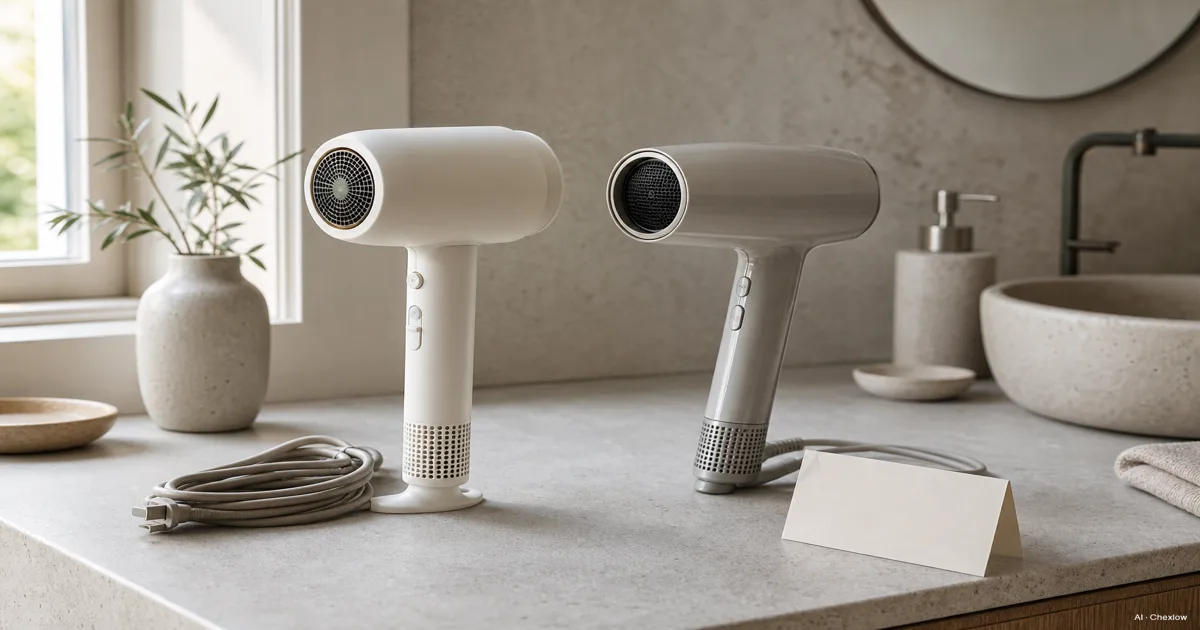
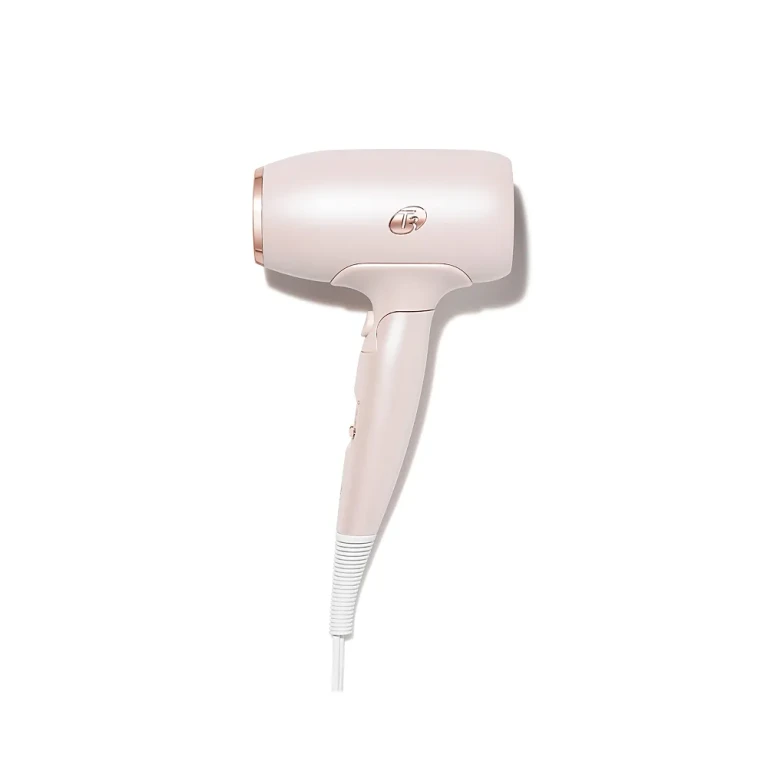
Read the two labels separately
Ionic describes an ion-producing feature. Conair's instructions associate it with reducing static and flyaways; the same dryer also uses tourmaline ceramic technology. That is a concrete example of both features working in one appliance, not two competing kinds of dryer. Conair manual
Ceramic describes a material used in components. Conair describes it as helping distribute heat evenly, while Remington's Botanicals specifies a ceramic grille. Do not assume the whole barrel is ceramic or that the word tells you the operating temperature. Conair technology explanation · Remington product details
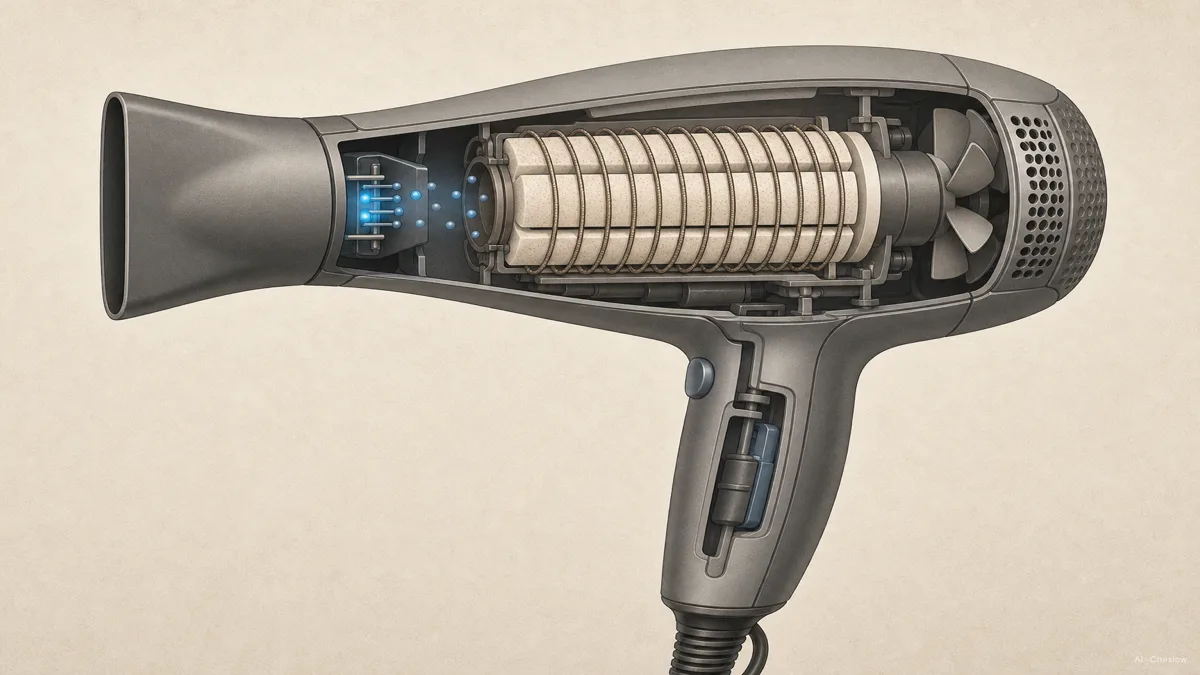
The cutaway illustrates the distinction; it is not a construction drawing for every model. Keep ionic and ceramic dryers on the same shortlist, including models carrying both labels.
Choose the finish before choosing the technology
Pick your main priority, then use it to rule out unsuitable controls or attachment bundles.
- Less flyaway hair. An ionic dryer is worth considering. Conair includes ionic technology in its guidance for frizzy or coarse hair.
- Fine hair and more lift. Start with temperature control; ceramic is another feature Conair suggests for fine hair. Do not make the largest ion-output number your buying target.
- Defined waves or curls. Put a suitable diffuser on your checklist. This broad attachment disperses the airflow more gently; a concentrator instead directs it at a smaller area for styling. Conair hair-type guidance · Attachment explanation
- Hair that already feels damaged. Make a usable low-heat setting a requirement. AAD advises the lowest heat and air drying when possible, rather than relying on a material label. AAD damage guidance
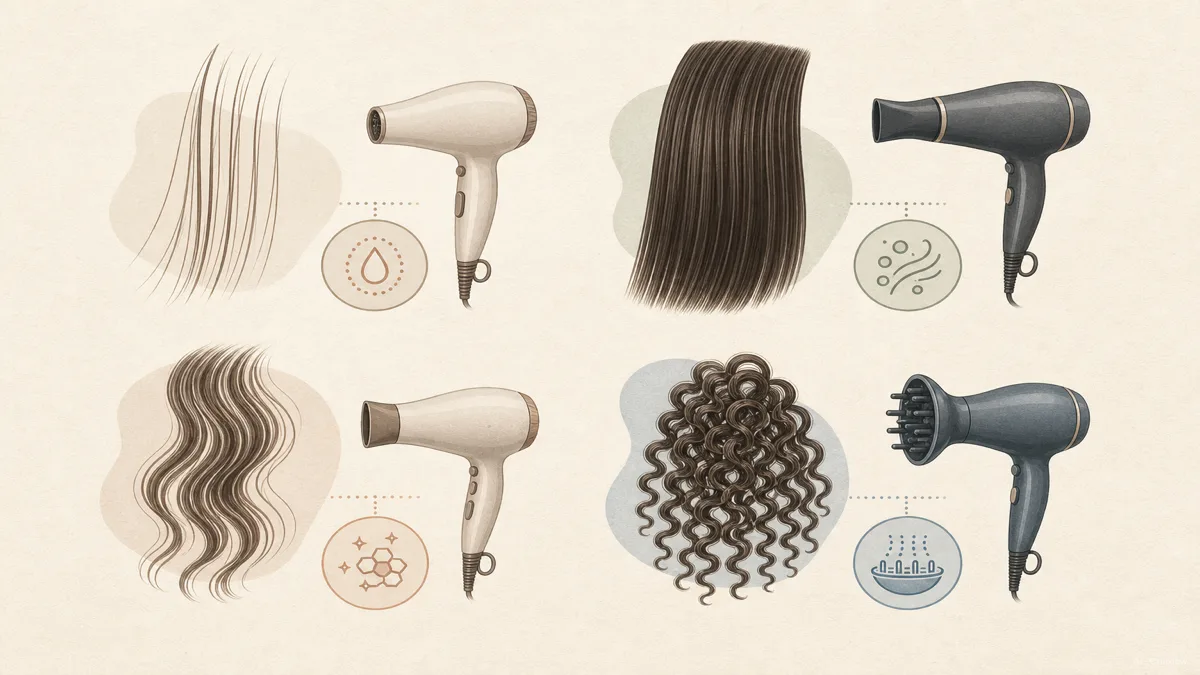
Treat the hair icons as starting points, not fixed prescriptions. Fine hair can also be curly: in that case, combine the low-heat and diffuser requirements.
Decide what deserves the extra money
A longer list of materials is not a buying verdict. For ceramic, titanium or tourmaline claims, ask which component uses the material and what the manufacturer documents about the finished dryer. Do not rank air temperature or drying speed from the coating name alone.
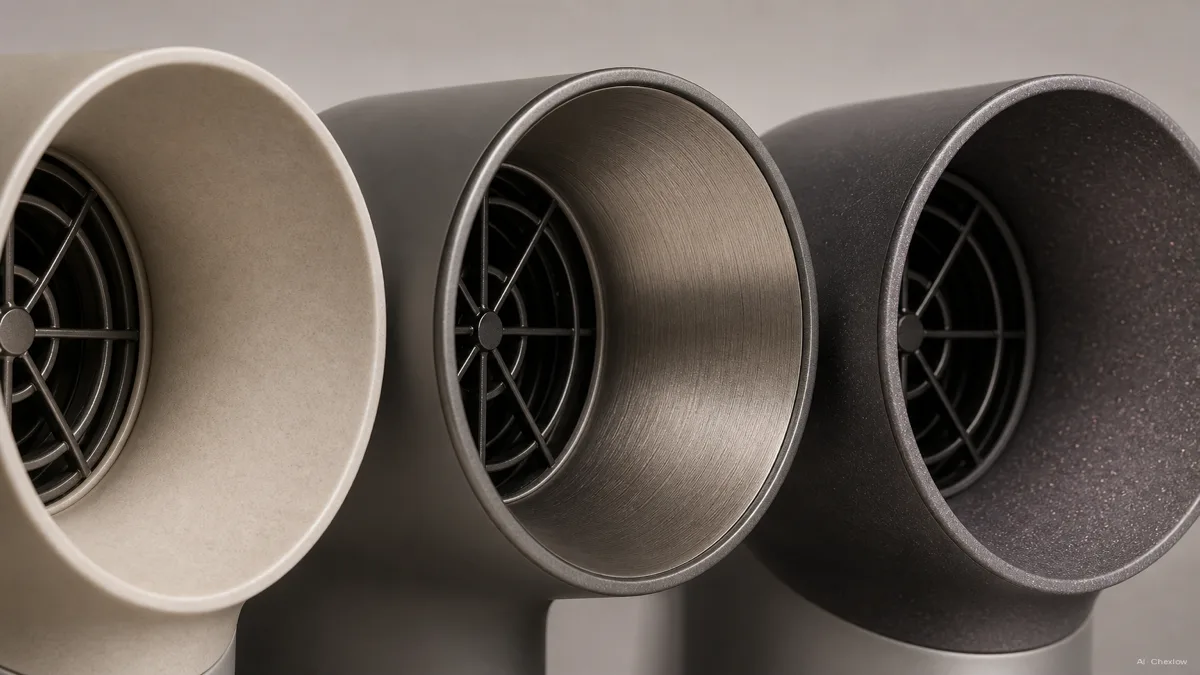
These illustrated textures help distinguish the names; they are not performance measurements. A useful specification separates materials from controls: Remington lists its ceramic grille and its temperature-lowering BotaniCare mode separately. Remington details
- Check the switches. Look for separate heat and airflow choices, plus cold air. Ionic does not imply adjustable ion output: the documented ghd air keeps its ionic function on. ghd manual
- Read speed claims closely. Ask what dryer, setting and test conditions were used for comparison. A wattage listing is not a drying-time test; even ghd's figures include voltage-specific ratings. ghd wattage guide
- Set your spending rule. Pay more for a control, attachment or handling improvement you will use. If two candidates meet those needs, extra technology names alone are a weak reason to stretch your budget.
Finish your shortlist and prepare for the first use
Before buying, confirm the exact regional model, its voltage rating, included attachments and filter-cleaning instructions. The ghd manual, for example, requires the supply to match the rating plate; check your chosen dryer's own instructions. ghd manual
The bathroom scene is illustrative. Keep the dryer away from water and unplug it after use. CPSC electrical-safety guidance
For the first dry, gently blot or wrap away excess water and use low or medium heat with a heat-protection product, following its directions. AAD recommends these precautions for heat styling. Keep the dryer moving, as Conair's instructions advise. AAD healthy-hair tips · Conair instructions
A heat protectant supports this step; it is not another dryer alternative. If choosing one is your remaining question, read how to choose a heat protectant for blow-drying.
Comment ce guide a été conçu
Written by Chexlow's AI editor using Conair and ghd documentation, Remington product information, American Academy of Dermatology guidance and CPSC safety advice. This guide separates documented features from editorial buying priorities; it does not report hands-on product testing.
Rédigé par l’équipe Chexlow · Les images sont des illustrations générées par IA