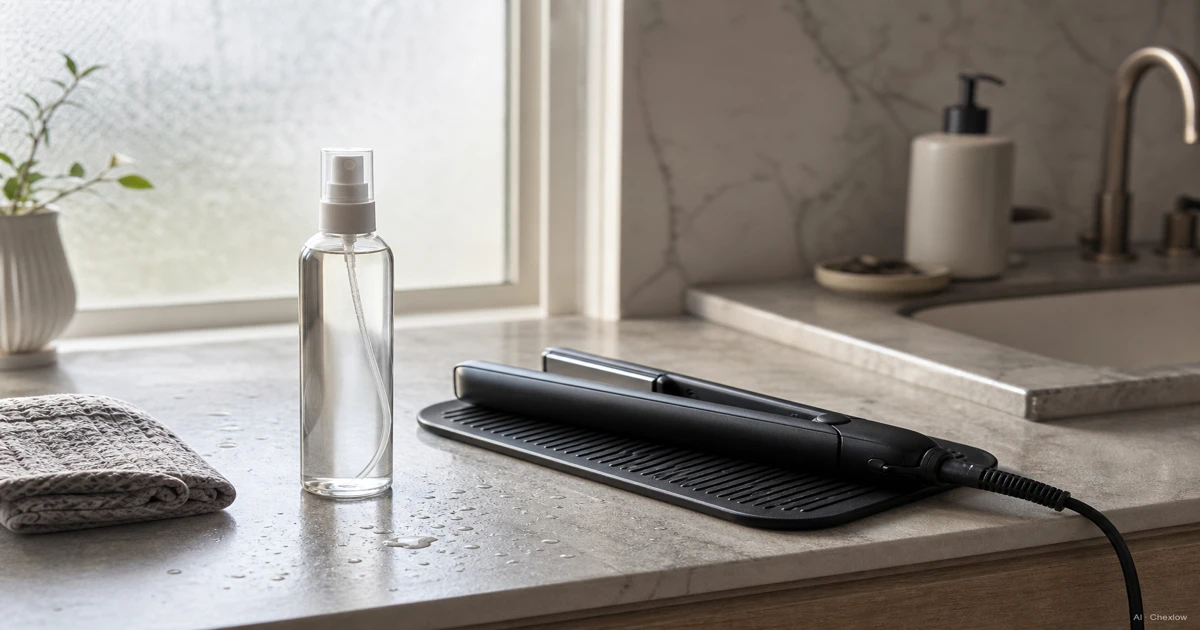
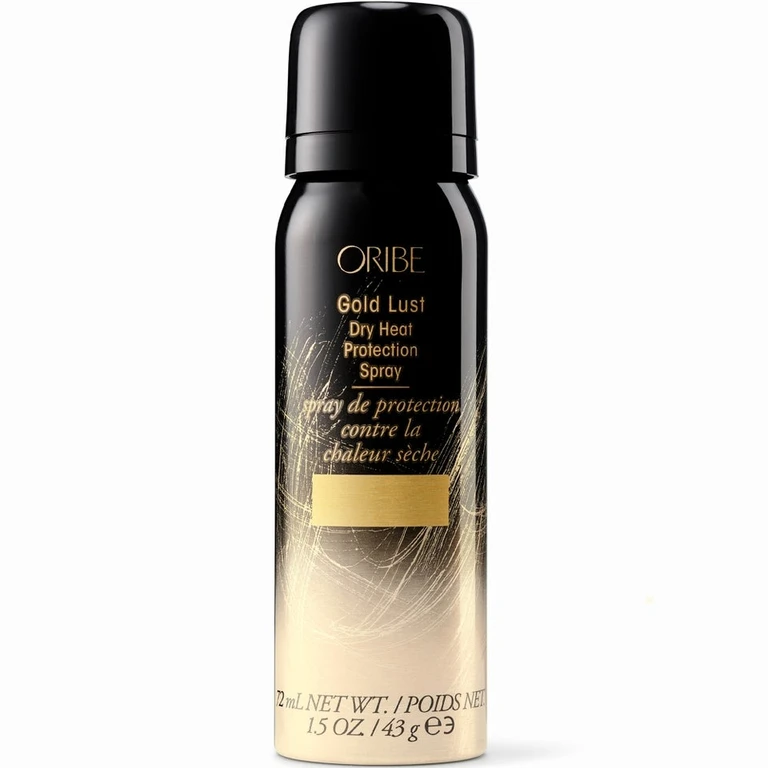
Match the product to your styling routine
Before comparing bottles, decide when protection needs to fit into your morning. Living Proof’s application guide distinguishes formulas intended for damp hair, dry hair, or both.
- After washing. Look for instructions covering application before blow-drying.
- Restyling already-dry hair. Choose a product explicitly suitable for dry application.
- Both routines. A dual-use formula is a practical first shortlist. Check its instructions for each stage rather than assuming you need two bottles.
Keep the product’s application state separate from the tool’s operating instructions. A damp-hair protectant does not make a conventional flat iron suitable for wet hair. The American Academy of Dermatology advises using flat irons on dry hair at low or medium heat.
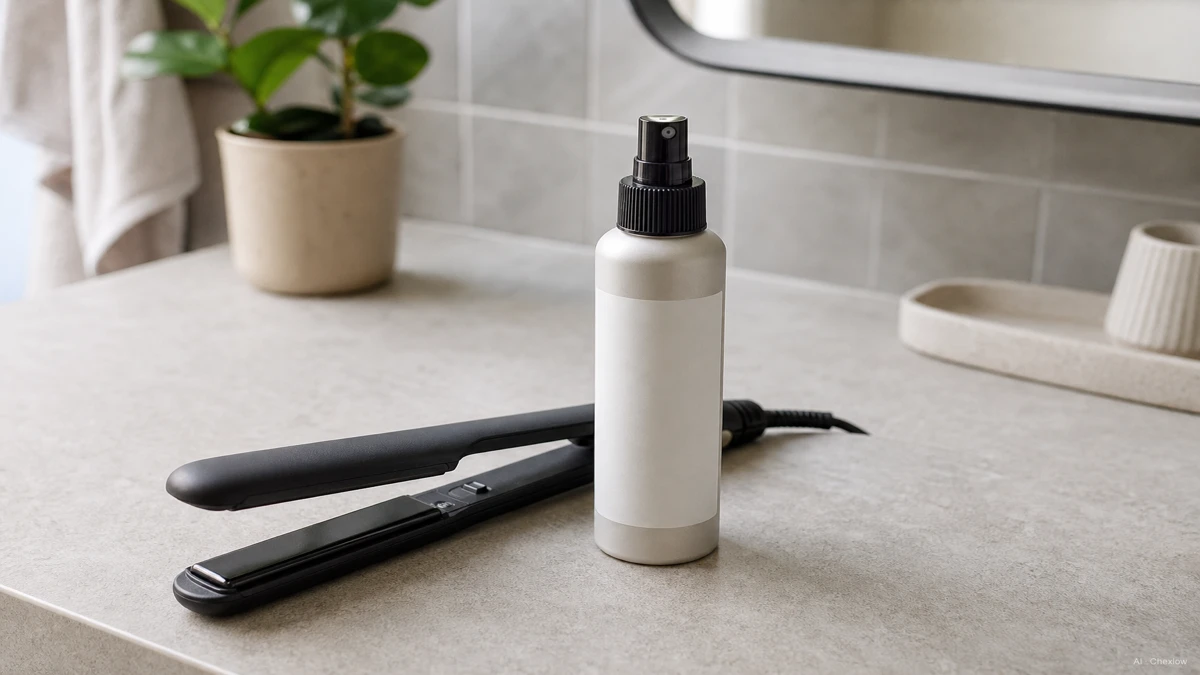
Choose the finish, then the format
Use texture to narrow your shortlist, not to assign every hair type a compulsory bottle shape.
- Volume matters most. Start by comparing lightweight sprays.
- Smoothing matters most. Compare conditioning creams with sprays intended for your hair’s thickness.
- You prefer oil or serum. Check the exact product for an explicit heat-protection claim and suitable application instructions before treating it as your protectant.
Manufacturer ranges offer useful examples, rather than universal rules. Kérastase positions Gloss Absolu Glaze Milk for fine-to-medium frizz-prone hair and Frizz-Glaze cream for medium-to-thick frizz-prone hair. That makes intended hair type a better comparison point than “spray versus cream” alone.
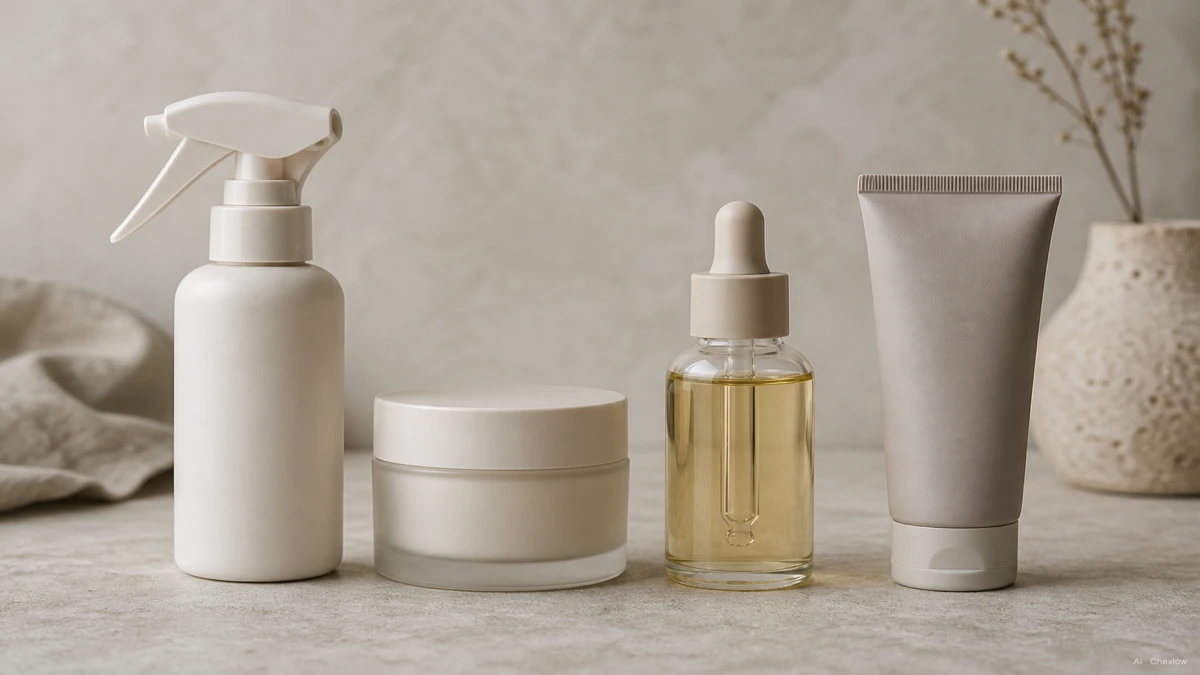
These are format illustrations, not four products you need to buy. For a first purchase, shortlist one product that fits your application stage and preferred finish.
Read protection claims without turning them into a heat setting
ghd describes Bodyguard as combining protective polymers and conditioning agents to form a protective layer on the hair surface. This explains that product’s approach; it does not establish a fixed damage-reduction percentage for every protectant.
Treat an “up to” temperature as a product claim, not your target styling temperature. The AAD warns that excessive heat can damage any hair type. Buying protection is not a reason to turn the dial higher.
Nor should one ingredient decide the purchase. Living Proof’s Perfect hair Day Heat Styling Spray is described as silicone-free and heat protecting. Silicone is therefore not a required ingredient on your shopping checklist.
Make the first use a useful check
Read the bottle’s dose and application directions before starting. For example, Perfect hair Day’s instructions specify sectioning and sweeping application from 6–10 inches away. That distance belongs to this product, not every spray.
- Before styling. Follow the product directions and the tool’s drying requirements. If spraying makes hair damp again, wait until it meets those requirements.
- After styling. Judge whether the finish suits you: too coated, too flat, or comfortable to wear. A smooth result alone cannot tell you how much damage was prevented.
- Before buying another bottle. Recheck application amount and intended hair type. Choose a different finish if the prescribed use does not suit you; do not deliberately underapply to make a heavy product feel lighter.
If your next question is how to refresh oily roots between washes, see the dry shampoo buying guide. Keep that separate from heat protection: the AAD explains that dry shampoo absorbs oil but does not replace washing with shampoo and water.
How this guide was built
This guide was written by AI for Chexlow, using manufacturer product descriptions and application instructions alongside American Academy of Dermatology guidance. Its editorial focus is choosing a first heat protectant by application stage and finish. Product examples illustrate label differences; they are not hands-on test results.
Edited by the Chexlow team · Images are AI-generated illustrations