What defines a peacoat — construction, length, and details
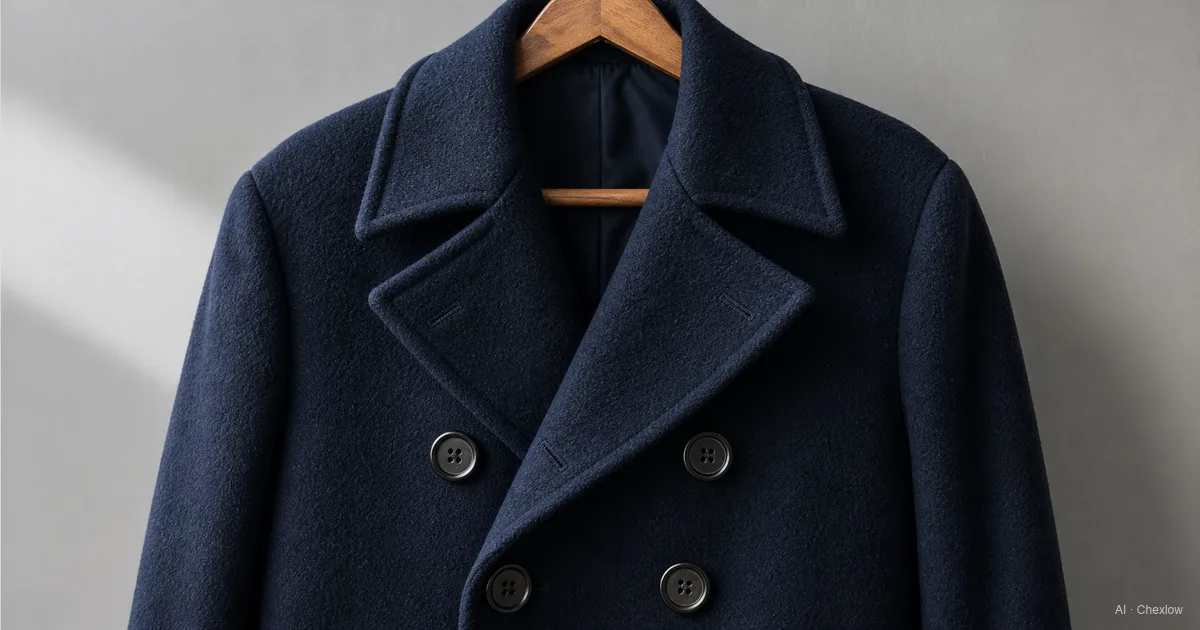
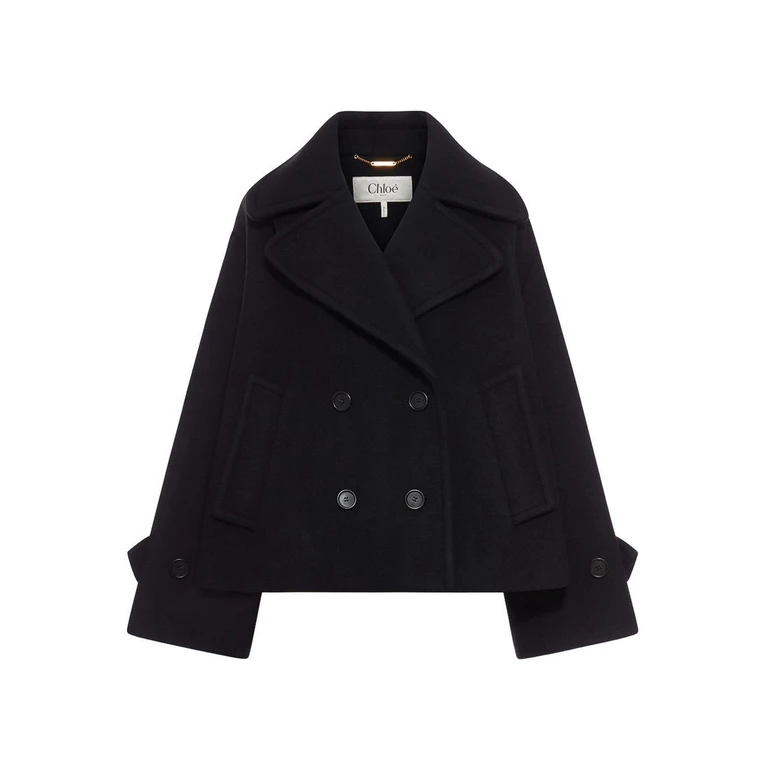
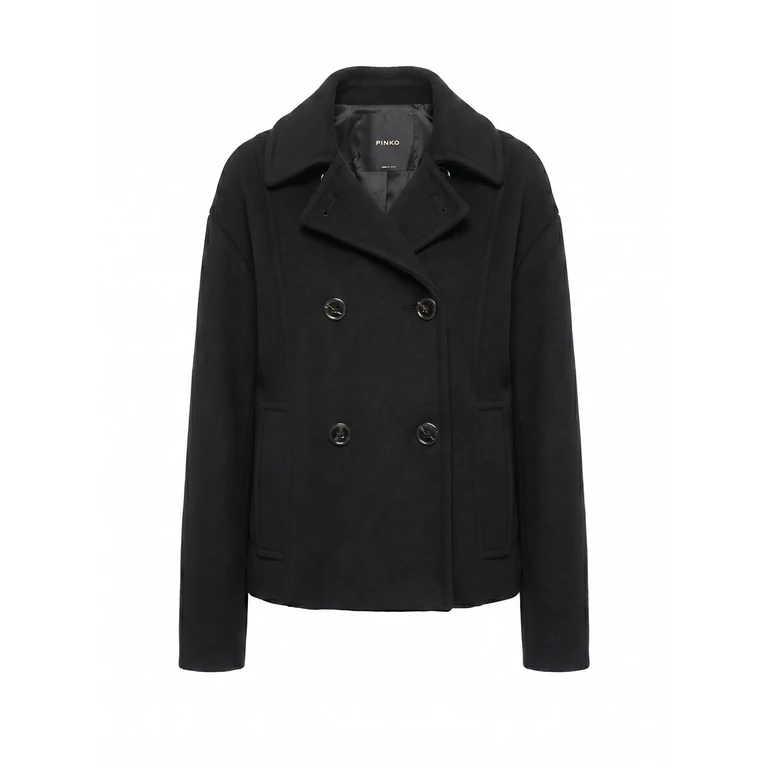
A peacoat is a structured, double-breasted wool coat of mid-thigh length or shorter, originally with a wide notch or peaked lapel, a two-column button arrangement (typically six to ten buttons total in two parallel rows), and a boxy cut that allows layering over a sailor's uniform or modern midlayers (Wikipedia, Pea Coat).
The key structural elements are:
- Double-breasted closure. This is not decorative. On a naval peacoat, the overlapping front panels could be buttoned to either side, allowing the wearer to turn the jacket around when one side was wet. On contemporary peacoats, the double-breasted front also adds a second layer of fabric across the chest, which increases wind resistance compared to a single-breasted coat of the same fabric weight.
- Wide lapels. The lapels on a traditional peacoat fold flat against the chest when the coat is closed, and can be turned up to protect the sides of the neck when open. The width of the lapel is one of the most variable design elements across brands — narrow lapels are more contemporary; wide lapels are more traditional and better for cold-weather function.
- Mid-thigh to hip length. A true peacoat ends somewhere between the hip and mid-thigh. Above the hip is a "reefer jacket" or a short version more suited to fashion than function. Below mid-thigh approaches overcoat territory and loses the peacoat's characteristic proportions.
- Smooth-faced wool or wool-blend cloth. The outer fabric of a peacoat is woven, not knitted, and typically has a smooth melton or heavy twill face rather than a fuzzy or fleece texture. The density and weight of this wool is central to both the peacoat's warmth and its structural silhouette.
A garment that has double-breasted buttons but is made of polyester, falls to knee length, and has a soft texture is not a peacoat in any functional sense — it is a fashion coat borrowing peacoat visual elements.
Wool vs. wool-blend — fabric content and what it means for warmth and care
A peacoat's warmth and longevity are directly tied to wool content. Pure wool at a high fabric weight (typically 500g to 800g per linear meter for suiting-weight to heavy melton) provides excellent windbreak and retains warmth even when damp. It is also the most expensive option.
Wool-blend peacoats (typically 50–80% wool with polyester, nylon, or acrylic as the secondary fiber) are the majority of peacoats available at mid-price and entry-level price points. At 70% wool or above with a fabric weight of at least 500g/m, the functional difference from a 100% wool coat is modest in most urban cold-weather use. Below 50% wool, the peacoat begins to feel thin, lacks structure, and will not drape as well after the first few wears (The Spruce, Peacoat Guide).
The secondary fiber content also affects care. A 100% wool peacoat almost always requires dry cleaning or very careful hand washing in cold water with wool detergent. A wool-polyester blend may be hand washable at cool temperatures if the care label permits — polyester does not shrink as readily as wool, and its presence in the blend reduces the risk of felting. Always check the care label before attempting to hand wash a wool-blend peacoat.
Melton wool — a dense, felted surface made by heavily milling the woven wool — is the traditional fabric choice for peacoats. It is wind-resistant, holds its shape well, and resists pilling. Lower-quality peacoats use a lighter, less milled wool twill that looks similar on a hanger but pills quickly and loses structure after a season of wear.
Fit at the shoulder, chest, and sleeve — what is different from a regular coat
The shoulder is the most important fit point on a peacoat, and it is where most people get it wrong. On a structured garment like a peacoat, the shoulder seam must fall exactly at the edge of the shoulder — where the top of the arm meets the torso. If the seam falls even 1–2 cm beyond the shoulder edge, the coat will look shapeless across the back and the sleeve will twist. If the seam falls 1–2 cm short of the edge, the coat will restrict arm movement and bunch under the arm (GQ, How a Peacoat Should Fit).
The chest fit on a double-breasted coat has a specific requirement: when the coat is buttoned, the front panels must lie flat against the chest without pulling or puckering. If the coat pulls toward the button side when closed, it is too small across the chest. If the lapel folds back or the coat gaps at the top, the coat may be too large or the cut may not suit your body shape.
Sleeve length should show 1–2 cm of shirt or sweater cuff below the coat sleeve. On a classic peacoat, the sleeve is usually set to end just at the wrist bone with a straight hem and no cuff. Unlike a suit jacket sleeve (which must show a specific amount of shirt cuff), the peacoat sleeve length is more forgiving — it can be altered easily by a tailor if the rest of the coat fits well.
The overall length of a peacoat should allow it to be buttoned and sit comfortably when seated. A peacoat that is too short will ride up severely when you sit down; one that is the right length will drape naturally with just a slight lift.
Double-breasted button alignment and chest closure
The double-breasted front on a peacoat involves two parallel columns of buttons — the visible buttons (usually decorative anchors or plain discs) and a hidden set of buttons that anchor the inner panel under the outer panel when the coat is closed. The alignment of these two sets of buttons is a reliable quality indicator.
On a well-constructed peacoat, when the coat is buttoned, the outer column of buttons aligns vertically with the edge of the collar, the lapel break is symmetrical on both sides, and the chest closes flat with no pulling or diagonal tension at the button holes. The inner button (which holds the inner panel flat under the outer panel) must be accessible without reaching deep inside the coat — a sign of good construction is that the inner button sits in an easily accessible position and the fabric it holds does not crumple when closed (Art of Manliness, Peacoat Guide).
On cheaper peacoats, the button alignment is often off by a few millimeters on one side, causing the coat to pull diagonally when buttoned. This flaw is immediately visible when the coat is closed and is difficult to correct without re-tailoring the button placement. Evaluate this in the fitting room: button the coat, step back, and look at the horizontal line of the button row. It should run parallel to the floor across the chest.
The number of buttons varies: 6-button, 8-button, and 10-button configurations exist, with 6-button being most common on shorter peacoats and 8 or 10 buttons on longer versions. The configuration is a style preference rather than a quality signal.
Lining quality and what it tells you about construction
The lining of a peacoat is not in contact with most weather, but it is in contact with every layer you wear beneath it and affects how the coat drapes, moves, and feels across the long term. A good lining makes the coat easy to slip on over sweaters and layers; a poor lining clings, wrinkles, and eventually tears at the sleeve attachment points.
Look for a woven polyester or rayon lining, or (in better peacoats) a natural fiber lining such as Bemberg cupro. Avoid knitted lining fabrics — they are less durable at the seam points and can pill against inner layers. The lining should be attached at the hem and at the cuff with a small loop that allows the lining to move independently from the outer shell when you move your arms — this is called a free-hanging or floating lining. A lining that is fully stitched to the hem of the outer fabric without any independent float will cause the outer fabric to pucker and the lining to pull and tear after frequent use (Real Men Real Style, Peacoat Buying Guide).
Inspect the sleeve lining separately. A poor-quality peacoat will have a lining that stops at the elbow or upper arm, leaving the lower sleeve unlined and causing it to grab on sweater fabric when putting the coat on. A well-constructed peacoat has a full sleeve lining to the cuff.
Pocket quality is a related indicator: peacoat pockets should have a straight, reinforced welt opening, a deep enough pocket bag to hold a phone and wallet, and a lining that continues into the pocket bag without raw edges inside.
Care — dry cleaning vs. hand washing, and seasonal maintenance
Most peacoats carry a "dry clean only" label, and for high-pile melton or very heavyweight pure wool fabrics, dry cleaning is genuinely the safer option. The risk in washing a structured wool garment at home is twofold: felting (if the temperature or agitation is too high) and loss of structure in the canvas or interfacing inside the chest and lapels.
However, many mid-weight wool-blend peacoats (60–70% wool with polyester) can be carefully hand washed in cold water with a wool detergent if the care label permits this, the result of which is that you save money and keep the coat cleaner more frequently than dry cleaning economics allow. If you attempt hand washing: fill a tub with cold water, submerge the peacoat, press gently rather than agitating, drain, and press out water without wringing. Lay flat to dry on a large towel, reshaping the shoulders and lapels while damp. Do not hang until fully dry — a wet wool coat hung from the shoulders will distort permanently at the shoulder seams (WikiHow, How to Clean a Peacoat).
For seasonal care between cleanings: brush the outer fabric with a soft garment brush after each wear to remove surface dirt and lint before it sets. Air the coat on a padded hanger for a few hours after wearing before returning it to the closet. Store on a wide, padded hanger — not a wire hanger, which will distort the shoulder structure over months.
Casual vs. smart-casual versatility — what the peacoat does and does not cover
A peacoat's styling range is specific and worth being clear about. It is excellent for:
- Smart-casual (jeans plus a button shirt or sweater, leather shoes or clean sneakers)
- Business casual over a blazer and chinos or trousers
- Evening wear over a knit sweater and dark trousers
It is not the right coat for:
- Formal events (a full suit with overcoat)
- Active outdoor use where a waterproof shell or parka is needed
- Very casual settings where its structured silhouette reads as overdressed
The peacoat's wool fabric and structured construction mean it always carries a degree of formality that cannot be entirely shed. This is a feature, not a bug — it is what allows the coat to make casual clothes look pulled together. But it also means a peacoat is not the coat to wear to a muddy outdoor event, a heavy-rain commute without waterproofing, or a situation where you need to compress it into a day pack.
Color choice affects versatility. Navy is the canonical peacoat color and the most flexible — it works with virtually every bottom garment and reads as both casual and smart. Camel and charcoal are strong second choices that work across the same range. Red, forest green, and other non-neutral peacoat colors are more limited in casual styling but can be excellent as an accent piece in an otherwise neutral wardrobe.
Sources
- Pea Coat, Wikipedia — origin, naval construction, double-breasted rationale
- Peacoat Guide, The Spruce — wool content thresholds, blend quality benchmarks
- How a Peacoat Should Fit, GQ — shoulder seam placement, chest fit, sleeve length
- The Ultimate Guide to the Peacoat, Art of Manliness — button alignment, double-breasted closure mechanics
- Peacoat Buying Guide, Real Men Real Style — lining quality, sleeve lining, pocket construction
- How to Clean a Peacoat, WikiHow — hand wash vs. dry clean, flat drying technique