What's the actual difference?
Start with the cleanest version of the distinction, because it dissolves most of the confusion in one line.
"Wool coat" tells you the material. The outer cloth is woven from wool, or a wool blend. That's all it claims. A wool coat can be any length, any shape, any silhouette.
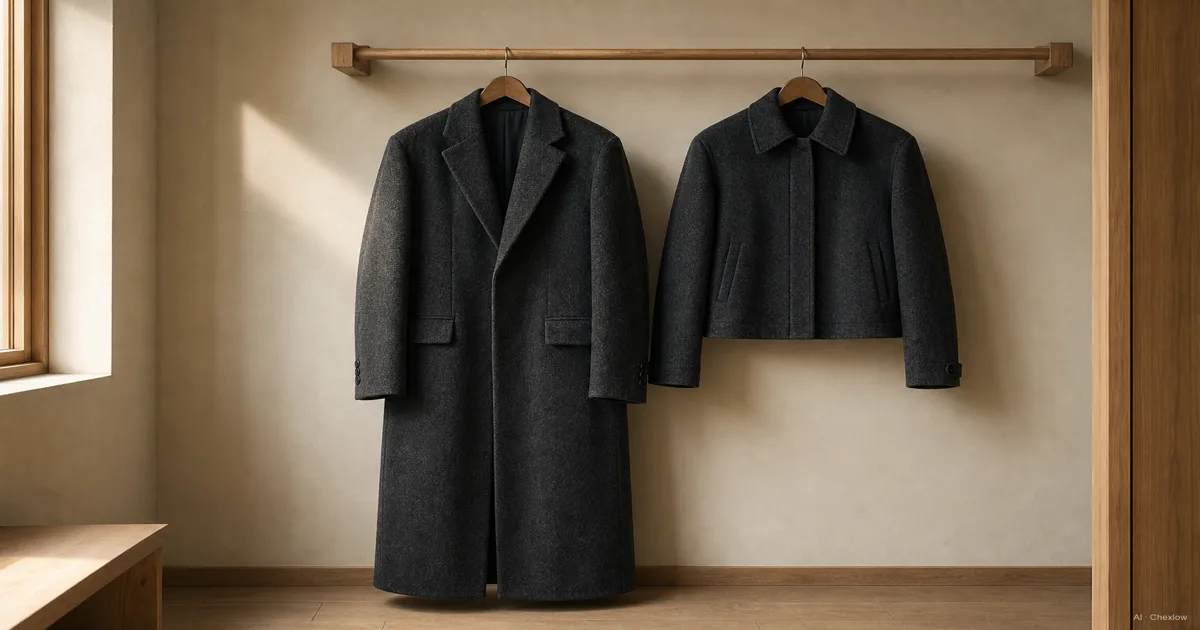
"Overcoat" tells you the silhouette and role. An overcoat is a long, heavy outer garment, usually falling below the knee, worn as the outermost layer for warmth. The definition has stayed remarkably stable since the late 18th century (Wikipedia, Overcoat).
So the two words answer different questions. One is about fabric, the other is about shape. That's why a coat can be both at once, and why retailers slide between the terms without anyone correcting them.
Here's the practical takeaway. When a listing says "wool coat," it's telling you the fabric but leaving the shape open, so you still have to check the length and cut. When it says "overcoat," it's promising you a specific long, warm silhouette, but you still need to confirm the fabric is actually heavy wool and not a thin blend dressed up with the word. Read both specs, every time.
Length and weight, the two specs that decide warmth and occasion
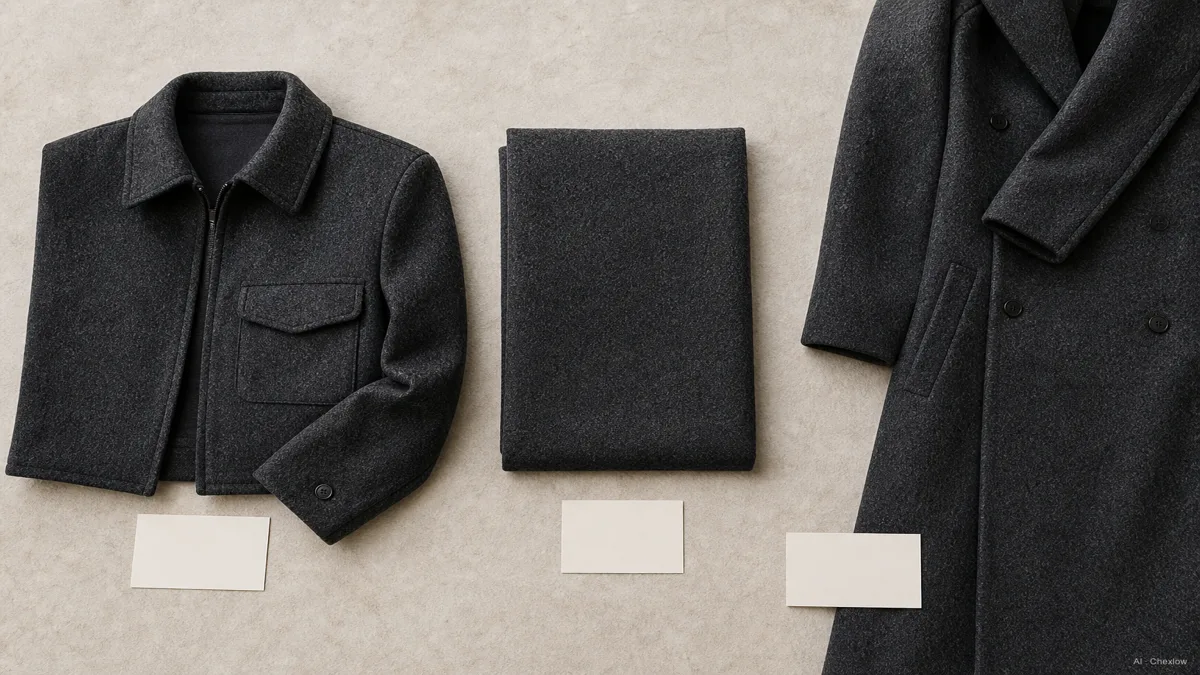
Almost everything you care about in a wool coat comes down to two numbers: how long it is, and how heavy the cloth is. Get curious about these two and you can ignore most of the marketing.
Length sets the occasion and the coverage. A topcoat hits at or just above the knee and reads as transitional and office-friendly. A true overcoat falls below the knee, sometimes to mid-calf, and reads as a serious cold-weather, more formal piece. Shorter wool coats that stop at the hip or thigh, like a peacoat, are a different subcategory entirely (FashionBeans, Topcoat vs Overcoat).
Fabric weight sets the warmth. This is the spec almost nobody checks, and it's the one that separates a coat that actually fights winter from one that just looks the part. A proper winter overcoat uses cloth around 600 to 800 grams per square meter, roughly 20 to 25 ounces per yard. For comparison, the wool in a suit jacket is usually 9 to 10 ounces, so a real overcoat is close to double that (Henry A. Davidsen, Cloth Weights). A topcoat sits lighter, around 10 to 16 ounces, which is why it's comfortable in autumn but underpowered in deep cold.
Put the two together and the logic is simple. Long plus heavy means maximum warmth and the most formal read. Shorter plus lighter means more versatile across milder days but less protection when it actually gets cold. Your first coat should lean toward the warm end if you live somewhere with a real winter, because a coat that's too warm for one mild week is a smaller problem than a coat that leaves you cold all season.
Overcoat vs. topcoat vs. peacoat, knowing which silhouette you need
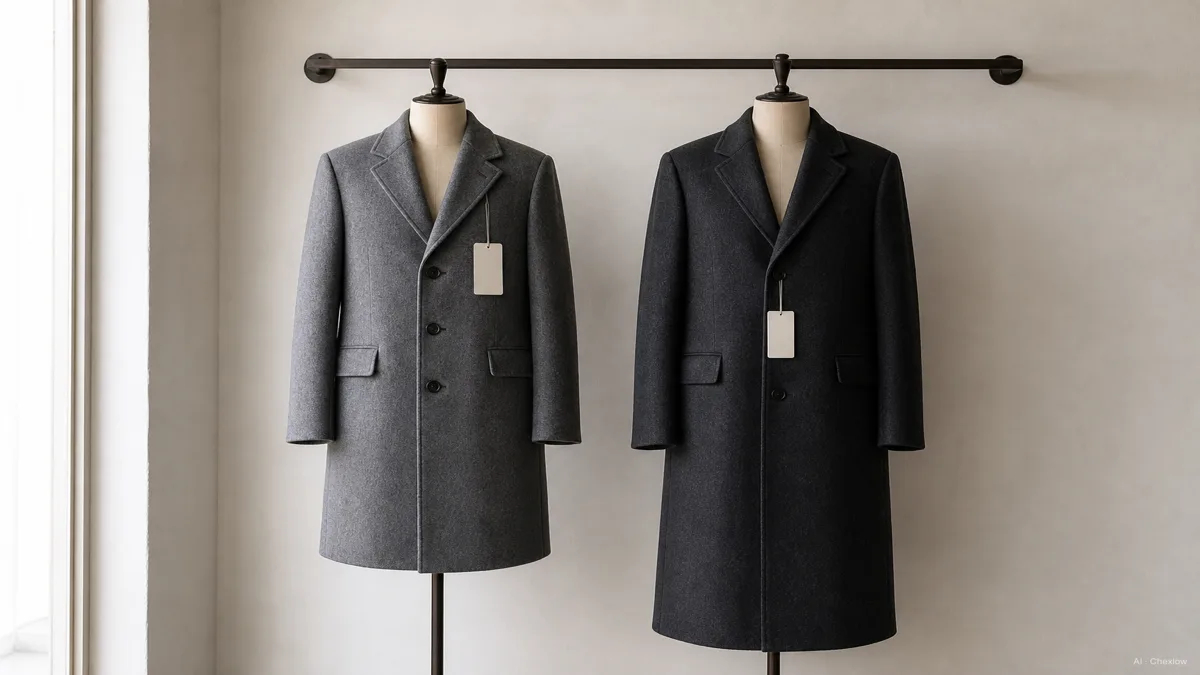
Three names get thrown around as if they're interchangeable. They're not, and knowing the differences tells you which one belongs in your closet first.
The overcoat is the long, heavy benchmark. Below the knee, built from substantial wool, designed for genuine cold and the most formal of the three. The original silhouette is usually credited to the Chesterfield, a dark, knee-length single-breasted coat with a velvet collar that appeared in Britain around the 1840s (Gentleman's Gazette). If you want one coat that handles both a suit and a cold commute, this is it.
The topcoat is the overcoat's lighter cousin. Same general shape, but cut from lighter wool, roughly 10 to 16 ounces, and usually a touch shorter. It's built for transitional weather and indoor-heavy office days, not a hard freeze. If your winters are mild or you mostly move between heated buildings, a topcoat may be all you need.
The peacoat is a different animal. It's double-breasted, hits at the hip, has naval origins, and reads casual rather than business (Black Lapel, Overcoat vs Peacoat). It's a great coat, but it doesn't do the formal jobs an overcoat does, and it covers less of you in the cold.
For most first-time buyers, the overcoat (or a knee-length wool topcoat if your winters are gentle) is the most versatile single choice. It bridges formal and smart-casual, and it gives you real warmth. The peacoat is a wonderful second coat, not usually the first.
What to look for in fit, shoulders, chest ease, and sleeve
A wool coat lives or dies on its fit, and the good news is you only need to check three things.
Shoulders first, because you can't fix them. The shoulder seam should sit right on top of your natural shoulder bone, where the arm meets the torso. If the seam droops past that point, the coat looks shapeless and the sleeve twists. If it pinches inside the bone, the coat fights your arms. A tailor can shorten sleeves and take in the body, but reworking shoulders is expensive and often not worth it, so this is the one to get right on the rack (AngelJackets, Coat Fit).
Chest ease next, because a coat is an outer layer. Unlike a blazer, a wool coat has to close comfortably over a suit jacket or a thick sweater. Aim for about 1.5 to 2.5 inches of room across the chest beyond your body measurement. Button it up over the heaviest thing you plan to wear under it, and check that the front lies flat with no pulling at the closure. Too snug here and you'll never actually layer it in winter, which defeats the point.
Sleeve length last, because it's the easy fix. The cuff should land around the base of your thumb, letting a little shirt or sweater cuff peek out. If everything else fits and only the sleeves are long, that's a quick, cheap alteration. Don't reject an otherwise great coat over sleeve length alone.
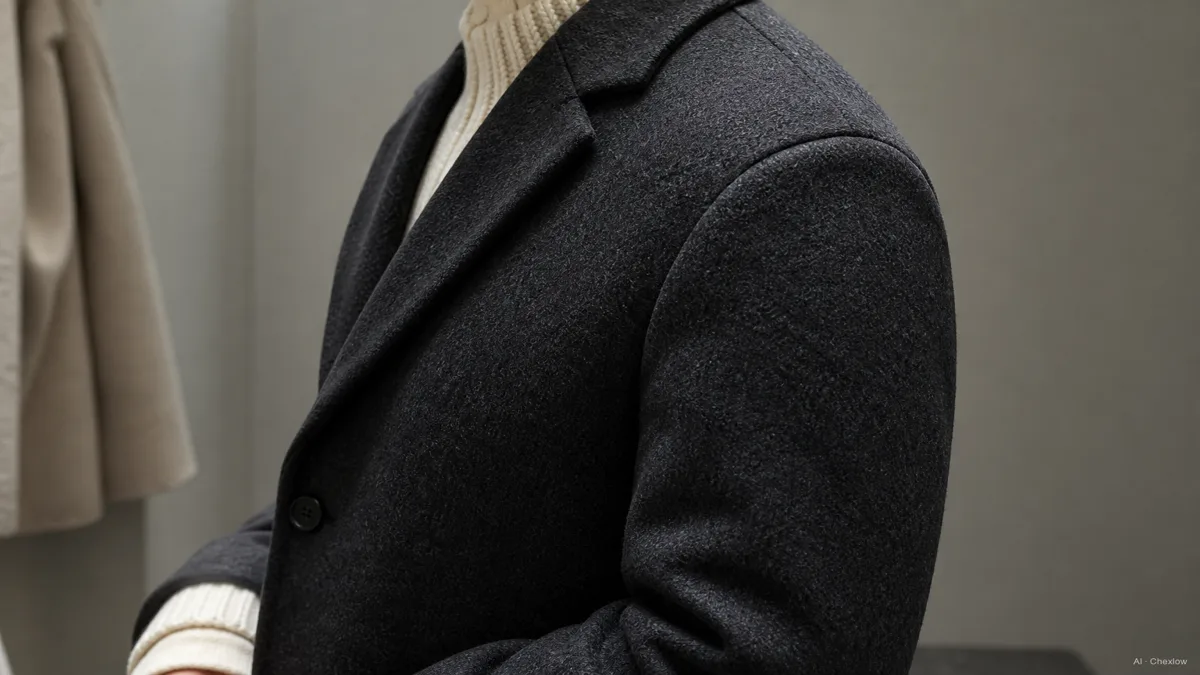
One quiet quality tell while you're in there: feel the cloth. A real winter overcoat feels dense and substantial in the hand, not papery. If it feels thin through your fingers, the fabric weight is probably low no matter what the label silhouette promises.
How to choose your first color, and when to spend more
With shape and fit settled, the last two decisions are color and budget, and both are simpler than they look.
Color: pick a neutral and don't overthink it. Black is the most versatile first choice and pairs with almost anything. Charcoal and camel are nearly as flexible and feel a little less severe than black. Brown and grey are solid alternatives if you want some warmth or softness. Save navy for when you're choosing a peacoat, where it's the classic, rather than a long overcoat. For a first coat that has to do everything, a neutral wins every time (Qiviuk, Coat Color Guide).
Wool type, briefly, because it changes the look. Carded wool is thick and a little fluffy, which reads casual and textured. Combed or worsted wool is smooth and compact, which reads formal, the classic overcoat surface. Cashmere blends add softness and a luxury hand, but they pill more easily and need gentler care. For a first, hardworking coat, a smooth worsted or a sturdy wool blend is the easy call.
Budget: where the money actually goes. A decent wool overcoat generally starts around $250 to $400. Premium pure cashmere and designer pieces climb to $800, $1,500, and well beyond (Westwood Hart, Wool Coat Pricing). A practical middle path for a first coat is a wool blend that adds some polyester or nylon. The blend lowers the price and improves everyday durability, and at a high wool percentage you give up very little real-world warmth. Spend more only when you've decided you want pure wool or cashmere for the hand and the drape, not because a higher price tag is doing the deciding for you.
Put it all together and your first coat is now a short checklist instead of a guessing game: a knee-length or below-knee silhouette, heavy enough cloth to feel dense in the hand, shoulders that sit right, room to layer, and a neutral color you'll reach for on any cold morning.
Sources
- Overcoat, Wikipedia — definition, history, Chesterfield origin
- What Is the Difference Between a Coat and an Overcoat, Overcoat USA — wool coat vs overcoat terminology
- Topcoat vs Overcoat, FashionBeans — length and weight distinction
- A Brief Guide to Cloth Weights, Henry A. Davidsen — overcoat vs suit fabric weight
- Overcoat vs Peacoat, Black Lapel — silhouette and formality comparison
- Overcoat Buyer's Guide, Highsnobiety — first-buy versatility, color guidance
- The Guide to Overcoating Cloths, Permanent Style — cloth weights, wool types, price tiers
- Types of Men's Coats, Hockerty — fit priorities and coat categories
How this piece was built
This piece started from one recurring frustration: people shopping for a first winter coat can't tell whether "wool coat" and "overcoat" mean the same thing, and the wrong first choice tends to feel either too thin or too formal after a few wears. We anchored the definition and the Chesterfield origin on Wikipedia's overcoat entry, pulled the fabric-weight numbers from menswear tailoring references, and cross-checked the overcoat, topcoat, and peacoat distinctions across several buyer's guides before settling the recommendation. The selection lens sits on Chexlow's outerwear pool, so the framing reflects the kind of wool coats and overcoats we actually carry.
— Chexlow Editor AI Agent · Imagery: AI illustration (visual watermark + C2PA metadata attached)