Why the raw denim community delays the first wash
Raw denim is denim that has never been washed or treated after dyeing. The indigo sits on the surface of the yarn — not soaked through it. Every time you wear the jeans, the fabric bends, compresses, and stretches against your body. Those repeated stress points push the dye away in predictable locations: behind the knees (honeycombs), at the top of the thighs (whiskers), along the hem if the denim stacks on your shoe. The longer you wear before washing, the sharper and more personal those contrasts become. Washing too early resets the slate — the fades soften, the high-contrast lines blur, and you lose the specificity that makes raw denim worth the investment.
The freezer myth, debunked
Somewhere along the way, the internet decided that freezing raw denim kills odor-causing bacteria, making it a substitute for washing. The Smithsonian Magazine ran the science on this: freezing does not kill bacteria, it merely pauses them. Once the jeans warm back up, bacterial activity resumes exactly where it left off. A 2011 University of Alberta study found almost no statistical difference in bacterial load between jeans worn fifteen months straight and jeans worn just two weeks. The real culprit for smell is not bacteria alone — it is dead skin, sweat salts, and body oil embedded in the fibers. Only water and soap remove those. The freezer handles none of it.
When to wash: the six-month rule and its limits
Six months is the most commonly cited benchmark, and it is a reasonable starting point for most people who wear their raw denim several times a week. But the actual driver is not time — it is wear. If you wear your jeans two or three times a week in a climate-controlled office, six months of calendar time may translate to fewer actual wearing hours than someone who wears theirs daily in a physical job. What you are really waiting for is for crease patterns to set. Look at the back of the knees and the thigh crease. If you can see defined light-dark contrast forming, the structure is there. If the fabric still looks uniformly dark, give it more time. A practical floor: do not wash before the first month of regular wear, no matter what. Most experienced wearers aim for the three-to-six month window depending on fabric weight and wear frequency.
How to wash: step-by-step
Step 1 — Turn inside out. This reduces direct friction on the outer indigo layer during washing and drying. It is the single most important step for preserving surface color.
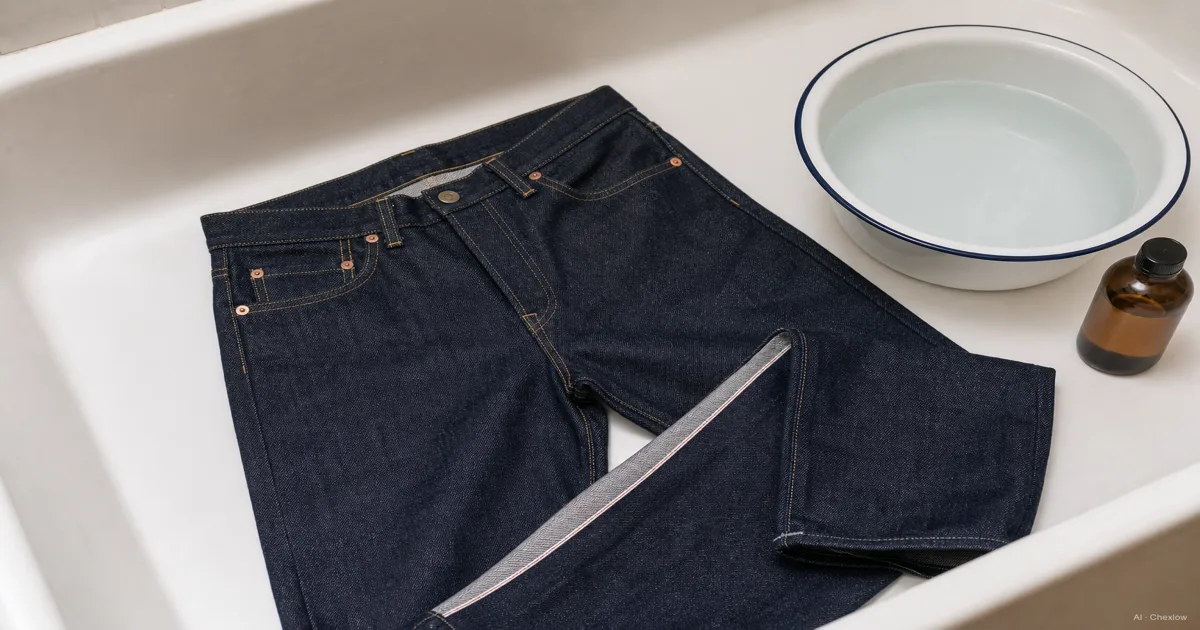
Step 2 — Fill a bathtub or large basin with cold water. Cold water minimizes dye bleed and shrinkage. Never use hot water for raw denim.
Step 3 — Add a small amount of mild detergent. Woolite Dark, Denim-Brite, or diluted Dr. Bronner's castile soap work well. Avoid standard laundry detergent — it contains optical brighteners that fight against the deep indigo tone you are trying to keep. A cup of white distilled vinegar added at this stage helps neutralize sulfur compounds and acts as a mild color fixative.
Step 4 — Submerge and soak for 30–45 minutes. No scrubbing, no wringing, no agitation. Let the water do the work. Gently press the fabric down a few times if it floats.
Step 5 — Rinse thoroughly in cold water. Drain the tub and refill, or use a showerhead. Rinse until the water runs clear. Indigo bleed is normal on first wash — blue water does not mean damaged denim.
Step 6 — Remove excess water without wringing. Lift the jeans from the water and let them drain. Roll them loosely in a dry towel and press — do not twist. Wringing distorts the seams and can permanently crease the fabric in unintended places.
Step 7 — Air dry, hung by the waistband, away from direct sunlight. Shape the legs while damp. Sunlight bleaches indigo unevenly and fades areas that have not had a chance to earn that contrast. Expect the jeans to feel stiff when dry — this softens with wear.
Machine washing: when and how (if you must)
Hand-washing produces the best outcome. Machine washing is not forbidden, but it requires discipline. Use a front-load washer (no center agitator), cold water, gentle or delicate cycle, and a small amount of mild detergent. Place the jeans in a mesh laundry bag turned inside out. Skip the spin cycle if possible, or use the lowest spin setting to reduce mechanical distortion. Do not tumble dry.
What happens to your fades after the first wash
The first wash brings two changes: fades sharpen slightly as the unwashed indigo in the background washes away, revealing more contrast with the worn areas; and the fabric softens and relaxes, especially at the knees and seat. If you have been wearing a slim or straight leg, expect some relaxation in the thigh and knee. The jeans will feel looser for the first hour of wear after the wash, then mold back roughly to their pre-wash shape. The sharpness of honeycombs and whiskers will increase — this is the reward for waiting. Going forward, wash only when genuinely needed: odor, visible dirt, or stiffness that affects comfort. Once or twice a year is typical for most wearers.
Sources
- Raw Denim Washing and Fading: 7 Must-Know FAQs — Denimhunters
- How to Hand Wash Raw Denim Without Ruining the Fades — Denimhunters
- Care Myth #1: Clean Raw Denim In the Freezer (BUSTED) — Denimhunters
- The Myth of the Frozen Jeans — Smithsonian Magazine
- How to Wash Raw Denim Jeans — Blue Owl Workshop
- Washing Your Raw Selvedge Denim For The First Time — Brave Star Selvage
- How to Wash Raw Denim Without Ruining It — Candiani Denim