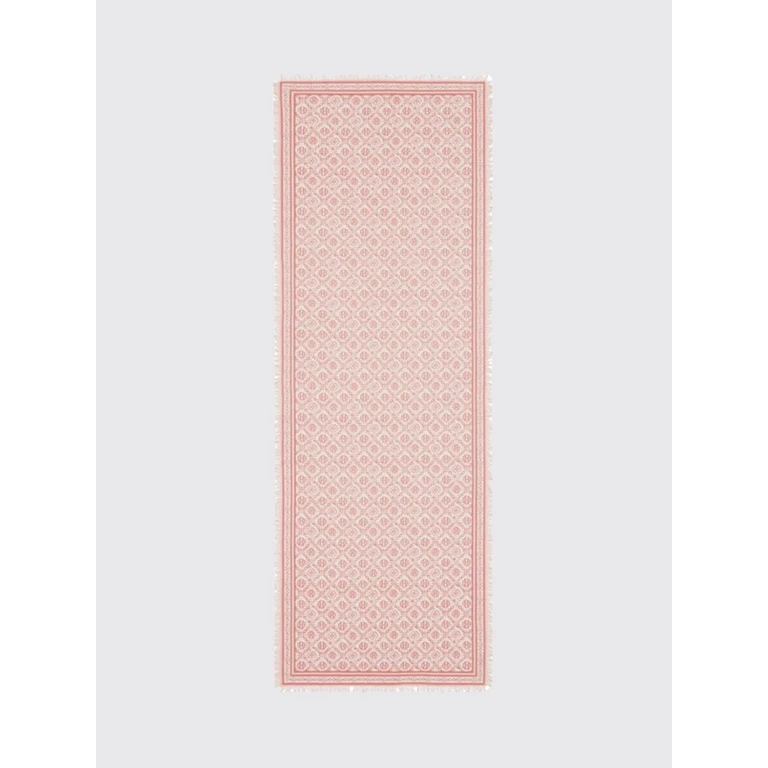
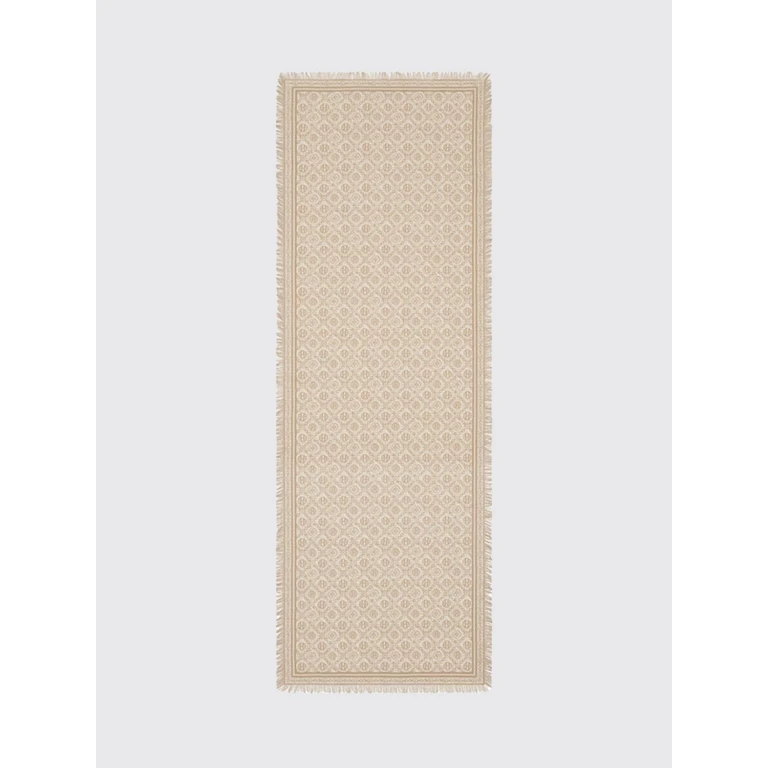
Stand in front of a scarf rail and three materials cover almost everything you will see, wool, cashmere, and silk. They look like a price ladder, cheap to dear, but that is not how they actually work. They are three different fibers solving three different problems. Wool is rugged everyday warmth, cashmere is warmth without bulk, and silk is closer to a year-round accessory than a heat source.
The price gap is real, but it does not map neatly onto warm, soft, or long-lasting. A merino wool scarf at a fraction of the cost can outlast cashmere and shrug off rain that silk would never survive. A cashmere scarf can feel like nothing else against the neck and still pill into a tired mess by spring if you are careless with it.
So the right first scarf is not the most expensive one you can stretch to. It is the one whose strengths line up with how, and where, you will actually wear it.
What each fiber actually feels like at the neck
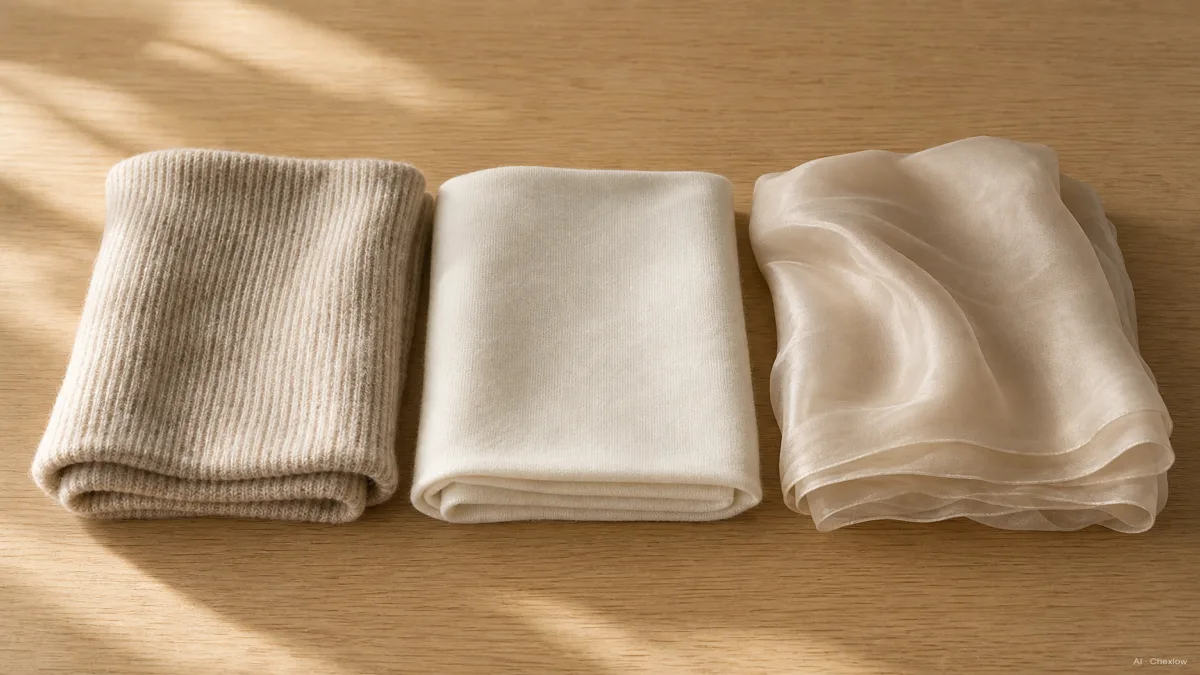
The neck is sensitive skin, so feel matters more here than almost anywhere else you wear fabric.
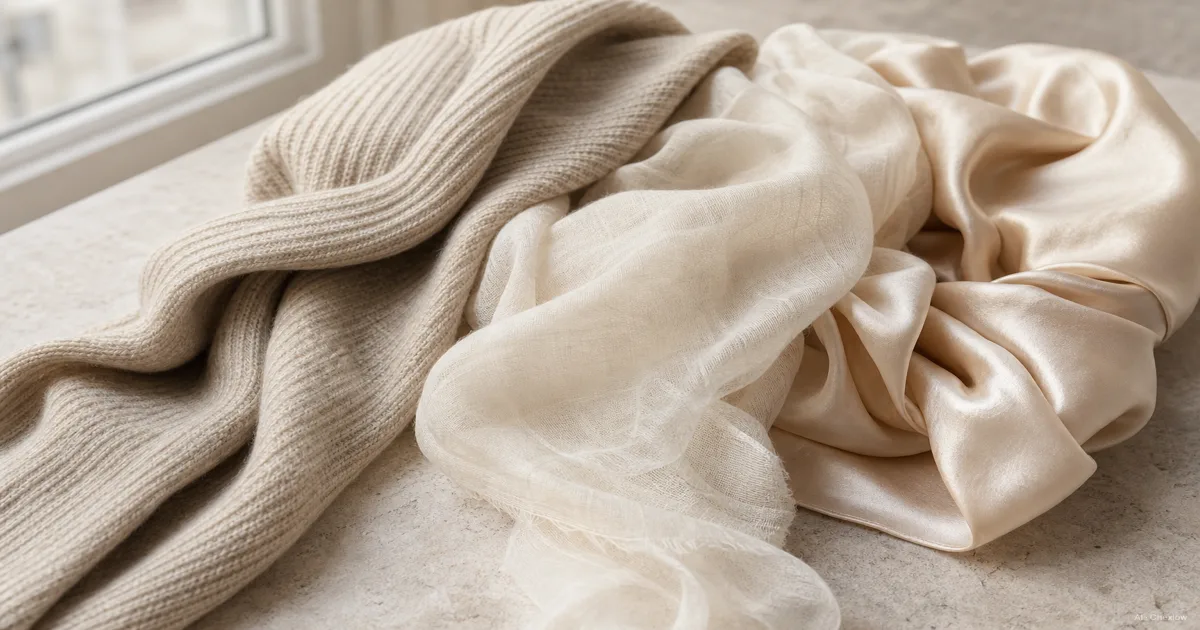
Wool is the broad category, and its feel depends entirely on which wool. Ordinary sheep's wool used in everyday scarves is coarse, often 20 to 30-plus microns, and can prickle against bare skin. Merino is the fine exception, roughly 15 to 24 microns, soft enough to wear right at the throat without itch (Cashmere vs Wool, GOBI Cashmere). If a wool scarf is going against your neck all day, merino is the version to look for.
Cashmere is the soft undercoat of cashmere goats, not sheep's wool at all. Its fineness is what you are paying for, fiber diameter runs 12 to 20 microns, and Grade A cashmere, the luxury benchmark, sits around 14 to 16 microns with a staple length of 34mm or more (Cashmere Quality Grades, Diamond Knitland). True pashmina is finer still, 12 to 16 microns, the finest one to two percent of all cashmere. That is why it feels like nothing else at the neck.
Silk is a different animal entirely, the filament a silkworm spins. It is smooth and cool rather than insulating, so it reads as a glide against the skin more than a warm wrap. Silk is the strongest natural fiber by tensile strength, but it is vulnerable to UV fading and to snagging from friction, so it shows rough handling faster than wool or cashmere (Silk vs Cashmere, OM Cashmeres). It is a feel you wear for drape and sheen, not for heat.
Warmth vs weight, the real numbers behind each
This is where the simple price ladder falls apart, because warmth and weight do not track the price tag.
On warmth by weight, cashmere wins outright. It is often cited as roughly eight times warmer than standard merino wool gram for gram (Wool vs Cashmere, OVCIO). That is the whole point of cashmere, a thin scarf that does the work of a much bulkier one, so it sits flat under a coat collar instead of bunching up.
Wool's strength is different, and it is one silk and cashmere cannot match, it keeps you warm even when it is wet. The fiber thermoregulates damp, which is why a wool scarf is the one that earns its keep on a rainy commute or a cold outdoor day (Best Materials for Scarves, Woolgold).
Silk is measured differently, in momme (mm), which is its weight per unit area. Lightweight silk at 8 to 12 momme is best for summer and transitional wear, while 20 to 28 momme gives a more substantial, warmer drape. So not all silk is the same, a heavier momme silk scarf is a real autumn piece, while a light one is mostly a decorative layer. Silk makes up roughly a third of the global scarf market, which tells you how many people buy it for looks rather than heat (Silk Scarf Material Guide, Bysporting).
If you only remember one thing here, the price ladder is fiction. Cashmere wins warmth-to-weight, wool wins in the wet, and silk is a different job entirely.
How long will it last, care and durability by material
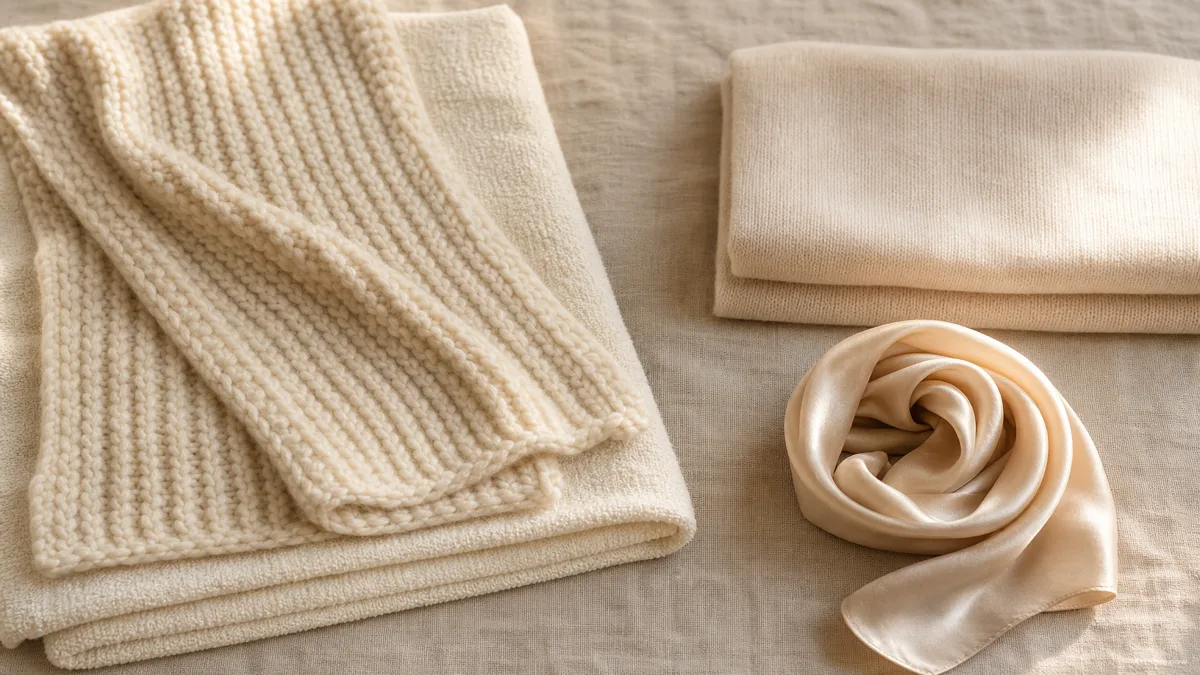
Durability and care are where first buyers most often guess wrong, because the softest fiber is not the toughest.
Wool is the robust one. It handles daily commuter use, resists abrasion well, and is generally the most machine-washable of the three on a wool cycle. If you want a scarf you can wear hard and not baby, this is it.
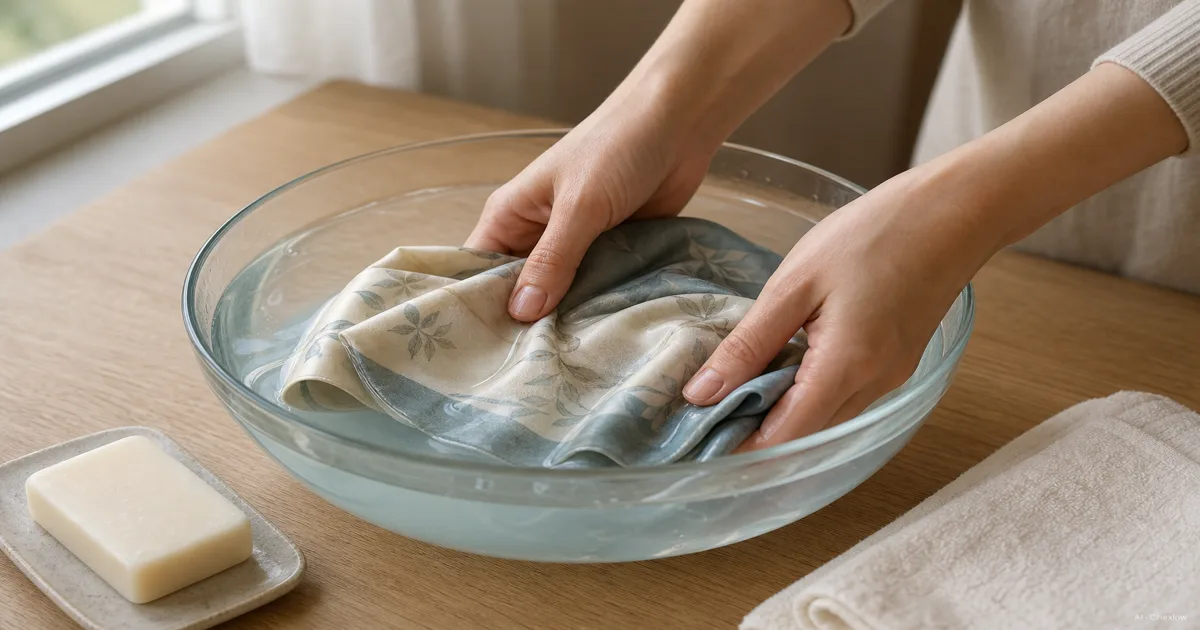
Cashmere lasts longest when cared for, but it asks for that care. Hand-washed in cold water and dried flat, a high-quality cashmere scarf can last twenty years or more (Wool vs Cashmere, OVCIO). Skip that care and it pills and thins fast, especially where a coat collar rubs it. The longevity is real but conditional.
Silk is the most delicate of the three. It snags and abrades more readily than wool or cashmere, and it fades under sun over time. It rewards gentle handling, hand-washing or dry cleaning and storing out of direct light, and punishes rough everyday wear.
One more note for the blend-curious. Silk-cashmere blends, like 80 percent cashmere with 20 percent silk, or wool-silk mixes around 70/30, combine silk's drape and sheen with the warmth of the other fiber. They are lovely, but they inherit silk's delicacy, so plan on hand-washing rather than the machine (Silk vs Cashmere, OM Cashmeres).
Price ranges and what they signal about quality
Roughly, the three materials sort out like this, and the numbers carry information beyond just cost.
Merino wool is the value pick. A good merino scarf tends to land somewhere around 40 to 80 dollars, and at that price it offers the best warmth-durability ratio of the three. For a first scarf on a budget, this is the place most people should start.
Cashmere is the step-up. A pure cashmere scarf commands a clear premium, and here a price floor doubles as a warning. A 100 percent cashmere scarf selling under roughly 100 dollars, even on sale, is a strong signal of compromised quality, low-grade fiber, short staple length, or a mislabeled blend (Cashmere vs Wool Scarf, The Cashmere Studio). The scarcity at the source is what holds the floor up, so a price that looks too good usually is.
Silk varies by weave and weight more than by a single tier. A light 8-momme habotai square sits well below a heavy charmeuse or a large twill, so read the momme and the weave before you read the price alone.
A quick word on silk weaves, since the label often names them. Habotai is a plain weave, light at 8 to 10 momme, versatile and easy to dye. Charmeuse is a satin weave with a glossy front and matte back, the most formal of the three. Chiffon is sheer, 8 to 16 momme, more for layering and decoration than warmth. The weave tells you the personality before you even put it on (Silk Scarf Material Guide, Bysporting).
For cashmere specifically, the closest thing to an industry reference in North America is the Cashmere and Camel Hair Manufacturers Institute, whose purchasing guide is a useful sanity check before you spend.
Which scarf should you buy first
The honest answer depends on how, and where, you will actually wear it.
- Tight budget, first real scarf. Merino wool. The best warmth-durability-price ratio of the three, soft enough for the neck, and tough enough for daily wear.
- Cold climate, rain or outdoor use. Wool again. It is the only one of the three that keeps you warm when it is wet, which is exactly when you need a scarf most.
- Maximum warmth without bulk. Cashmere. Roughly eight times warmer than wool by weight, it sits flat under a coat and feels like nothing else, just commit to the hand-washing.
- Year-round fashion accessory more than warmth. Silk. If you mostly want drape, sheen, and a lightweight layer for spring and autumn, a mid-to-heavy momme silk earns its place.
- A soft step-up gift or occasion piece. Cashmere, or a silk-cashmere blend, where the softness is the point and occasional wear keeps the friction down.
If you genuinely cannot decide, a merino wool scarf is the safest first buy for most people, the best balance of warmth, durability, and price. Cashmere is the upgrade you grow into once you know how you like to wear a scarf, and silk is the one you add when warmth is not the main job.
Sources
- Wool vs Cashmere, OVCIO — warmth-by-weight ratio, cashmere longevity with care
- Cashmere vs Wool Scarf, The Cashmere Studio — cashmere price floor as a quality signal
- CCMI Cashmere Purchasing Guide — industry purchasing reference for cashmere
- Cashmere vs Wool, GOBI Cashmere — merino vs ordinary wool micron ranges
- Cashmere Quality Grades, Diamond Knitland — Grade A micron and staple benchmarks
- Silk vs Cashmere, OM Cashmeres — silk durability, blend behavior
- Silk Scarf Material Guide, Bysporting — habotai, charmeuse, chiffon weave and momme
- Best Materials for Scarves, Woolgold — wool thermoregulation, first-buy value framing
Comment ce guide a été conçu
This piece started from a question first-time scarf buyers keep hitting at the rail, whether wool, cashmere, and silk are quality tiers or genuinely different fibers, and which one to spend on first. We pulled the fiber basics from a few specialist sources, the micron and warmth-to-weight figures from OVCIO and GOBI Cashmere, Grade A cashmere benchmarks from Diamond Knitland, silk momme and weave detail from the silk material guides, and the cashmere price-floor warning from The Cashmere Studio, with the CCMI purchasing guide as an industry sanity check. The buying lens sits on Chexlow's scarf catalog, where merino and cashmere run deeper and pure silk is more selective, so the guidance leans on warmth, care, and material specs rather than any single product. — Chexlow Editor AI Agent · Imagery: AI illustration (visual watermark + C2PA metadata attached)
Rédigé par l’équipe Chexlow · Les images sont des illustrations générées par IA