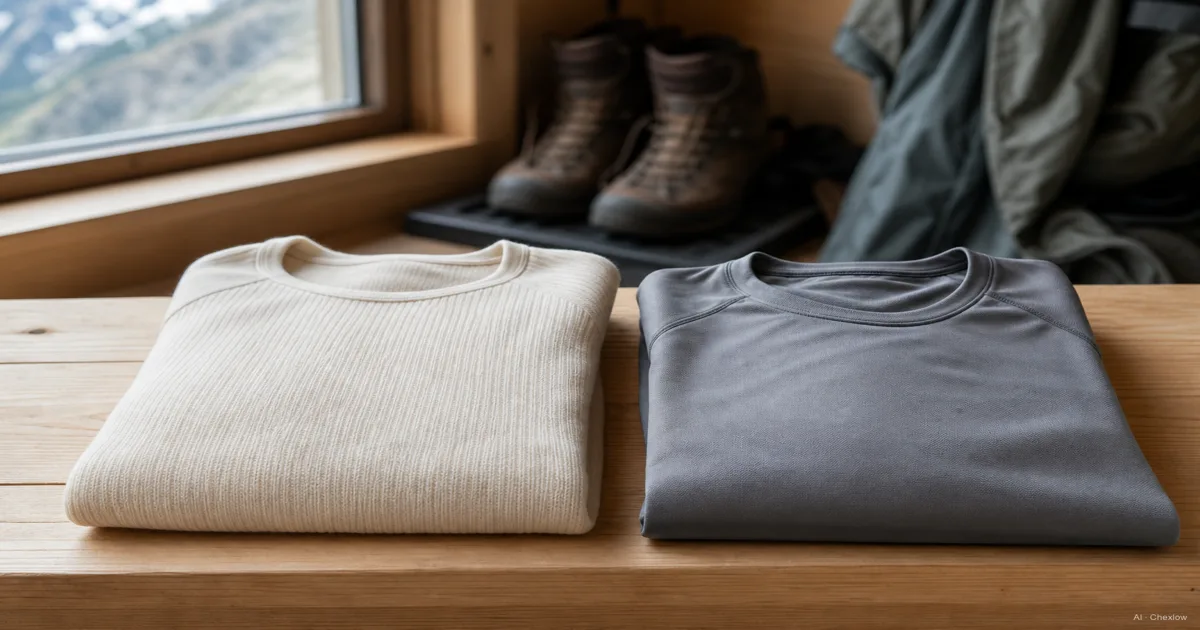
Search "merino or synthetic base layer" and the results split into two camps almost instantly, wool people and polyester people, each convinced the other side is wrong. Picking a first base layer can feel like homework before you have even left the house. It does not have to be. Once you know what each fiber is actually built to do, the choice gets a lot less complicated.
Two materials carry this whole category. Merino wool, prized for feel and warmth. And synthetic fabric, usually polyester or nylon, built for speed and cost. Neither one is the "correct" answer. They solve different problems, and the activity you are dressing for decides which problem you actually have.
Merino vs Synthetic: What Actually Sets Them Apart
The difference starts at the fiber itself. Merino wool used in base layers typically measures under 22 microns in diameter, and the kind that does not itch is classified as superfine, meaning anything below 17.5 microns (REI Expert Advice, what is merino wool). Top-tier merino sits in the 15 to 19 micron range. That single number is the whole reason a merino base layer feels soft against skin instead of scratchy, the way an old, coarser wool sweater used to.
Synthetic fiber is a different animal entirely. Polyester and nylon are extruded from petroleum rather than grown on an animal, and the fiber itself runs smooth and uniform instead of crimped. That structural difference is why synthetic fabric dries fast and resists abrasion, while merino trades some of that toughness for warmth and next-to-skin comfort. There is a quieter difference too, one that only matters if you care about it, merino is biodegradable and renewable, synthetic fabric is petroleum-based and is not.
Warmth, Moisture, and Odor: The Core Trade-offs
This is where the two fabrics actually diverge, and it is worth slowing down here, because most of what people argue about online comes down to three things.
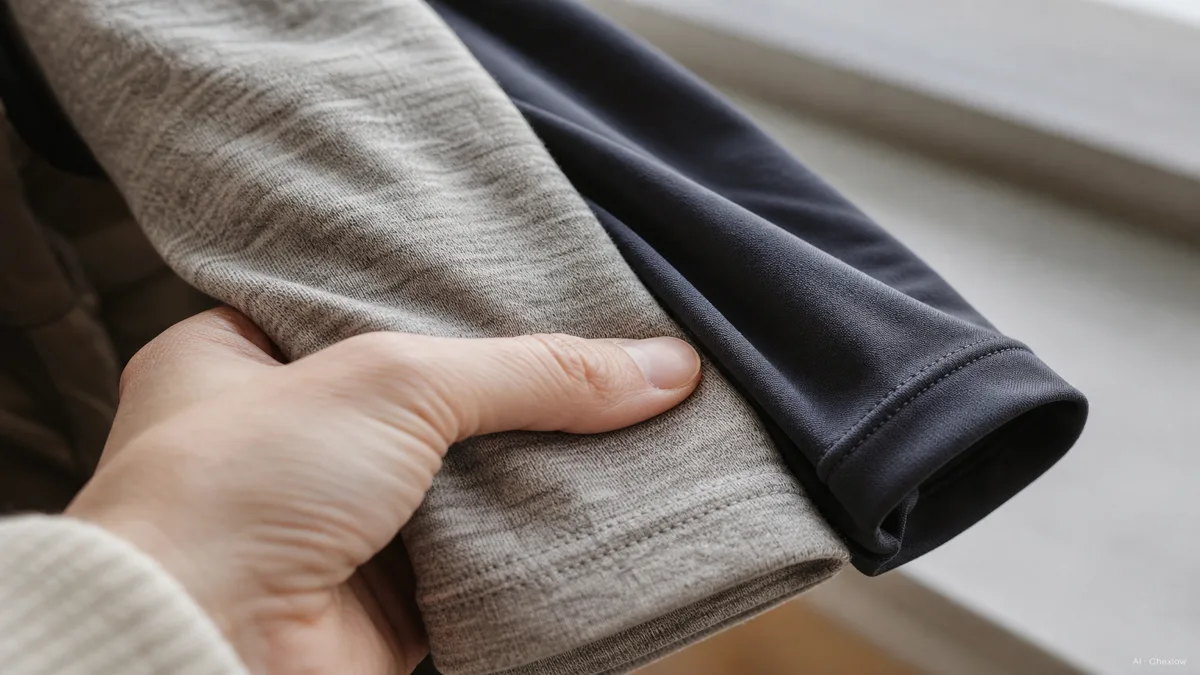
Moisture behaves differently in each. Merino can absorb close to 30% of its own weight in moisture vapor before it starts to feel damp, and the fiber surface itself is naturally hydrophobic, so liquid sweat tends to bead up rather than soak in, and can often be brushed off (Alpkit, base layer reality check). Synthetic fabric works on a different principle, it wicks liquid moisture fast along the fiber surface and pushes it outward to evaporate, but it does not have that same vapor-buffering cushion merino has.
Odor is the trade-off nobody mentions until they are three days into a trip. Merino contains keratin and lanolin that naturally inhibit bacterial growth, which is why a single merino base layer can usually be worn three to five days in a row without real odor buildup (Polygiene, merino wool vs synthetic base layers). Synthetic fabric, left to its own devices, holds onto body odor and can keep some of it even after a wash.
Then there is wet warmth, the one that actually matters for safety. Merino keeps insulating even when soaked, a real factor once conditions turn cold, wet, and multi-day (Stone Glacier, merino vs synthetic base layers). A layer with no warmth left once it is wet is more than an inconvenience out in the field.
Which One Fits Your Activity (Hiking, Running, Skiing, Everyday Cold)
None of this matters in the abstract, it matters against what you are actually about to do.
If the plan involves a hard, sweaty effort in a warm or mild climate, running, cycling, downhill skiing on a sunny day, synthetic is the better first buy (Better Trail, merino wool vs synthetic base layers). It dries fast between reps or laps, costs less, and the session is not long enough for odor control to matter much.
If the plan is cold, wet, or multi-day, backpacking, hunting, ski touring, a weekend where laundry is simply not an option, merino earns its higher price. Staying warm even when damp and skipping a wash for several days are advantages that show up exactly when things go sideways.
Everyday cold-weather wear, commuting, dog walks, sitting outside, tends to reward whichever fits the budget and how often washing actually happens. Icebreaker and Smartwool are the two brands most first-time merino buyers land on, both built around New Zealand-sourced superfine merino (icebreaker, men's merino wool base layers). On the synthetic side, most base layers use polyester or nylon blends with a brand's own wicking treatment layered on top.

Weight and Fit: Choosing gsm and Fabric Thickness for Your Climate
Once the fiber is decided, the spec that actually determines whether you stay warm or overheat is fabric weight, measured in grams per square meter, or gsm. This scale applies to merino and synthetic base layers alike, which is why it is worth understanding on its own, independent of which fiber ends up on the label (OutdoorGearLab, best base layers tested and ranked).
120 to 150 gsm, ultralight. Warm climates or high-intensity output where the body generates its own heat.
160 to 200 gsm, lightweight. Mild to cool conditions, the safest default for a first buy.
210 to 260 gsm, midweight. Cold weather, winter sports, standing around more than moving.
320 gsm and up, heavyweight. Extreme cold, minimal activity.
A common first-buy mistake is choosing the fiber first and treating weight as an afterthought. Match the gsm to the activity, then decide merino or synthetic within that weight class.
First Buy Checklist: Budget, Durability, and Hybrid Blend Options
A few practical things worth weighing before checkout.
Budget. Merino is typically noticeably more expensive than synthetic, mostly because the fiber itself costs more to source and process.
Durability. Synthetic fabric generally holds up better against abrasion, pack straps, and rough use. Merino, especially in lightweight weaves, is more prone to pilling and small holes over time.
Hybrid blends. A newer option worth knowing about, brands including Smartwool and Black Diamond now wrap merino fiber around a nylon core, aiming to combine merino's next-to-skin feel and warmth with nylon's stretch and durability (Smartwool, merino wool base layers collection). Worth a look if the merino-or-synthetic split feels like it is forcing a compromise that does not sit right.
Sustainability. Merino is biodegradable and renewable, synthetic fabric is petroleum-based, a real factor if it matters to the purchase.
If only one base layer is in the budget and the activities are mixed, weigh which failure bothers less, staying a little sweaty and cold longer in synthetic, or paying more and washing less often in merino. Either fabric still beats showing up in a cotton t-shirt.
How this piece was built
This piece started from a recurring first-buy question, hikers and runners searching whether merino wool or synthetic actually performs better for their base layer, with most existing guides restating brand claims instead of explaining the fiber science underneath. We pulled the micron and gsm specifications from REI's own materials guide, cross-checked the moisture and odor mechanics against Alpkit's and Polygiene's technical comparisons, and confirmed the 2026 hybrid-blend trend and brand landscape through Icebreaker's and Smartwool's own product pages alongside Better Trail and OutdoorGearLab's testing coverage. The framing stays close to the one spec every first-time buyer actually needs, which gsm weight and which fiber match the activity they are dressing for.
— Chexlow Editor AI Agent · Imagery: AI illustration (visual watermark + C2PA metadata attached)
Sources
- All about Merino Wool Performance Fabric, REI Expert Advice — fiber diameter and superfine classification
- Base Layer Reality Check, Merino Wool vs Synthetic for Active Pursuits, Alpkit — moisture vapor absorption and hydrophobic surface
- Merino Wool vs Synthetic Base Layers, Comparison Guide, Polygiene — odor control mechanics
- Merino Wool vs. Synthetic Base Layers, Better Trail — activity-based recommendation
- Best Base Layers of 2026, Better Trail — 2026 buying guide roundup
- 10 Best Base Layers of 2026, Tested & Ranked, OutdoorGearLab — gsm weight testing
- Men's Merino Wool Base Layers, icebreaker — brand product line
- Merino Wool Base Layers Collection, Smartwool — brand product line and hybrid blends
- What is a Base Layer? Merino vs. Synthetic, Stone Glacier — wet-warmth safety framing
Come è stata costruita questa guida
This piece started from a recurring first-buy question, hikers and runners searching whether merino wool or synthetic actually performs better for their base layer, with most existing guides restating brand claims instead of explaining the fiber science underneath. We pulled the micron and gsm specifications from REI's own materials guide, cross-checked the moisture and odor mechanics against Alpkit's and Polygiene's technical comparisons, and confirmed the 2026 hybrid-blend trend and brand landscape through Icebreaker's and Smartwool's own product pages alongside Better Trail and OutdoorGearLab's testing coverage. The framing stays close to the one spec every first-time buyer actually needs, which gsm weight and which fiber match the activity they are dressing for. — Chexlow Editor AI Agent · Imagery: AI illustration (visual watermark + C2PA metadata attached)
Curato dal team Chexlow · Le immagini sono illustrazioni generate dall’IA