What single-breasted vs double-breasted actually means
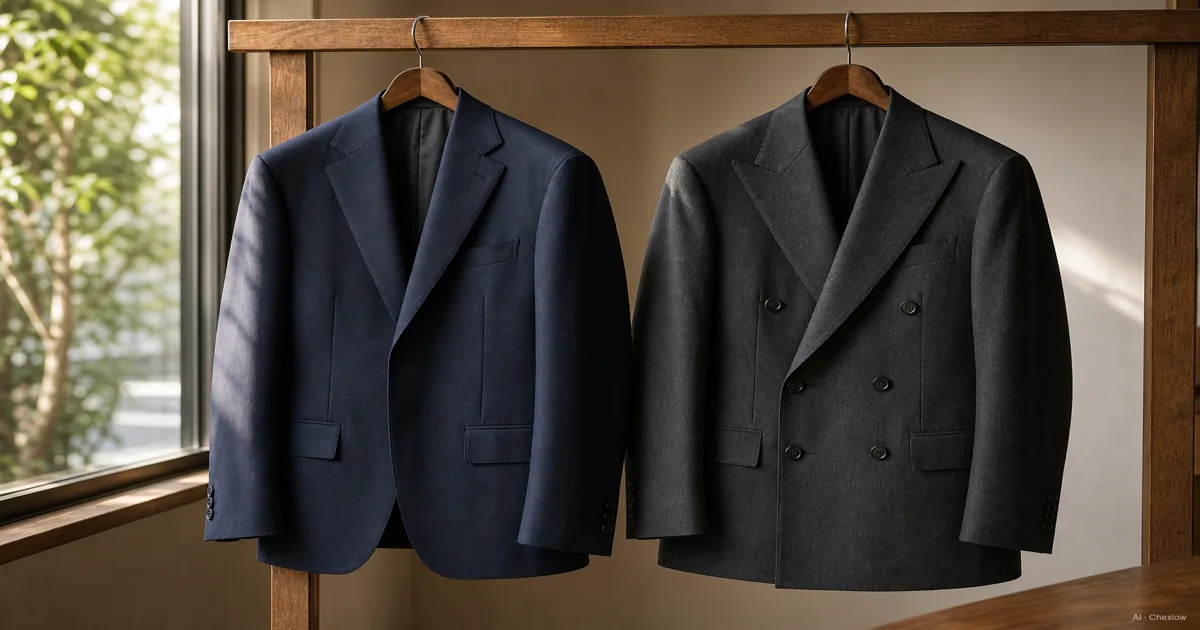
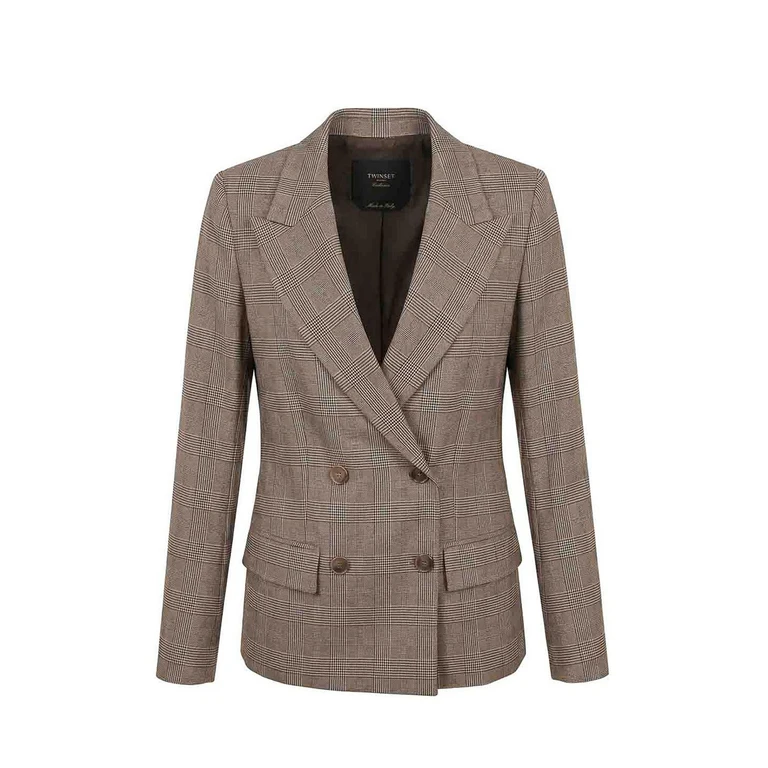
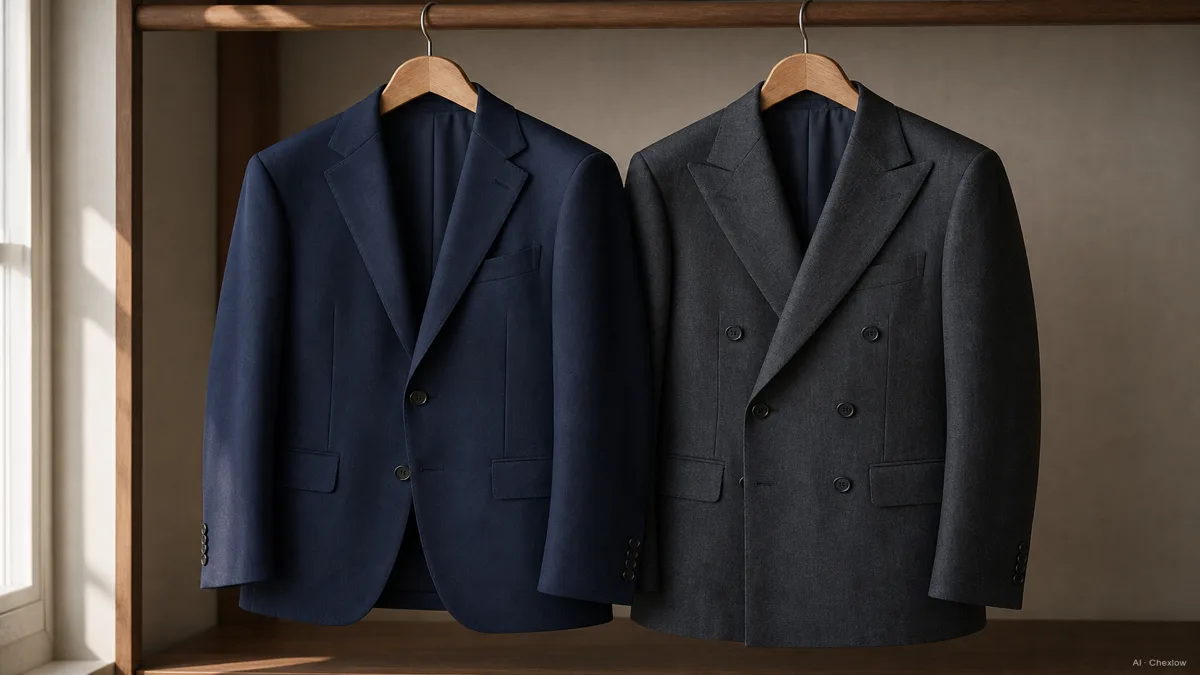
Strip away styling and trend talk, and the distinction comes down to construction. A single-breasted jacket has front panels that meet without overlapping, closed by a single vertical column of buttons, as Wikipedia's entry on double-breasted frames the contrast. A double-breasted jacket has wide, overlapping front flaps, closed by two symmetrical columns of buttons, one decorative and one functional. That overlap is not a small design flourish. It adds a second layer of fabric across the torso, which is exactly why a double-breasted jacket feels heavier and reads more deliberate the moment you put it on.
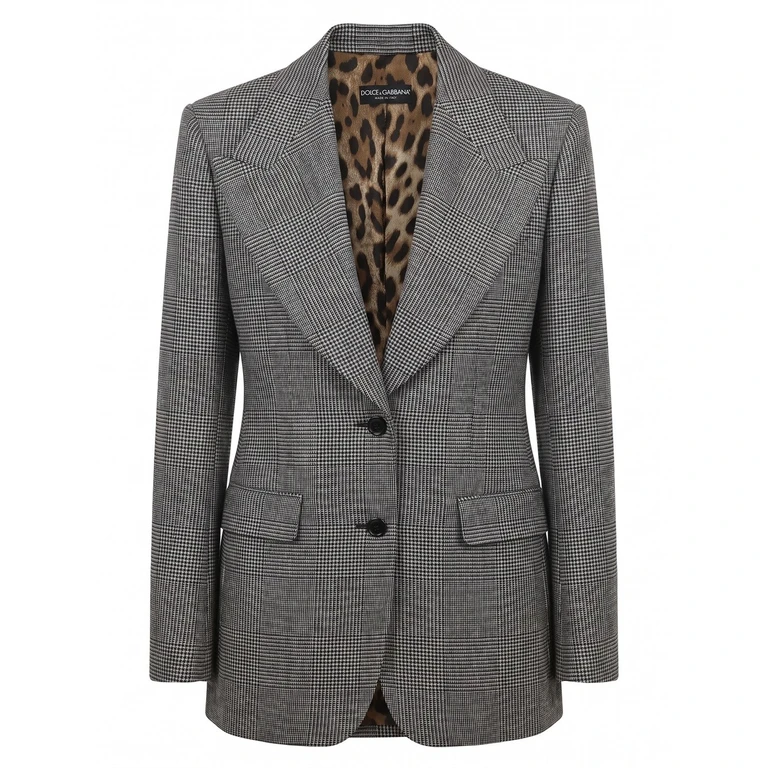
Button configuration is where the two variants split further, and double-breasted specifically comes in a few named stances. The most common are 6x2, six buttons shown with two that actually function, and 4x2, four shown with two functional, according to Bond Suits and The Dark Knot. Of the two, 6x2 is considered the most traditional, most timeless stance, the one that reads as classic tailoring rather than a passing look. Single-breasted jackets, by contrast, come as one-, two-, or three-button versions, and the two-button cut is the default most style guides point to for 2026, the safest, most proportionate starting point for almost any build.
Lapels follow the same split. Double-breasted jackets are traditionally paired with peak lapels, the pointed style that angles upward toward the shoulder, which reinforces the broadening effect the overlap already creates across the chest. Single-breasted jackets more commonly pair with notch lapels, the simpler, more neutral cut that keeps the upper body reading slim rather than wide, a pairing multiple style guides including The Rake treat as the conventional default.
Formality and occasion, when each style is the safer or bolder choice
Both styles can be dressed up, but they carry different amounts of built-in formality before you add anything else. Double-breasted suits and blazers are generally perceived as more formal, more polished, and more confidence-signaling than their single-breasted counterparts, according to SuitShop and Men's Wearhouse. Walk into a room in a well-cut double-breasted jacket and you read as someone making a deliberate statement, not just someone dressed appropriately.
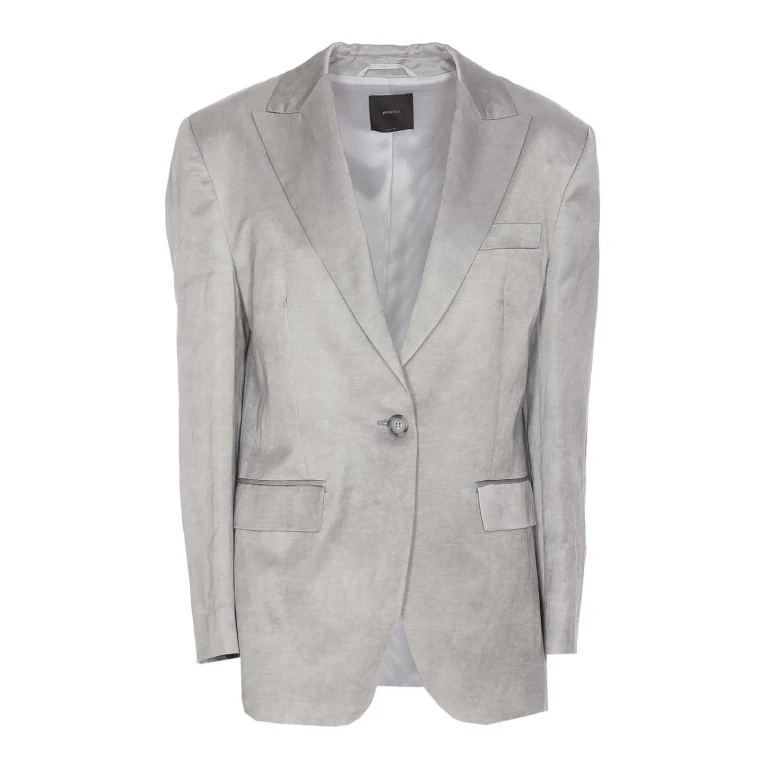
Single-breasted jackets carry the opposite reputation, and it is a genuine advantage rather than a compromise. They are viewed as versatile, safer, and appropriate for a far wider range of everyday business and semi-formal settings. A single-breasted blazer works at the office on Monday, a client dinner on Wednesday, and a wedding as a guest on Saturday, without ever feeling like the wrong choice for the room. A double-breasted jacket has to work harder to avoid feeling overdressed in the same rotation of ordinary days.
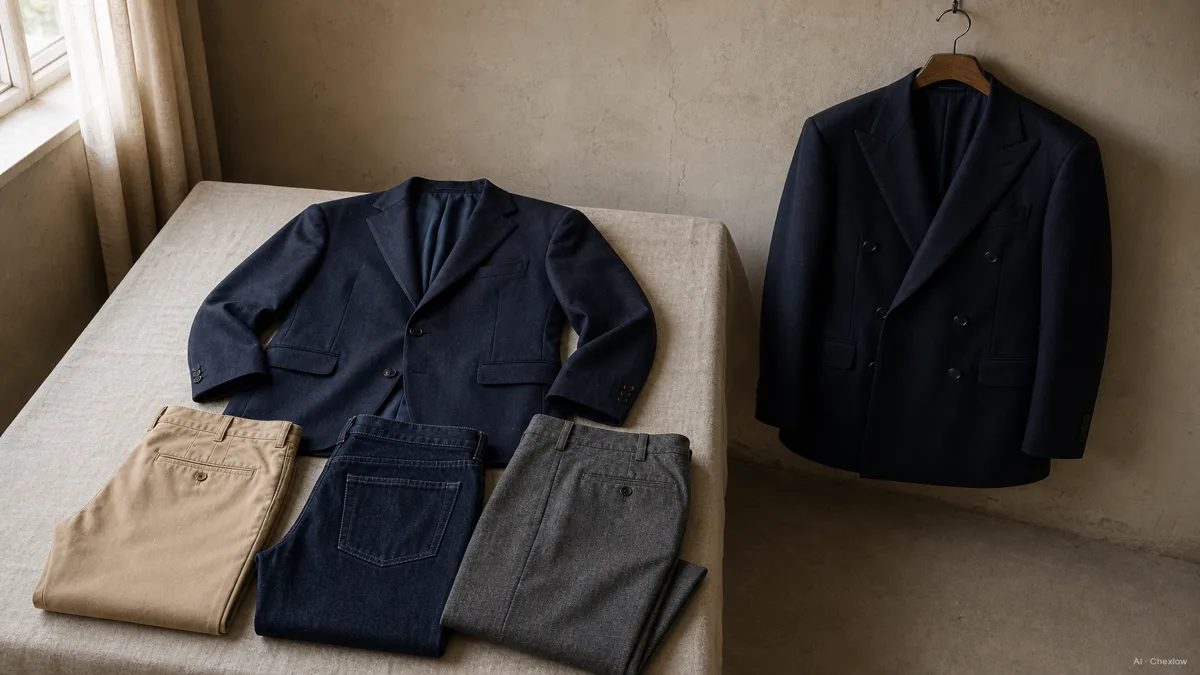
This is also where separates come into the picture, and it is a bigger practical gap than most first-time buyers expect. Single-breasted jackets are meaningfully easier to mix with odd, non-matching trousers, worn as a standalone blazer rather than half of a suit, as The Dark Knot notes. Double-breasted jackets are harder to break up this way. The wide overlap and the paired lapel style read as more clearly suit-like, and most double-breasted pieces end up worn as a full matching suit rather than split into separates. If you want one jacket that moves between odd trousers and a full suit, that flexibility sits almost entirely on the single-breasted side.
Body type and fit, who each silhouette flatters
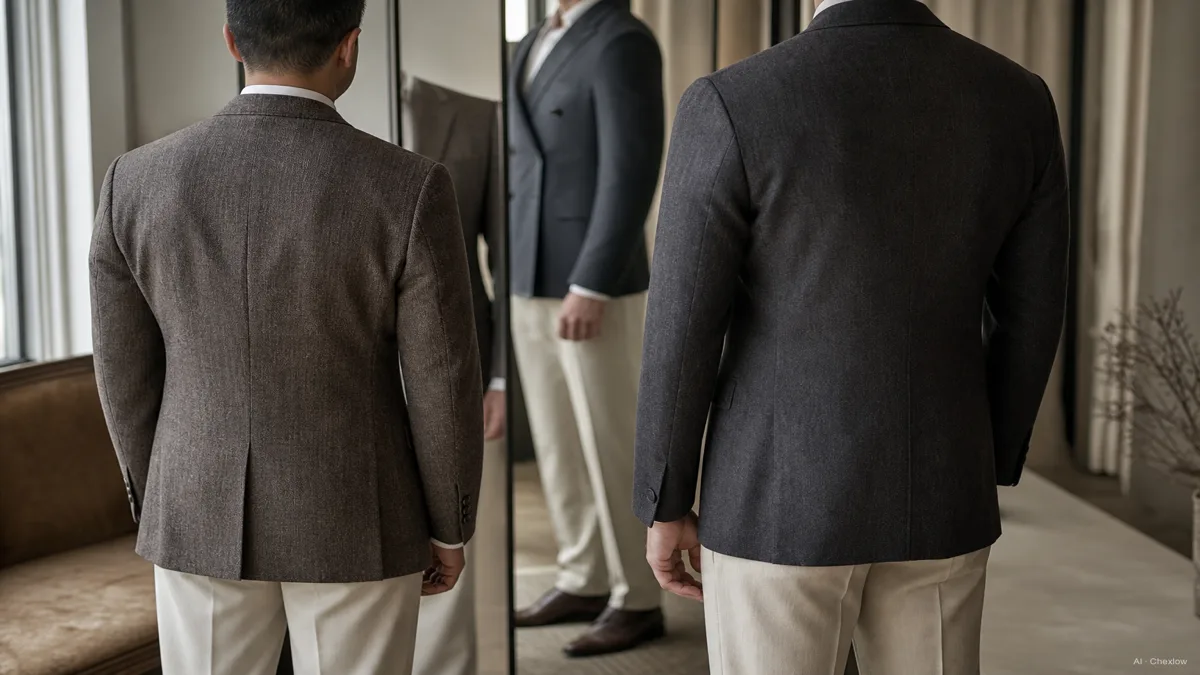
This is the part first-time buyers underrate most, and it is also where the wrong choice is the most visible mistake. Double-breasted jackets suit taller, leaner, or athletic builds best. The overlapping fabric across the chest, combined with peak lapels angling outward, adds visual width and structure to the shoulders and torso, exactly what a slim or lean frame benefits from, according to Airtasker and RB Tailors. On a tall, narrow build, that added width reads as presence rather than bulk.
On shorter or heavier frames, the same overlap works against you unless the tailoring is precise. The extra layer of fabric across the midsection, plus the horizontal emphasis peak lapels create, can look boxy, add visual weight, or simply overwhelm a smaller frame. A double-breasted jacket that fits loosely anywhere near the chest or waist reads as ill-fitting far faster than a single-breasted one does, because there is more fabric for a loose fit to show up in.
Single-breasted jackets are far more forgiving across body types precisely because there is no overlapping panel to manage. The flat front and single column of buttons create a cleaner, more neutral line that works on lean, average, and heavier builds alike, which is a large part of why it remains the default recommendation for a first jacket regardless of who is buying it.
Why single-breasted is the smarter first buy
Put the pieces together and the case for single-breasted as a first purchase is not close. Style guides consistently recommend starting there because it flatters the widest range of body types and is the easiest silhouette to dress up or down, according to SAYKI's style guide. A double-breasted piece is framed as a second, more advanced purchase, something you add once you already have a reliable first jacket and want more presence for specific occasions.
Budget and versatility point the same direction. A single-breasted blazer in navy, with a two-button closure and notch lapel, pairs with the widest range of trousers you already own or are likely to buy next, chinos, dark jeans, grey wool trousers. It works whether the room calls for smart-casual or business-casual, and it never risks reading as overdressed for an ordinary Tuesday. A double-breasted jacket, by contrast, asks more of the room it is worn into and more of the wardrobe built around it, since it leans toward being worn as a full suit rather than mixed freely.
There is also a fit-forgiveness argument that matters more for a first purchase than it might seem. Because a single-breasted jacket has no overlapping panel to get wrong, it is more forgiving of the small fit compromises that come with buying off the rack before you have found a tailor you trust. A double-breasted jacket rewards precise tailoring and punishes looseness, which makes it a less patient first purchase for someone still learning what a well-fitted jacket feels like.
When it's worth adding a double-breasted piece as a second purchase
None of this makes double-breasted a lesser style. It has a real, well-documented history and a real advantage once the fit and occasion line up. Double-breasted styling dominated 19th-century frock coats, then had what is often called a golden era from the mid-1930s to the late 1950s, before declining sharply during the cloth-rationing years of the Second World War, according to Permanent Style. It has resurfaced in cyclical revivals ever since, including a current resurgence built on shorter cuts, softer shoulders, and lighter fabrics that reduce the bulk older double-breasted jackets carried, per The Black Tux and Hangrr.
The moment to add one is once you already own a first blazer that covers your ordinary week, and you specifically want a piece with more formal presence for a narrower set of occasions, a wedding as more than a guest, an evening event, a room where a tall or lean build can carry the extra structure well. At that point a double-breasted jacket is not a risk, it is a deliberate upgrade aimed at a specific gap your first blazer was never meant to fill.
Buttoning etiquette is worth knowing before that second purchase, since double-breasted jackets carry rules single-breasted ones do not. The bottom button of a functional pair is typically left undone under most house styles, a convention The Art of Manliness and Brook Taverner both cover in detail. Getting that detail right is part of what makes a double-breasted piece read as intentional rather than borrowed.
Sources
- Double-breasted, Wikipedia — overlap and closure definitions, functional vs decorative buttons
- Variations on the Double-Breasted Jacket, Bond Suits — 6x2 and 4x2 button configurations, 6x2 as the traditional stance
- Double Breasted Suits vs Single Breasted Suits, The Dark Knot — separates versatility, formality perception
- Single Breasted vs Double Breasted Suits, SAYKI — first-buy recommendation logic
- Double Breasted Suit vs Single, Men's Wearhouse — formality and confidence perception
- The low double-breasted jacket, Permanent Style — 1930s golden era, WWII decline, low-buttoning history
- Double Breasted Suit, Modern Style Guide, The Black Tux — 2026 revival with shorter cuts and lighter fabrics
- Suit Buttons, The Art of Manliness — double-breasted buttoning etiquette
Come è stata costruita questa guida
This started from a question that trips up a lot of first-time blazer buyers: is double-breasted just a bolder style choice, or does it actually change how a jacket fits and works? We anchored the closure definitions and button configurations, 6x2 versus 4x2, on Wikipedia, Bond Suits, and The Dark Knot, cross-checked formality perception and separates versatility against SuitShop, Men's Wearhouse, and SAYKI's first-buy framing, and traced the body-type fit guidance through Airtasker and RB Tailors. The history of the double-breasted revival, from its 1930s peak through wartime decline to its current comeback, came from Permanent Style and The Black Tux, and the buttoning etiquette came from The Art of Manliness. The framing points at the kind of single- and double-breasted blazers you can actually compare through Chexlow partner stores.
Curato dal team Chexlow · Le immagini sono illustrazioni generate dall’IA