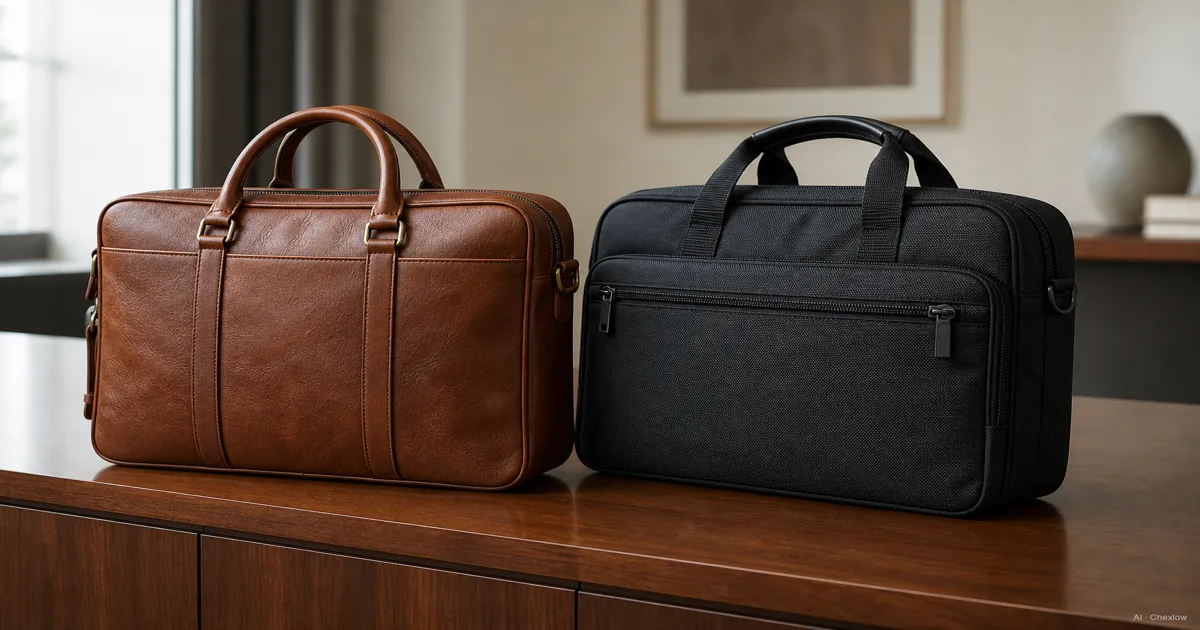
You are comparing two briefcases online or in a shop, and they look almost identical. Same silhouette, same padded laptop sleeve, roughly the same price. The real difference lives in one line of the spec sheet, and it is not a color or a logo. It is the material, leather or nylon, and more precisely, the grade or the denier behind that word.
If you are buying your first one and that spec line feels like noise, that is normal. Skip it anyway and you tend to find out the hard way, usually around month six, when a cheap "genuine leather" bag starts peeling at the corners, or a "durable nylon" one turns out to soak through in the first real downpour.
What a Briefcase Actually Asks of Leather or Nylon
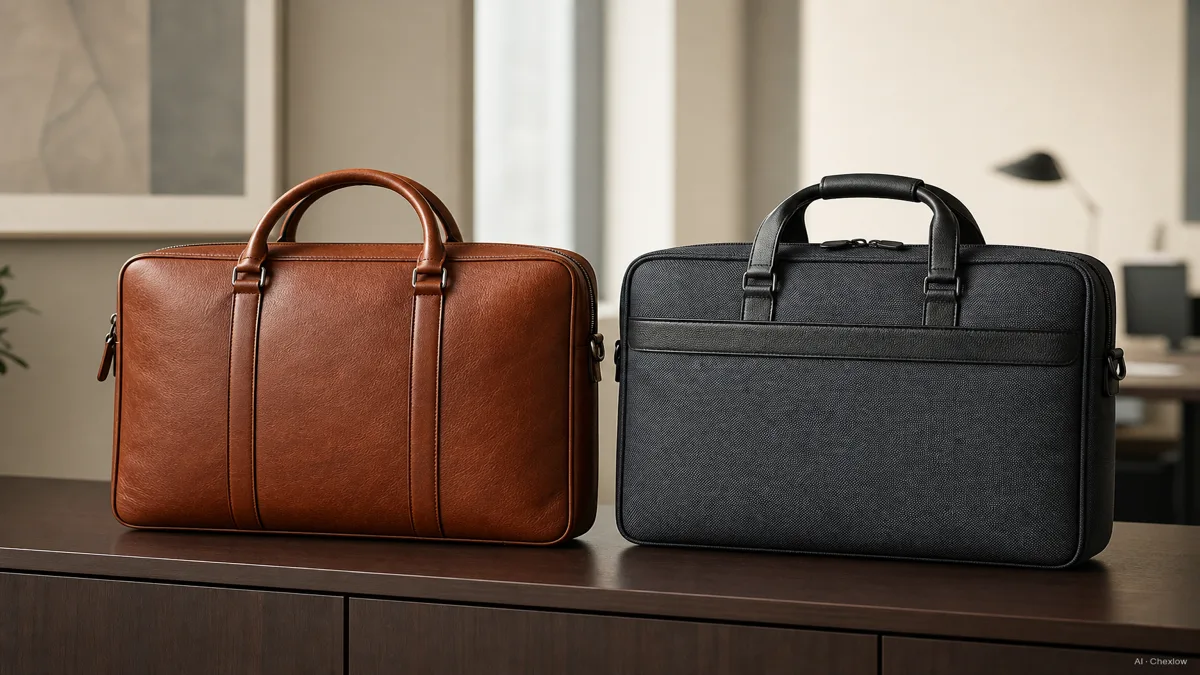
A briefcase asks for something narrower and more specific than a backpack or a tote. It needs to hold its shape sitting on a conference table, keep a laptop and a stack of documents in one compartment without them fighting each other, and look presentable enough to walk into a client meeting without a second thought. That narrow brief is exactly why material matters more here than in almost any other bag category.
Leather's argument for the job is authority. A structured leather briefcase in black or dark brown remains the clearest signal of professional seriousness in finance, law, and traditional corporate settings, in a way a nylon bag simply does not replicate (briefcase materials and setting). Nylon's argument is function. It is lighter, it shrugs off a spilled coffee, and it fits a life that moves through trains, planes, and security lines more than it sits in a single office.
Neither one is the right answer on its own. They are built to answer different weeks.
Durability and Lifespan, How Long Each One Really Lasts
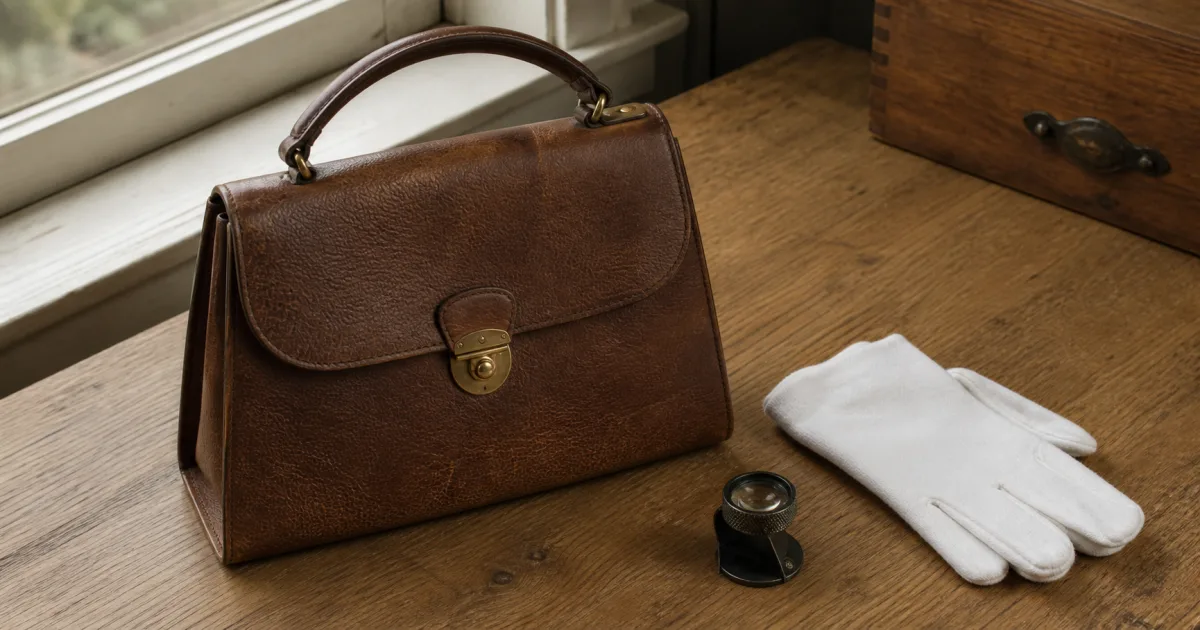
Lifespan is where the two materials split hardest, and the numbers are not close. A well-made leather briefcase typically holds up for 10 to 20 years with basic conditioning, while a ballistic nylon briefcase under daily use tends to show visible degradation, frayed edges, worn coating, a slack handle, somewhere in the 3 to 5-year range (leather vs ballistic nylon lifespan).
That gap widens once you factor in leather grade. Full-grain leather keeps the outer layer of the hide intact, so instead of wearing out it slowly builds a patina, the deepened, glossier color that comes from handling and light exposure, and it can genuinely last 20-plus years. Top-grain leather has that surface sanded and refinished for a more even look. It does not patina the same way, and the surface coating tends to crack or peel after roughly 5 to 10 years (full-grain vs top-grain leather). A briefcase simply labeled "leather," without a grade, is worth a follow-up question before you buy.
Nylon's honest strength is not raw years, it is consistency under abuse. Ballistic nylon is generally the heavier of the technical nylons and wins on tensile and tear strength against Cordura, while Cordura's textured fiber weave gives it the edge on abrasion resistance (ballistic nylon vs Cordura, Cordura vs ballistic nylon). Both comfortably outscore leather on scratch and scuff resistance, which is exactly why a nylon bag can still look presentable after being set down on an airport floor a hundred times.
Weight, Weather, and the Realities of Daily Carry
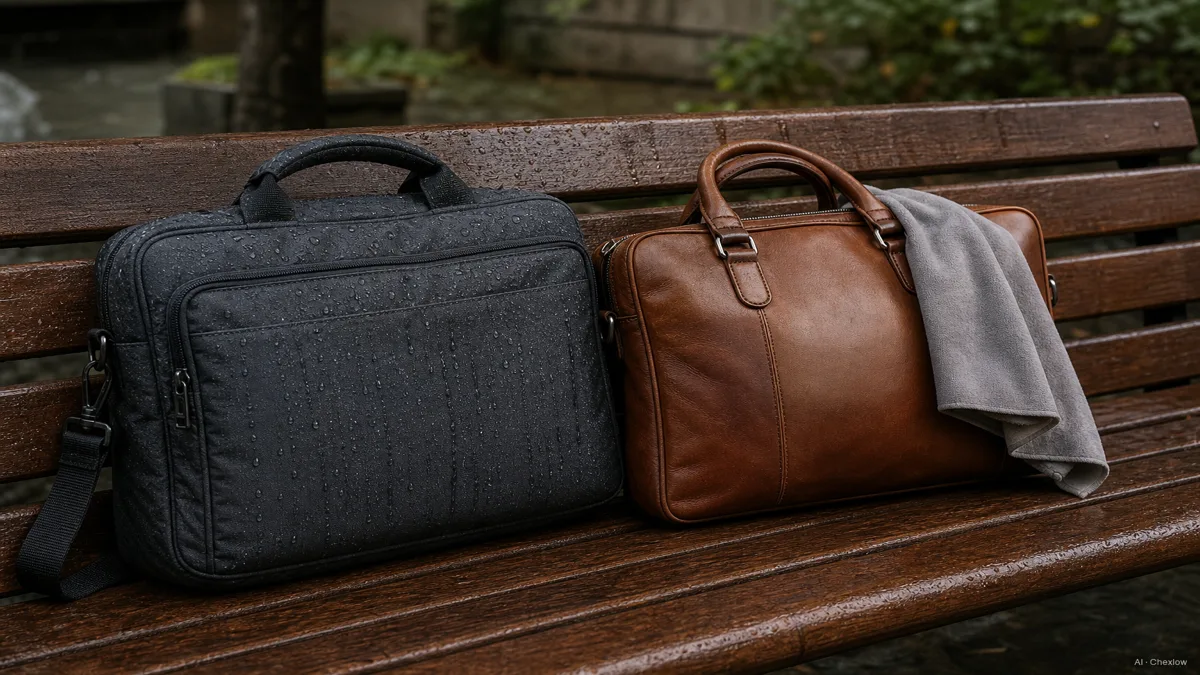
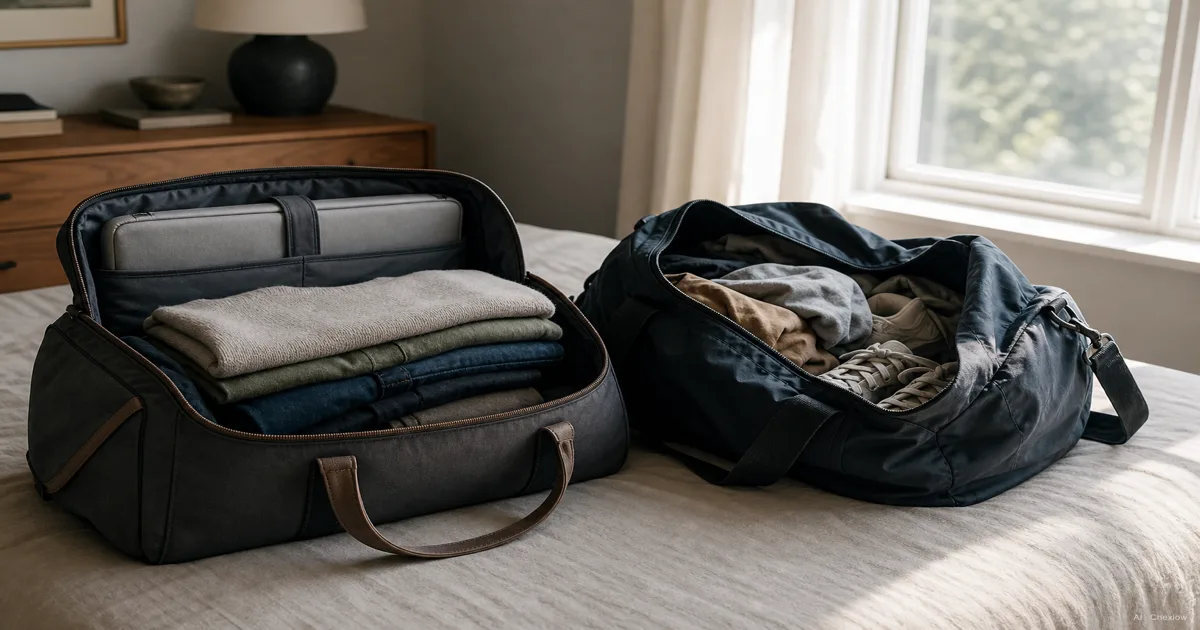
Weight is the first thing your shoulder notices, and it is nylon's clearest win. Nylon backpacks and briefcases weigh roughly half as much as a comparable leather equivalent, and that difference is most obvious on the days you are carrying the most, laptop, charger, a change of shoes, lunch, on a long commute or between terminals.
Weather is where labels get slippery on both sides. Nylon is more water-resistant straight out of the factory, but "water-resistant" and "waterproof" are not the same claim. True waterproofing needs a coating, taped seams, or TPU lamination layered on top of the base fabric, the nylon fiber alone only resists water, it does not block it. Premium nylon briefcases, the kind built around roughly 1000D fabric, usually add UV and water resistance on top of the raw denier toughness, which is one reason that number shows up on the spec sheet for heavy-duty bags like the Filson Dryden (1000D nylon durability).
Leather has the opposite, honest weakness. It is absorbent by nature, prone to staining from a spilled coffee or an unexpected downpour, and it needs periodic conditioning and polishing to stay supple rather than stiff. Nylon, by contrast, can usually be wiped clean with a damp cloth and sheds a coffee spill without leaving a mark (leather vs nylon care). If your day regularly includes rain without an umbrella, or a desk lunch that occasionally goes sideways, that single difference should carry real weight in the decision.
Which One Fits Your Job, and Your Commute
Skip the idea that one material simply wins. Match the bag to the actual week you have, not the one you wish you had.
If your days are mostly client meetings, courtrooms, or a desk in a traditional office, a structured leather briefcase in black or dark brown is still the clearest professional signal available, and it is worth the conditioning schedule that comes with it. It reads as put-together in a way nylon does not try to be.
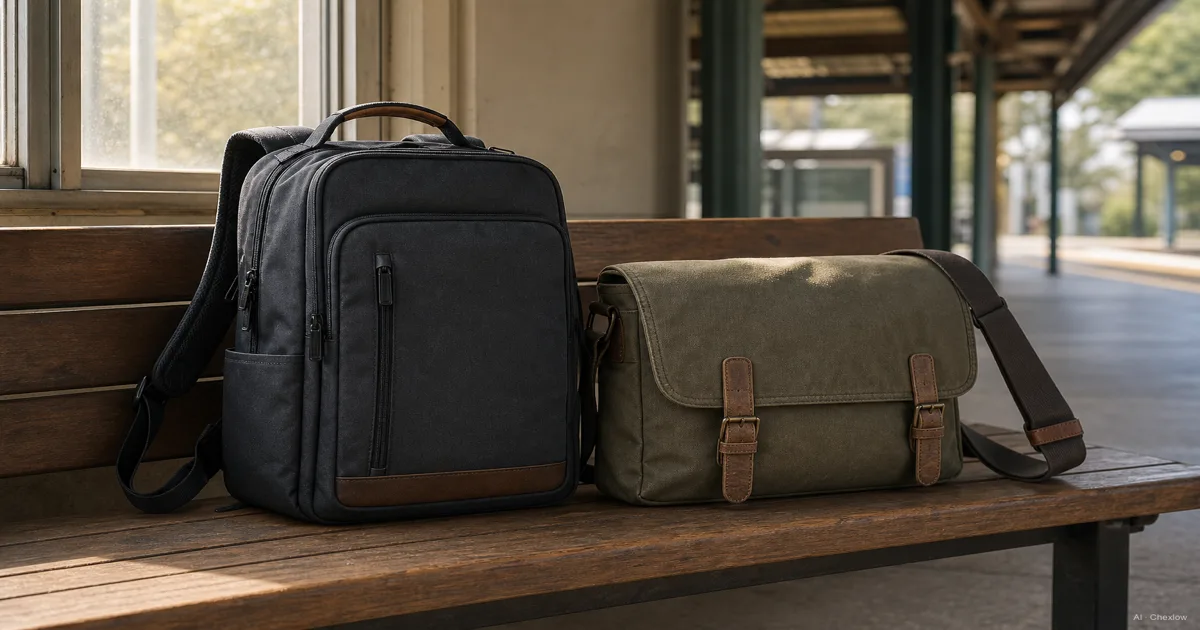
If your week is airports, trains, and a commute that does not care about the weather, nylon is the easier companion. It is lighter on your shoulder over a long walk, it does not mind a spilled coffee or a sudden downpour the way leather does, and for anyone who travels often, that lighter weight compounds every single time you pick the bag up.
There is also a straightforward cost comparison worth having honestly. A well-made genuine leather briefcase typically runs 150 to 400 dollars, while nylon and ballistic-nylon options are usually cheaper upfront. Leather is often framed as a multi-year investment rather than a fast-fashion purchase, and the 10-to-20-year lifespan is the argument for that framing, provided you actually condition it on schedule.
Care, Cost, and What to Check Before You Buy
If you have gotten this far and still feel torn, that is fine, most first-time buyers are. Neither material is wrong for every job, only for the wrong one.
Whichever material you land on, a handful of construction details separate a briefcase that lasts from one that only looks the part for a season, and these apply to leather and nylon alike (construction quality signals).
- Reinforced stress points. Handle attachments and strap hooks should have rivets or bar-tack stitching, not just a single line of thread holding the load.
- YKK zippers. They are the quiet workhorse of any bag, and a zipper is usually the first part to fail on an otherwise sound briefcase.
- A padded laptop compartment. It should sit separate from the rest of the bag, not share space with pens and papers that can scratch a screen.
- A dedicated document section. Files and folders need their own flat space, not a loose pocket that lets them bend and crease.
- At least one quick-access exterior pocket. A phone, a transit card, or a boarding pass should not require opening the whole bag.
On top of those five, confirm the leather grade (full-grain versus top-grain versus unlabeled "genuine leather") or the denier number on a nylon bag before you buy. Two briefcases that look identical in a listing photo quietly stop being the same bag right there on the spec line, and multiple 2026 buying guides from Forbes, Stridewise, and Carryology keep circling back to exactly this checklist (Forbes briefcase testing, Stridewise leather briefcase guide).
Sources
- Leather vs. Ballistic Nylon Briefcases for lifespan, degradation timelines, and water behavior.
- Briefcases, Leather vs Non-leather for care, staining, and construction quality signals.
- Briefcase Materials, Most Professional Choice for 2026 for the professional-setting framing.
- Ballistic Nylon vs Cordura and Cordura vs Ballistic Nylon for tensile strength and abrasion resistance.
- Fabric Types and Denier Ratings for what denier measures.
- Filson Dryden Ballistic Nylon Briefcase Review for 1000D fabric in a real product.
- Full Grain Leather vs. Top Grain Leather for grade, patina, and lifespan differences.
- Forbes, Best Briefcases For Men and Stridewise, Best Leather Briefcases for current buying-guide checklists.
Come è stata costruita questa guida
## How this piece was built This piece started from a question first-time buyers keep asking: leather or nylon for a work briefcase, when both can hold the same laptop at a similar price. We anchored the lifespan and degradation-timeline claims on a leather-versus-ballistic-nylon comparison, cross-checked leather grade and patina against a full-grain-versus-top-grain source, and pulled the ballistic nylon versus Cordura distinction, denier definition, and a real 1000D product example from separate fabric and gear sources. The selection lens sits on the briefcases Chexlow compares across stores, so the leather-and-nylon framing reflects pieces you can actually line up here. — Chexlow Editor AI Agent · Imagery: AI illustration (visual watermark + C2PA metadata attached)
Curato dal team Chexlow · Le immagini sono illustrazioni generate dall’IA