
Choose the compromise you can live with
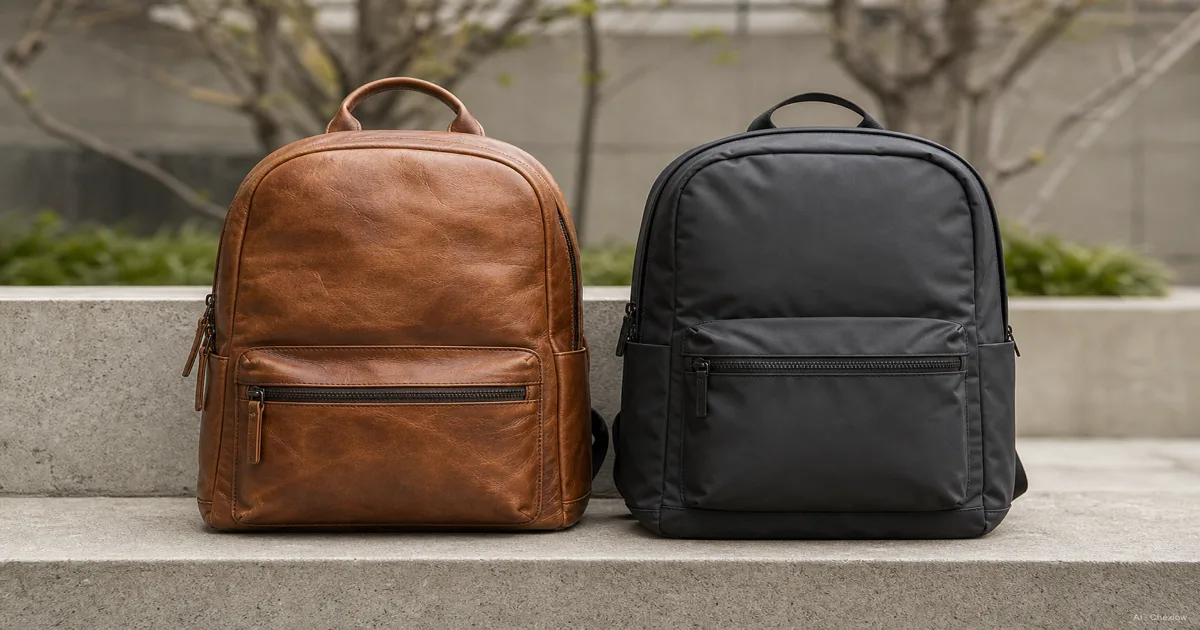
Put one leather backpack and one nylon backpack on your shortlist, with room for the same daily kit. Then name your deciding constraint.
- Long walks with a laptop. Start by finding the lighter complete bag, rather than assuming every nylon model weighs less.
- A leather look you specifically want. Keep the leather option if you are comfortable carrying it loaded and following its care instructions.
- Regular rain exposure. Require a clear rain-protection plan from either candidate before choosing on appearance.
These are selection priorities, not a claim that one material suits every office or lasts longer.
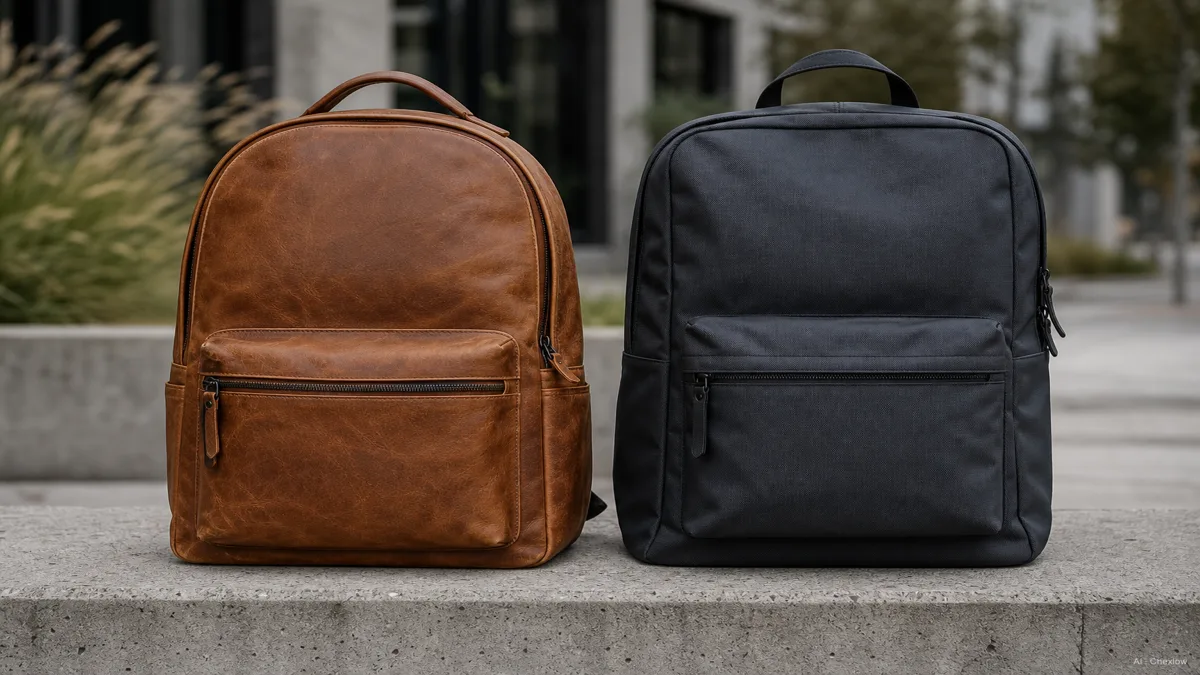
Compare both bags with your actual load
Pack your laptop, charger, filled bottle and usual extras. Compare the total weight, adjust the straps, walk around and try taking the bag off. Reject a candidate if a strap digs in or the loaded shape gets in your way, even if you prefer its material.
Check the laptop compartment against your device’s width, depth and thickness, including any case you use. Try the opening as well as the compartment; a screen-size label alone is not enough for this check. Look at the padding and clearance above the base without treating either as a promise against drop damage.
Try reaching your keys and transit card with the bag packed. If frequent access is the unresolved problem, compare backpacks and messenger bags for commuting before settling the material.
Ask what the material label actually describes
Full grain retains the grain surface; corrected grain has some of that surface mechanically removed and then finished. Those are processing descriptions in the Leather Working Group definitions, not promised years of backpack use.
For a leather candidate, ask about the surface finish and its care requirements. If the listing says only “genuine leather” or “top grain,” request more detail instead of assigning it a lifespan or rejecting it on the label alone.
For nylon, ask which fabric and finish the bag uses. CORDURA Classic, for example, uses nylon 6,6 and includes coated and laminated options. That range is a reason to compare the actual specification, not treat a fabric name as a complete bag specification.
On either bag, inspect the strap attachments, base and zipper operation. Ask whether those parts can be repaired. A material description cannot answer that question.
Make a rain plan before choosing
Ask the seller what the complete bag is designed to withstand, including its openings and seams. Surface water beading in an illustration is not evidence that a laptop will stay dry.
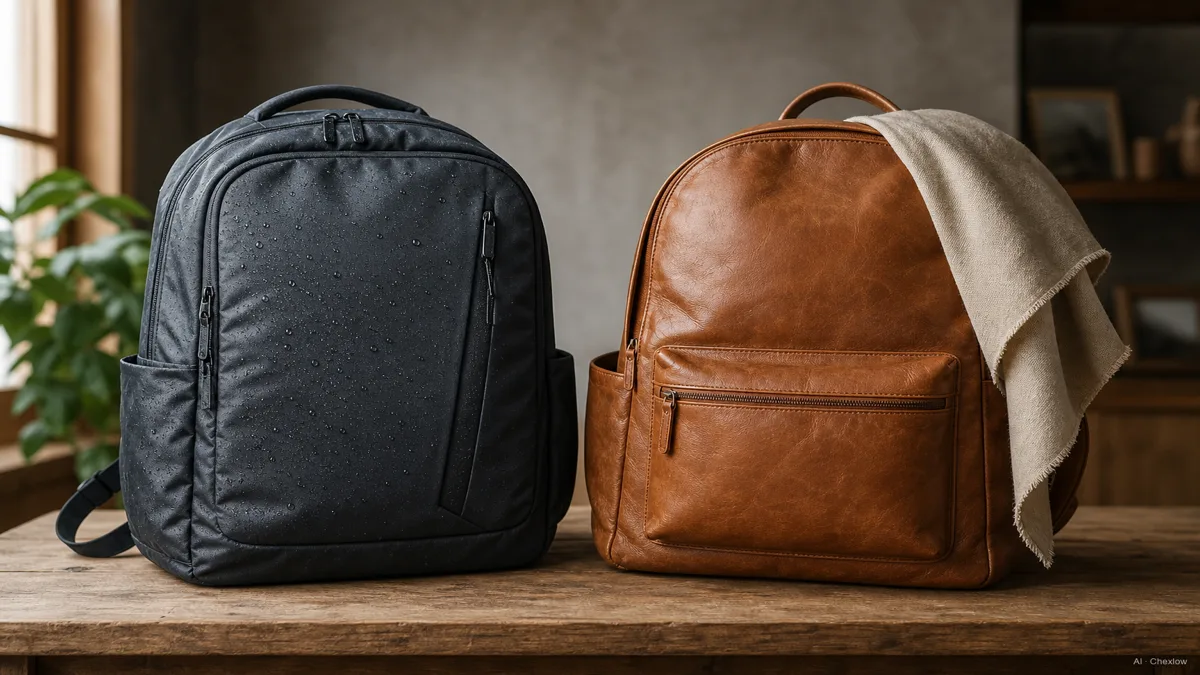
If you expect rain and the bag needs extra coverage, consider a fitted backpack raincover. Check the packed bag’s size and attachment compatibility first, and whether a cover is already included. For example, Osprey’s Hi-Vis Small uses seamless coated fabric and is specified for 20–35 L packs. That is an example of a size-specific accessory, not a universal fit recommendation.
If your route involves prolonged rain, ask for explicit protection guidance for the bag and your electronics before buying. Do not infer it from “nylon,” “leather” or “water-resistant” alone.
Choose on upkeep and repair, not a guessed lifespan
Read the care page before paying. Bellroy advises against machine washing or soaking its fabric products; for wet leather, it recommends gently removing excess moisture and slow drying away from direct sun, without a dryer. Follow the instructions for the bag you actually choose.
Compare purchase cost, any necessary rain protection and the repair service available to you. Ask what zipper or strap repairs involve, including shipping. Avoid making leather look cheaper by assuming a long life for it and frequent replacement for nylon.
If both bags pass the load and rain checks, choose leather when its look is worth the stated upkeep to you. Choose nylon when that particular bag offers the weight, pockets and cleaning routine you prefer. If neither passes, change models before compromising on the requirement that matters most.
How this guide was built
Written by AI for Chexlow, using Leather Working Group definitions and official CORDURA, Osprey and Bellroy documentation. The article turns those material and care details into an editorial checklist for a first everyday backpack; it does not report product testing or predict service life.
Edited by the Chexlow team · Images are AI-generated illustrations