


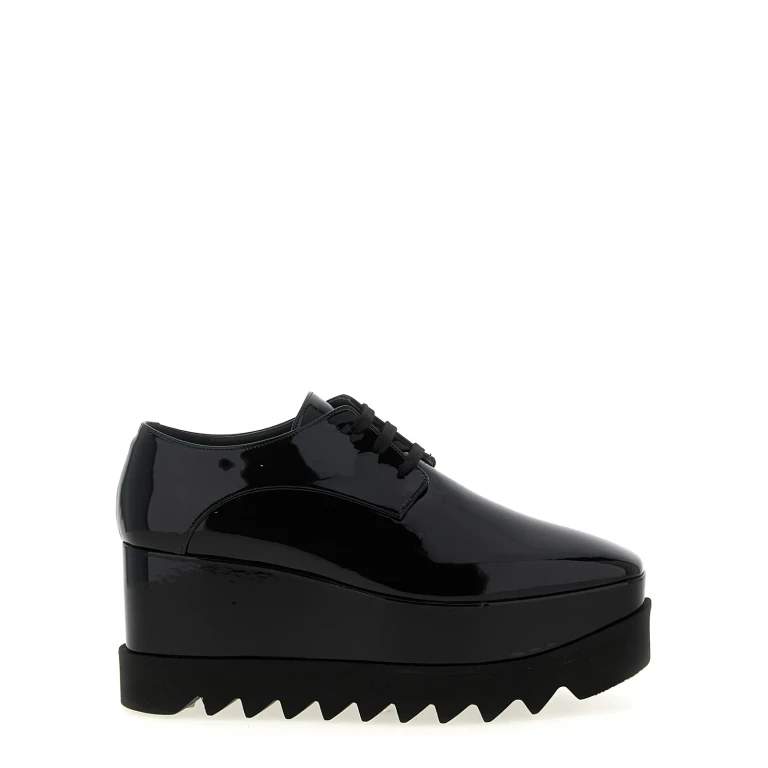

Choose the occasion you need to cover first
Write down the next occasion for which your existing shoes will not work, then the outfits you wear most often. If those point to different purchases, cover the non-negotiable occasion first.
- Mostly jeans, chinos and relaxed office clothes: start by trying Chelsea boots. Choose a restrained shape if you also want to wear them with tailored trousers; try your usual trousers over the boot to check that the hem falls freely.
- Primarily traditional suits and business dress: start with a plain or cap-toe Oxford in smooth black leather. The cap-toe Oxford has a long-established business and formal role, although Oxfords also come in less formal variations. Crockett & Jones explains the Oxford range.
- A stated dress code: check the required footwear before choosing. “Wedding” alone is not a dress code, and a black-tie invitation needs a more specific answer than “a dark leather shoe.”
These are starting points, not a fixed ranking. Crockett & Jones describes smooth calf Chelsea boots with almond or chiselled toes as suitable for business dress and tailoring. A bulky casual boot is a different proposition. Its Chelsea guide shows that range.
Compare actual Chelsea and Oxford candidates only after choosing the job they need to do. Colour alone does not settle the choice.
Check the instep before committing to either shape
A Chelsea uses elastic side panels rather than laces. An Oxford has closed lacing: the panels carrying the eyelets are stitched beneath the front of the upper. A Derby has open lacing, with those panels attached above it. That makes a Derby worth trying if you need more adjustment over the instep, the top of your foot. Crockett & Jones’s construction guide describes the distinction.
Use your intended socks and try both feet. R.M.Williams also recommends measuring both feet in the socks you expect to wear. Its sizing guide is a useful example, but use the chart for the brand you are buying.
- Check toe space and width separately. Do not accept squeezed toes to stop the heel moving.
- Walk and check the instep. If the length works but the top feels tight, try another width or shape. R.M.Williams specifically recommends a wider fit for this situation.
- Ask about heel movement for that model. R.M.Williams allows slight initial heel rise in its boots; that is not permission to accept a foot sliding around inside any Chelsea. Its guide says a correct fit should be comfortable without a painful wearing-in period. Read its fitting guidance.
If neither candidate holds your foot comfortably and you want adjustable laces, continue with choosing a Derby instead of an Oxford. Treat it as another fitting option, not a guaranteed solution for every wide foot.
Choose the sole for your route, not a formality label
Look at a side view and an underside view. “Rubber” does not automatically mean chunky: Crockett & Jones designed its City rubber sole with a close-trimmed edge and narrow waist to preserve a dressier outline. The City sole explanation illustrates why material and profile are separate choices.
- An everyday pair with a neat outline: put slim rubber soles on your shortlist, then check the particular model’s tread, flexibility and intended use.
- A pair mainly for dress occasions: compare leather soles too, if you prefer their appearance. Do not choose one solely because you think all formal shoes require it.
- Wet-weather performance is essential: ask for explicit information about the whole shoe’s water protection and the outsole’s grip. A material label alone is not enough evidence for either.
If keeping rain out matters more than the dress-shoe look, compare rain boots and duck boots before buying. Check the individual boot’s waterproofing and lining rather than assuming the category name settles either.
Make the final purchase pass the outfit and fit checks
Try the finalists with the clothes you actually intend to wear. For a Chelsea, check the trouser hem over the shaft and walk in the chosen heel height. For an Oxford, check the whole outfit and whether the laces hold your foot comfortably.
Before paying, confirm three things:
- The exact size and width you tried match the pair you are ordering, and you understand the return conditions.
- The upper’s care instructions suit the finish you chose. Crockett & Jones separates its guidance by material, including calf, suede and rough-out suede. There is no reason to buy a generic care kit before knowing which finish you have. See its material-specific care guide.
- The fit works now. Do not buy a painful pair on the promise that cream will fix it. R.M.Williams explicitly notes that softening leather does not correct the wrong size in its sizing guidance.
For the first outing, choose a situation where you can change shoes if needed. Follow the maker’s care instructions: R.M.Williams, for example, does not recommend conditioner for every leather type and advises drying wet boots naturally, away from direct heat. Its everyday care guidance explains those limits.
Come è stata costruita questa guida
Written by Chexlow’s AI editor using Crockett & Jones’s construction, style, sole and care guidance, alongside R.M.Williams’s fitting and care instructions. The occasion-first recommendations are editorial judgments for a first purchase; brand-specific fitting advice is identified as such. This is source-based guidance, not a report of product testing.
Curato dal team Chexlow · Le immagini sono illustrazioni generate dall’IA