
Start with the weather you need to dress for
Think about the journey that makes you want new boots: a rainy commute, a muddy dog walk or a cold wait outside. Use that journey to shortlist a type, then check the actual model.
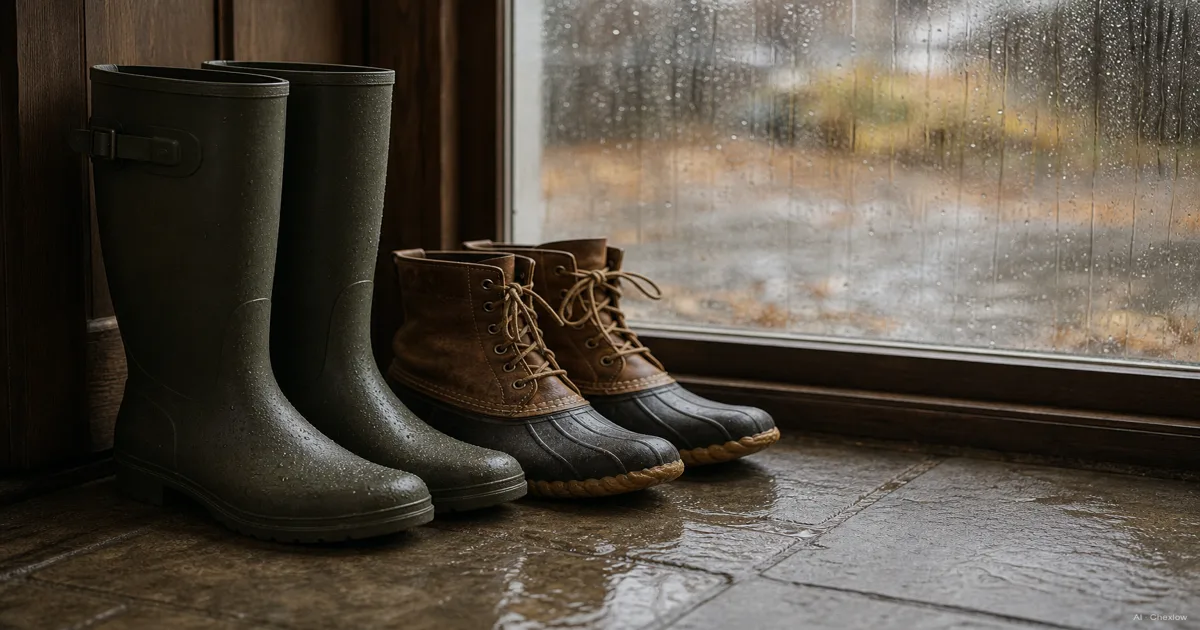
- Rain and splashes. Start with rubber rain boots if covering the lower leg is your priority. Compare the height of the particular pairs, rather than assuming every rain boot is tall.
- A laced, mixed-material boot. Start with duck boots if that is the design you want. L.L.Bean's range combines rubber bottoms with leather uppers and includes both unlined and insulated versions. The shape alone does not tell you how warm a pair will be. L.L.Bean range
- Cold rain or slush. Keep either type in contention until you have checked the protection below. Choosing by appearance first leaves the important questions unanswered.
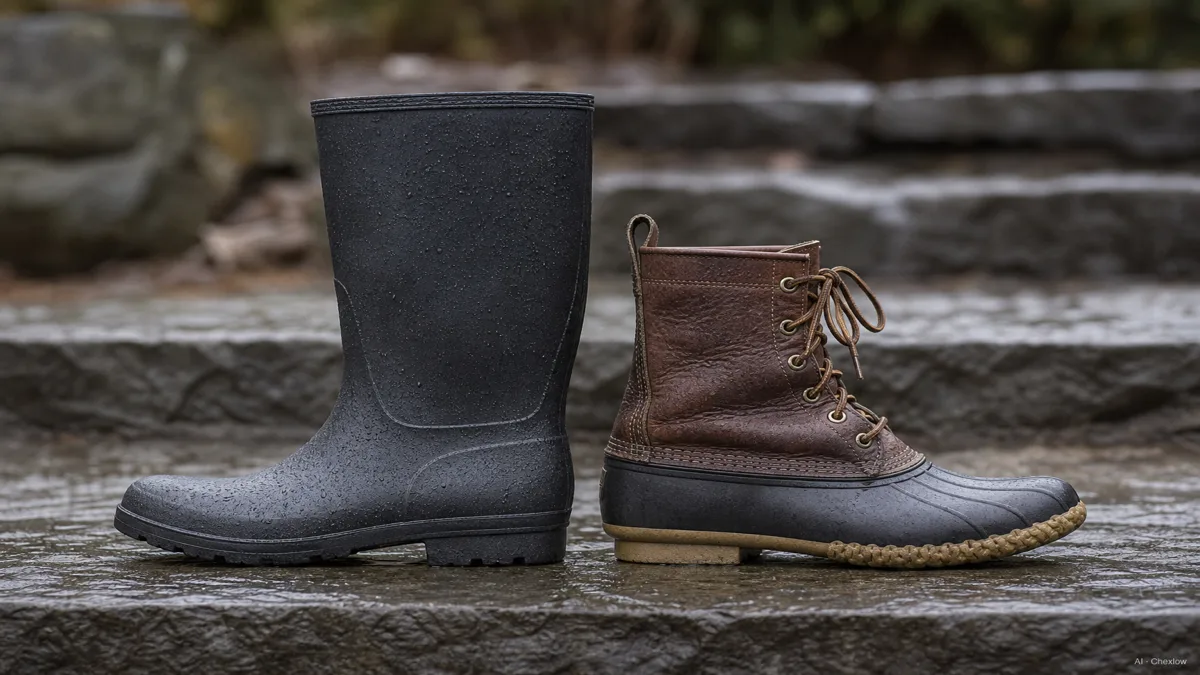
Check where waterproof protection stops
The useful question is not just “Is it waterproof?” Ask which parts are waterproof, and how high that protection extends.
For example, the men's 8-inch Bean Boot specifies waterproof protection only to just below the stitching on its rubber shell. Its leather shaft is not a promise of that same protected depth. If that limit does not suit your route, choose another construction.
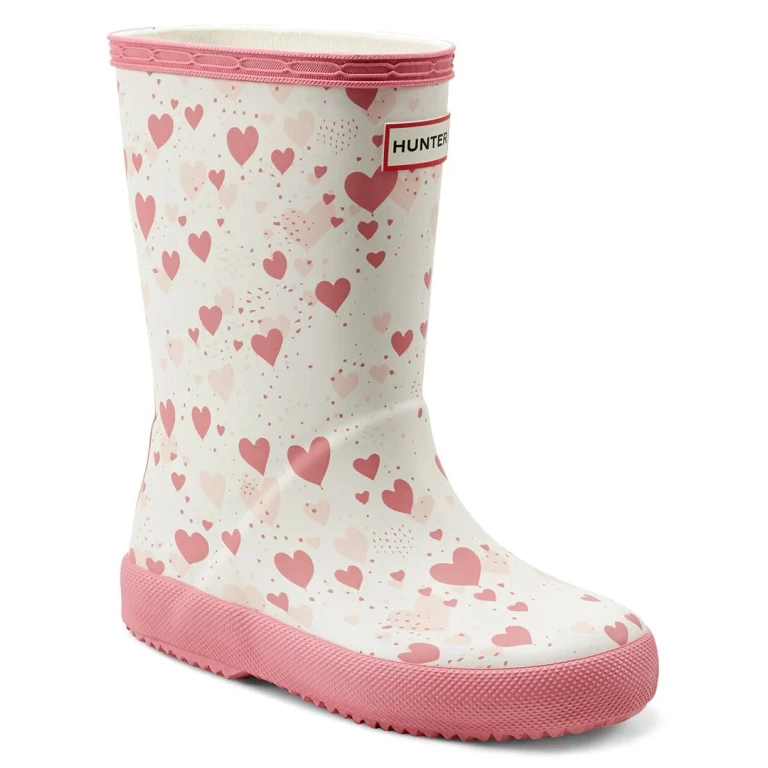
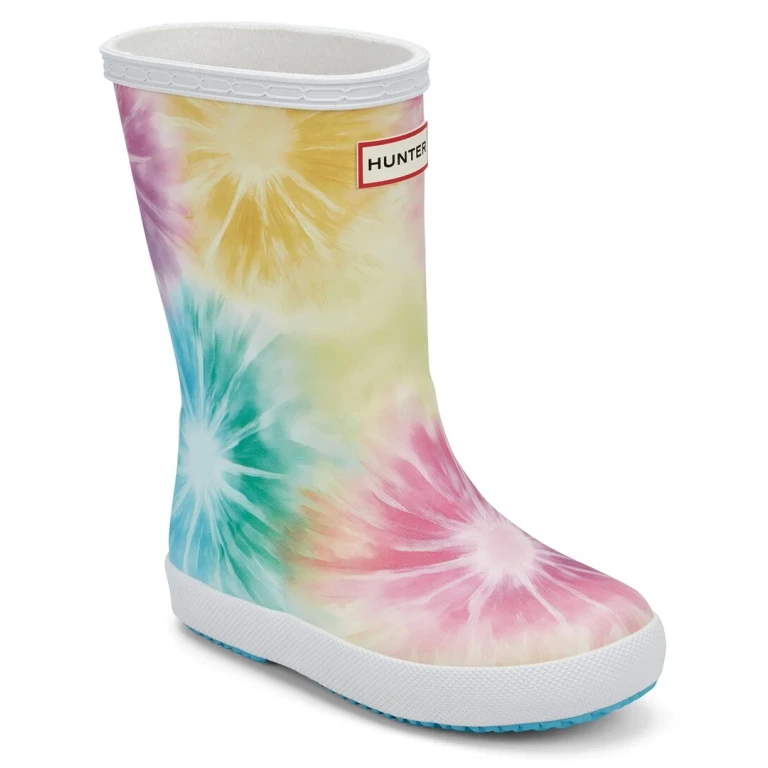
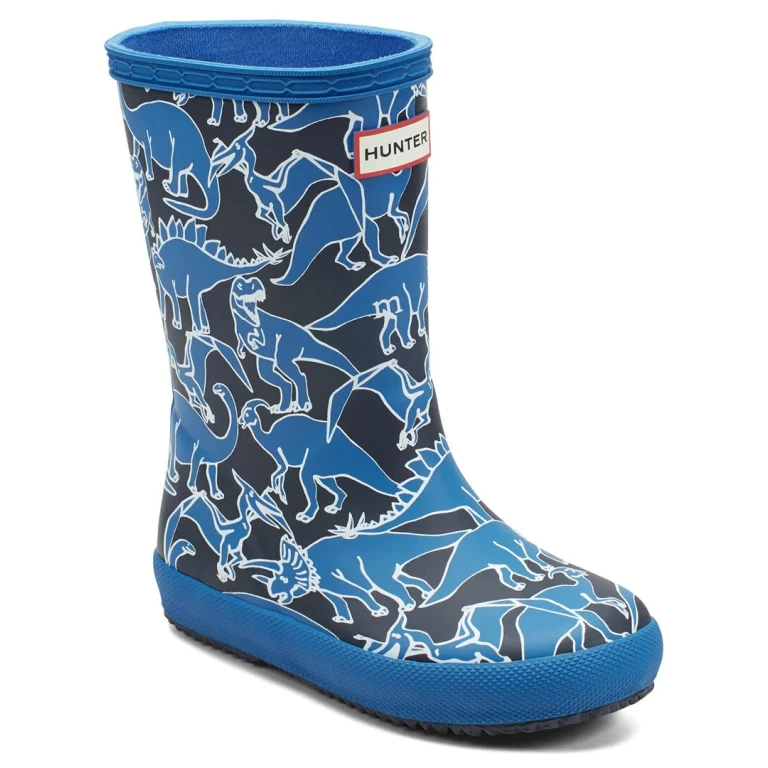
A rubber boot need not be a single seamless moulding, either: Hunter's Men's Original Tall uses 28 natural-rubber parts and a textile lining. Look for the maker's waterproof specification rather than treating a smooth exterior as proof.
Before buying, find the stated protection limit and the shaft measurement. If the page gives only a boot height, ask the manufacturer about water exposure; do not turn that measurement into a wading depth.
Choose warmth and grip as separate requirements
A warm-looking cuff is not enough information. Check the lining inside the boot, whether insulation is included, and what conditions the maker specifies.
For a concrete winter construction, SOREL's men's Caribou lists sealed seams, a removable 9 mm lining and non-waterproof laces. Those are model details to compare, not features you can assume every duck boot shares.
Rubber styles can also be insulated. The Muck Arctic Sport Mid combines fleece with a 5 mm neoprene inner boot, a synthetic-rubber layer. So “rubber for rain, duck boots for winter” is too crude a buying rule.
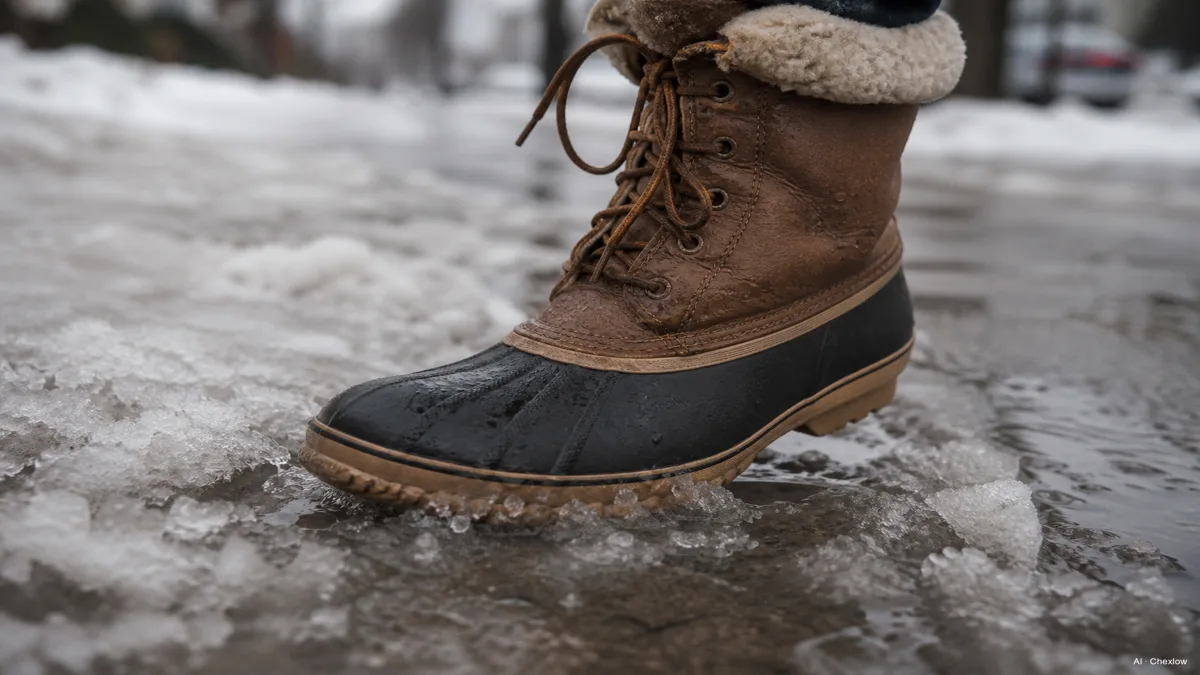
Treat the image as an illustration of a lined boot in slush, not a performance test. If ice is part of your route, ask about the exact outsole's intended conditions. CCOHS notes that no footwear resists slipping in every condition; waterproofing alone does not settle that question.
Try the shortlist on, then make the call
Start with the exact model's size instructions. Hunter's guidance says usual shoe size, rounding half sizes up; the 8-inch Bean Boot page says one full size down. Neither instruction is a rule for the whole category.
For the fitting, bring the socks you plan to wear and check:
- Foot and heel. Walk, turn and bend your knees. Reject toe pressure or heel movement that makes you grip with your toes.
- Shaft and clothing. Try your usual trouser hems and sit down. Check that the opening and upper edge work with your calf.
- Your actual day. Compare the weight and movement of both pairs. Do not award all-day comfort to either category without trying them.
Choose the rain boot if its coverage and fit solve your wet-weather problem. Choose the duck boot if you prefer its fit and construction and its stated water protection is sufficient. For cold use, make insulation an additional requirement for either choice; if a key specification is missing, resolve it before ordering.
Buying mainly for trails or a loaded hiking trip? Continue with low-cut hiking shoes versus mid-cut boots to compare footwear around terrain and pack load.
How this guide was built
Written by Chexlow's AI editor using manufacturer descriptions from Hunter, L.L.Bean, SOREL and Muck, plus CCOHS guidance on slipping. This comparison turns model-specific examples into questions for a first purchase; it does not report hands-on testing or guarantee performance across either category. The material definition comes from the American Chemistry Council’s Chemical Safety Facts.
Edited by the Chexlow team · Images are AI-generated illustrations