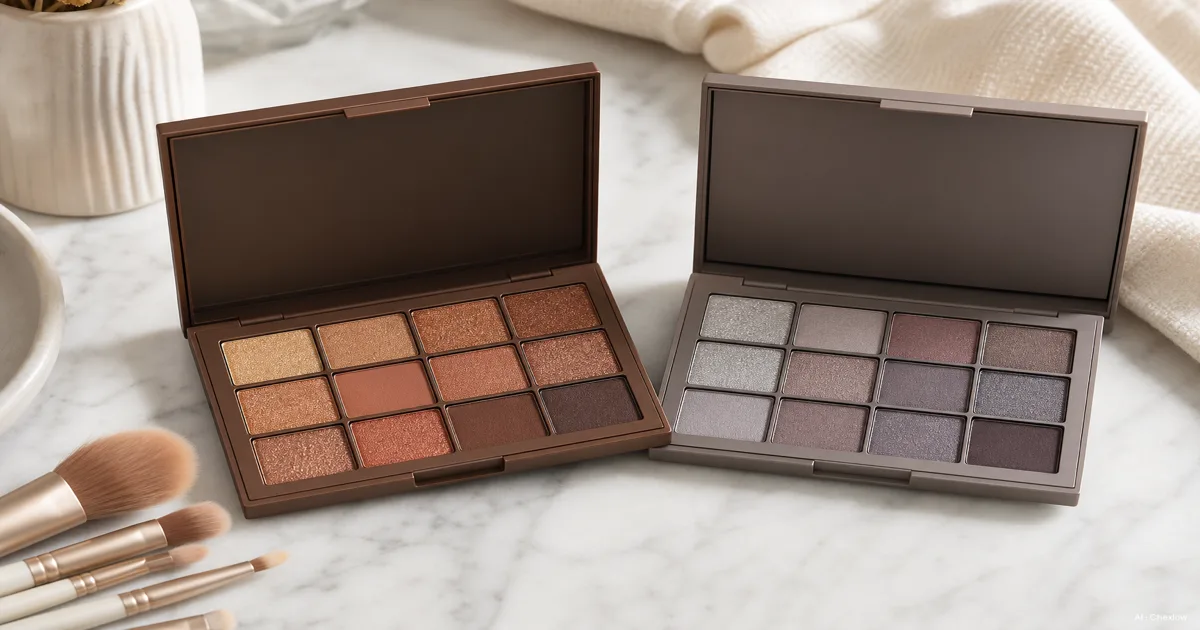
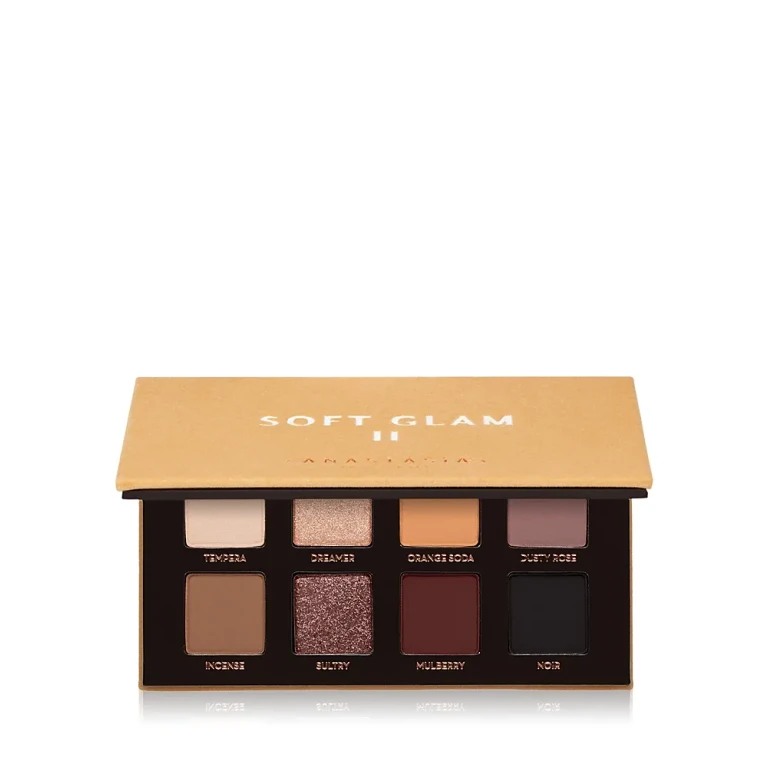
Choose the colour direction you actually want
Before comparing whole palettes, pick the look you want to repeat. Use these as browsing directions, then inspect the individual shades:
- Warm. Start with copper, bronze and warm brown if those are the colours you want across your lids.
- Cool. Look at grey-brown and taupe, a brown-grey mix, if you prefer that colour direction.
- Still undecided. Compare a warm brown with a cool brown before buying a palette that commits heavily to either.
These warm and cool brown families appear in Charlotte Tilbury’s brown eyeshadow guide. The buying approach here is simpler: choose a colour you want to use, then check the rest of the palette around it.
Do not stop at the word neutral. Look at the shades you would use most often and decide whether their actual colour is what you wanted.
Use undertone as a clue, not an entry requirement
Undertone describes a colour tendency distinct from skin depth. RMS Beauty also encourages experimenting outside your tonal range; its vein advice specifies the face or neck, not the wrist.

This wrist illustration is a reminder of the familiar shortcut, not a colour diagnosis. If you cannot interpret your veins confidently, leave the label unresolved. For this purchase, compare how the two colour directions look on you instead of treating uncertainty as proof that you are neutral.
Check usable shades before counting pans
Try assigning jobs to the colours before you buy. For a simple first look, this guide suggests a lid colour you like, a visibly deeper shade for definition, and a reflective accent only if you want one. Judge those differences against your own skin, not just against the other pans.
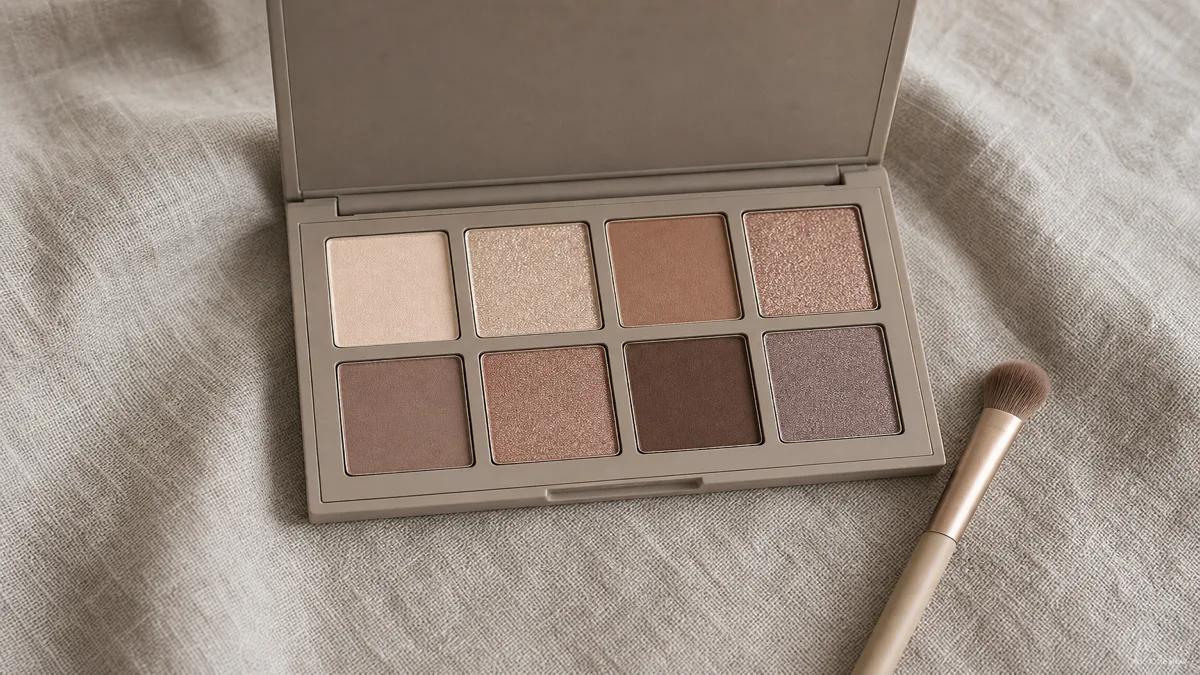
The illustration shows mixed finishes, not a requirement to buy eight shades. A smaller palette is worth considering if you can explain how you would use its colours. Extra pans earn their place when they add a look you want, rather than another nearly identical shade.
Finish is a separate decision from colour temperature. Matte has no reflective shine; shimmer reflects light more subtly than metallic. KBL Cosmetics explains these finish differences.
For this first purchase, choose mattes if you want an unreflective look, or add a shimmer if you want a bright accent. Do not buy sparkle simply to satisfy a supposed beginner rule.
Compare the shades you will actually wear
Narrow the choice to two palettes and compare the same jobs in each: your main lid colour and your deeper shade. If you plan to use a reflective accent, compare that too.
- Check the main colour. Look at a light application as well as a stronger swatch. Is it a colour you would choose to wear?
- Check the depth. Can you distinguish the defining shade from the main colour on your skin? If they look too similar for your planned look, compare another palette.
- Check the finish. Turn toward and away from the light. Keep the amount of reflection you want, rather than choosing from the pan alone.
If you sample in a shop, ask for a single-use applicator. Use only products intended for the eye area, as the FDA advises.
When shopping online, look for swatches on skin close to your own depth and read each shade description. If you still cannot identify a usable main colour and defining shade, keep comparing. A warm or cool label alone is not enough to complete the purchase.
Plan one look, then decide whether you need a tool
A neutral base followed by a darker lid shade is one approach described by Bobbi Brown. For your first attempt, choose the two shades in advance and practise that combination before adding more colours.
For a soft powder application, use an eyeshadow brush you already own. If you need one, a fluffy blending brush serves that specific task; MAC describes this brush shape for washes of colour and blending. A large brush set is not part of this guide’s first-purchase plan.
Once you have chosen the palette, ask what is still missing from your intended look. If it is a separate line along the lashes or a wing, move on to choosing between pencil and liquid eyeliner. You can leave that purchase for later if eyeshadow alone gives you the result you wanted.
Come è stata costruita questa guida
Written by AI for Chexlow, using published guidance from RMS Beauty, Charlotte Tilbury, KBL Cosmetics, MAC, Bobbi Brown and the FDA. The editorial focus is choosing a first palette through colour preference, usable shade depth and finishes. This is source-based guidance, not a report of product testing or a personal colour consultation.
Curato dal team Chexlow · Le immagini sono illustrazioni generate dall’IA