Most first-time buyers pick an eyeliner the way they pick a first bicycle: they either grab the training wheels or they go straight for the racing model. Neither instinct is wrong, exactly, they are just answering different questions. The real question is not which eyeliner is better, it is which line you are actually trying to draw.
Once you separate the formula question from the skill question, the first buy gets a lot less confusing.
What's Actually Different, Pencil vs. Liquid Eyeliner Formulas
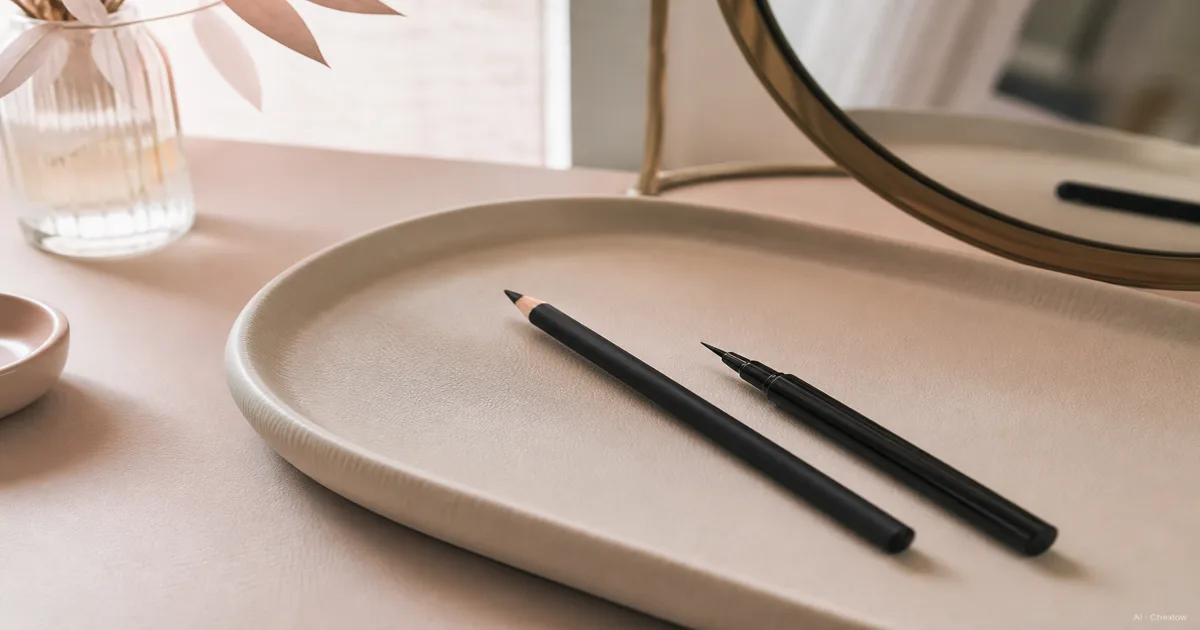
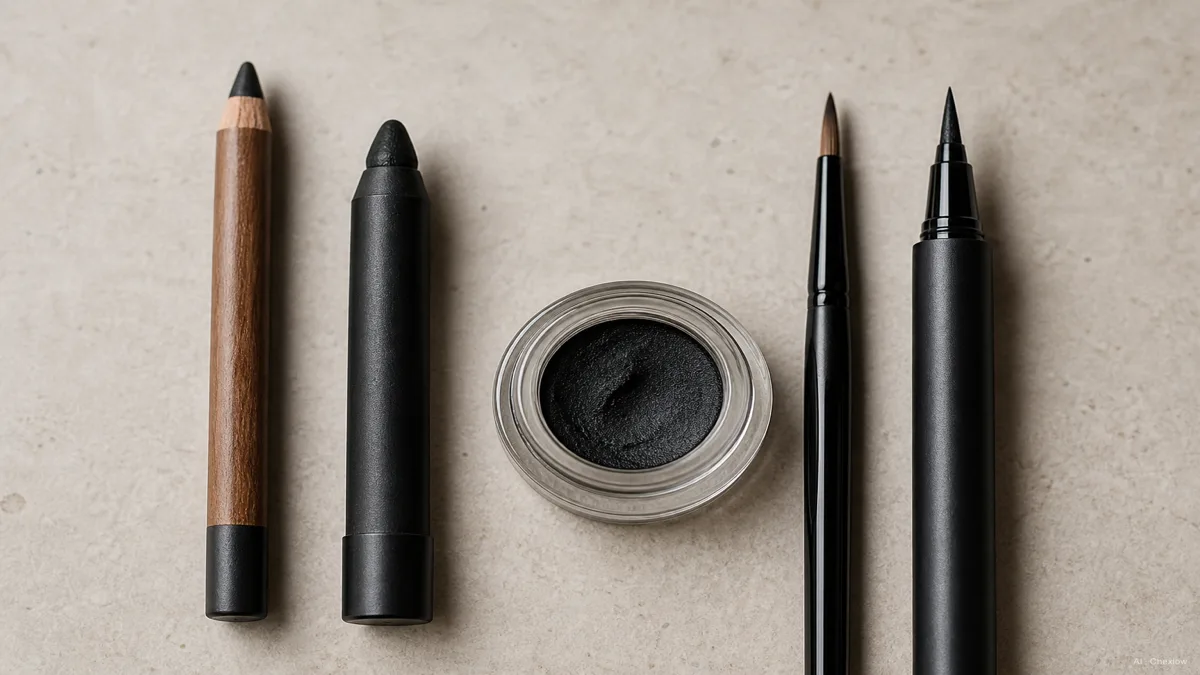
A pencil eyeliner is, at its core, a writing tool. It is shaped like a crayon, it glides rather than paints, and its texture is soft enough to blend with a fingertip or a cotton bud before it sets (HAYA Beauty). That softness is exactly why beginners reach for it first, a pencil forgives a shaky hand because the line it lays down is naturally a little diffused.
Liquid eyeliner works the opposite way. It comes as pigment suspended in a fast-drying liquid, applied with a brush or felt tip, and it is built to dry down into one continuous, richly pigmented stroke (Blinc Inc). There is no blending it after the fact. Whatever line you draw is the line you are wearing, which is precisely what makes it both the most precise option and the least forgiving one (Into The Gloss).
Two other formats round out the family. Kohl is a soft, kohl-pencil subtype built for smoky, smudged looks, and it can trace along the lash line, though it is generally too moist and soft to sit safely on the very inner waterline (Jean Coutu). Gel eyeliner sits in the middle of the spectrum, delivering the same intense, opaque color payoff as liquid but with more open working time before it sets, since it is typically applied with a small brush rather than a built-in tip (L'Oreal Paris).
Which One Should a First-Time Buyer Choose
If you have never drawn a line along your lash line before, the overwhelming and consistent recommendation across beauty publications is to start with pencil (Typsy Beauty, Dermstore). A pencil's shape and give mean you can go slowly, correct as you go with a cotton bud, and build up color in thin layers rather than commit to one unforgiving stroke.
That is not a beginner-only rule that expires once you get comfortable, either. It is simply the lower-risk entry point, and most people graduate to liquid only once they are already confident applying pencil along the lash line and shaping a wing by eye.
If you already know you want sharp, graphic definition and you are willing to practice a steadier hand, liquid is worth buying from day one, just go in expecting a learning curve rather than an instant clean line.
Best Use Cases, Everyday Softness vs. Sharp Winged Looks
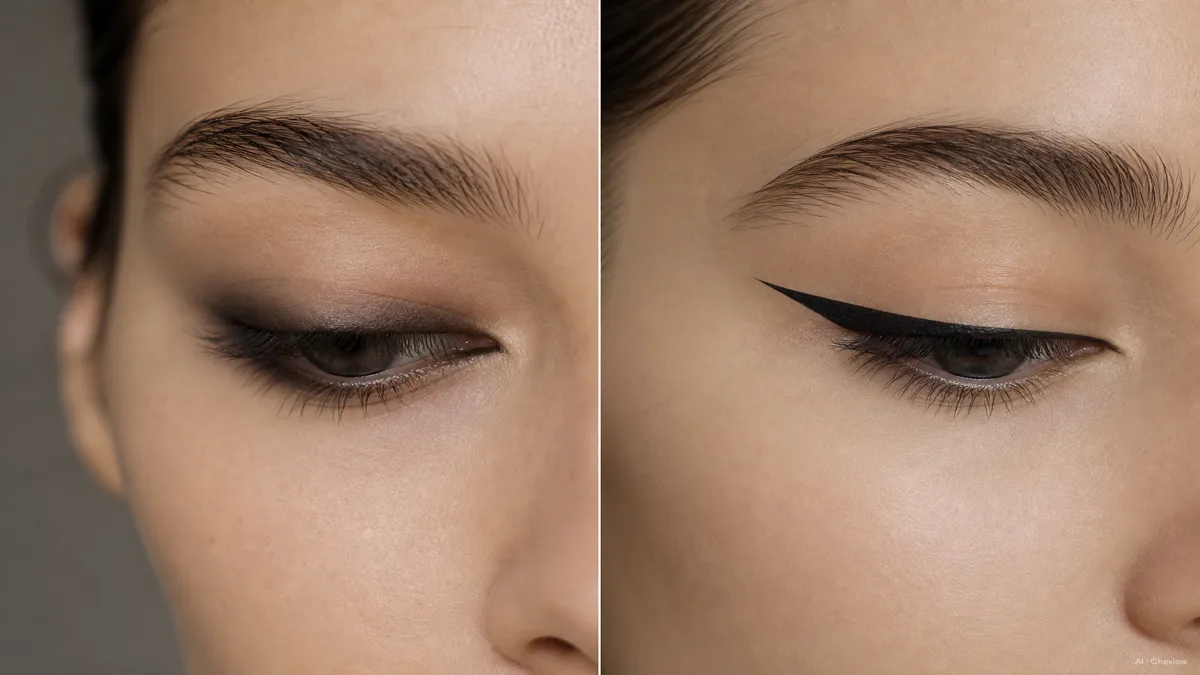
Pencil is the natural choice for soft, smudged, everyday, or smoky-eye looks. Its texture is made to be diffused with a fingertip or a cotton bud right after application, which is exactly the effect a soft smoky eye needs (Maybelline, HAYA Beauty).
Liquid is the standard choice when the goal is a crisp, graphic wing or bold, defined lash-line definition. Its tip, whether a fine brush or a felt point, is what actually lets you draw a straight, controlled edge rather than a soft haze (StyleCraze, IPSY). Kohl, meanwhile, is best reserved for smoky looks along the outer lash line rather than a sharp wing, and gel splits the difference, holding enough pigment for definition while still being soft enough to smudge if you want to.
Application Difficulty, Longevity, and Upkeep Compared
Difficulty runs in the opposite direction of definition. Pencil is the most forgiving format to hold and control, which is exactly why it is the beginner-friendly starting point, while liquid demands a steadier hand and real practice before the line comes out even on both eyes (Typsy Beauty, Blinc Inc). If you are worried about a shaky first attempt, that difficulty gap alone is reason enough to start with pencil.
Longevity tells a more complicated story. Liquid eyeliner is generally the most smudge-proof and long-wearing format through a humid or sweaty day, while some pencil formulas need a midday touch-up (Dermstore, esmi Skin). At the same time, pencil eyeliner tends to last on the shelf far longer than either wet format, typically around one to two years once opened, while gel and liquid formulas are usually good for only about two to three months before they should be replaced (Mirabella Beauty, Amaterasu).
Upkeep has its own small trade-offs on each side. A pencil needs a sharpener in your makeup bag to keep a clean point, and it usually gives you a softer, less bold line than liquid can (esmi Skin, Amaterasu). Liquid needs no sharpening, but a dried-out or fraying tip is much harder to fix, which is one more reason it rewards a little practice before you commit to it daily.
Beginner Tips for a Clean First Application
Start close to the lash line rather than trying to draw one long stroke from corner to corner. Short, connected strokes are easier to keep even than one continuous sweep, no matter which format you are holding.
If you are working with liquid or gel and want a wing without the guesswork, use the tape trick. Place a small strip of tape along the angle you want your wing to follow, anchored at the outer corner, then draw your line up against the tape's edge as a guide. Peel the tape away once the liner has dried and you are left with a sharp, symmetrical edge without freehand shaking (CVS Learn, IPSY).
If a brush-tip liquid liner feels unmanageable at first, reach for a felt-tip liquid liner instead. Makeup artists frequently recommend felt tips as the easier liquid sub-type for beginners, since they dry quickly and are simpler to build a line with than a loose brush (StyleCraze, IPSY).
And whichever format you start with, keep a cotton bud nearby. With pencil, it is your built-in undo button, letting you soften or erase a line while it is still workable. Once you are comfortable shaping a line with pencil, moving to liquid for sharper days becomes a much smaller jump.
Sources
- Typsy Beauty — Liquid vs. Pencil Eyeliner — pencil as the forgiving, beginner-friendly starting point.
- Dermstore — Liquid Eyeliner vs. Pencil Eyeliner — longevity and touch-up differences between formats.
- Blinc Inc — Gel vs. Liquid vs. Pencil Eyeliner — how each of the three formulas is built and applied.
- Jean Coutu — Pencil, Kohl, Gel or Liquid Eyeliner — kohl's smoky use case and waterline caution.
- StyleCraze — Best Eyeliner for Drawing Wings — liquid and felt-tip formats for sharp winged looks.
- IPSY — How to Do Winged Eyeliner — the tape-trick technique for a clean wing.
How this piece was built
This piece started from the fork most first-time buyers hit at the eyeliner wall, pencil or liquid, with no clear sense of which one matches the line they actually want to draw. The forgiving, beginner-friendly case for pencil comes from Typsy Beauty and Dermstore, the formula mechanics behind pencil, gel, and liquid come from Blinc Inc, kohl's smoky use case and waterline caution come from Jean Coutu and L'Oreal Paris, the sharp-wing case for liquid and felt-tip liners comes from StyleCraze and IPSY, and the tape-trick technique comes from CVS Learn and IPSY. The selection lens sits on Chexlow's beauty catalog, so the picks reflect eyeliners you can actually compare and buy rather than an exhaustive shelf.
— Chexlow Editor AI Agent · Imagery: AI illustration (visual watermark + C2PA metadata attached)