

Keep the formula fixed while narrowing the shades
Start with one foundation you want to wear. Comparing shades across several formulas at once makes the next choice harder: you are changing the product as well as its color. If coverage and format are still undecided, first work through choosing between BB cream, cushion and fuller-coverage foundation.
Read two parts of each shade description separately: depth, meaning how light or dark it is, and undertone, the color cast considered alongside that depth. For example, Laura Mercier’s Real Flawless page describes 0N1 Silk as very fair with neutral undertones and provides neutral, warm and cool filters. That explains the label; it does not make this shade your match.
If you already have a good match, record its brand, full product name and shade. Laura Mercier’s matching guide describes using those inputs in its shade finder. Treat the result as a candidate to compare, rather than a reason to skip trying it.
For a manageable shortlist, choose two or three nearby shades in that formula. If depth looks close but the color cast remains unclear, include another undertone at a similar depth. You can leave your own undertone undecided until you compare the product on your face; this process does not require a wrist-vein diagnosis.
Arrange the trial before opening a bottle
Ask whether samples of those exact shades and that exact formula are available. A miniature of a different foundation does not answer the same question. If samples are unavailable, check the seller’s rules before deciding whether a full-size trial is worth the cost.
Confirm whether opened cosmetics qualify, the return deadline, exclusions and return postage. Laura Mercier’s customer-care policy distinguishes its own website purchases from purchases at authorized retailers, which must go back to the retailer. Do not assume a brand’s direct-store terms apply to another seller or country.
Color matching and checking skin tolerance are separate tasks. For a new formula, follow its directions and review the AAD’s small-area testing method, which uses the usual amount twice daily for seven to ten days. If a reaction develops, wash the product off and stop using it; seek dermatology help if the reaction is severe and does not settle.
Compare on your face, then check again
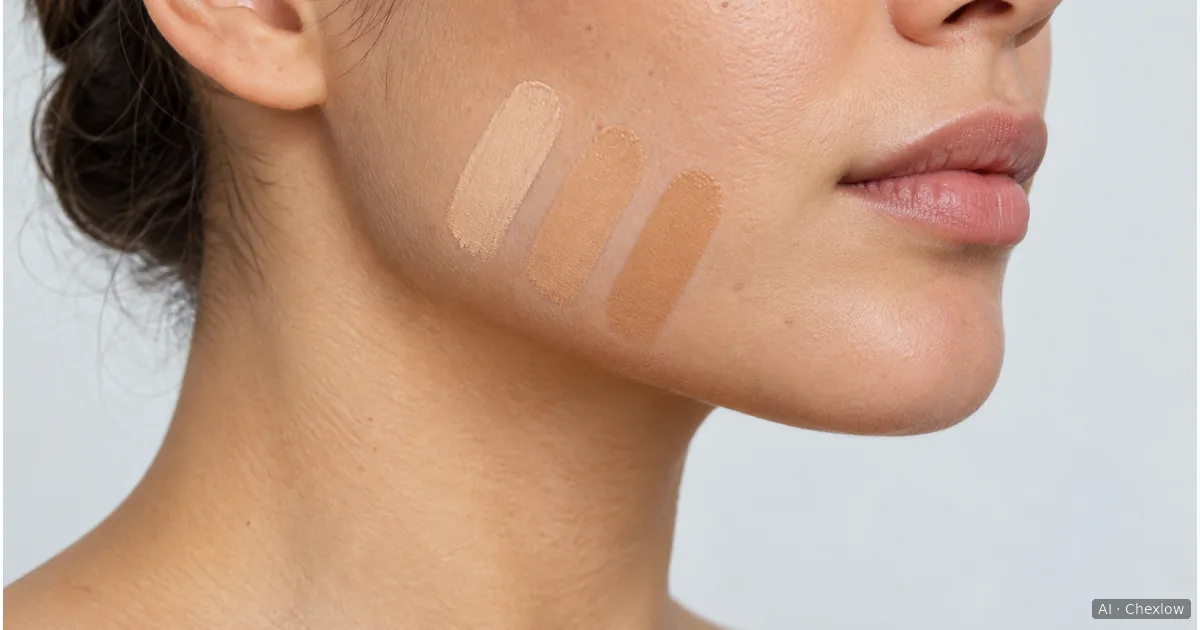
Bobbi Brown recommends selecting the formula first and swatching the chin, cheek and forehead. For the side-by-side comparison here, begin with small, separate swatches near the jaw, keeping the neck visible; then check the closest candidate on the other facial areas.
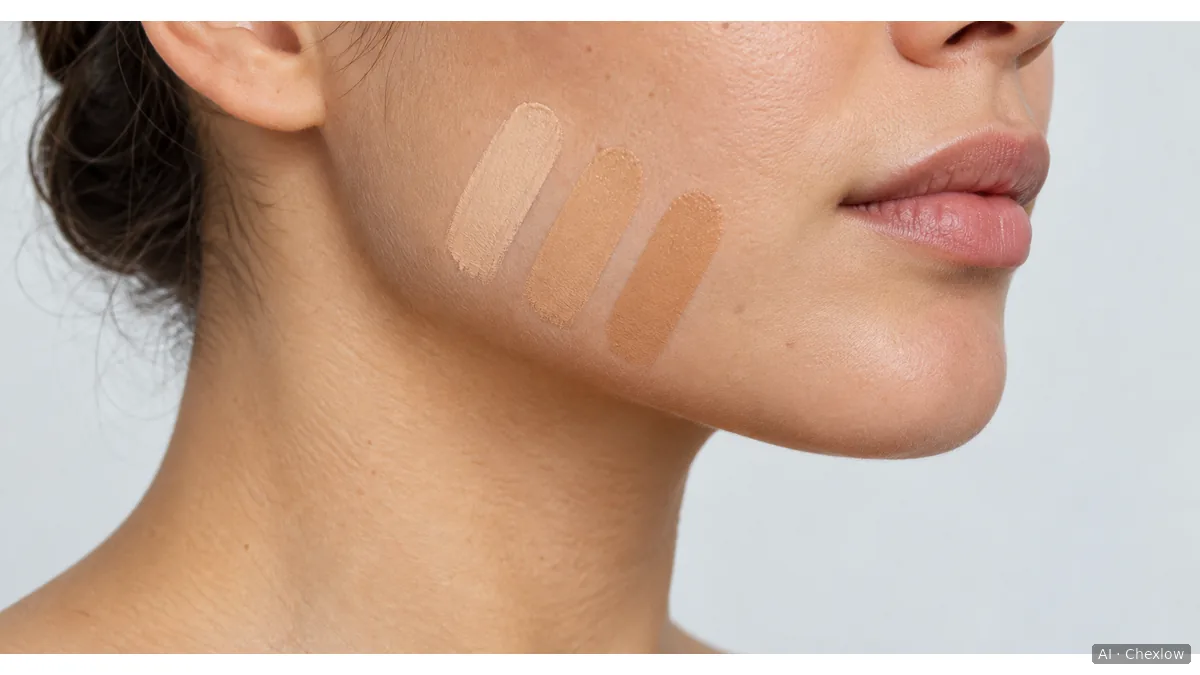
The illustration shows where to compare samples, not calibrated shade colors or a winning match. Keep a note of which actual shade occupies each position.
Use comparable thin applications and the same skin preparation. Look in daylight, then in the lighting where you normally wear makeup. Blend the edges and judge the transition into surrounding skin, rather than choosing the prettiest unblended stripe.
Record how each shade looks at application and after it settles. The Laura Mercier guide notes that some formulas can change color after application, so a first glance alone need not settle the purchase. If a candidate changes noticeably on you, record the change instead of automatically ordering a lighter shade.
Buy the match, or change the right variable
- Clearly too light or dark: compare a different depth within the same formula.
- Depth is close, but the cast looks wrong: compare another undertone at a similar depth.
- No candidate blends convincingly: ask for another shade range or try a different formula; buying two bottles to mix is not the necessary next step.
- A candidate works across the checks: confirm the full product name, shade code and shade name on the seller’s selected option before buying one.
If the base matches surrounding skin but a small area still needs coverage or color correction, that is a different decision. Continue with concealer versus color corrector, rather than changing the shade of your whole face to address one patch.
Come è stata costruita questa guida
This guide was written by AI for Chexlow using manufacturer shade and application guidance, Laura Mercier customer-care terms, and AAD product-testing advice. The shortlist and comparison sequence are editorial recommendations, not results from original product testing or a personalized shade assessment.
Curato dal team Chexlow · Le immagini sono illustrazioni generate dall’IA