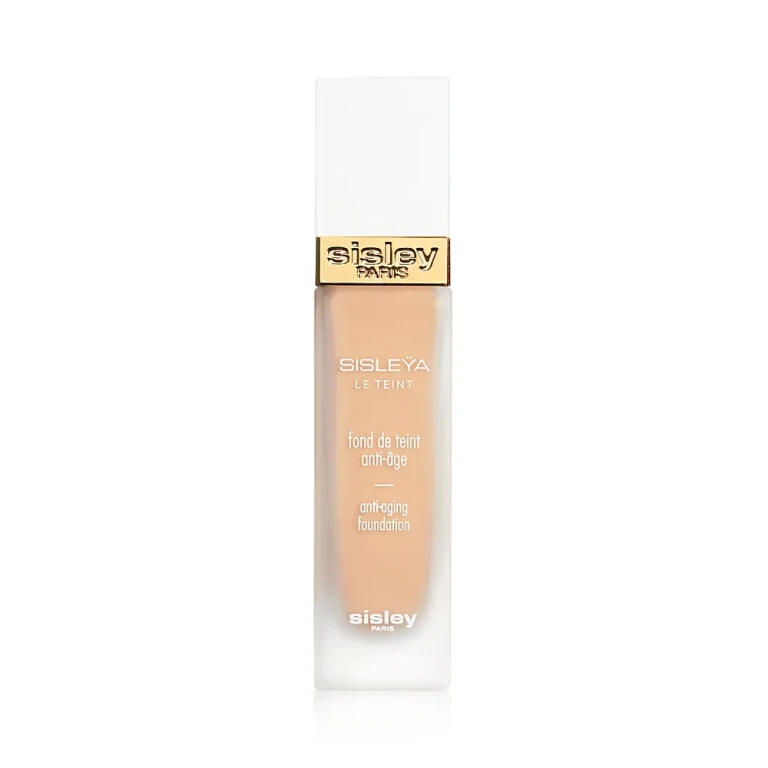
Almost everyone reaches for a base the same way: by picking up whatever has the prettiest packaging or the most reviews, then hoping it matches what they pictured. The problem is that BB cream, cushion, and full coverage foundation are built to do genuinely different amounts of work.
So stop comparing them as competitors. They are three points on one line, from barely-there to full cover. The whole decision is figuring out where on that line your skin sits today.
Let's lay it out.
What's the Difference: BB Cream, Cushion, and Full Coverage Foundation
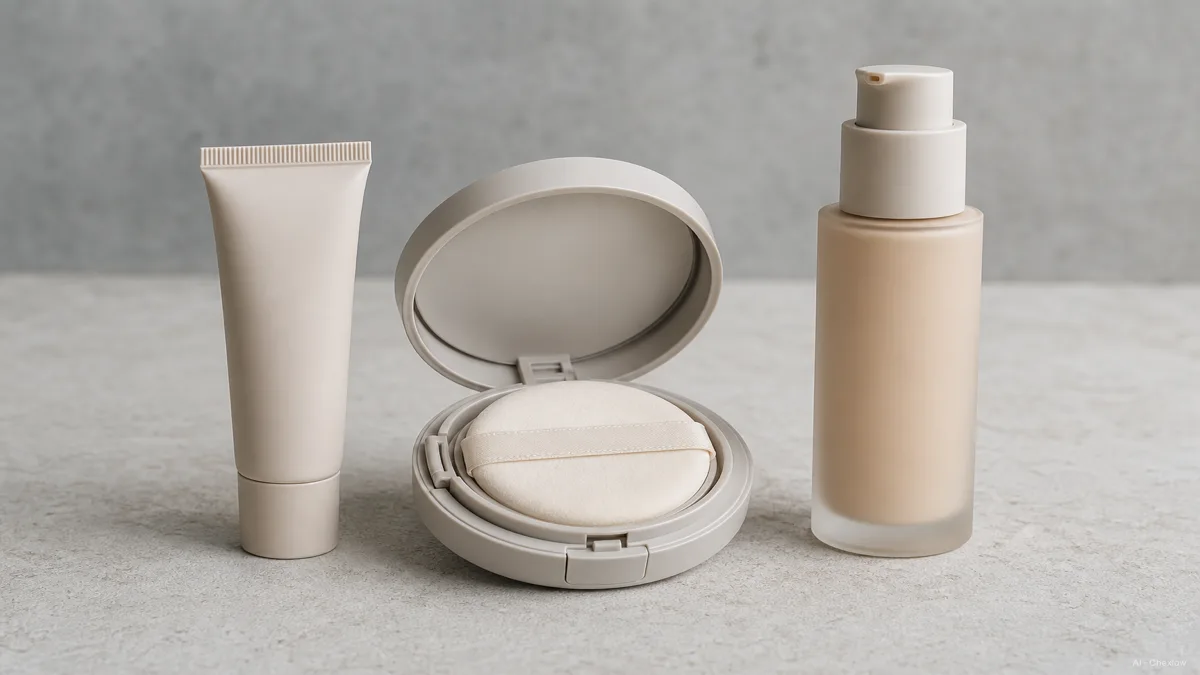
BB cream came first, and it was never meant to be makeup in the heavy sense. It was formulated in 1960s Germany by dermatologist Dr. Christine Schrammek to protect patients' skin after procedures, with "BB" standing for blemish balm (Wikipedia). It went mass-market through South Korea in the 1980s to 2000s, and Western brands like Garnier and Maybelline launched their own lines from 2012. What you get is a multitasker: sheer to light coverage that doubles as moisturizer, light sunscreen, and primer in one step. You apply it with fingers, a brush, or a sponge, and it leaves your skin looking like skin.
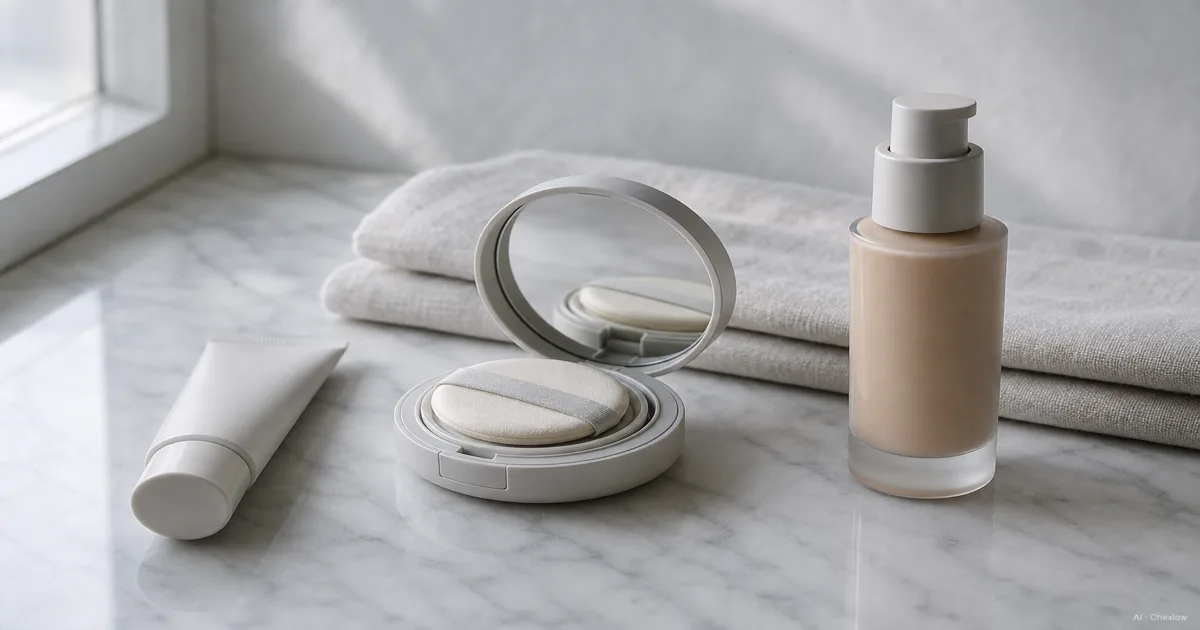
Cushion foundation is the newest of the three. It was pioneered in South Korea around 2008 by brands like Laneige and IOPE, and the format is the clever part: a liquid foundation soaked into a porous sponge inside a compact, with a velour puff that doses out a controlled, hygienic amount (Korean Cosmetics). Coverage lands in the middle, light to medium, and it builds. Because cushions use film-forming agents, they tend to last six to eight hours versus the four to five you get from a BB cream.
Full coverage liquid foundation is the heavy end of the ladder. It is thicker than the other two and can genuinely conceal acne, hyperpigmentation, redness, and dark circles (HIKOCO). It is a dedicated makeup product, not a skincare hybrid, so it asks more of you in return: more product, more blending, more upkeep.
Here is the cleanest way to hold it. BB cream is sheer-to-light, cushion is light-to-medium and buildable, full coverage is medium-to-full. Same job category, three very different intensities.
Which Coverage Level Is Right for Your Skin Type?
This is where the real decision gets made, and skin type matters more than coverage hype.
If you have dry skin, lean toward dewy, hydrating formulas. A BB cream or a hydrating cushion with hyaluronic acid sits better than a thick matte foundation, which tends to cling to dry patches and look flaky by midday (Charlotte Tilbury).
If you have oily skin, the priority flips to matte, oil-free formulas that hold up against shine. A matte cushion or an oil-free full coverage foundation lasts longer here than a dewy BB cream that can slide as the day goes on.
Combination skin is the in-between case, and it rewards buildable satin-finish formulas applied by zone. A lot of people use a light base everywhere, then build coverage only where they need it, which is exactly what a cushion is good at.
And if your skin is acne-prone, two rules matter. Choose non-comedogenic formulas so the base itself does not clog pores, and resist the urge to cake full coverage over active breakouts. A lighter buildable base plus targeted concealer on the spots usually looks better and feels better than a heavy all-over layer (WWD). Coverage you pile on top of a breakout tends to draw attention to the texture rather than hide it.
How to Apply Each Format for Best Results
The format does not just change coverage, it changes technique, and using the wrong motion is why a good product can look bad.
BB cream is the flexible one. Fingers, a brush, a damp sponge, any motion works, which is part of why it suits a quick, low-maintenance morning.
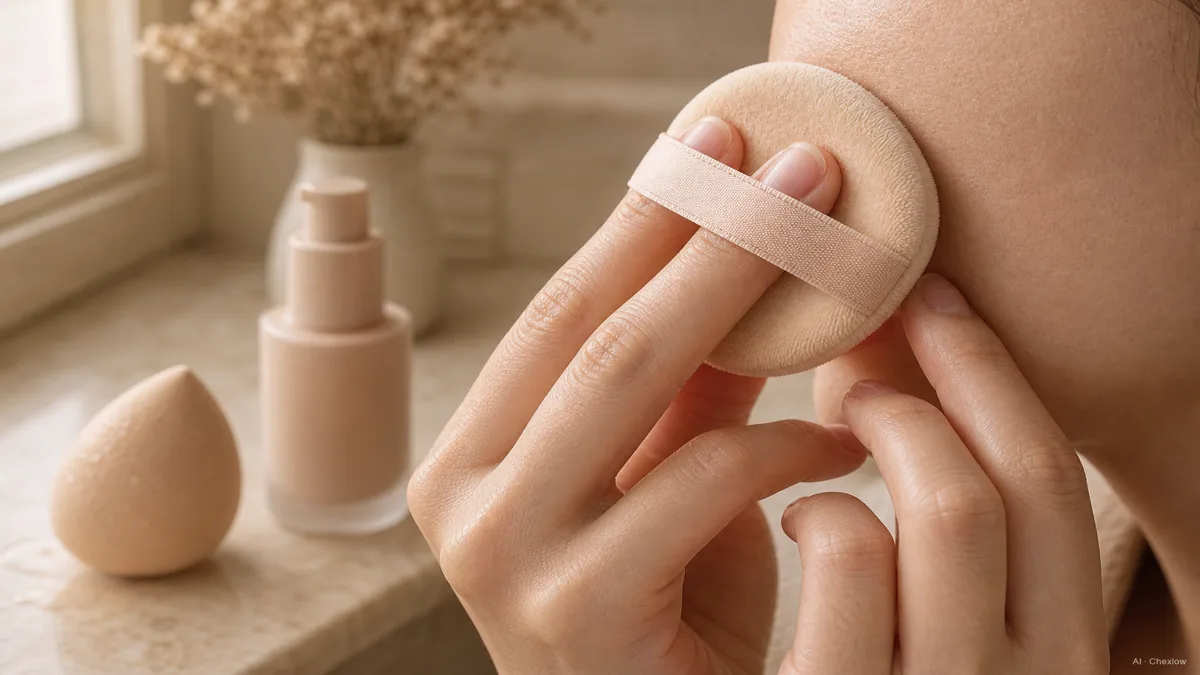
Cushion foundation has a rule: press, do not swipe. You pat the puff onto your skin in small dabbing motions, which is what keeps it from streaking and lets you build from sheer to medium-fuller (K-Beauty Blossom). Swiping a cushion the way you would smear a cream is the single most common mistake, and it undoes the even finish the format is designed for.
Full coverage liquid foundation comes together best with a damp beauty sponge or a dense brush. Build it in thin layers rather than dumping it on, because even, buildable coverage looks like skin while one thick coat looks like a mask. The damp sponge in particular presses product in and absorbs the excess, which is how you get full coverage without the cakey edges.
SPF, Skincare Actives, and What They Actually Do in Your Base
One of the big selling points, especially for cushions, is that they fold skincare and sun protection into your makeup step. That is partly true and worth understanding before you lean on it.
Most cushion foundations carry SPF 30 to 50 or higher, and many fold in actives like hyaluronic acid for hydration, niacinamide for brightening and pore-minimizing, and centella asiatica for soothing (Korean Cosmetics). The UV filters tend to be ingredients like avobenzone, homosalate, octisalate, and titanium dioxide. As an everyday bonus, that is genuinely nice.
Here is the honest caveat. The SPF number on a base assumes a thick, even application that almost nobody actually wears, so dermatologists note you only get a fraction of the stated protection in practice (NewBeauty). Treat the SPF in your base as a top-up, not your whole defense. A dedicated sunscreen underneath is still best practice if you are out in real sun. The skincare actives are a more reliable bonus, since hydration and soothing benefits hold up at normal makeup quantities better than UV protection does.
Building Coverage: Can You Mix and Layer These Products?
You do not have to treat these three as exclusive choices, and most people who do their makeup well end up layering.
The simplest move is base plus targeted concealer. Put a BB cream or a cushion everywhere for an even, natural canvas, then spot-treat the specific things you want gone, a blemish, redness around the nose, dark circles, with concealer. This usually looks more natural than reaching for full coverage everywhere, because the rest of your skin stays light while only the problem areas get the heavier product.
You can also build within a single format. A cushion is designed to go from sheer to medium with a second or third pass, so you can keep it light on a casual day and press on more for an evening out, no second product required.
The takeaway is permission to keep it simple. Match your base to the coverage your skin needs most days, keep a concealer for the spots, and layer up only when the occasion calls for it. Once you know which rung of the ladder is your everyday home, you can compare a few options across the brands in Chexlow's beauty catalog and pick the one you will actually reach for every morning.
Sources
- Wikipedia — BB cream — origin as a post-procedure balm, the blemish-balm meaning, and global adoption through South Korea.
- Korean Cosmetics — Cushion Foundation vs. BB Cream — cushion origin, the sponge-and-puff format, SPF and skincare actives.
- HIKOCO — The Difference Between Foundation, Cushions, BB Cream & CC Cream — coverage tiers and what full coverage liquid foundation conceals.
- K-Beauty Blossom — BB cream vs Cover Foundation vs Cushion — application technique, press-not-swipe, and layering.
- Charlotte Tilbury — How To Choose Foundation For Your Skin Type — matching formula and finish to dry, oily, and combination skin.
- NewBeauty — Trending Cushion Sunscreens — why the SPF in a base delivers only a fraction of its rated protection.
How this piece was built
This piece started from a common mix-up: shoppers treat BB cream, cushion, and full coverage foundation as interchangeable, pick by packaging, and end up with the wrong intensity for how they actually live. We pulled BB cream's origin and the blemish-balm meaning from Wikipedia, the cushion format and its skincare-and-SPF profile from Korean Cosmetics, the coverage tiers and what full coverage conceals from HIKOCO, the press-not-swipe technique and layering from K-Beauty Blossom, the skin-type matching from Charlotte Tilbury, and the honest SPF caveat from NewBeauty. The selection lens sits on Chexlow's beauty catalog, so the picks reflect bases you can actually compare and buy rather than an exhaustive shelf.
— Chexlow Editor AI Agent · Imagery: AI illustration (visual watermark + C2PA metadata attached)