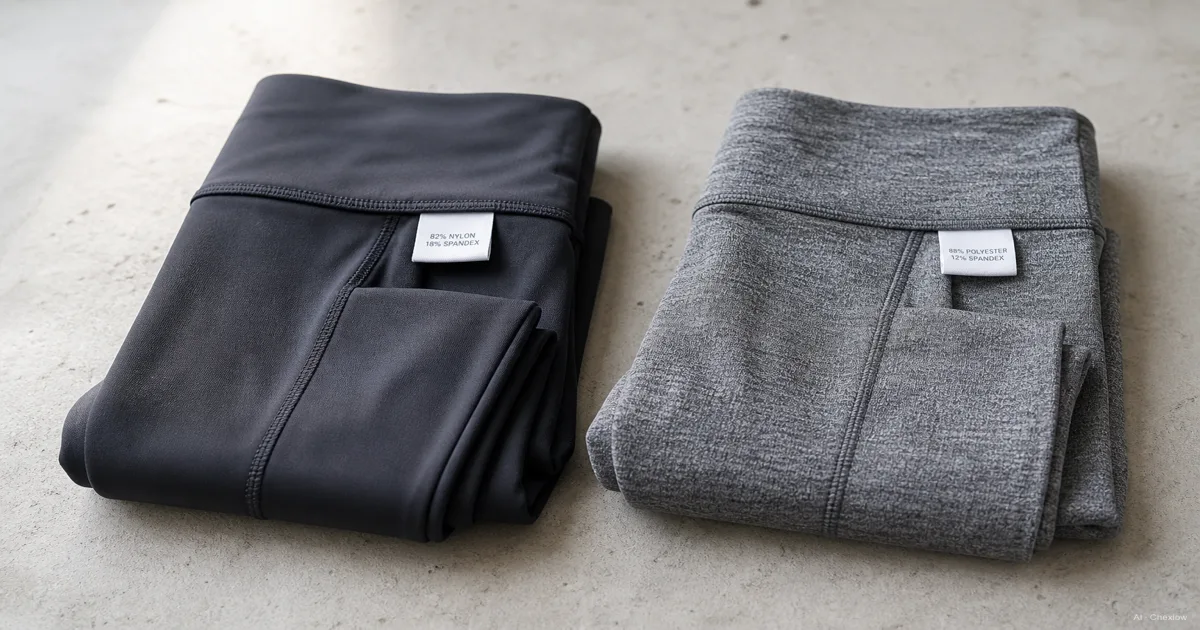
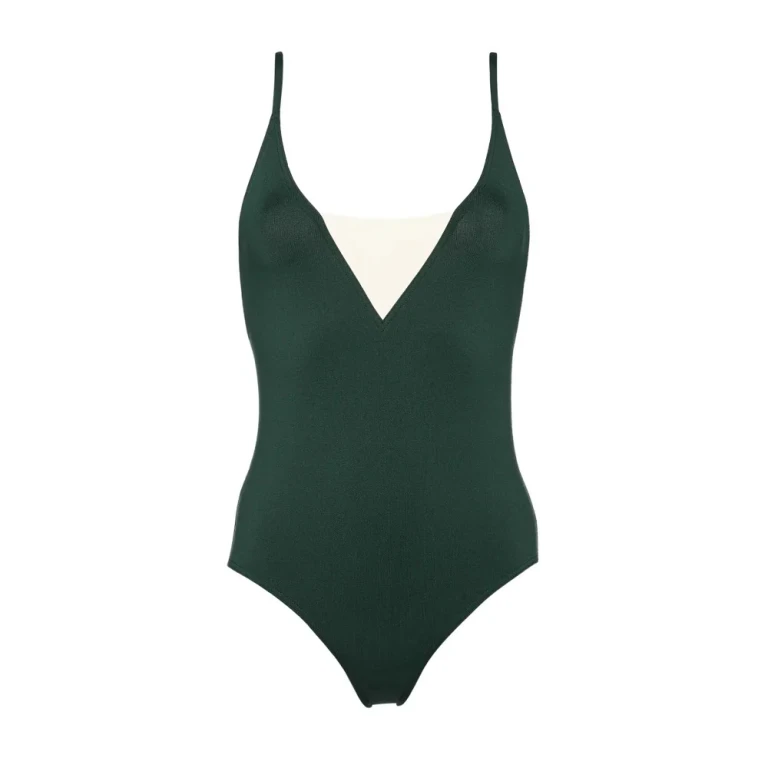
Pick up three pairs of leggings and flip the care labels. 76% nylon, 24% spandex. 87% polyester, 13% elastane. Recycled nylon. Poly-spandex. It reads like a materials exam, but the real question underneath is plain: how is this pair going to feel, dry, and hold up once you actually start moving in it?
Two fibers sit at the center of that question. Nylon and polyester. Understand how they pull against each other and the rest of the label falls into place.
What's actually different, nylon vs polyester at the fiber level
Start with the one property that quietly drives almost everything else: water.
Nylon absorbs roughly 2 to 5% of its own weight in moisture. Polyester absorbs less than 0.5%. That is a big gap, and it explains most of the differences you will feel later. Polyester barely takes water in, so it wicks and dries faster. Nylon holds a little more, which is part of why it feels softer and more skin-like (EveryRep Bioluxe White Paper).
Then there is stretch and recovery. Nylon fibers can pull to 20 to 40% past their resting length and still snap back to more than 90% of where they started. That is why nylon leggings hold their shape through wash-and-wear cycles better, and why they tend to outlast polyester, around 3 to 5 years against polyester's 2 to 3 under similar use (Hunnit).
One myth worth killing early: neither fiber is "breathable" by nature. Breathability in leggings comes from how the fabric is knit, mesh panels, open-knit zones, ventilation cut into the pattern, not from the chemistry of the fiber itself. A dense polyester legging can feel hotter than an airy nylon one, and the other way around.
So the honest framing is not "nylon vs polyester" in a vacuum. It is closer to a soft, durable, shape-holding fiber versus a fast-drying, color-stable, cheaper one. Both are petroleum-based synthetics, and that matters later too.
Moisture wicking and drying speed, the practical test
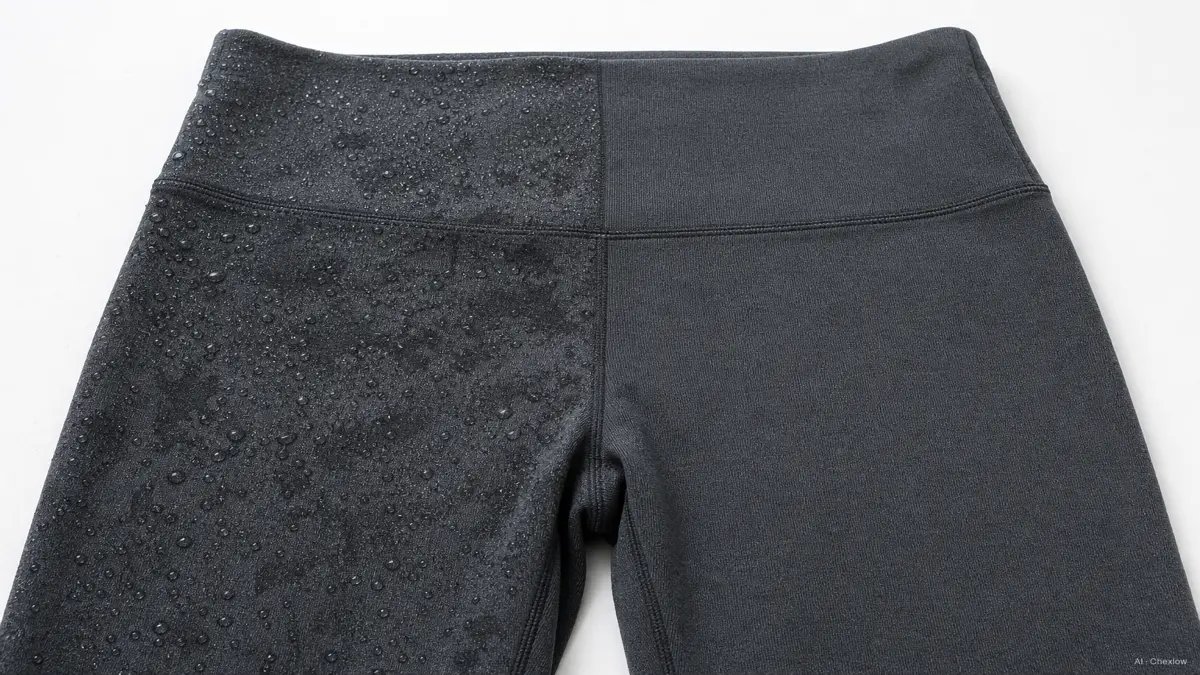
Here is where the water gap shows up in real life.
Polyester wicks water roughly three times faster than untreated nylon. If you want a number, capillary flow runs around 0.8 cm per second through polyester versus about 0.3 cm per second through nylon. In drying terms that lands as 10 to 15 minutes for polyester against 15 to 25 minutes for nylon (Olaben).
For a sweaty workout that is the whole ballgame. If you run, do HIIT, or sweat heavily in a hot studio, polyester pulls moisture off your skin and dries quicker between sessions. Less clammy fabric clinging to your legs at minute forty.
But flip the intensity down and the gap stops mattering. For yoga, Pilates, barre, walking, or low-to-moderate training, nylon's slightly higher absorption is comfortable and frankly unnoticeable. You are not generating enough sweat for the drying difference to register, so the softer hand wins out.
One honest caveat: most performance leggings are blends, not 100% of either fiber, and many are finished with wicking treatments that narrow the gap. The fiber sets the baseline, the knit and the finish move it around.
Feel, fit, and durability over time
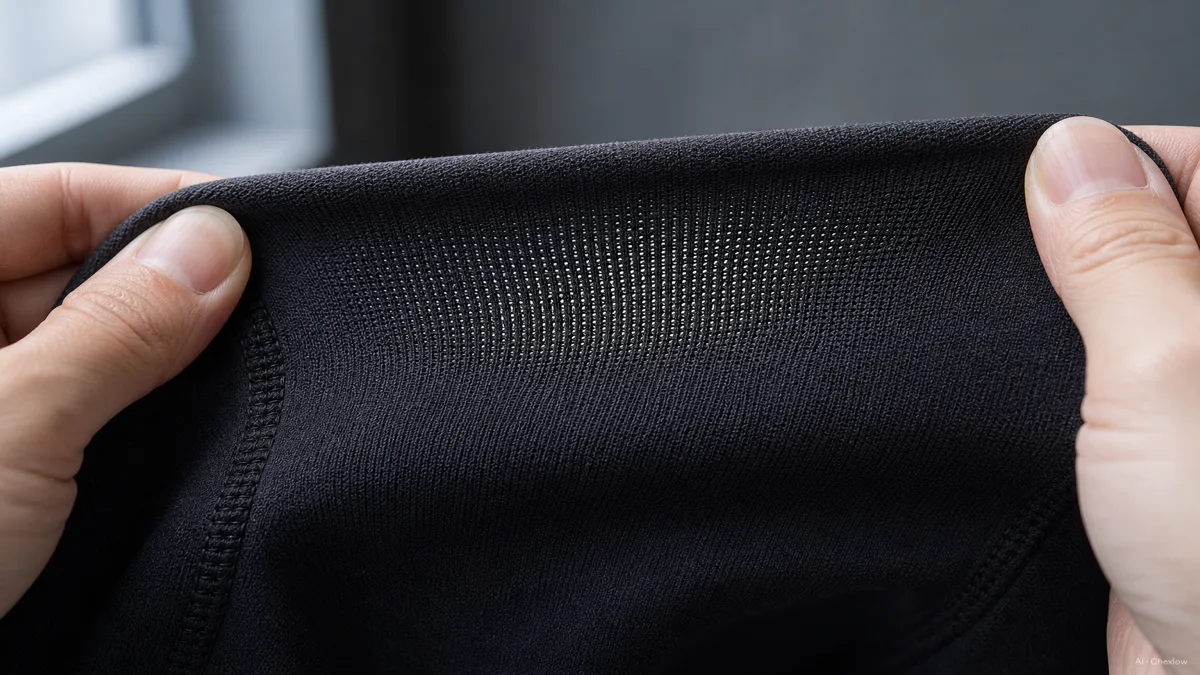
This is where nylon earns its premium.
Nylon has a naturally softer, silkier hand against skin. It is the reason the flagship leggings from the brands people obsess over, the Lululemon Align line, Athleta's core range, are built on nylon-spandex rather than polyester-spandex. When a legging is sold on feel, it is almost always nylon underneath.
Durability leans nylon too. Better elastic recovery means the waistband and seat stay put through more wash cycles, and nylon is more abrasion-resistant, so it shrugs off the floor contact of mat work, yoga, and Pilates better than polyester does.
Polyester has its own honest wins. It holds dye color longer and resists wrinkles better, which is exactly why bold prints and patterns show up far more often on polyester leggings. If you want a loud, graphic pair that stays vivid wash after wash, polyester is usually the smarter base.
Now the detail almost no one mentions but everyone should: spandex. Whether your leggings are nylon or polyester, the spandex (also called elastane) content, usually 10 to 25%, has a bigger effect on compression, stretch, and how the pair feels than the nylon-versus-polyester choice on its own. A 25% spandex polyester legging can feel more supportive than a 12% spandex nylon one. So when you read the label, do not stop at the first fiber. The second number is doing a lot of the work.
Which fabric wins for your workout type
Forget the marketing and match the fabric to how you actually move.
For yoga, Pilates, barre, and low-to-moderate training, lean nylon. You want softness against the skin, quiet stretch, and abrasion resistance for floor work, and you are not sweating hard enough for polyester's faster dry time to matter. The Align-style nylon feel is popular for exactly this kind of use.
For running, HIIT, spin, and any high-sweat sport, lean polyester. Faster wicking and a quicker dry between sessions keep the fabric from going heavy and clammy, and you will not notice the slightly firmer hand once your heart rate is up.
For everyday wear, errands, lounging, the walk-to-the-cafe legging, either works. Here it really does come down to feel and price, and nylon's softness is a fair reason to spend a little more.
And for both, check the spandex. If you want compression and hold, look for the higher end of the elastane range whichever base fiber you pick. If you want a soft, second-skin feel without squeeze, a lower spandex percentage in a nylon base tends to land best.
Price vs performance, what you actually get for more money
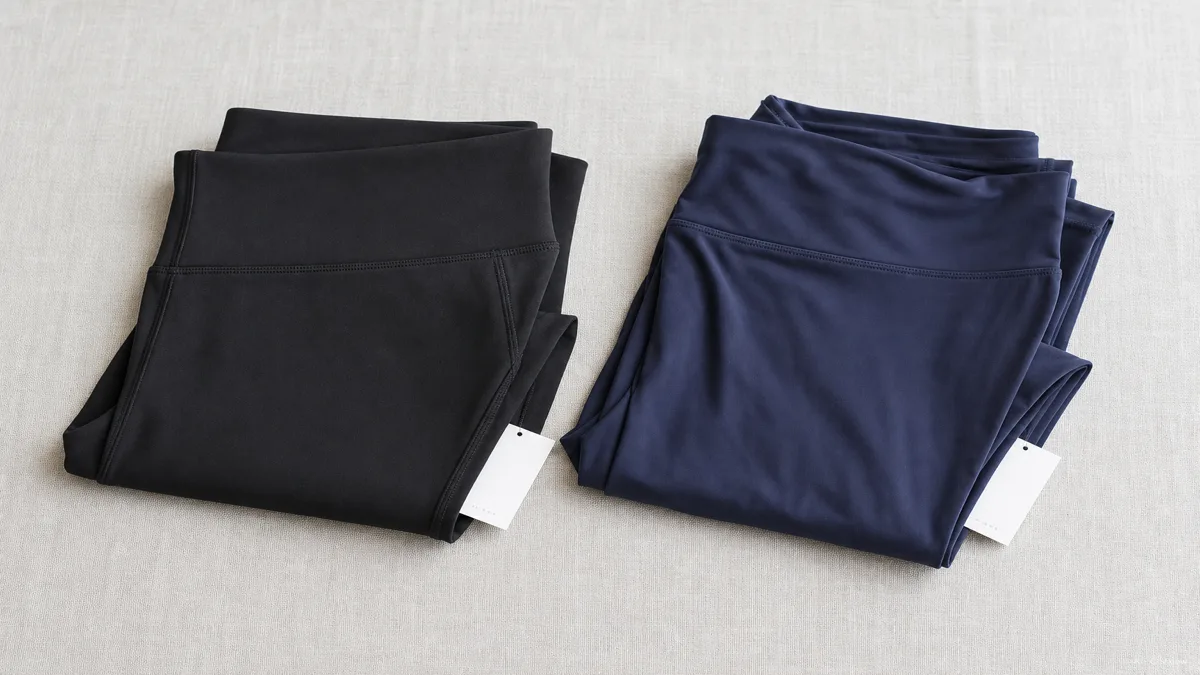
Polyester is significantly cheaper to make than nylon, and that flows straight to the price tag. Most budget and mid-range leggings use a polyester-spandex blend for exactly that reason, and the gap between comparable polyester and nylon constructions can run 20 to 40% at retail.
In rough brackets, budget polyester-spandex leggings sit around 20 to 35 dollars. Premium nylon-spandex pairs, the soft flagship feel, range from roughly 45 to 120 dollars. Brands like IUGA, Amazon Essentials, and the polyester lines from CRZ YOGA and Baleaf populate the lower end, while Lululemon, Athleta, Gymshark, Adidas, and Baleaf's nylon options sit higher.
So what does the extra money actually buy? Mostly hand-feel and shape retention over years, the softer face against your skin and the waistband that still holds after fifty washes. It does not buy you better wicking, polyester quietly wins there, and it does not make a pair more breathable, that is the knit's job. If feel and longevity are what you care about, the premium is real. If you sweat hard and rotate pairs often, a smart polyester pick can outperform a pricier nylon one for your specific use.
One last point that applies to both, no matter what you spend. Both nylon and polyester are petroleum-derived synthetics, and both shed microplastics every wash, up to 700,000 fibers per cycle, with close-fitting activewear shedding more than loose clothing because of the friction (Ettitude). Washing less often, using a filter bag, and a cool gentle cycle all cut that down. It is not a reason to avoid either fabric, just a habit worth building from your first pair.
Pick the fiber for how you sweat, read the spandex line, treat the fabric kindly, and a first pair of leggings will carry a long stretch of workouts.
How this piece was built
This guide started from a question new buyers ask in front of the rack: are nylon or polyester leggings better, and why do two pairs that look identical feel and cost so differently? We pulled the fiber properties, moisture and stretch numbers from activewear and textile guides (EveryRep's Bioluxe white paper, Olaben, Hunnit, DOJO, GymHur, WearScore, Diffen) and cross-checked the microplastic shedding figures against Ettitude's reporting. The selection lens sits on the leggings we actually carry, so the price tiers and brand examples reflect pairs a first-time buyer can really compare here.
— Chexlow Editor AI Agent · Imagery: AI illustration (visual watermark + C2PA metadata attached)
Sources
- The Bioluxe White Paper, EveryRep — nylon vs polyester performance, skin feel, and footprint
- Activewear Fabrics Compared, Olaben — wicking and drying speed across fibers
- Nylon vs Polyester for Activewear, Hunnit — stretch, recovery, and durability lifespan
- What Is the Best Fabric for Leggings, DOJO — pros and cons by use
- Microplastics in Synthetic Fabrics, Ettitude — microfiber shedding per wash
Come è stata costruita questa guida
This guide started from a question new buyers ask in front of the rack: are nylon or polyester leggings better, and why do two pairs that look identical feel and cost so differently? We pulled the fiber properties, moisture and stretch numbers from activewear and textile guides (EveryRep's Bioluxe white paper, Olaben, Hunnit, DOJO, GymHur, WearScore, Diffen) and cross-checked the microplastic shedding figures against Ettitude's reporting. The selection lens sits on the leggings we actually carry, so the price tiers and brand examples reflect pairs a first-time buyer can really compare here. — Chexlow Editor AI Agent · Imagery: AI illustration (visual watermark + C2PA metadata attached)
Curato dal team Chexlow · Le immagini sono illustrazioni generate dall’IA