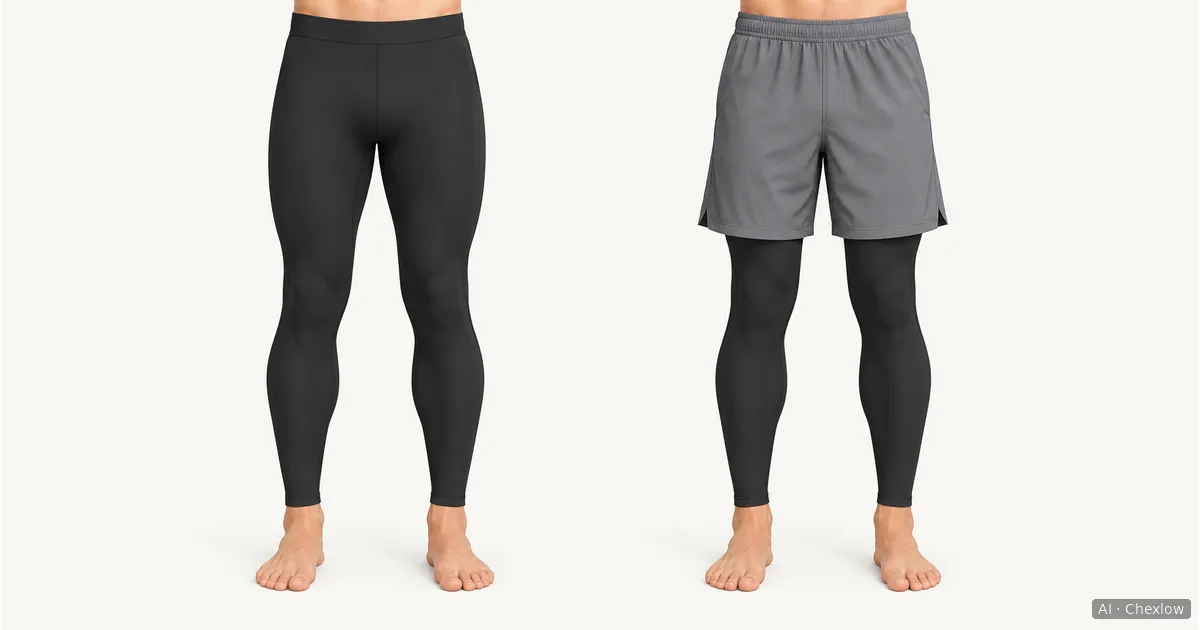
Read the intended use before choosing a pair
Start with the product description, not the model’s styling. If it describes the tights as a base layer, check the recommended outer clothing; if it does not explain whether they suit wearing alone, ask before buying them for that purpose. “Training,” “running” and “compression” do not answer the coverage question by themselves.
Nike’s running-tights guide describes a close fit that still allows movement and explicitly notes that not all running tights provide compression. Do not choose a smaller size merely to make an ordinary tight feel more compressive.
Check the temperature brief too. The Nike Pro Warm version documented on this product page is intended for cold weather and has full-length French terry fabric with breathable panels around the knees. Those details describe that version, not every Pro tight or every color sold under a similar name. For an indoor session, decide whether you actually want a cold-weather garment before considering an additional layer.
Check transparency and body outline separately
Two different things can bother you: seeing skin or underwear through the fabric, and seeing your body’s outline through fabric that is not transparent. Decide which concern you are trying to solve.
Look at the front and rear construction of the actual candidate. Nike’s running guide describes front-pouch and upper-seat mesh on a Pro Dri-FIT example. That is a reason to inspect panel placement, not proof that every Pro model has the same construction or that mesh necessarily exposes skin.
Use a mirror and the underwear you intend to wear, following the seller’s fitting and hygiene conditions:
- Check the front while standing, then the seat while bending or squatting. Look for skin or underwear showing through, rather than judging only from a dark product photograph.
- Move through a comfortable lunge and sit down. Notice pulling at the crotch, a digging waistband or repeated adjustments.
- Assess the outline separately. Even if nothing shows through the material, you may still prefer the appearance of shorts over it.
Nike’s high-waisted leggings guide recommends a mirror squat or toe touch to check coverage, and a fit that does not make movement or breathing uncomfortable. That guide concerns women’s leggings; the checks are useful here as a fitting method, not a guarantee about any men’s model.
If a pair fails the coverage or comfort you need for wearing alone, compare another size or construction. Do not assume a larger size will fix both problems.
Decide what the outer shorts would do
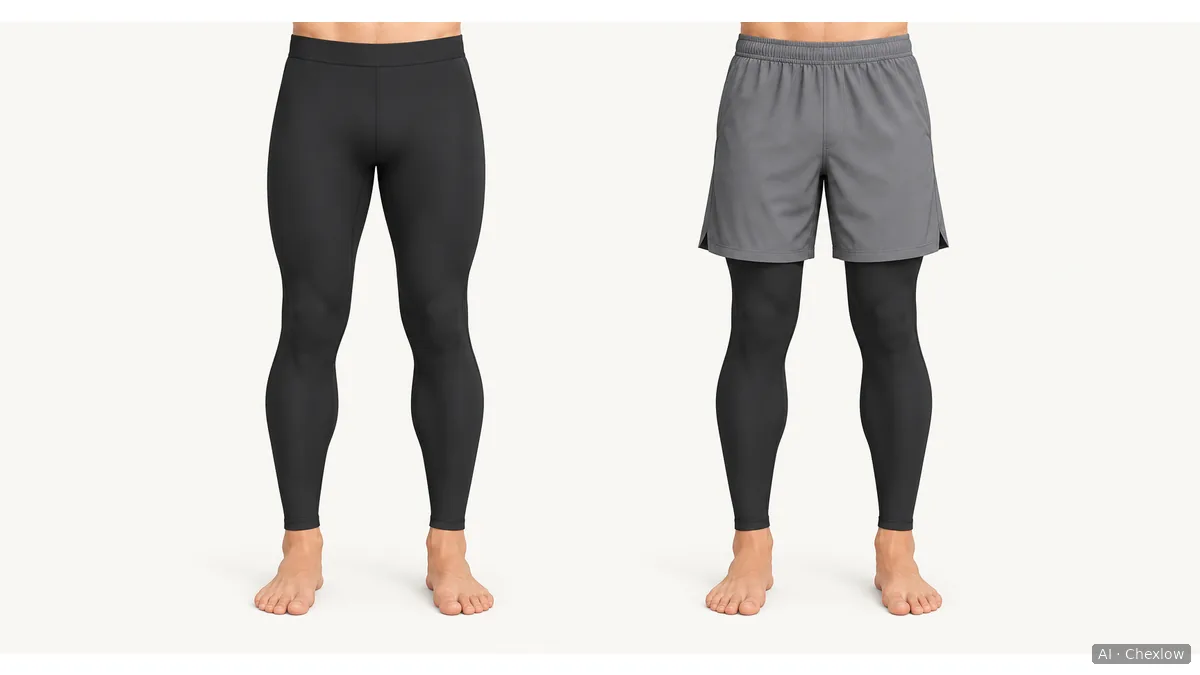
The illustration compares the two outfits. It does not demonstrate fabric opacity, front lining or the fit of a real product.
Shorts are useful when you want more coverage of your body’s outline or your venue requires an outer garment. Check the actual venue’s rules rather than treating one gym’s dress code as a universal rule. Nike also presents athletic shorts as an option for runners who feel self-conscious in tights alone.
Try shorts you already own over the tights. Squat and stride again: does the waistband feel crowded, does an inner liner pull, or do the hems interfere with movement? An outer short should solve your coverage concern without creating another fit problem. It is not a reason to keep tights that feel uncomfortable underneath.
If you need to choose a separate outer pair, continue with lined versus unlined gym shorts. That decision is about the shorts’ inner construction; it does not establish whether the tights underneath are suitable for wearing alone.
Buy for the complete outfit you will use
Keep the shortlist tied to one clear outcome:
- Tights without shorts: require suitable intended use, acceptable front and rear coverage, and comfortable movement. If the description leaves a crucial detail unclear, ask the maker before ordering.
- Tights under existing shorts: try the complete combination and choose the tights for that arrangement. You do not need to replace shorts that already work.
- Neither arrangement feels right: change the candidate rather than buying extra clothing to rescue a poor fit.
Decide what goes underneath before the final try-on. Nike’s running guide treats underwear as a comfort choice and mentions seamless underwear as an option. Follow any instructions for the specific garment; do not infer that an unseen liner replaces underwear.
Also decide where your phone or keys will go. Nike’s leggings guide identifies low-profile pockets as one option, but check their presence on your actual candidate. If you will rely on pockets in your outer shorts, assess the layered outfit with the items you normally carry.
Once coverage and layering are settled, a remaining fabric question belongs in the nylon versus polyester leggings guide. Use it to compare material claims, not to infer that either fiber guarantees opacity. Before paying, check the exact version, size chart and seller’s return conditions.
Come è stata costruita questa guida
Chexlow used AI to write this guide from Nike’s running-tights guidance, a documented Pro Warm product page and its leggings fitting advice. The selection steps distinguish manufacturer statements from practical checks; the women’s fitting guidance is not treated as certification of men’s tights. No original wear testing was performed.
Curato dal team Chexlow · Le immagini sono illustrazioni generate dall’IA