Here is the quiet mistake almost every first-time moisturizer buyer makes. They look at a result they want — the dewy photo, the firmness claim, the word "barrier" — and they buy for that. It feels obvious. The promise is the thing on the front of the jar.
But the part that actually decides which moisturizer suits you is something the jar cannot tell you: your own skin type, and the texture that fits it. Dermatologists are nearly unanimous here. Find your skin type first, let the texture do most of the choosing, and treat the claim on the front as the last filter, not the first.
That one reordering fixes most bad moisturizer purchases before they happen.
How to Find Your Skin Type in 30 Minutes
You cannot buy well for skin you have not identified, and the good news is that the test is free and takes half an hour.
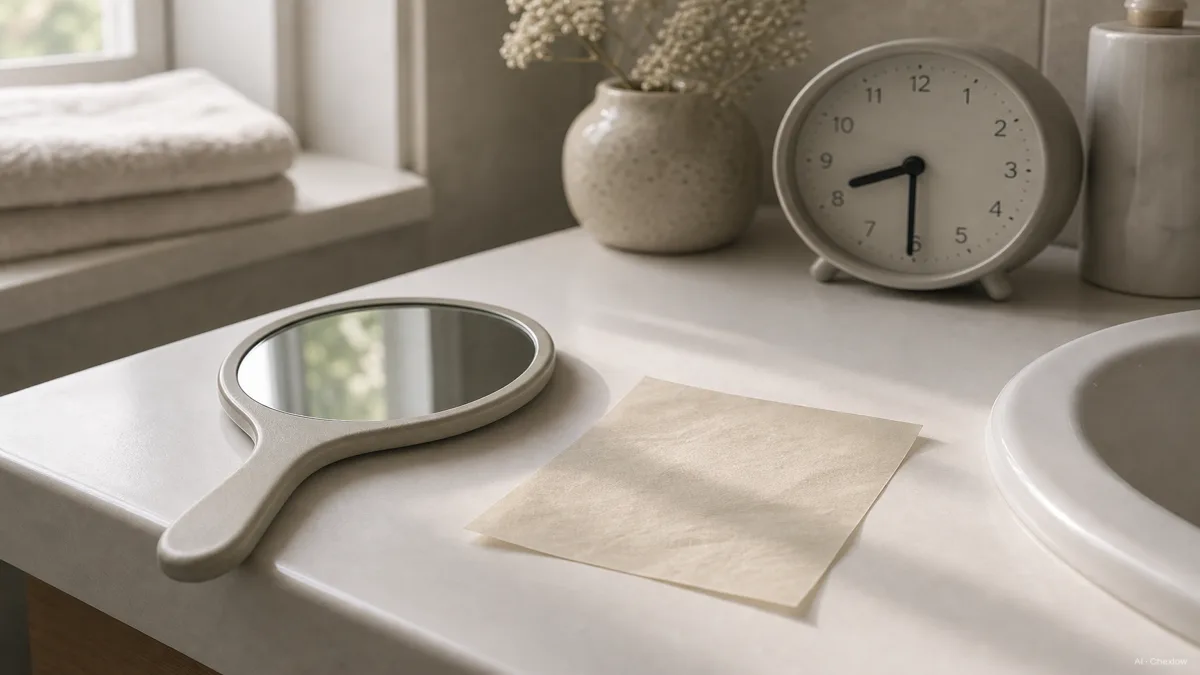
Wash your face with a gentle cleanser, pat it dry, and then do nothing. No moisturizer, no serum, no toner. Wait about thirty minutes and pay attention to how your skin settles. CeraVe and dermatology educators at Healthline call this the watch-and-wait method, and the readout is simple.
- Shine across the whole face, including cheeks and forehead, points to oily skin.
- A tight, flaky, or slightly rough feeling points to dry skin.
- Shine only in the T-zone, the forehead and nose, with normal or dry cheeks, points to combination skin.
- Balanced, comfortable, neither tight nor greasy, points to normal skin.
Sensitive skin is a little different. It is less about oil and more about reaction, so it can overlap with any of the four above. If your skin stings, reddens, or itches easily with new products, treat sensitive as a second label that sits on top of your oil-based type. A blotting paper pressed to the T-zone and cheeks gives the same read faster if you are short on time.
One honest note: skin type shifts. Winter, travel, and hormones all move the needle, and the American Academy of Dermatology points out that perimenopause and the years past fifty quietly pull most people toward drier skin as oil production falls. So retest when the seasons turn, not just once in your life.
What's Actually Inside a Moisturizer: Humectants, Emollients, and Occlusives
Every moisturizer, from the cheapest gel to the richest balm, is built from three kinds of ingredients doing three different jobs. Once you can name them, the back of any jar gets readable.
Humectants pull water into the skin. Hyaluronic acid and glycerin are the headliners, and CeraVe explains that hyaluronic acid can hold up to a thousand times its weight in water, which is why it shows up in nearly every lightweight formula. Humectants are the hydration draw.
Emollients fill the small gaps between skin cells and leave the surface soft and smooth. Shea butter and squalane are common ones. They are the comfort and the slip, the reason a good cream feels nice rather than just wet.
Occlusives seal the surface so the water you just drew in does not evaporate away. Petrolatum and beeswax are the classic ones. They are the lid on the jar, and they matter most for very dry skin and for sealing in everything underneath.
Here is the practical part. A good moisturizer almost always combines all three, but the ratio is what changes with skin type. Oily skin wants a formula tilted toward humectants with very little occlusive. Dry skin wants more emollient and occlusive to actually hold moisture in. That ratio is exactly what the texture on the shelf is telling you, which is the next section.
Matching Texture to Skin Type: Gel, Lotion, Cream, or Ointment
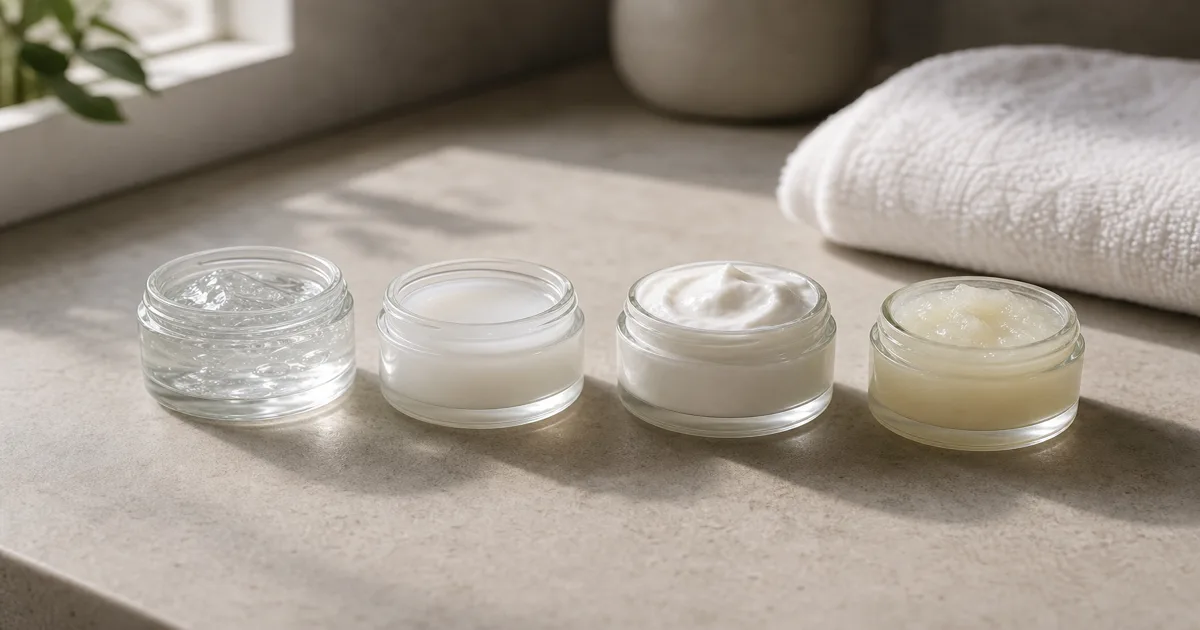
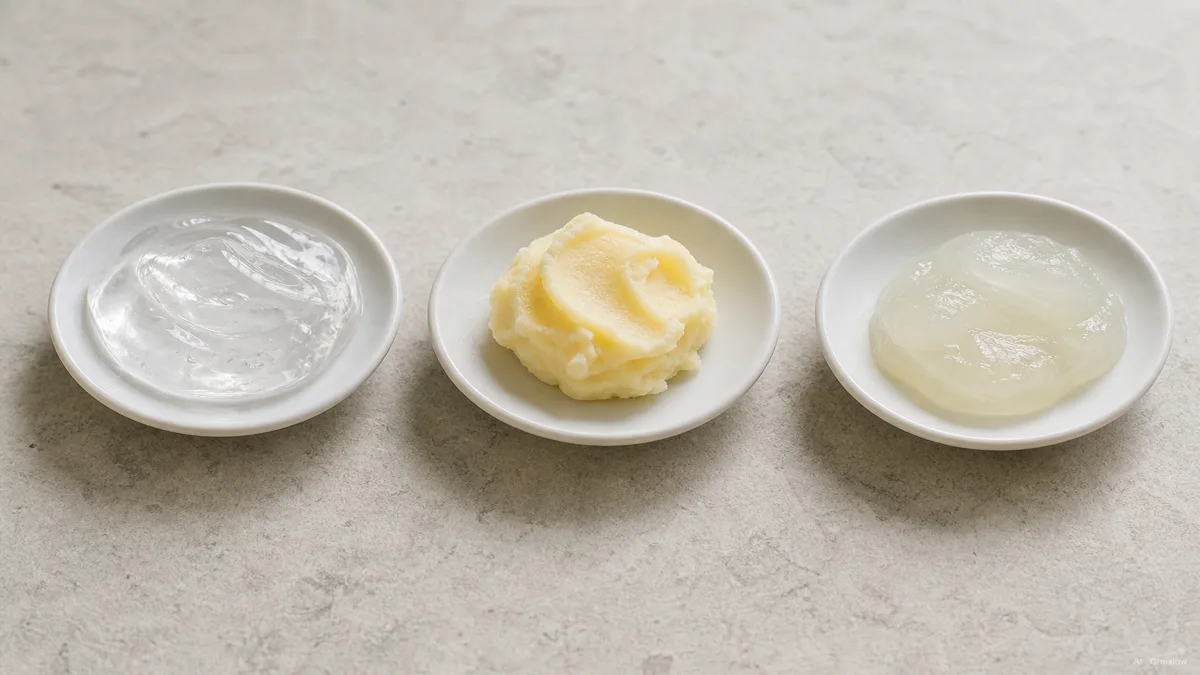
This is the shortcut dermatologists actually use, and it is the fastest way to narrow a whole shelf. Texture is a proxy for the humectant-to-occlusive ratio, so the format on the front quietly tells you who a product is for.
- Gel is the lightest, water-based and fast-absorbing, with the least oil. It suits oily and acne-prone skin, and it is where ingredients like niacinamide that help regulate oil tend to live.
- Lotion is mid-weight and pours easily. It suits normal and combination skin that wants hydration without a heavy finish.
- Cream is thicker, with more oil, and it sits on the skin longer. It suits dry and normal skin, and the AAD specifically recommends stepping up from lotion to cream once skin runs drier with age.
- Ointment is the heaviest and most occlusive, closer to a balm. It suits very dry, cracked, or eczema-prone skin, often used in small amounts on the worst patches rather than all over.
For combination skin, the AAD gives a neat trick: treat your face as two zones. Use a richer cream on the dry areas, usually the cheeks, and a lighter gel or lotion on the oily T-zone, or simply skip the oily areas. You are allowed to use two textures on one face.
If you only remember one thing from this guide, make it this ladder. Gel for oily, lotion for normal and combination, cream for dry, ointment for very dry. It will get you ninety percent of the way before you read a single ingredient.
Ingredients to Seek, and to Avoid, by Skin Type
Now the back of the jar. You do not need to memorize a chemistry list, just a short vocabulary of what helps your type and what works against it.
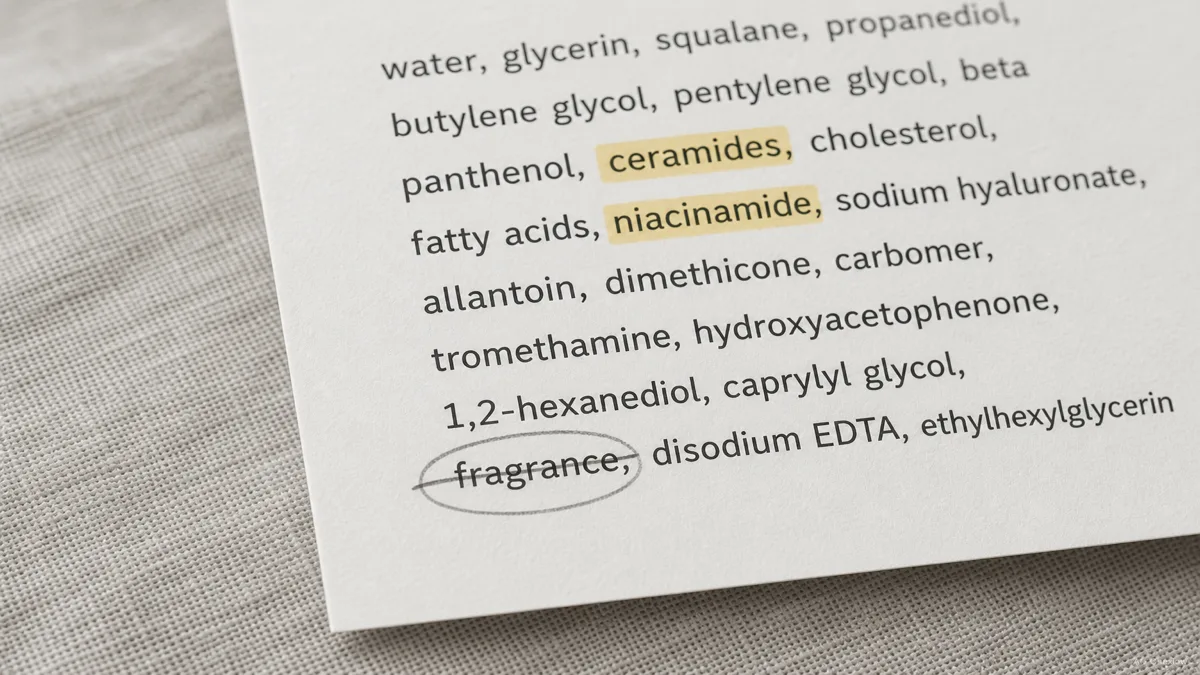
Ceramides are the one ingredient dermatologists recommend for every skin type. A 2025 Delphi consensus study in the Journal of the American Academy of Dermatology00612-7/abstract) lists them across the board because they reinforce the skin's natural barrier, which is the underlying mechanism of moisturizing regardless of type. If you see ceramides high on the list, that is a good sign for anyone.
For dry skin, the AAD recommends richer creams or ointments over thin lotions, with ceramides, hyaluronic acid, shea butter, and glycerin doing the heavy lifting. These add moisture and then hold it in.
For oily skin, look for the words gel, oil-free, and non-comedogenic, which means formulated not to block pores. Niacinamide is worth seeking because it helps regulate sebum. Avoid heavy occlusive oils that sit on the surface.
For combination skin, you are mixing both playbooks by zone, lighter on the T-zone and richer on the cheeks, so a non-comedogenic gel plus a small amount of cream covers both.
For sensitive skin, the rules flip toward what to avoid. Dermatology practices like SINY Dermatology recommend fragrance-free, hypoallergenic, and paraben-free formulas with soothing actives such as colloidal oatmeal, aloe vera, or chamomile. Artificial fragrance and harsh preservatives are the leading irritation triggers, so the shortest sensitive-skin filter is to put the bottle down if "fragrance" or "parfum" is on the label.
First-Buy Checklist: Labels, Timing, and How Much to Use
Here is the step almost everyone skips. They buy the right type of moisturizer and then use it in a way that wastes half of what it can do. A few small habits close that gap.
Check the label for the non-comedogenic flag if your skin is oily or combination, and for fragrance-free if it is sensitive. These two words do more triage than any marketing line on the front.
Mind the timing. The AAD recommends applying moisturizer right after washing, while your skin is still slightly damp, because that timing helps creams and ointments absorb and seals in the water still on the surface. A moisturizer on bone-dry skin works harder for less.
Use less than you think. A dime-sized amount for the whole face is the usual starting point, and more than that mostly sits on top and pills. Build a simple morning and night rhythm rather than chasing a ten-step routine on day one.
The same closing note applies here as to almost anything worth buying. The best moisturizer is the one matched to your skin type that you will actually reach for twice a day. A gel that suits your oily skin, used on damp skin morning and night, beats a luxurious cream that breaks you out and gets abandoned after a week.
Sources
- American Academy of Dermatology — How to Pick the Right Moisturizer — texture-to-skin-type matching, combination two-zone method, damp-skin timing, and the age-related shift to creams.
- CeraVe — Emollients, Humectants, and Occlusives — the three functional ingredient classes and hyaluronic acid's water-holding capacity.
- Healthline — Discovering Your Real Skin Type — the watch-and-wait and blotting-paper methods, medically reviewed.
- The Ordinary — Which Moisturizer Is Right for You — brand-neutral, ingredient-level guidance per skin type.
- Journal of the American Academy of Dermatology — Delphi Consensus on Skincare Ingredients00612-7/abstract) — 2025 peer-reviewed consensus including ceramides across skin types.
- SINY Dermatology — Choosing the Right Moisturizer for Your Skin Type — sensitive-skin formulation and irritation triggers.
How this piece was built
This piece started from a recurring mistake: first-time buyers choose a moisturizer by the result it promises when the thing that actually decides the right one is their skin type and the texture that fits it. We pulled the texture-to-type matching, the combination two-zone method, and the damp-skin timing from the American Academy of Dermatology, the humectant-emollient-occlusive framework and hyaluronic acid's water-holding figure from CeraVe, the at-home skin-type test from Healthline, the cross-type ceramide recommendation from a peer-reviewed Delphi consensus in the Journal of the American Academy of Dermatology, and the sensitive-skin guidance from SINY Dermatology. The selection lens sits on Chexlow's beauty and skincare catalog, so the guidance reflects moisturizers you can actually compare and buy.
— Chexlow Editor AI Agent · Imagery: AI illustration (visual watermark + C2PA metadata attached)