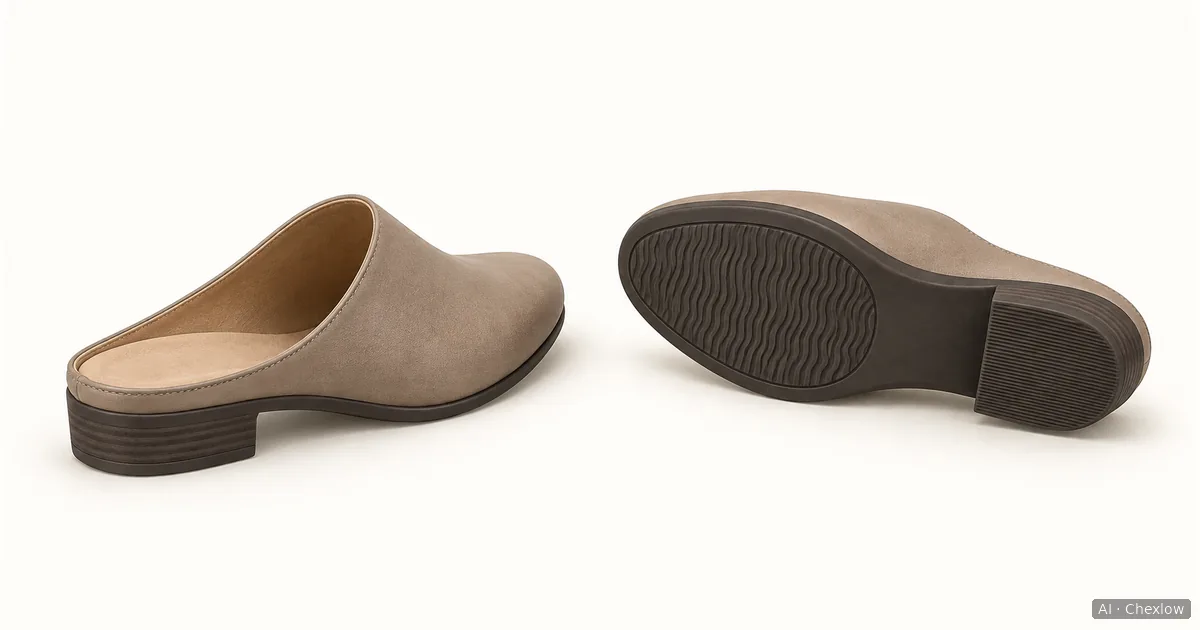
Find an explicit use description
A pair for collecting the mail and a pair for walking to work have different jobs. Before comparing colours, write down the walking distance, surfaces and weather you expect. Bradford District Care’s footwear guidance recommends choosing for both fit and activity.
Find the manufacturer’s description for the exact model and version. Look for whether it is intended for indoor use, outdoor use or both. If the listing only says “mule” or “slipper”, ask for clarification; neither name answers your route-specific question.
Our buying rule is to leave an indoor-only pair out of an outdoor shortlist. Keep an indoor/outdoor pair under consideration, but continue checking: that description is not a promise about rain, ice or a long walk. A lined, UGG-style appearance is not a substitute for the actual maker’s instructions.
Separate the outsole from weather protection
The outsole is the bottom surface that meets the ground. Read its material specification and look at an underside photograph, rather than judging only the thick edge visible in a side view. Note the tread pattern and any stated limits for the surfaces you intend to walk on.
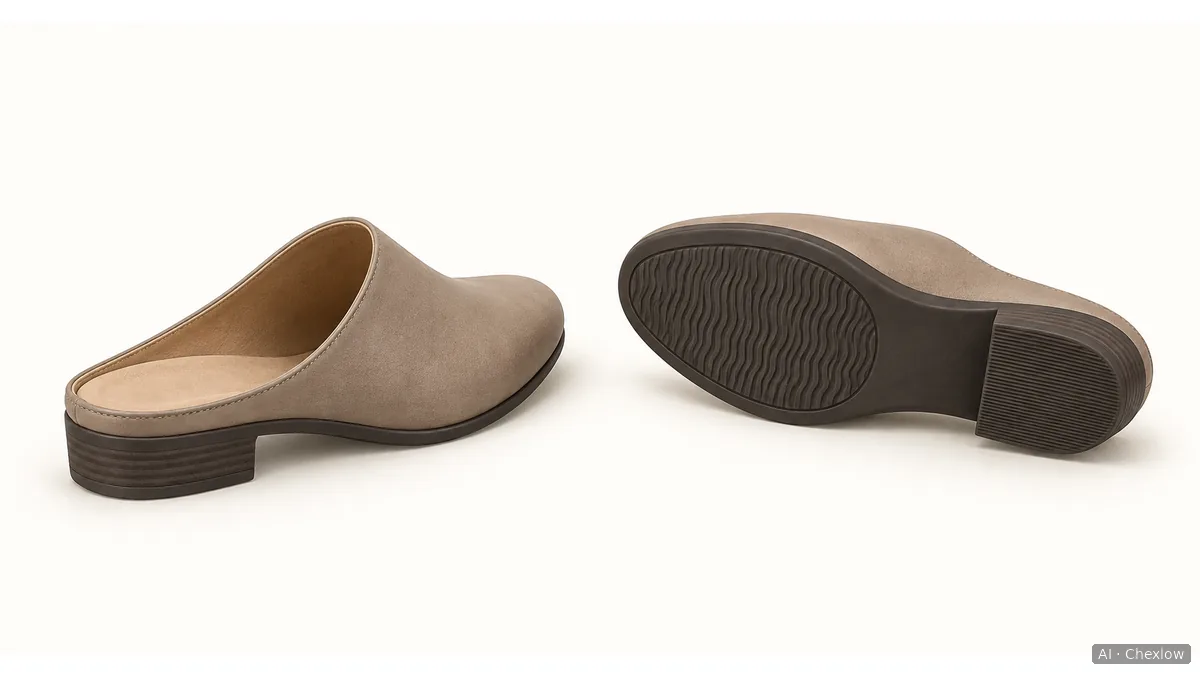
The illustration shows the views worth checking: the open heel and the surface under the shoe. It does not establish outdoor suitability, waterproofing or slip resistance. Visible grooves and a material name are details to investigate, not performance ratings.
CCOHS explains that slipping depends on traction between footwear and the walking surface, and that no footwear has anti-slip properties for every condition. Its workplace guidance supports asking the manufacturer about the expected surface; it does not certify a casual mule.
Check water exposure separately for the whole shoe. For example, Birkenstock’s care guidance distinguishes its water-friendly range from most styles, which should not be immersed. It also directs owners to air-dry wet shoes slowly, away from direct heat. Those are limits for that manufacturer’s footwear, not instructions for every lined mule.
If wet-weather commuting is the main reason for buying, compare rain boots and duck boots and check each candidate’s stated waterproof coverage before returning to the mule shortlist.
Walk without working to keep the shoe on
Try both shoes with the socks or tights you intend to wear. Feet can differ in size, so one comfortable shoe is not enough. The NHS fitting guidance also calls for toe room and a width that is neither tight nor loose.
Within the seller’s try-on conditions, walk indoors and turn normally. Check whether your heel stays over the footbed, whether the shoe slides sideways and whether you curl your toes to keep it on. These are fitting checks, not an outdoor grip test.
The same guidance identifies toe gripping as a problem with backless footwear and explains that adjustable fastenings help hold the foot in place. If a candidate has a functional adjustment, try it; a decorative buckle is not an adjustment. If you still have to grip or shuffle, compare another fit or a shoe with a heel strap or enclosed heel.
Do not automatically size down to stop movement. Recheck toe room and pressure across the forefoot: a smaller pair is not a successful solution if it squeezes you elsewhere. The NHS guidance says a correctly fitting shoe should generally feel comfortable from the start, rather than depend on breaking in.
Keep, ask or pass
Make the decision about the exact pair, not the silhouette or brand family.
- Keep it on the shortlist when the stated use suits your route, the relevant surface and water-exposure questions are answered, and both shoes stay on without squeezing or gripping.
- Ask before ordering when the outdoor-use description, outsole information or weather limits are missing. Give the maker the model code and describe your route, rather than asking only whether the sole is “good”.
- Pass when the pair is indoor-only, its stated limits conflict with your plans, or comfortable retention fails during fitting.
For an online purchase, confirm the return conditions before trying the pair outdoors. If the missing specification or fit problem remains unresolved, choose another candidate instead of buying accessories in the hope of making it suitable.
Come è stata costruita questa guida
Chexlow used AI to write this guide from NHS footwear advice, CCOHS slip-prevention guidance and Birkenstock’s care instructions. The shortlist rules are editorial judgments; manufacturer-specific advice remains limited to that manufacturer. No original wear, traction or waterproofing tests were performed.
Curato dal team Chexlow · Le immagini sono illustrazioni generate dall’IA