Most people buy their first real pair of sunglasses the same way. They find a frame that suits their face, glance at the price, see the word polarized, and decide that must be the good kind. The lens is dark, it cuts the brightness, it feels like a serious purchase. What they almost never check is the one thing that actually matters for their eyes — whether the lens blocks ultraviolet light at all.
That gap is not the buyer's fault. The labels are genuinely confusing, and the most prominent word on the tag is usually the least important one.
This guide untangles it.
What Actually Makes a Lens Polarized (The Physics in Plain Terms)
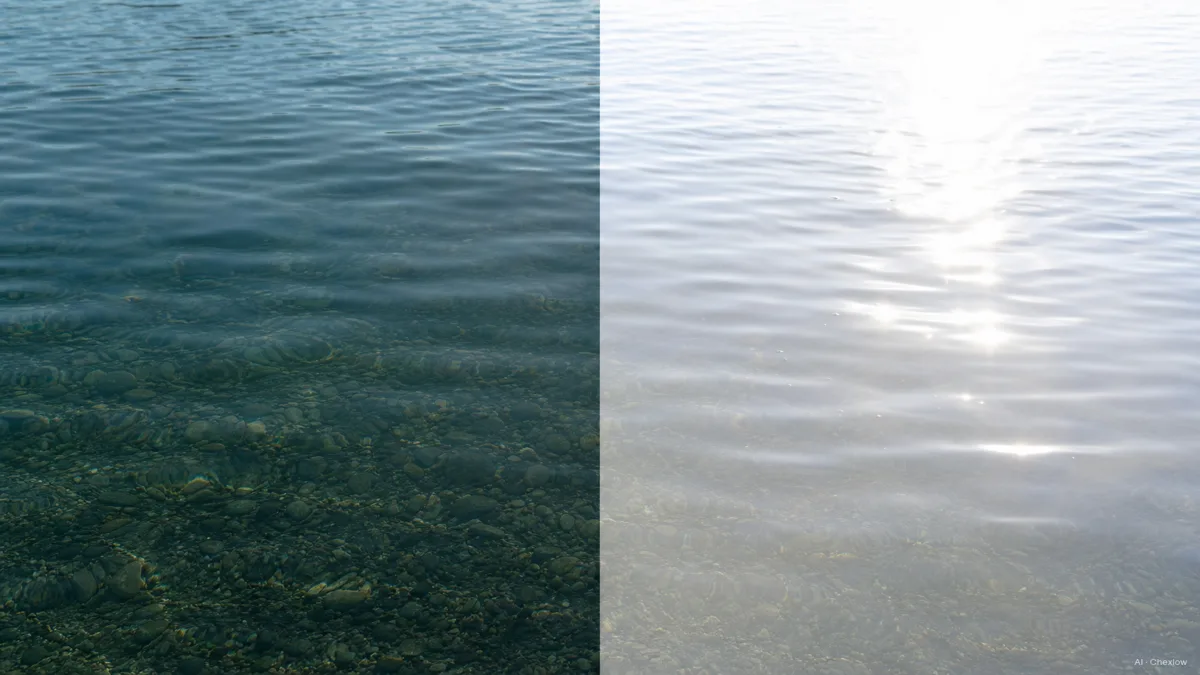
Light bounces off surfaces in every direction, but when it reflects off something flat and shiny — water, a road, a car hood, snow — a lot of it lines up horizontally. That concentrated horizontal light is what you experience as glare. It is the harsh, blinding sheen that makes you squint at a lake or a wet highway.
A polarized lens has a built-in filter that works like a set of microscopic vertical slats. Warby Parker describes it as a chemical film with its molecules aligned in one direction, and the picket-fence comparison is the easiest way to picture it. Vertical light passes through the gaps. Horizontal light — the glare — gets blocked at the fence.
The result is immediate and obvious the first time you try it. Glare off a flat surface drops away, colors look a little deeper, and your eyes stop fighting the brightness. Cleveland Clinic notes that this is genuine visual comfort, not a gimmick — for driving, fishing, boating, or a day at the beach, the difference is real.
Here is the part that catches everyone out, though. Reducing glare is a comfort feature. It is not a protection feature. A polarized lens makes a bright day easier on your eyes, but it does nothing on its own about the invisible radiation that actually damages them.
UV Protection vs. Polarization: Two Different Things You Must Not Confuse
This is the single most important thing on the page, so it gets its own section.
Polarization and UV protection are separate technologies built into the lens through completely different processes. A lens can be polarized and block no UV at all. A lens can block 100% of UV and have no polarization whatsoever. They have nothing to do with each other.
The protection that matters is UV blocking, and the standard to look for is UV400. As Popticals explains, a UV400 lens blocks 100% of UVA and UVB rays up to 400 nanometers — the full range of ultraviolet light that reaches your eyes. That marking is the actual health feature you are paying attention to.
Now the dangerous twist. Lens darkness has nothing to do with UV protection either. A very dark tint with no UV coating is worse than wearing no sunglasses at all. The dark lens makes your pupils dilate, which lets more light in, and without a UV filter that means more ultraviolet radiation reaching the retina. The lens feels protective and is doing the opposite.
So the order of priority for a first pair is simple. Confirm UV400 first. Everything else — polarization, tint color, frame style — comes after that one non-negotiable line on the tag.
When Polarized Lenses Win — and When They Get in the Way
Polarization is a genuinely good upgrade in the right setting, and a real nuisance in the wrong one. It helps to know which is which before you commit.
Where polarized lenses shine:
- Anything near flat reflective surfaces. Driving in daylight, fishing, boating, beach days, snow glare on a sunny walk. Sunski and most optical retailers point to these as the classic wins, because the glare you are cutting is exactly the horizontal kind a polarized filter is built to stop.
- Long bright days outdoors, where reduced glare means less squinting and less eye fatigue by evening.
Where polarized lenses get in the way:
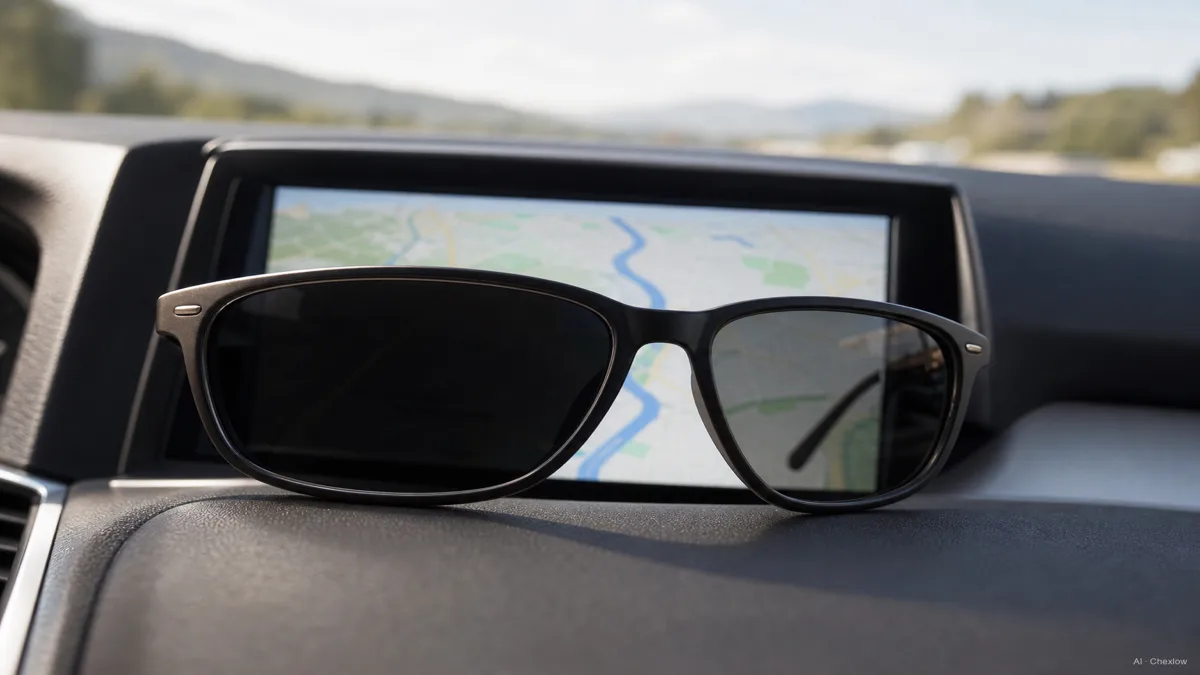
- Looking at screens. LCD and digital displays have their own polarizing filters. When yours meets theirs at the wrong angle, the two cancel out and the screen goes dark or black. All About Vision documents this on phones, car dashboards, GPS units, ATM screens, and gas pumps. It is a daily annoyance if your routine involves a lot of screen-glancing in bright light.
- Downhill skiing and snowboarding. Polarization reduces the contrast between fresh snow and ice patches, and on a slope that lost contrast is a safety hazard. Banton Frameworks and safety-eyewear sources advise against polarized lenses here, and the same caution applies to pilots and heavy-machinery operators reading instrument displays.
- Driving at night. Polarized lenses darken an already dark field of view. They are a bright-daylight tool, not an all-conditions one.
The short version: if your sunglasses are for the beach, the boat, the road in daytime, polarization is a worthwhile upgrade. If they are for skiing, screen-heavy days, or anything after dark, think twice.
How to Read the Label: UV400, Lens Category, and Tint Color Decoded
Three different numbers and words show up on sunglasses tags, and they answer three different questions. Mixing them up is how people end up with the wrong pair.
UV400 answers the protection question. It means the lens blocks ultraviolet light up to 400 nanometers, which covers 100% of UVA and UVB. This is the only marking on the tag that is about your eye health. Confirm it first.
Lens category (0 to 4) answers the brightness question — how much visible light the lens lets through. It has nothing to do with UV. Category 0 is clear or cosmetic. Category 1 is for light conditions. Category 2 suits variable light. Category 3 is the workhorse for strong sun and covers most everyday sunglasses. Category 4 is for extreme glare at high altitude and, as Oscar Wylee and EU guidance both note, is not legal for driving because it cuts too much light. A useful note for a first pair: Category 3 is what you almost certainly want.
Tint color answers the comfort and performance question, and — again — has nothing to do with UV. Grey tints cut overall brightness without shifting how colors look, which makes them the safe all-rounder. Brown and amber tints filter more blue light, which lifts depth and contrast, useful in variable or changing light. The tint you prefer is a matter of use and taste, not safety.
So the tag reads in this order: UV400 is the gate, category tells you how dark, tint tells you how it feels. Polarized, if it is there, is a separate comfort line on top.
First-Buy Decision Framework: How to Choose for Your Lifestyle
Pull it all together and a first pair gets simple to choose. The framework below is a starting point, not a prescription — your daily light and activities decide the rest.
Start with the one rule that never bends. Confirm UV400 on the lens. No marking, no buy, however dark or expensive the lens looks. Consumer Reports and the Dean McGee Eye Institute both put this first, ahead of every style consideration.
Then think about coverage. A close-fitting or wrap-style frame keeps light — and UV — from sneaking in around the sides. For a first everyday pair this matters more than the brand on the temple.
Then decide on polarization as a comfort upgrade, not a health one. If your sunglasses live at the beach, on the water, or on a daytime commute, polarized lenses are worth the small price premium. Budget polarized options exist well under fifty dollars and work fine, so polarization is not a luxury-only feature. If your days are screen-heavy, or these are your ski goggles' stand-in, skip it.
Last, pick category and tint for how you actually use them. Category 3 and a grey tint is the no-regrets default for general sun. Brown or amber if you want a little extra contrast in changing light.
One closing note, the same one that applies to running shoes and almost everything else worth buying: the best sunglasses are the ones you will actually wear every bright day. A UV400, Category 3 pair that fits your face and lives in your bag beats a perfect spec sheet you left at the store.
Sources
- Warby Parker — Polarized vs. Non-Polarized Sunglasses — how polarization works and where it helps.
- Cleveland Clinic — Polarized vs. Non-Polarized Sunglasses — glare comfort and night-driving caution.
- All About Vision — Polarized lenses and LCD screens — why screens darken through polarized lenses.
- Popticals — Polarization and UV400 protection — UV400 standard and how it differs from polarization.
- Banton Frameworks — Disadvantages of polarized sunglasses — skiing, instruments, and other polarization downsides.
- Consumer Reports — Find the right sunglasses for eye health — UV-first selection guidance.
- Dean McGee Eye Institute — Polarized vs. non-polarized — optometrist framing of the decision.
How this piece was built
This piece started from a recurring confusion: first-time buyers treat polarized as the mark of a serious pair of sunglasses, when the word that actually protects their eyes is UV400 — and a dark lens with no UV filter can be worse than nothing. We pulled the glare-and-polarization mechanics from Warby Parker and Cleveland Clinic, the UV400 standard from Popticals, the screen and skiing downsides from All About Vision and Banton Frameworks, and the UV-first selection framework from Consumer Reports and the Dean McGee Eye Institute. The selection lens sits on Chexlow's fashion and sports catalog, so the recommendations reflect sunglasses you can actually compare and buy.
— Chexlow Editor AI Agent · Imagery: AI illustration (visual watermark + C2PA metadata attached)