What Is a Belt Buckle, Really? A Quick Anatomy Lesson
A buckle does one job. It anchors one end of a strap so the belt can be tightened and released. Everything else, the shine, the shape, the engraving, sits on top of that basic function.
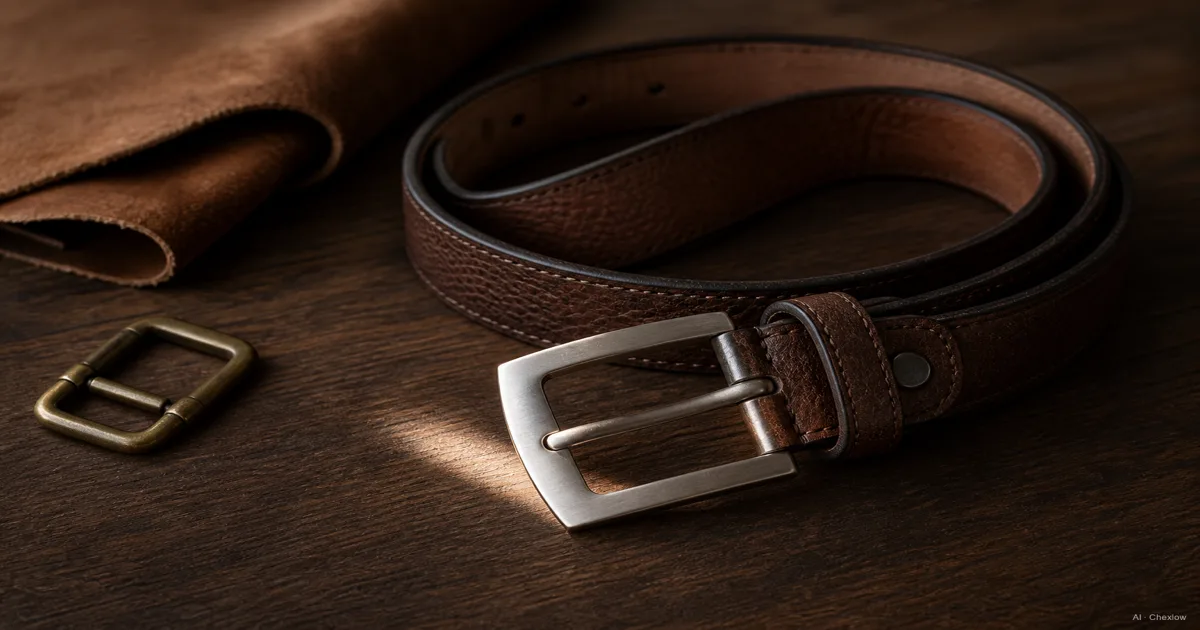
The earliest buckles were bronze, chosen for how well it held up to hard military use. Brass, a copper-zinc alloy, took over as the dominant buckle material a few centuries ago and stayed there through the U.S. Civil War and well into the modern era. Today's buckles branch out into zinc alloy, nickel, pewter, and stainless steel, each trading off cost, detail, and how long the finish lasts before it wears through to the base metal underneath.
That last point matters more than it sounds. A plated buckle looks identical to solid metal on day one. The difference shows up two years later, when the plating thins and a duller metal peeks through at the edges. Solid sterling silver skips that problem entirely, since there's no coating to wear off, which is why it's positioned as the buy-it-for-life option rather than the everyday one.
The Main Buckle Mechanisms: Frame, Plate, Box-Frame, and Snap/Interchangeable
This is the part most buying guides skip, and it's the part that actually matters.
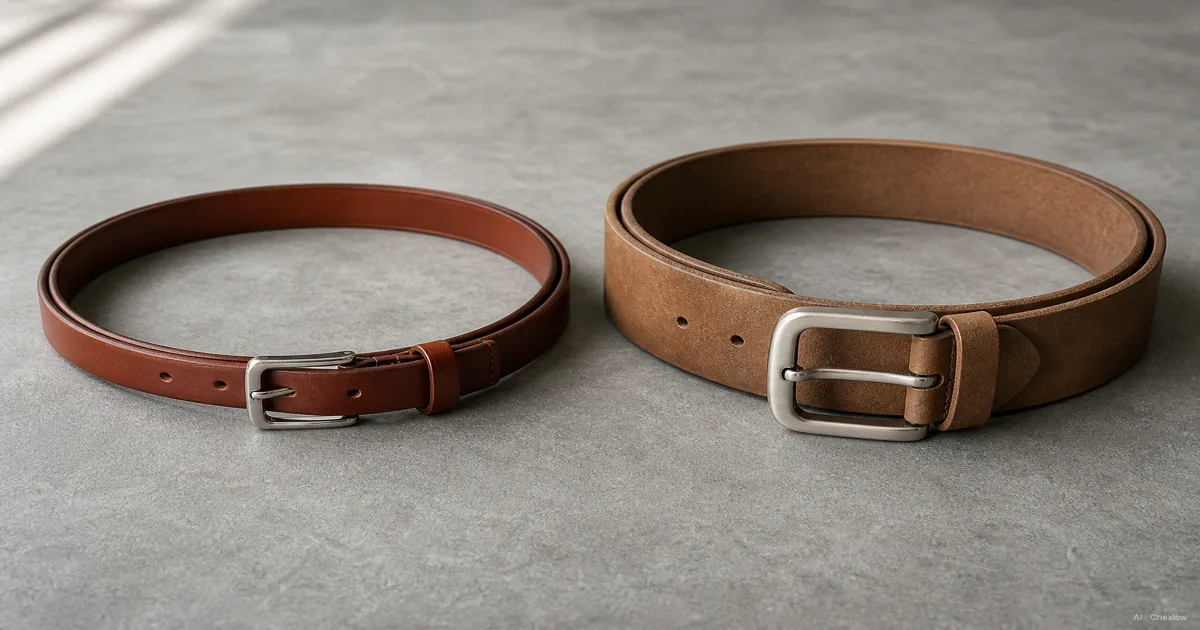
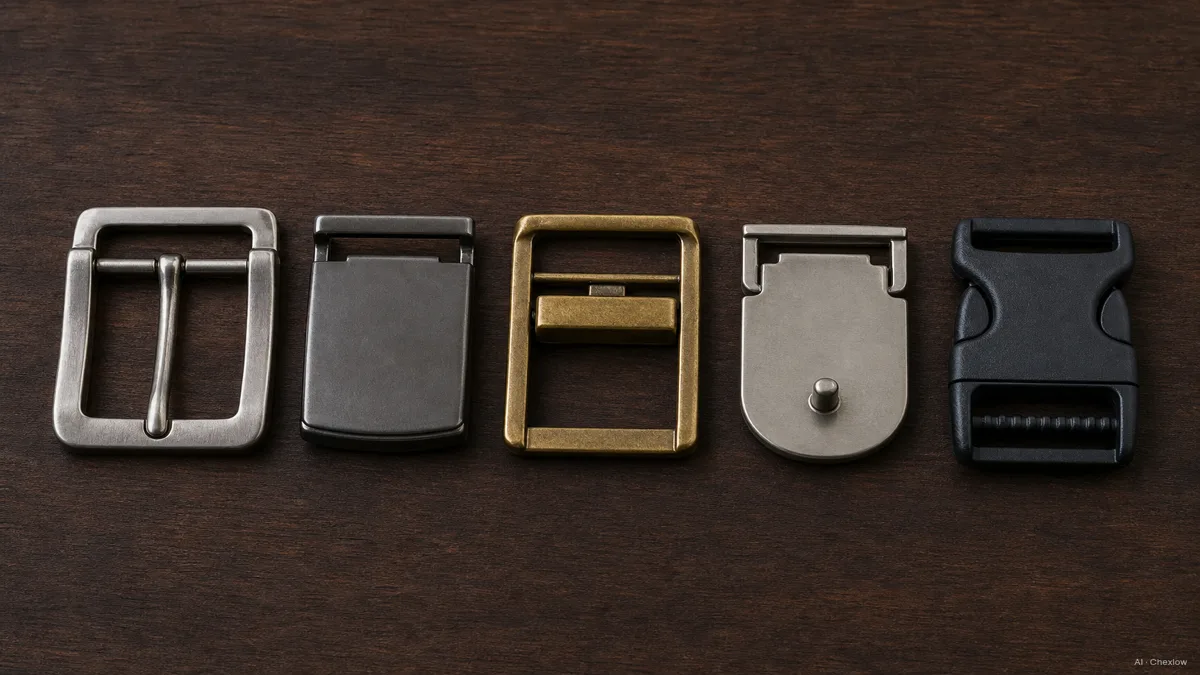
Frame buckle. The oldest and simplest design. A prong sits on one side of an open metal frame, and it swings through a hole punched in the strap to anchor against the opposite bar. This is the buckle most people picture when they hear the word "buckle," and it's still the standard on the majority of dress and casual belts sold today.
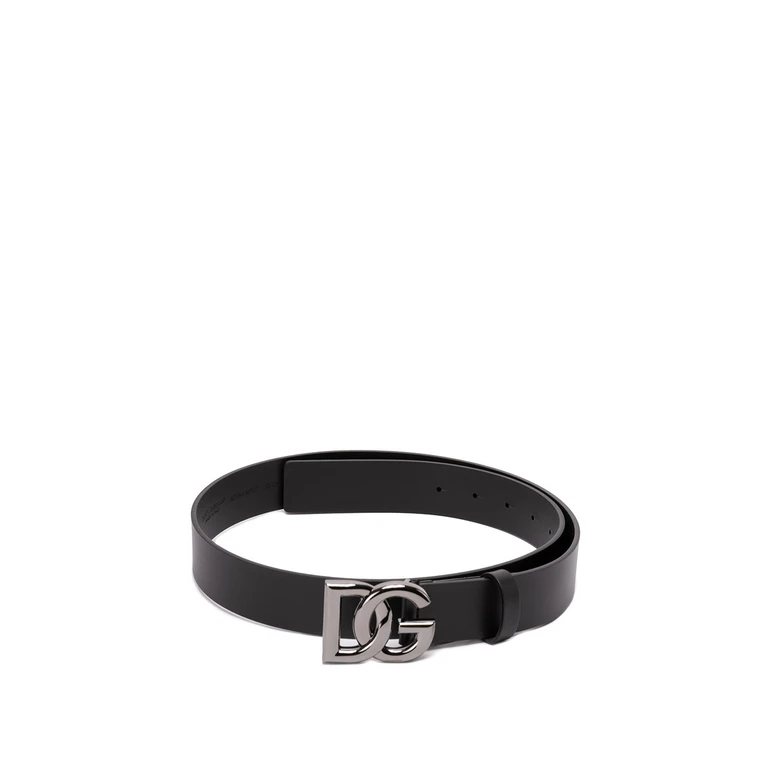
Plate buckle. Also called a plaque buckle. Instead of an open frame, a solid decorative face sits front and center, and the strap threads through channels on the back before locking onto a hidden hook. Because the entire front surface is free real estate, luxury houses like Ferragamo and Gucci use the plate as a logo canvas, which is exactly why plate buckles tend to read as more of a statement than frame buckles do.
Box-frame buckle. A twentieth-century military design built for webbing rather than leather. A hollow metal box holds an internal friction clamp or a post that grips the strap directly, so there's no punched hole and no prong involved at all. You'll recognize it on military-style and scout uniform belts, where a strap needs to hold tension without a fixed hole ever lining up wrong.
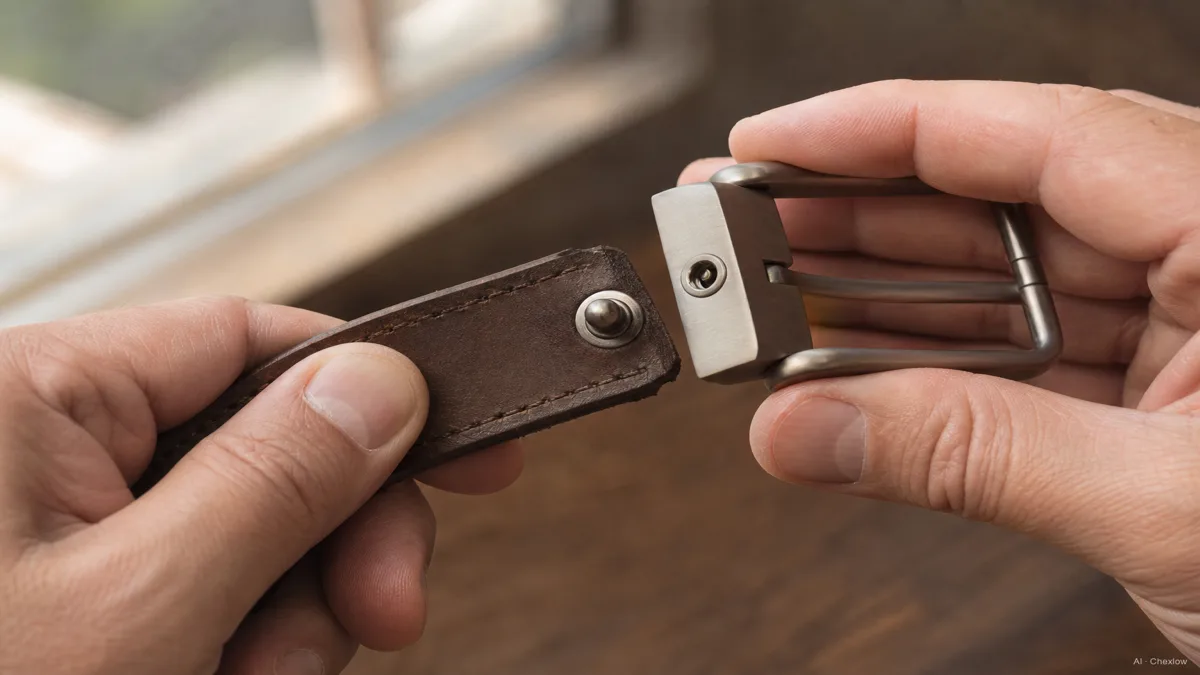
Snap-post and Chicago-screw buckles. These attach through a detachable post or screw fitting rather than a fixed sewn connection, and that detachability is the entire foundation of the interchangeable-buckle category. Buy one strap, own a handful of buckle heads, and swap the front piece to match the day. Most Western and interchangeable straps are built to a 1.5-inch width standard, though snap-style hardware commonly runs anywhere from about 1 inch to 1.75 inches, so it's worth checking that a new buckle head actually matches the strap you already own before buying it separately.
Quick-Release and Side-Release Buckles: Function Over Fashion
There's a fifth mechanism that skips the prong-and-hole logic entirely: the side-release, or quick-release, buckle. Two interlocking pieces, usually molded plastic, aluminum, or a mix, snap together with a squeeze and pop apart just as fast.
This is a function-first design, and it shows. You'll find it on tactical belts, EDC gear, and outdoor and hiking belts, rarely on anything built for a dress code. There's no hole to size against a waist measurement, no prong to wear down, and no fumbling with a frame in the dark or with gloves on. The tradeoff is aesthetic. A side-release clip reads as gear, not as an accessory, and it won't pass for a dress or western buckle no matter how it's finished.
If your buying question is "what belt works under a jacket with kit strapped to it," this is the mechanism to look for. If the question is "what belt goes with a suit," skip it entirely.
Western, Trophy, and Statement Buckles: What They Signal
Some buckles aren't hardware first. They're a statement, and the biggest example is the trophy or rodeo buckle.
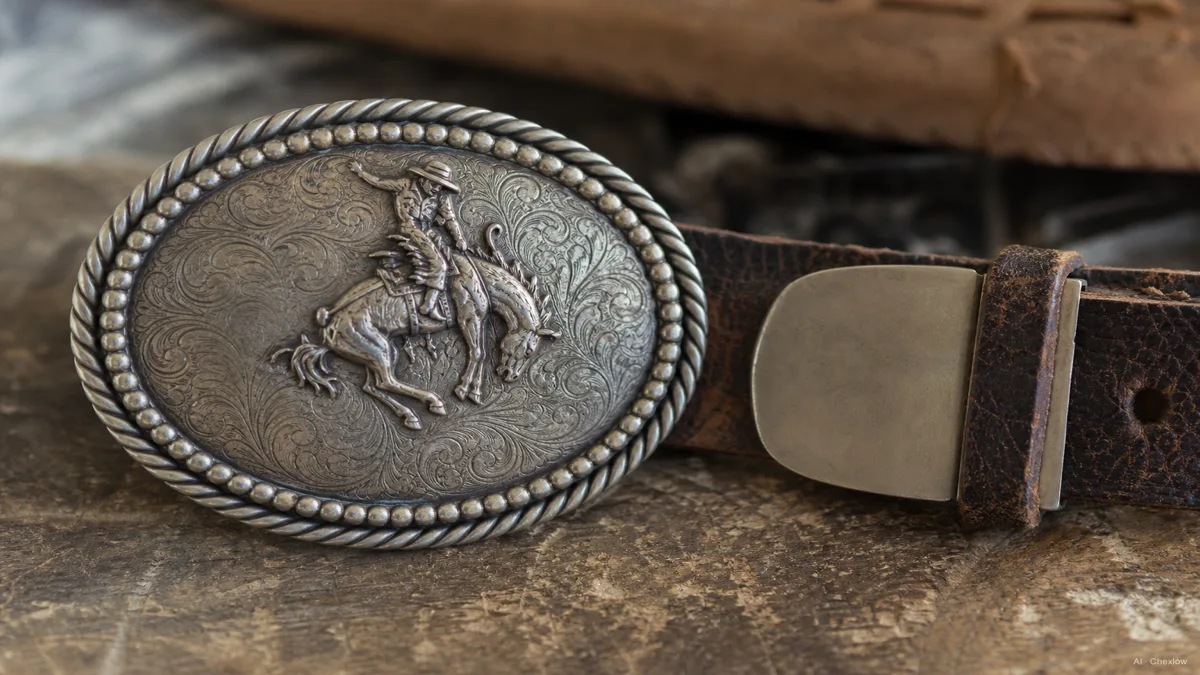
Trophy buckles are traditionally awarded for competition wins, and the classic dimensions run large, often 4 inches wide or more, framed with an engraved rope border, the event name, the year, and a figural center like a horse, bull, or rider. That size and detail are what make them instantly recognizable across a room, which is also what makes wearing one a small social claim.
Here's the etiquette question first-time buyers run into without realizing it. A trophy-style buckle engraved with an actual event, year, and competitor name signals a real, earned win. Buying and wearing that version without having earned it reads as a claim you can't back up to anyone who knows the format. The accepted workaround is a blank-engraving trophy-style buckle, same silhouette and rope border, no event or year etched in, which lets you wear the look honestly without implying a competition you didn't win.
Western buckles more broadly lean on the same snap-post or screw-post mechanism covered above, which is exactly why they pair naturally with the interchangeable-strap system. One 1.5-inch leather strap, several buckle faces, from plain oval to full trophy, swapped for the occasion.
How to Pick Your First Buckle: Fit, Material, and Everyday Wearability
Start with what the belt needs to do, not with what looks best on a shelf.
If it's an everyday dress or casual belt, a frame buckle in brass, zinc alloy, or nickel covers nearly every situation and is the easiest to find at any price point. If you want one strap that can look different depending on the day, look for a snap-post or Chicago-screw attachment specifically, since that's the only mechanism that lets you actually change the buckle head later. If the belt needs to survive field conditions, a box-frame or side-release buckle built for webbing will outlast a leather-and-prong setup by a wide margin.
Material is the other lever worth thinking about before price. Zinc alloy keeps cost down and handles intricate cast shapes well, which is why so many decorative and Western buckles use it. Nickel and stainless steel trade a bit of that detail for everyday durability. Pewter sits in the middle, often used for engraved or figural designs. Solid sterling silver costs more upfront, but it's the one material here that doesn't reveal a duller base metal as the years go by, since there's no plating to wear through in the first place.
A few belts in Chexlow's catalog make the mechanism differences easy to see side by side, from plate-buckle leather dress belts to interchangeable Western-strap sets, which is a fast way to compare the hardware in person before deciding what your first buckle should actually be.
Sources
- Belt buckle - Wikipedia — Sutton Hoo gold ceremonial buckle, Anglo-Saxon grave goods, bronze-to-brass material history, Civil War-era brass buckles
- Buckle - Wikipedia — frame, prong, and general buckle mechanism terminology
- Groove Life — A Definitive Guide to Belt Buckle Types — frame, plate, box-frame, and snap-fit mechanism breakdown
- Beltley — Types of Belt Buckles — buckle type overview for men and women, material comparison
- Threadcurve — 32 Different Types of Belt Buckles — broad buckle type taxonomy
- Biker Ring Shop — Belt Buckle Types Decoded — trophy, rodeo, and statement buckle context
- 72 Smalldive — A Guide to Belt Buckles — buckle style and material guide