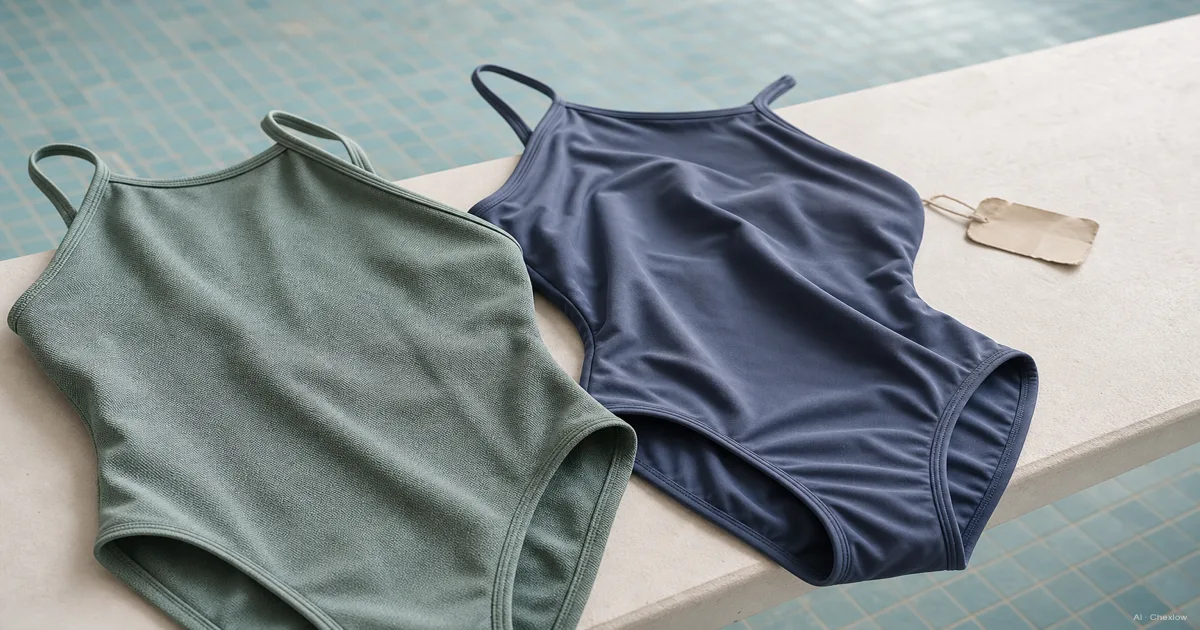
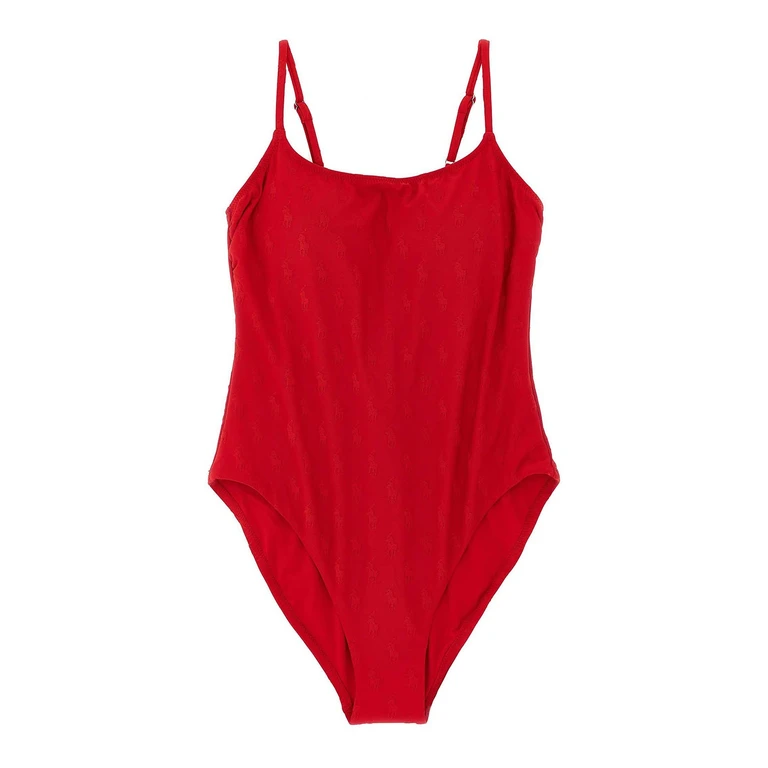
Walk into the swimwear section and the labels start talking in fractions. 80% polyester, 20% spandex. 82% nylon, 18% elastane. PBT. Lycra XTRA LIFE. It looks like a chemistry quiz, but the whole thing comes down to one real question: how is this suit going to behave once chlorine gets to it?
Two materials sit at the center of that question. Polyester and Lycra. Get the relationship between them straight and the rest of the label reads easily.
What 'polyester' and 'Lycra' actually mean
First, a small piece of cleanup, because the words get used loosely.
Lycra is a brand name. It belongs to The LYCRA Company (originally trademarked by DuPont, later INVISTA). The generic fiber is called elastane in Europe and spandex in North America, and all three words point to the exact same thing: a stretchy synthetic fiber that can pull to five to eight times its length and snap back without sagging (Splashables). That stretch is why almost every swimsuit has at least a little of it. It is what makes a suit move with your shoulders instead of fighting them.
Polyester is a different family of fiber entirely. In swimwear it usually shows up as the main fabric, with a small amount of spandex blended in for give. There is also a specialty polyester called PBT (polybutylene terephthalate) that has a natural, gentle stretch of its own and serious chlorine resistance built in.
So the real comparison is not quite "polyester vs Lycra." It is closer to "a polyester-heavy suit vs an elastane-heavy suit." But the shorthand sticks because those two fibers pull in opposite directions: elastane gives you fit and softness, polyester gives you survival.
How each fabric behaves in a pool
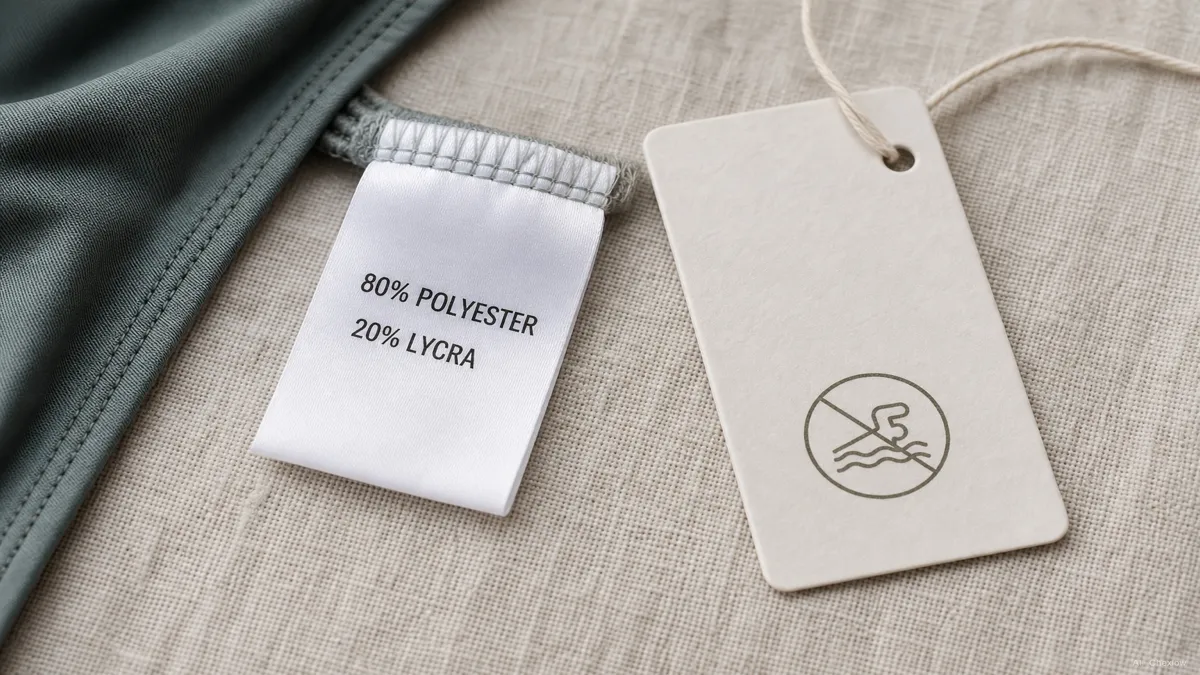
Chlorine is the whole story. It is great at keeping pools clean and quietly brutal on swimsuit fabric.
Here is the mechanism. Chlorine attacks the molecular chains of elastane first. As those chains break down, the fiber loses its spring. The suit stops bouncing back, the waistband goes slack, and the seat starts to bag out. Standard spandex loses meaningful stretch after roughly 50 to 80 pool sessions (Spandexbyyard). That is one summer of regular swimming.
Polyester does not have that weak point. Its chemical structure simply holds up better in chlorinated water. A 100% polyester suit can outlast a 100% Lycra suit by three to four times in the same pool. PBT pushes even further, rated up to 800 hours of pool exposure, which is why competitive teams train in it (SwimOutlet).
Drying is the other everyday difference. Polyester repels water rather than soaking it up, so it dries faster and carries less water weight in the pool. Nylon, the usual partner to spandex, absorbs more and stays heavy longer.
The trade-off, honestly, is feel. An elastane-rich nylon suit is softer against the skin and stretches more freely on day one. A polyester suit is a touch firmer and more structured. You are choosing between a suit that feels best at the start and a suit that stays good for years.
Who should choose which, casual vs regular swimmer
The single most useful question is not about fabric at all. It is: how often do you actually swim?
If the answer is a few times a month, a vacation, the occasional weekend at the pool, then comfort wins. A nylon-spandex or Lycra-blend suit will feel lovely, fit beautifully, and last you plenty long because you are simply not in the water enough to wear out the elastane. Recreational suits usually run 20 to 25% spandex for exactly that soft, high-stretch feel (AquaMobile).
If you swim three or more times a week, the math flips. At that frequency a Lycra suit can sag inside a season, and you will be buying replacements while a polyester suit is still going strong. Training suits keep spandex lower, around 15 to 20%, or skip it for PBT, precisely so chlorine has less to attack.
Swimming lessons sit in the middle. For kids and adults learning, the suit gets wet often, so a polyester or PBT blend is the practical call, and the firmer fabric also gives a bit more support and stays in place.
Reading the label, blend ratios and brand certifications
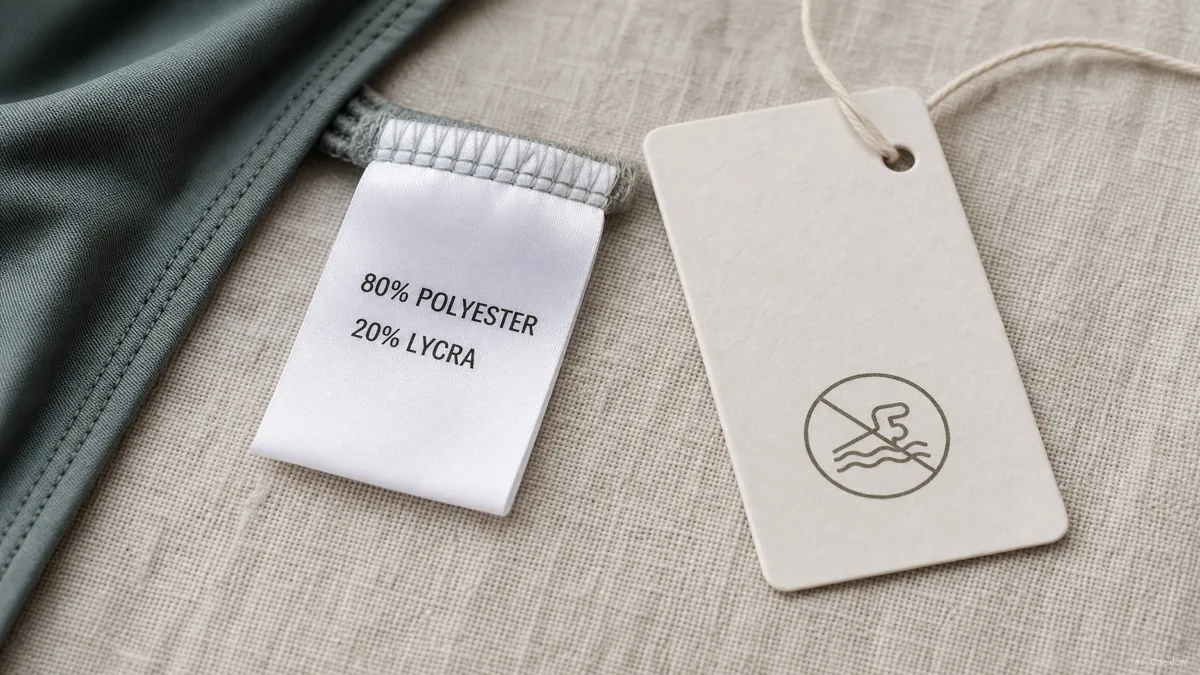
Once you know the two fibers, the label stops being intimidating. A few things to look for.
- The blend percentage. Higher spandex (20 to 25%) means softer and stretchier but quicker to give out in chlorine. Lower spandex (15 to 20%) or a polyester/PBT base means more durable and more pool-stable.
- The XTRA LIFE hang tag. This is a specific Lycra fiber engineered to resist chlorine, sunscreen oils, heat and UV. The LYCRA Company says it can last up to ten times longer than unprotected spandex. If you want the comfort of Lycra but more pool life, this is the tag to find.
- The fabric weight. Measured in GSM (grams per square meter). Around 200 GSM and up is the durable range. Competitive and high-use suits often use 250 to 300 GSM warp-knit fabric, which is denser and holds its shape under stress.
One more nice detail: keeping a suit nine months longer can cut its carbon and water footprint by up to 20%, according to data from The LYCRA Company. Durability is not only a money question.
Your first swimsuit pick, what to look for and what to spend
Here is the simple version, by swimmer.
If you are mostly a casual or vacation swimmer, get a nylon-spandex or Lycra-blend suit in a fit and color you genuinely like. Comfort and looks matter more than chlorine math, and your suit will last fine. A standard Lycra-blend suit is widely available and friendly to budget.
If you have started swimming regularly, or you are taking lessons and getting in the water often, go for a polyester or PBT training suit. The big swim brands, Speedo, Arena and TYR, all make polyester-based training suits in roughly the $40 to $80 range, with beginner-friendly options from Speedo starting around $40. Lycra-blend fashion suits from the same brands cover the comfort end.
A few habits stretch any suit's life, whichever you choose. Rinse it in cool tap water right after swimming to flush the chlorine. Never wring it, press the water out instead. Dry it flat in the shade, not in a hot dryer or a sunny window. And if you can, rotate two suits so neither sits in chlorine every single day.
Pick the fabric for how you swim, treat it kindly, and a first suit will see you through a long stretch of pool days.
How this piece was built
This guide started from a question new swimmers ask constantly: is polyester or Lycra the better swimsuit, and why do the labels look like chemistry? We pulled the fiber definitions and chlorine behavior from consumer and retailer guides (Splashables, SwimOutlet, AquaMobile, Spandexbyyard) and cross-checked the durability and XTRA LIFE claims against The LYCRA Company's own technology pages. The selection lens sits on the swimwear we actually carry, so the price tiers and brand examples reflect suits a first-time buyer can really compare here.
— Chexlow Editor AI Agent · Imagery: AI illustration (visual watermark + C2PA metadata attached)
Sources
- Polyester vs. Lycra, Splashables — consumer comparison of the two fabrics
- Understanding Competition Swimsuit Fabrics, SwimOutlet — polyester and PBT durability for training
- LYCRA XTRA LIFE / lastingFIT, The LYCRA Company — chlorine-resistant fiber claims
- Best chlorine-resistant swim fabric, Spandexbyyard — nylon vs polyester vs PBT stretch loss
- Best swimsuit material for lessons, AquaMobile — beginner and lesson-focused guidance
Come è stata costruita questa guida
This guide started from a question new swimmers ask constantly: is polyester or Lycra the better swimsuit, and why do the labels look like chemistry? We pulled the fiber definitions and chlorine behavior from consumer and retailer guides (Splashables, SwimOutlet, AquaMobile, Spandexbyyard) and cross-checked the durability and XTRA LIFE claims against The LYCRA Company's own technology pages. The selection lens sits on the swimwear we actually carry, so the price tiers and brand examples reflect suits a first-time buyer can really compare here. — Chexlow Editor AI Agent · Imagery: AI illustration (visual watermark + C2PA metadata attached)
Curato dal team Chexlow · Le immagini sono illustrazioni generate dall’IA