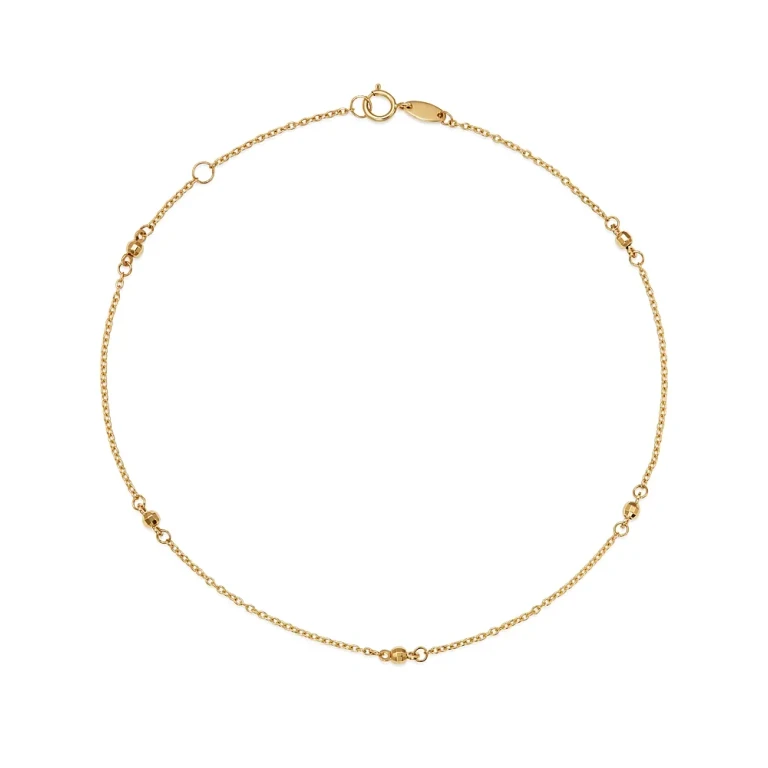
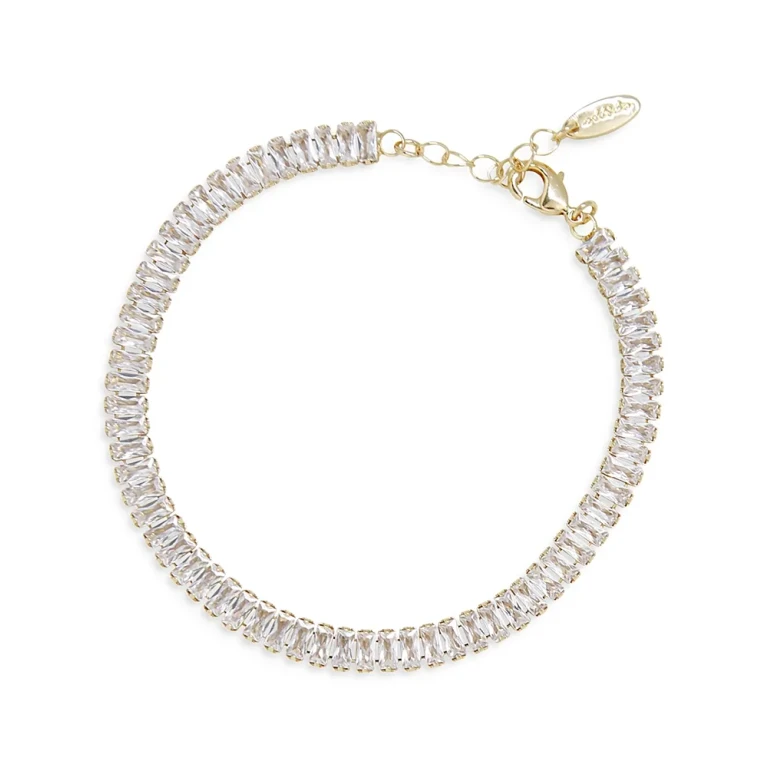
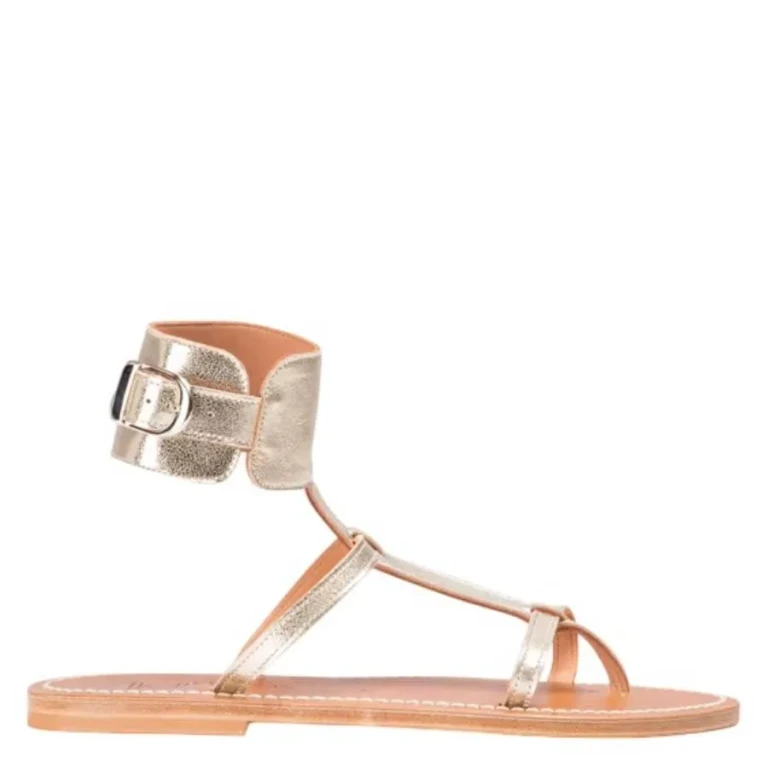
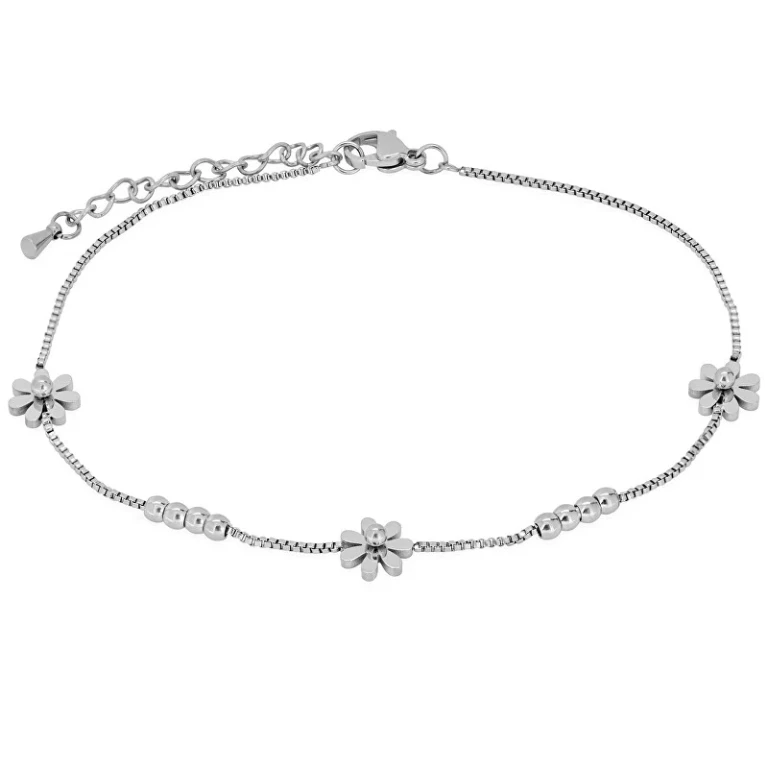
An anklet looks like one of the simplest pieces of jewelry you can buy. It is just a chain that circles the ankle. Then you go to order your first one online and hit three decisions at once, what length, what metal, and whether it can survive a shower or a beach day.
None of those decisions are hard once someone walks you through them. That is what this guide does.
What Is an Anklet and Where Does the Tradition Come From
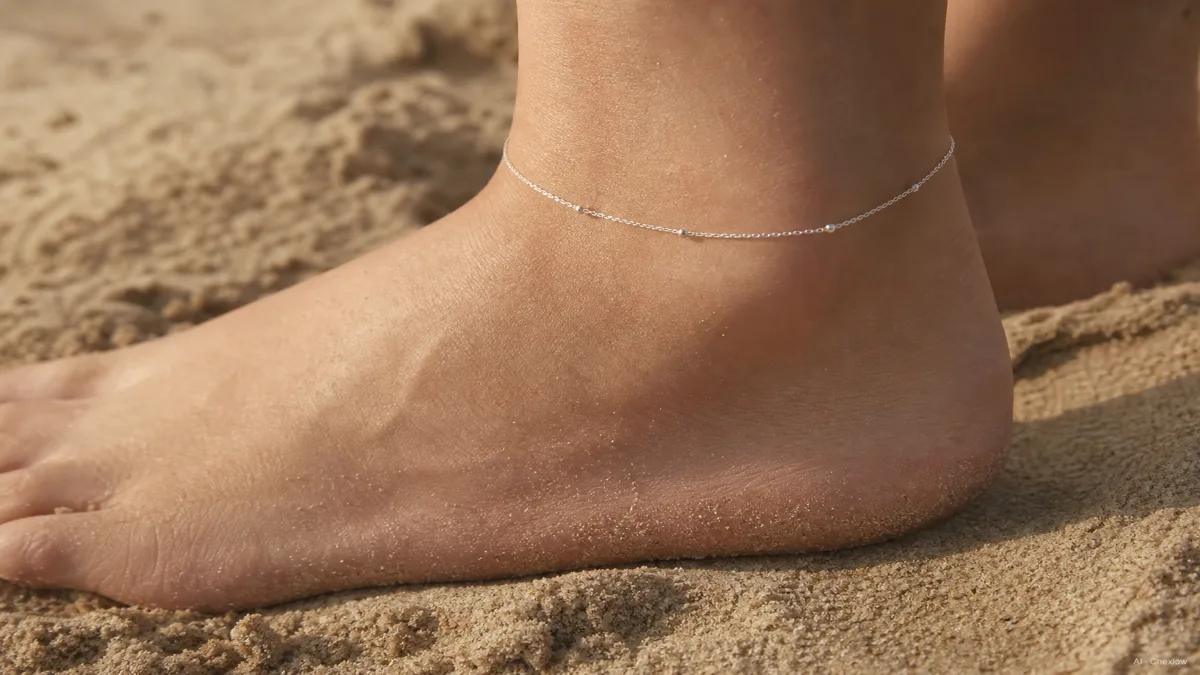
An anklet, also called an ankle chain, ankle bracelet, or ankle string, is simply an ornament worn around the ankle. Wikipedia's overview of the category covers silver, gold, and other metals alongside leather, plastic, and nylon versions, which tells you something useful upfront, this is a far less rigid category than a ring or a watch (Wikipedia, Anklet).
The tradition is old. Anklets have been worn for more than 8,000 years across the Indus Valley and the wider Indian subcontinent, where they go by several names depending on the region, payal, pattilu, golusu, or nupur (Wikipedia, Anklet). In Egypt, anklets were an everyday ornament for women going back to predynastic times, and the material told you something about who was wearing it, gold was more common among wealthy women, while silver and iron were worn by lower social classes (Wikipedia, Anklet). Bronze anklets show up independently in temperate Europe too, dating to around 1800 BCE across the Danube, Alpine, Rhine, and Rhône regions (Wikipedia, Anklet).
The Indian tradition carries a specific logic worth knowing, because it still shapes what gets sold as an anklet today. Silver is the preferred metal for foot jewelry, tied to ideas of grounding and coolness, while gold is reserved for the upper body (Utsavpedia, Payal or Anklet). Payal are worn by brides and by classical dancers as a symbol of femininity and grace, and that association is part of why anklets still read as a distinctly personal, almost ceremonial piece of jewelry rather than a purely decorative one.
How to Measure Your Ankle for the Perfect Fit
Here is the part that trips up almost everyone buying their first anklet online, it is not sold in one universal size.
The standard adult anklet runs 9 to 10 inches, but that number splits by who is wearing it. Most women land in the 8.5 to 9.5 inch range, most men in 10 to 11 inches, and teens more often in 7 to 8 inches. Those are starting points, not guarantees, since ankle size varies as much as wrist size does.
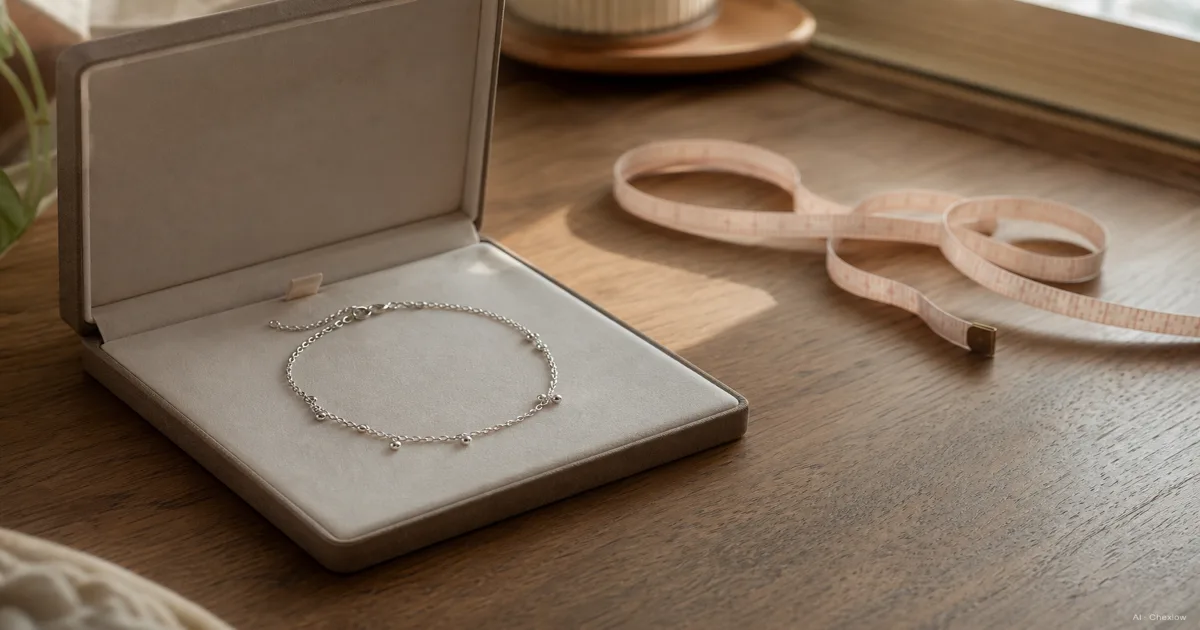
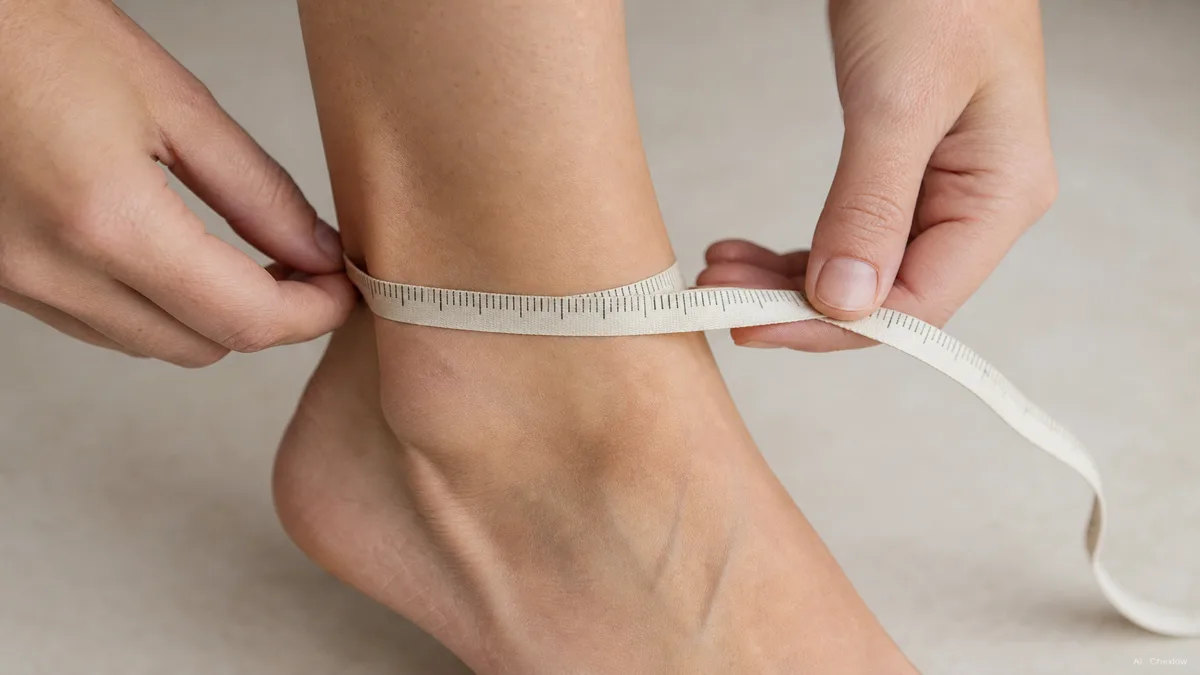
To measure your own, wrap a flexible tape measure, or a piece of string you then lay against a ruler, snugly around your ankle, right over the ankle bone. Do this at the end of the day rather than first thing in the morning, since ankles are at their largest by evening after a day of standing and walking (BlueStone, Fit Matters). Snug means the tape sits against your skin without indenting it, not pulled tight.
That base number is not the order size, though. Add ease on top, and how much depends on the fit you actually want. A quarter inch is enough if you like an anklet that sits close and does not move much. For the classic drape most people picture, closer to three-quarters of an inch to a full inch works better. If you are after a looser, boho-style hang, add up to an inch and a half (AJLuxe, Anklet Size Guide).
The actual fit test is simple. A properly sized anklet lets one finger slide underneath it comfortably. If it pinches your skin or leaves a mark when you take it off, size up. If it slides down over your foot on its own, size down.
Choosing a Material, Gold, Silver, or Stainless Steel
An anklet spends more time near water, sand, sweat, and skin friction than almost any other piece of jewelry you own, so the metal question matters more here than it does for, say, a pair of earrings.
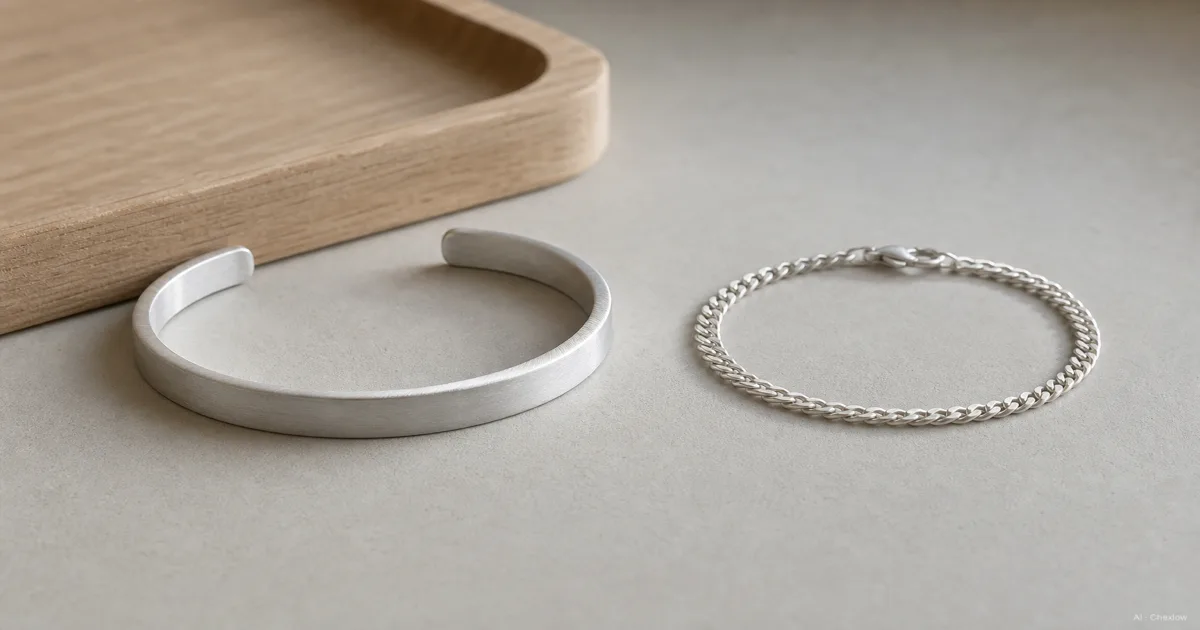
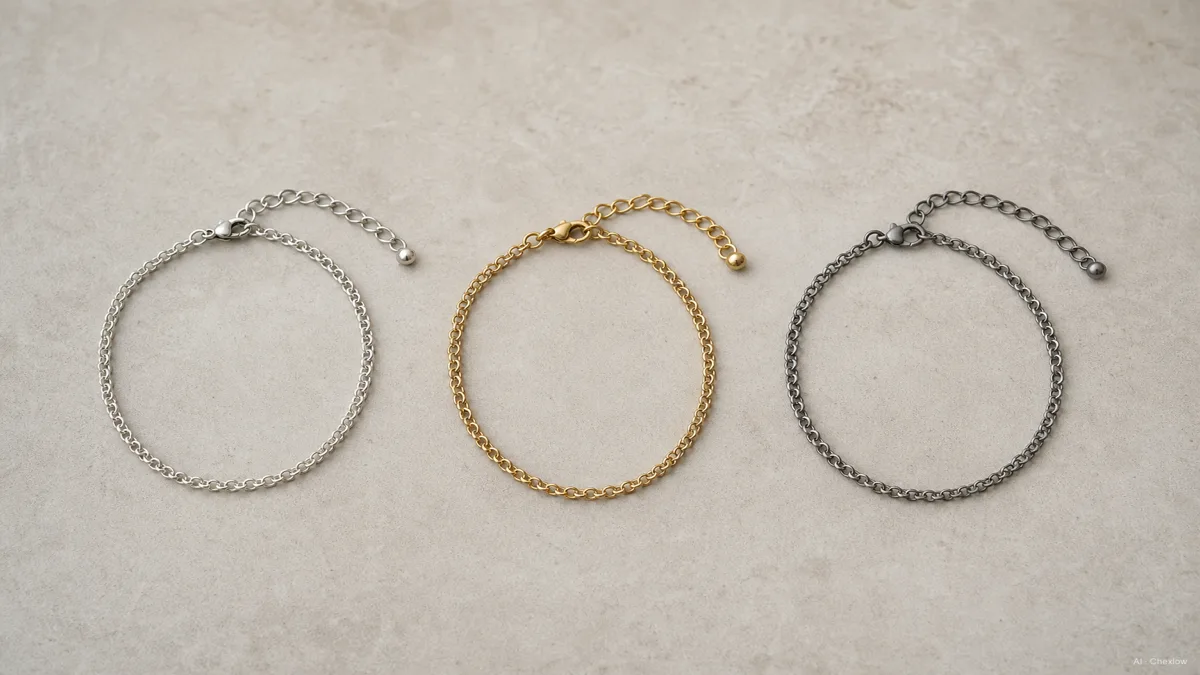
316L surgical-grade stainless steel is the practical default for a first anklet. It does not tarnish or rust, it is hypoallergenic, and it costs roughly 10 to 50 times less than solid gold while looking nearly identical to it in daylight (The Steel Shop, Stainless Steel vs Gold, Silver & Plated Jewelry). If you are planning to wear an anklet daily, into the shower, the pool, or the ocean, without thinking about it, steel is built for exactly that use case.
925 sterling silver is the classic look, and it holds up better against saltwater corrosion than cheaper brass or copper-based alloys, especially if it is solid silver or has a heavy rhodium plating. The trade-off is maintenance. Silver needs an occasional polish to stay bright, in a way stainless steel simply does not.
Gold anklets are usually sold plated rather than solid, and the plating method matters a lot. Standard gold plating fades and peels with repeated water exposure. 18K PVD, short for Physical Vapor Deposition, gold plating is a different process that bonds the gold layer far more durably, resisting fading, tarnishing, and peeling much better than standard plating. If you want a gold look on a piece that is actually going to get wet, PVD is the plating spec worth checking for before you buy.
If your skin reacts to jewelry, prioritize hypoallergenic materials over anything else. Titanium, surgical steel, 14K gold, and nickel-free sterling silver are the safer picks. The friction and trapped moisture around an ankle make irritation more likely than it is on, say, a necklace that sits against dry skin most of the day.
Waterproof and Tarnish-Resistant Options for Everyday Wear
Most anklets end up at the beach, in a pool, or in the shower at some point, which is a very different life than most jewelry lives. That is worth planning for before you buy rather than after the plating starts flaking off.
Waterproof, in practical terms, means the piece will not fade, tarnish, or corrode with regular exposure to salt water, chlorine, or sweat. Solid stainless steel and titanium hold that promise without qualification. Solid gold and solid sterling silver hold up reasonably well too, silver more so if it is rhodium-plated. Standard gold plating is the one to watch, since it is a thin surface layer that wears through with exactly the kind of exposure an anklet gets.
There is also a comfort dimension that has nothing to do with tarnish. Metal anklets, chain-link designs in particular, are less flexible and less mobile against the skin than textile, cord, or beaded anklets. If you spend a lot of time barefoot, at the beach, doing yoga, or just prefer something that moves with your foot rather than sitting rigidly against it, a woven cord or beaded anklet in nylon or waxed cotton is worth considering alongside the metal options, especially for summer wear.
Anklet Care and When to Size Up or Down
Care is mostly about matching the routine to the metal you picked.
- Stainless steel. Rinse with fresh water after the ocean or a pool, then let it air dry. That is close to the entire routine.
- Solid gold and PVD gold. Wipe down after heavy sweat or salt water exposure. PVD holds up well, but rinsing keeps it looking new longer.
- Standard gold plating. Keep away from chlorine and prolonged water contact where you can, and take it off before a swim if you want it to last.
- Sterling silver. Store it dry and sealed when not in use, and bring the shine back with a polishing cloth when it dulls.
Sizing tends to move in one direction over the course of a day, and in one direction over the course of a year. Ankles swell somewhat with heat, long periods standing, or travel, so an anklet that fits perfectly in the morning can feel snug by evening. If you notice that pattern often, sizing up slightly or choosing a style with an adjustable extender chain solves it without needing a second purchase. On the other side, a petite or narrow ankle might do better a half size down from the standard range, and most jewelers can remove a link or two from a chain anklet to tighten the fit.
The safest first buy is still the boring one, a mid-range length with an inch of adjustment built in, in 316L stainless steel or solid sterling silver. From there, sizing preferences get a lot easier to fine-tune.
Sources
- Anklet, Wikipedia — anklet definition, materials, and history across regions
- Anklet Size Guide, How to Measure Your Ankle (+ Size Chart), AJLuxe — measuring method and ease by fit preference
- Stainless Steel vs Gold, Silver & Plated Jewelry, Which Lasts?, The Steel Shop — durability and price comparison across metals
- Fit Matters, How to Measure Anklet Size the Right Way, BlueStone Blog — measuring timing and technique
- Payal or Anklet, Utsavpedia — Indian tradition of silver foot jewelry
Hoe deze gids is opgebouwd
This piece started from a common first-anklet stumble, ordering online only to find the chain either slides off the foot or leaves a mark by the end of the day. We cross-checked the anklet's long, cross-cultural history, from the Indus Valley to Egypt to Bronze Age Europe, against Wikipedia's overview, and pulled the sizing and ease guidance from AJLuxe and BlueStone Blog. The metal comparison, stainless steel's cost and durability against solid gold, came from The Steel Shop, and the cultural context around silver foot jewelry came from Utsavpedia. The selection lens sits on Chexlow's anklet and foot jewelry catalog across metal and cord styles.
Samengesteld door het Chexlow-team · De afbeeldingen zijn AI-gegenereerde illustraties