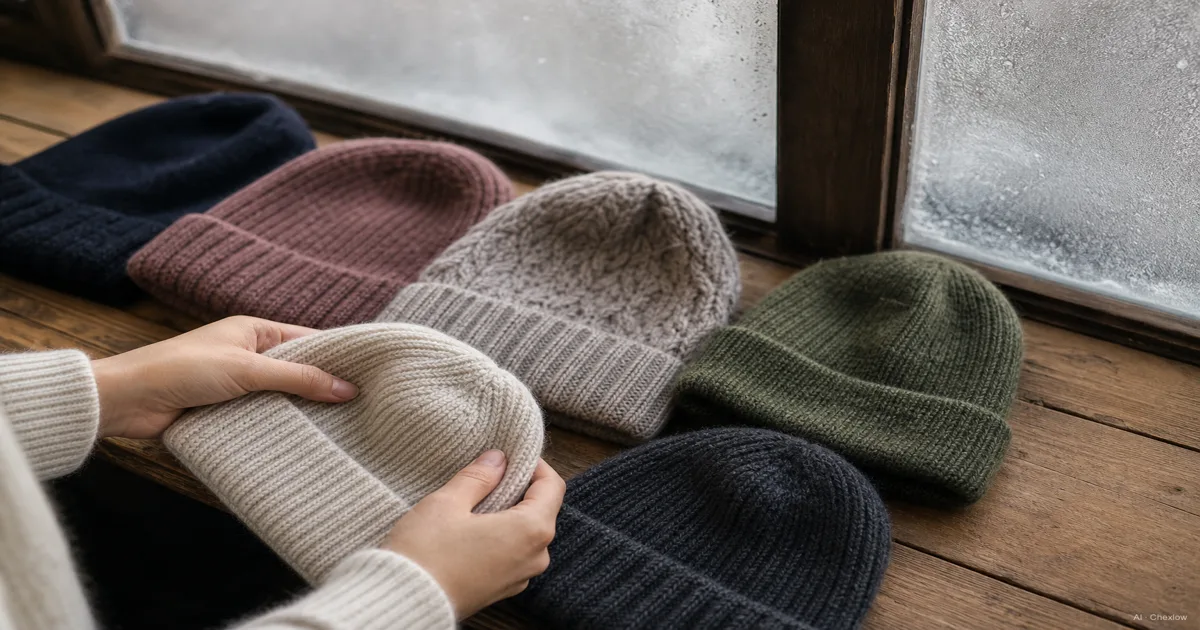
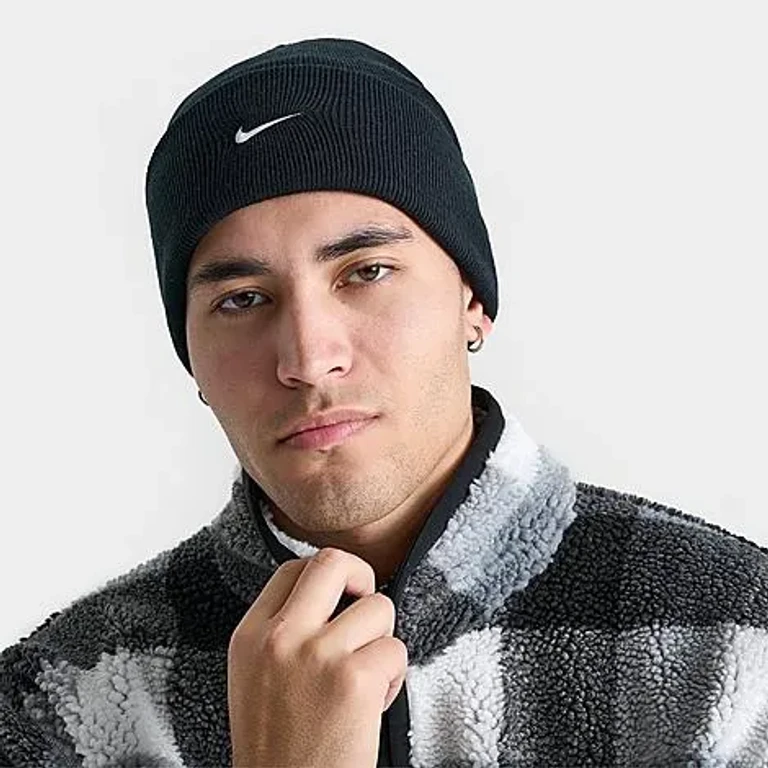
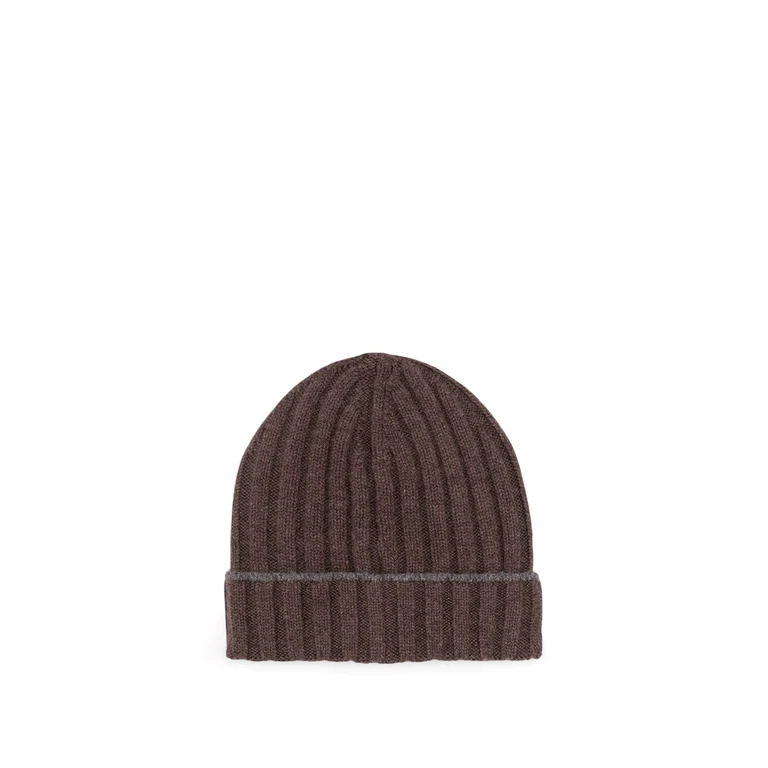
Stand in front of a beanie wall and the labels start to blur together, 100% acrylic, merino wool, a wool-acrylic blend, pure cashmere, waffle-knit cotton. They read like a checklist of qualities rather than an actual decision, and it is tempting to just grab whichever one feels softest under your hand in the store.
A beanie is a fairly simple object doing one job, hold a layer of warm air against your scalp before wind and cold carry it away. Acrylic, wool, cashmere, and cotton all do that job differently, at very different prices, and with very different rules for keeping the thing clean. None of them is the objectively correct beanie. Each is built for a different climate, budget, or laundry habit.
So before color or logo, the real first decision is which fiber matches how cold it actually gets where you live, and how much effort you want to put into washing day.
What actually keeps a beanie warm, how each material traps heat
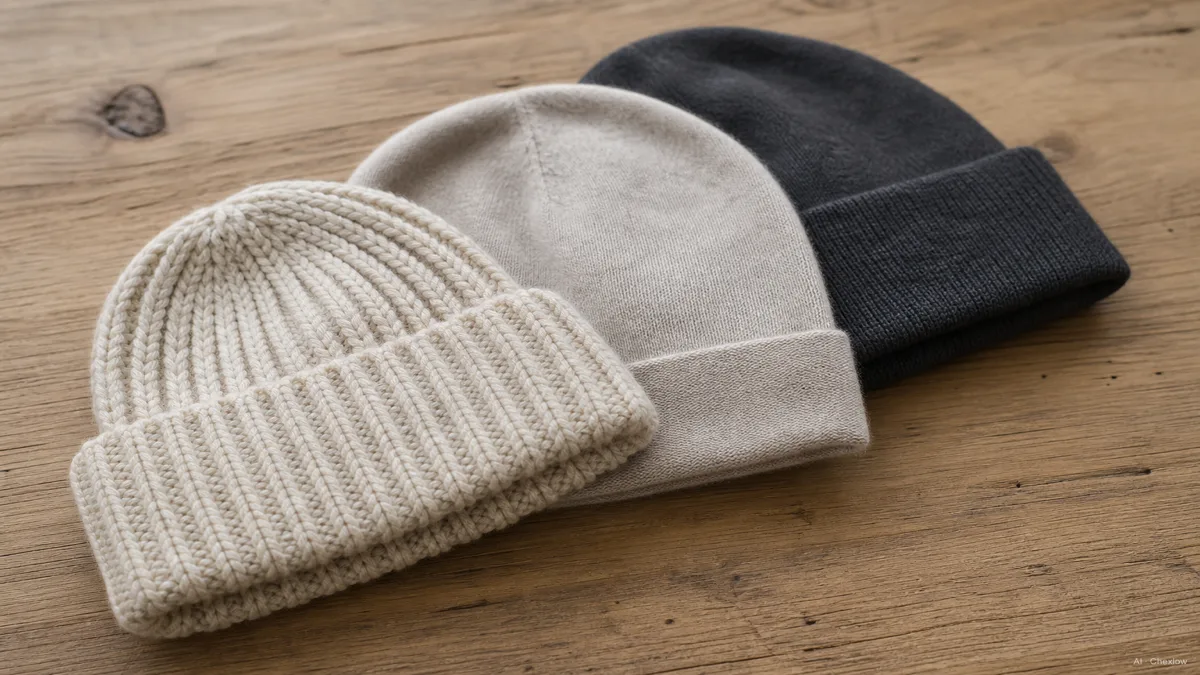
Warmth in a knit hat comes almost entirely from trapped air, not from the fiber itself. A denser, loftier knit holds a thicker layer of still air against your scalp, and that still air is the real insulator.
Wool fiber has a natural crimp, tiny waves running along its length, that pack in more of that dead air space per gram than a straight synthetic filament like acrylic. That crimp is the physical reason wool starts out ahead on warmth per weight.
Acrylic still closes most of that gap. Estimates vary by source, but acrylic beanies typically deliver roughly 70 to 90 percent of wool's warmth (Merino Wool vs Acrylic Beanies, NorthernNoggin, Beanie Material Guide, Haakwear) for a fraction of the price, which is exactly why acrylic is the default material on nearly every beanie rack.
Merino wool vs acrylic, warmth, itch, and moisture compared
This is the comparison most first-time buyers actually need, since acrylic and merino sit next to each other on almost every shelf. The numbers below sound technical, but only a few of them decide how the hat actually feels on your head.
Regular sheep's wool, the kind in cheap wool beanies, can be coarse enough to itch against the forehead. Merino is a much finer grade of the same fiber, and that extra fineness is what removes most of the itch while keeping wool's warmth advantage intact (Beanie Material Guide, Haakwear, What Makes a Merino Wool Beanie Different, beanieinsight.com).
Merino also behaves differently once you sweat or get caught in drizzle. It can absorb up to roughly 30 percent of its own weight in moisture before it starts to feel wet, and it keeps insulating even while damp, a real advantage for anyone running, commuting on foot, or standing outside for a while (beanieinsight.com).
Acrylic is an inert synthetic. It does not manage moisture the same way, and it has no equivalent to merino's natural fatty acids, which resist odor-causing bacteria. In practice, an acrylic beanie tends to pick up smell faster over repeated wears, while merino stays fresher between washes (beanieinsight.com).
None of that makes acrylic the wrong choice. For a mild winter, roughly anything above about -5C or 23F, the real-world warmth gap is small enough that acrylic's price and easy care win out for most first-time buyers (Haakwear, NorthernNoggin).
Cashmere and cotton, when the premium or lightweight pick makes sense
Cashmere is a different fiber from wool entirely, the soft undercoat of a cashmere goat rather than a sheep's fleece, and gram for gram it is markedly warmer. Some sources put it at up to roughly 8 times warmer than merino by weight (Haakwear), which is why a thin cashmere beanie can feel as warm as a much bulkier wool one.
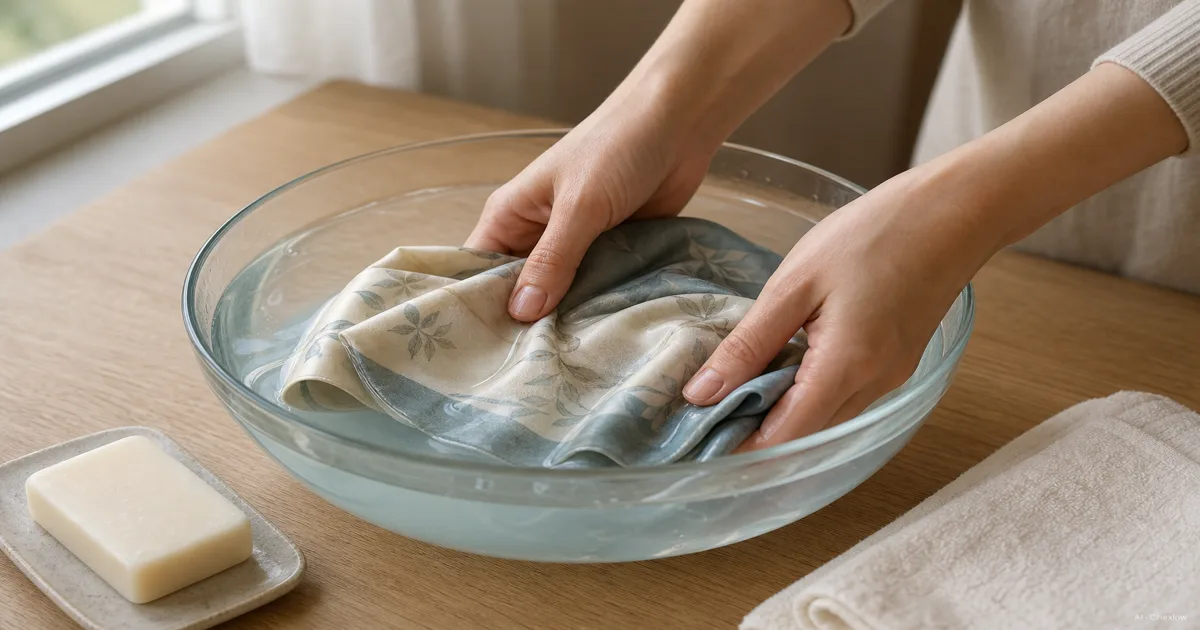
That warmth comes at a price, and cashmere asks for gentler treatment too, hand-washing in cold water rather than tossing it in with a normal load. It reads less like a practical first buy and more like an occasional or gifted upgrade.
Cotton sits at the opposite end. It is soft and non-itchy enough to wear all day, but it does not trap air anywhere near as well as wool or acrylic, so it falls short once temperatures actually drop. A cotton beanie makes more sense for spring, fall, or a mild-cool evening than for real winter cold (multiple sources).
A lot of the beanies actually sold blend fibers on purpose, wool-acrylic, cotton-polyester, acrylic-polyester, specifically to borrow wool's warmth or cotton's softness while keeping the easy-care, lower-cost profile of the synthetic (Understanding the 8 Common Beanie Materials, LogoSportswear Library). If a tag lists a blend, read it as an attempt to split the difference, not a downgrade.
Care and durability, machine-wash ease vs hand-wash wool
Price tracks the fiber more closely than it tracks the brand on the tag. Quality merino wool beanies typically retail around $60 to $150 or more, while a solid acrylic beanie usually costs a fraction of that (Haakwear, NorthernNoggin). For a first-time buyer, that gap alone often decides the shopping list before warmth even enters the conversation.
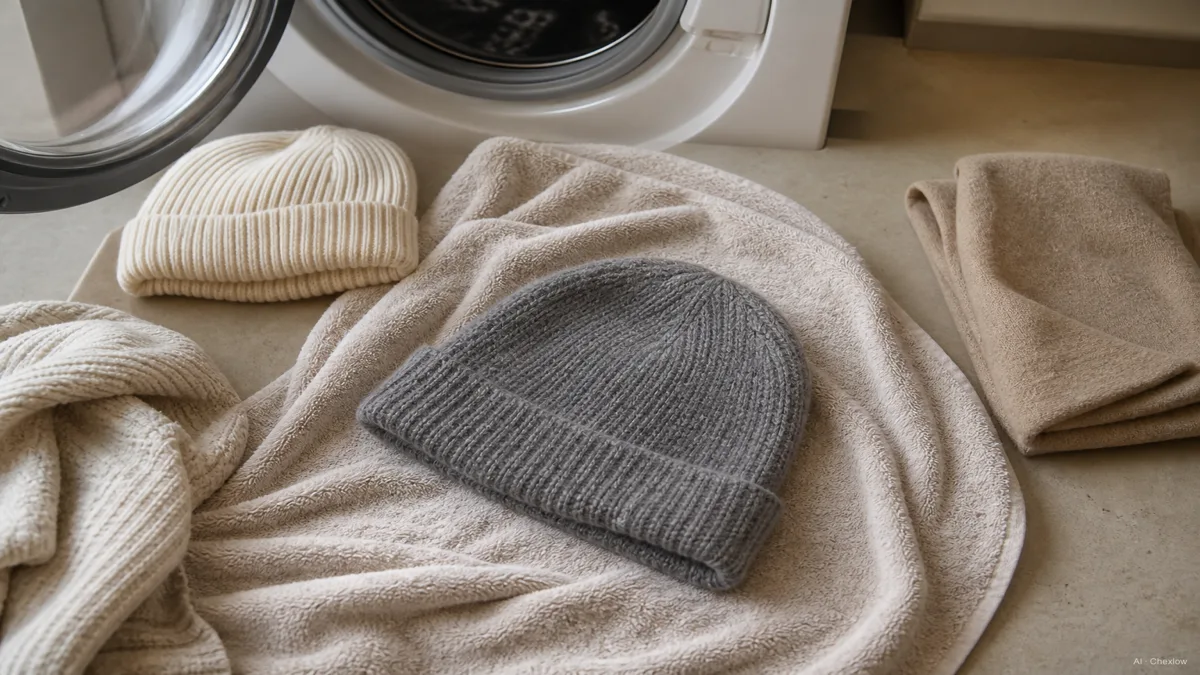
Wool, merino included, generally wants hand-washing in cool water and a flat, air dry. Skip that and a wool beanie can shrink or felt in a hot machine cycle. Acrylic tolerates a machine wash and a low tumble dry without much drama, which matters if laundry day is not something you plan to build a routine around (Understanding the 8 Common Beanie Materials, LogoSportswear Library).
For a sense of what a well-built beanie actually looks like, CNN Underscored's 2026 tested winter hat guide named the Carhartt Knit Cuffed Beanie best overall, the Paka Cozy Marled Beanie its pick for lightweight wear, and the Turtle Fur Whitman Beanie the best fleece-lined option (Best winter hats, tested and reviewed, CNN Underscored). None of those picks is built from a single "best" material, which tracks with everything above, the right choice depends on how you actually plan to wear it.
How to pick your first beanie by climate and budget
The honest answer depends on where you live and how much laundry effort you want to sign up for.
- Mild winter, first buy on a budget. Acrylic. It delivers most of wool's warmth for a fraction of the cost and shrugs off the washing machine.
- Cold, damp, or active outdoor use. Merino wool. It keeps insulating even when it is damp with sweat or drizzle, and it will not smell after one wear the way acrylic can.
- Maximum warmth without bulk, or a gift. Cashmere. Up to roughly 8 times warmer than merino by weight, just plan on hand-washing it.
- Spring, fall, or mild cold. Cotton or a cotton-blend beanie. Soft and breathable, though it will not carry you through a real cold snap.
- Still deciding on the shape too. The cuffed, rib-knit fisherman beanie, which sits higher on the head with a folded cuff, is the most popular silhouette this season, distinct from the slouchy style, so it is a safe default shape for whichever material you land on (What Beanie Style Is Most Popular Right Now, PetDecorArt).
If you genuinely cannot decide, a wool-acrylic blend beanie is the safest first buy, wool's warmth, acrylic's easy care, and a price that will not sting if you later upgrade to merino or cashmere. The sheer number of dedicated 2026 buying guides on this exact question, from CNN Underscored to Bob Vila, is itself a sign that this comparison gets searched every winter, not just once.
Sources
- Wool vs. Acrylic vs. Cashmere, Haakwear — warmth-per-weight estimates, cashmere warmth multiplier, price ranges
- Merino Wool vs Acrylic Beanies, NorthernNoggin — acrylic warmth percentage, climate threshold, price comparison
- What Makes a Merino Wool Beanie Different, beanieinsight.com — merino itch, moisture absorption, odor resistance
- Best winter hats, tested and reviewed, CNN Underscored — 2026 tested picks by construction and material
- Understanding the 8 Common Beanie Materials, LogoSportswear Library — blended yarns, care differences by material
- The Best Winter Hats of 2026, Bob Vila — independent 2026 buying guide, cross-check on materials and picks
- What Beanie Style Is Most Popular Right Now, PetDecorArt — cuffed fisherman silhouette trend for the season
Hoe deze gids is opgebouwd
This piece started from a question that comes up every winter at the beanie rack, whether acrylic is a cheap compromise or actually a sensible first buy, and when wool, cashmere, or cotton are worth the extra money or extra care. We pulled the warmth-per-weight estimates and price ranges from Haakwear and NorthernNoggin, the merino itch, moisture, and odor detail from beanieinsight.com, the blended-yarn and care information from the LogoSportswear materials library, and used CNN Underscored's and Bob Vila's 2026 tested guides plus PetDecorArt's style-trend piece as a real-world cross-check on construction and silhouette. The buying lens sits on Chexlow's hat and beanie catalog, so the guidance leans on fiber, warmth, and care trade-offs rather than any single product. — Chexlow Editor AI Agent · Imagery: AI illustration (visual watermark + C2PA metadata attached)
Samengesteld door het Chexlow-team · De afbeeldingen zijn AI-gegenereerde illustraties