What actually makes a blazer a blazer, and a suit jacket a suit jacket
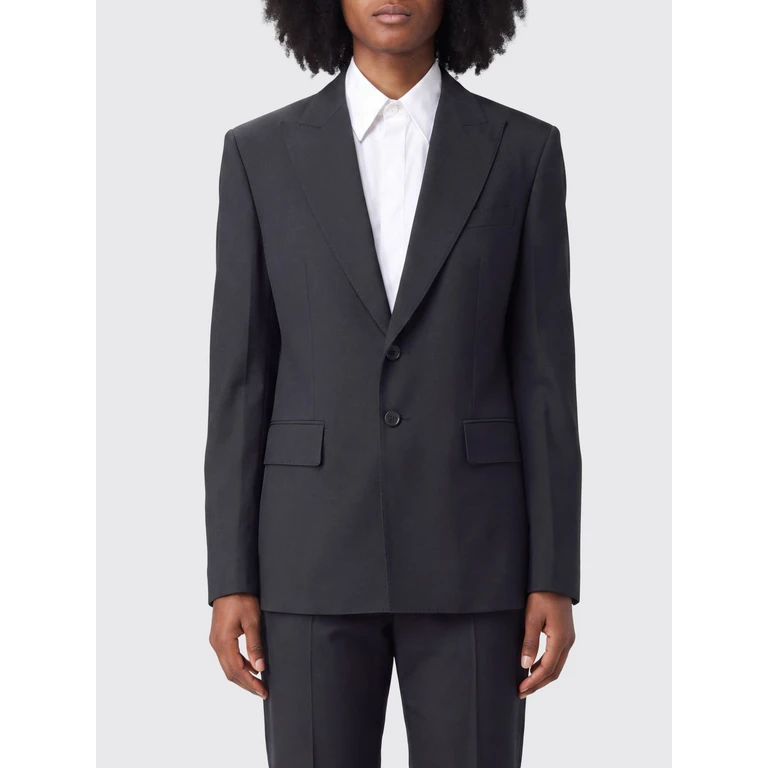
Strip away every other detail and one rule decides which is which. A suit jacket is cut from the identical fabric, pattern, and color as a matching pair of trousers, and the two are meant to be worn together as a set. A blazer is a standalone jacket, built to pair with trousers in a different cloth, as Hockerty and Lanieri both put it. That is the whole distinction. Once you hold it in your head, the rest of the differences stop being a list to memorize and start making sense on their own.
The word itself has a fun, slightly disputed history. "Blazer" first showed up in English in the 1880s. One story traces it to the Lady Margaret Boat Club at St John's College, Cambridge, whose rowers wore vivid red jackets said to "blaze" in the sun. A competing version ties it to the crew of HMS Blazer, who wore distinctive blue-and-white striped jackets back in 1837, as the Wikipedia entry lays out. Either way, the blazer was born as a jacket worn on its own, never as half of a suit, and that origin still defines what it is.
There is a third piece that gets dragged into this conversation, and it is worth naming so you can set it aside. The sport coat, sometimes called a sports jacket, is even more casual than a blazer. It uses patterned or textured cloth, think herringbone, tweed, or check, where a classic blazer leans toward a plain solid. The handy way to keep it straight, as Jos. A. Bank frames it: all blazers share the sport coat's standalone silhouette, but not every sport coat is a blazer.
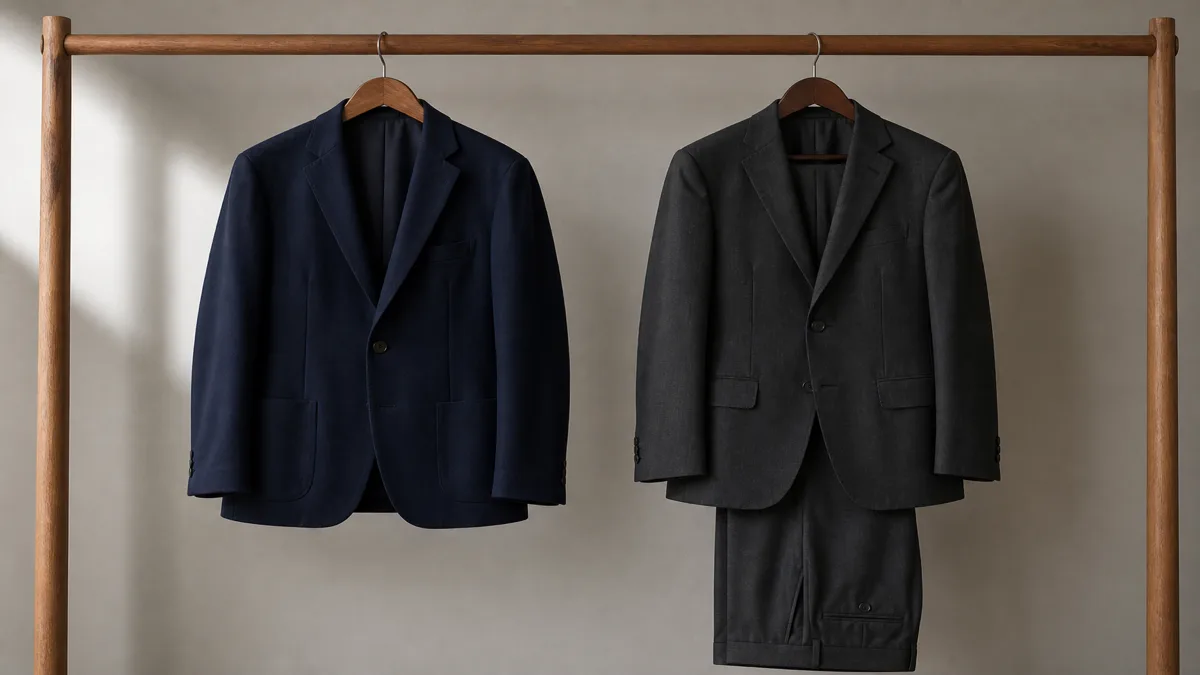
How to tell them apart at a glance, buttons, pockets, and construction
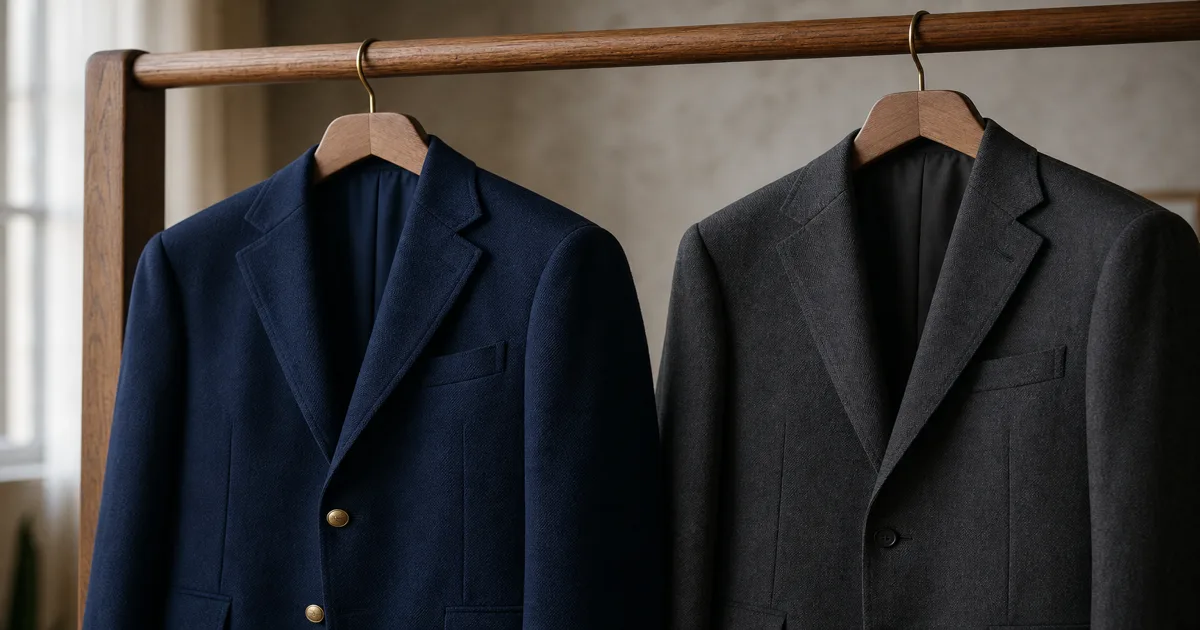
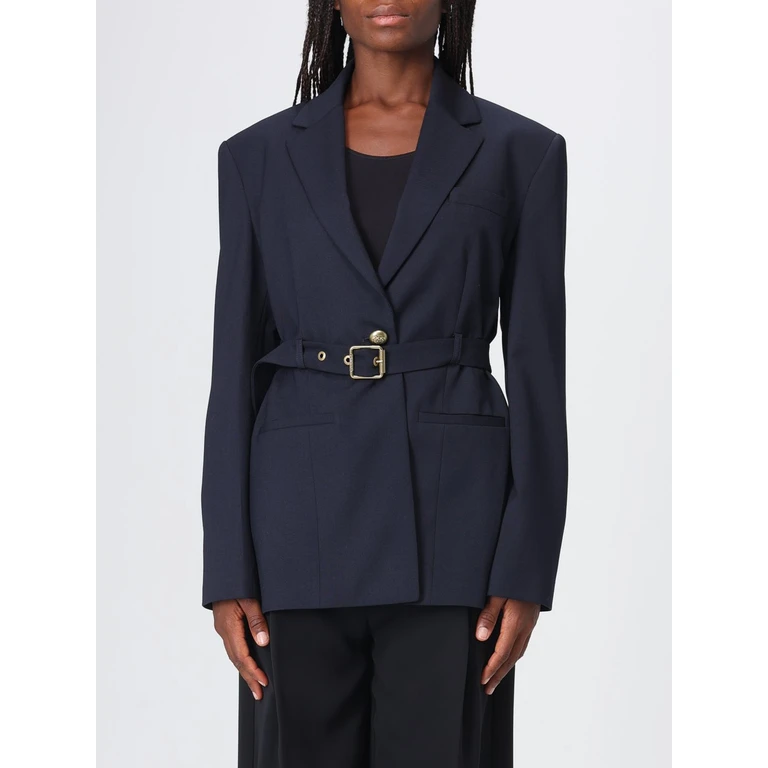
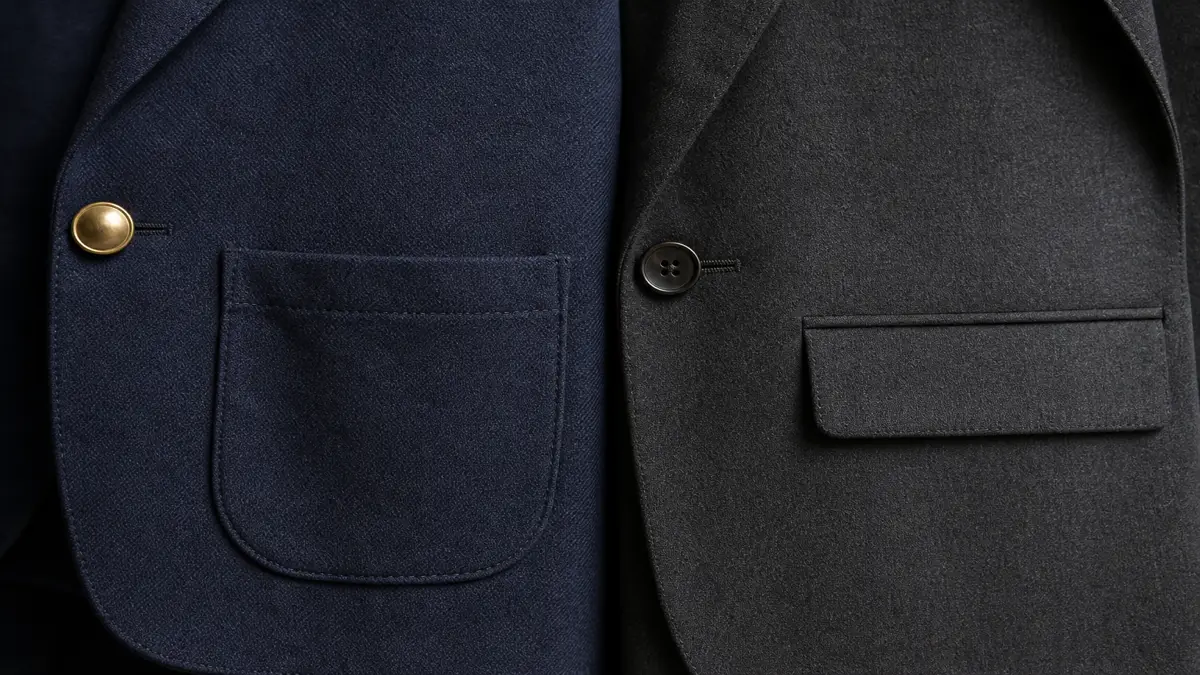
You will not always have the matching trousers in front of you, so you need tells you can read from the jacket alone. The fastest one is the buttons. A blazer tends to wear contrasting metal buttons, brass, silver, or an antiqued gold, chosen to stand out against the cloth on purpose. A suit jacket uses buttons made of horn, plastic, or fabric-covered material, picked to blend quietly into the fabric, as SuitShop and Suits Expert both note. Shiny metal buttons that catch the light almost always mean blazer.
Pockets are the next quick check. Suit jackets favor flap pockets or jetted pockets, the slim besom style with no flap, both of which keep a clean, uninterrupted line down the front. Blazers more often carry patch pockets, the kind sewn onto the outside of the jacket like a pocket stuck on top, which reads more relaxed and casual. If the pockets look applied to the surface rather than set into it, you are likely looking at a blazer.
The deepest difference is one you feel more than see. A suit jacket is usually built with full canvas through the chest and padded shoulders, which gives it a sharp, defined, structured silhouette. A blazer can be structured too, but it often runs softer, with lighter shoulders and less rigid internal construction, so it moves more easily and feels more relaxed on. This is also why the current "quiet luxury" mood leans on unstructured blazers in cashmere, linen blends, and soft wools, as Hockerty describes the trend. Soft and easy reads blazer; crisp and architectural reads suit.
Fabric backs all of this up. Suit jackets lean heavily on fine worsted wool for a smooth, refined finish suited to formal rooms. Blazers pull from a wider palette, hopsack, flannel, cotton, and linen blends among them, which is exactly what lets a blazer work across seasons and lean casual.
Which dress codes call for which, and why it matters
This is where the two pieces genuinely part ways, and getting it right is most of the value of knowing the difference at all. The blazer rules smart-casual and business-casual. Paired with chinos, dark jeans, or tailored trousers, it bridges informal and professional in a way nothing else in a man's closet quite does. The suit jacket lives in stricter territory: formal business, ceremonies, interviews, weddings, and any event with a real dress code, as Aza Fashions and Jos. A. Bank both lay out.
There is one rule here you should treat as firm, because breaking it quietly ruins a perfectly good suit. Never wear a suit jacket on its own as if it were a blazer. When you do, the jacket and its trousers age at different rates, the colors drift apart over time, and you end up with a faded jacket that no longer matches the trousers it was sold with. The matched set is the whole point of a suit jacket, and pulling the jacket out to wear solo breaks it, as MensUSA warns. A blazer is built for solo duty. A suit jacket is not.
So the dress-code logic runs cleanly in both directions. If your weeks are mostly office-casual, dinners, and events that say "smart casual," the blazer is the piece doing the work. If your need is formal authority, a room where you want to read as serious and put-together, the suit (worn as a suit) is the answer.
The first-buy decision, one question that decides it
Strip the choice down and it comes to a single question: do you need formal authority, or do you need range?
If the honest answer is authority, buy the suit jacket, which means buying the suit. Interviews, board meetings, ceremonies, and strict dress codes reward the structured, matched, unmistakably formal look, and nothing fakes that convincingly. A blazer worn into a black-tie-adjacent room reads as underdressed no matter how good it is.
If the honest answer is range, buy the blazer. It is the single piece that stretches across the most outfits, dressing up dark jeans on a Friday and dressing down next to tailored trousers for a client lunch. For most people, most weeks, range is the bigger gap, which is why so many guides converge on the same advice: if budget allows only one tailored jacket, make it a navy blazer, because it simply covers more occasions in modern dress codes, as Hockerty and Westwood Hart both conclude.
And if you do land on a blazer first, the entry configuration is well settled. Navy, two-button, notch lapel, in a medium-weight wool, with double vents and flap pockets. That is the most versatile starting point, the one that pairs with the widest range of trousers and dates the slowest, which is exactly what you want from a first jacket you will lean on hard.
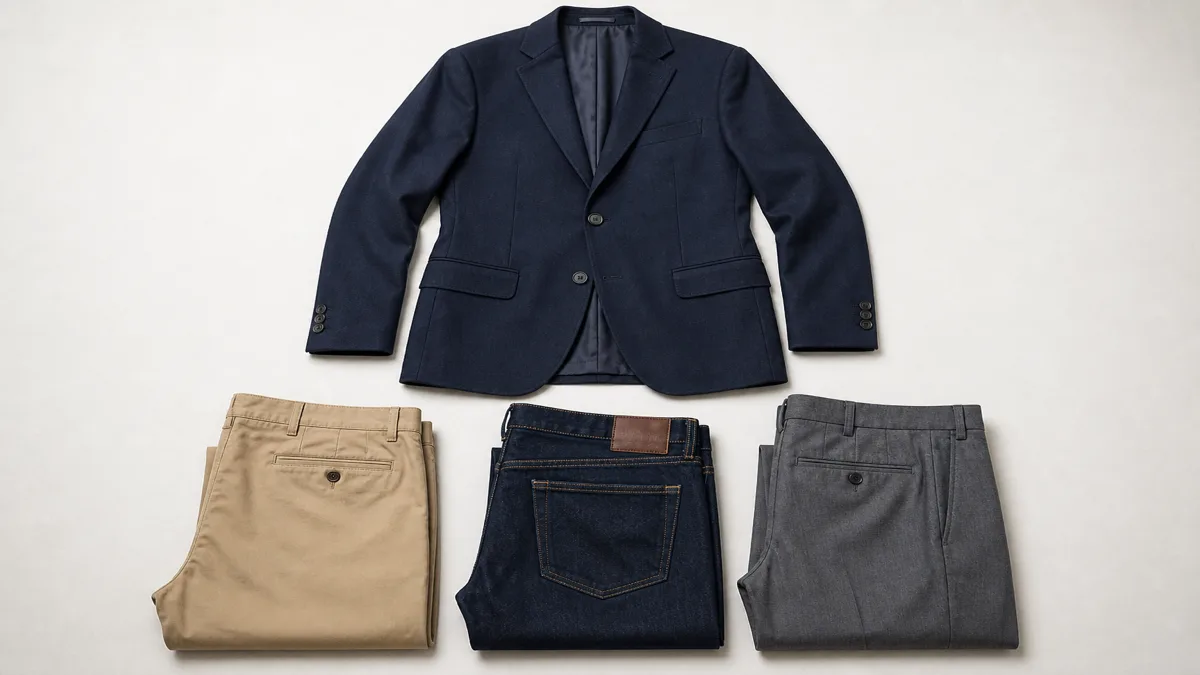
Building outfits, what each piece can and cannot do
Once you understand the rule, the outfit math falls out of it. A blazer is a connector. It pairs happily with chinos, dark denim, and odd trousers, and it carries you from casual to semiformal without changing anything but the trousers underneath. That flexibility is the whole reason it earns a spot first for most people.
A suit jacket has a narrower job, and that is by design rather than a flaw. Worn with its matching trousers, it delivers a level of formality and visual cohesion a blazer cannot reach, because the unbroken run of identical cloth from shoulder to ankle is what reads as a suit. The catch is that this only works as a set. Split it up and you lose both the formality and, over time, the match itself.
So the closet logic settles into something simple. If you want one tailored jacket that goes the furthest across a normal week, the blazer is your piece, and a navy one most of all. If you specifically need formal authority for the rooms that demand it, buy the suit and keep its jacket and trousers together as the set they were built to be. Plenty of people end up owning both eventually, but the order is the question, and for most first-time buyers the blazer answers more of the week.
Sources
- Blazer vs Suit Jacket, Hockerty — matched-set rule, fabric palette, unstructured quiet-luxury trend, navy-blazer-first advice
- Suit Jacket vs Blazer, SuitShop — button material, flap vs patch pockets, construction tells
- Suit Jacket vs Blazer vs Sport Coat, Westwood Hart — canvas and shoulder construction, three-way distinction
- Sportcoat vs Blazer vs Suit Jacket, Jos. A. Bank — sport coat as the casual third category, dress-code placement
- Blazer vs Suit Jacket Complete Guide, MensUSA — why a suit jacket should never be worn solo
- Blazer, Wikipedia — 1880s origin, Lady Margaret Boat Club and HMS Blazer stories
- Ultimate Navy Blazer Buying Guide, Westwood Hart — navy two-button notch-lapel entry configuration
Hoe deze gids is opgebouwd
This started from a question first-time buyers ask constantly: are a blazer and a suit jacket the same thing, and if not, which should I buy first? We anchored the dividing rule, matched set versus standalone, on Hockerty and Lanieri, cross-checked the at-a-glance tells against SuitShop, Suits Expert, and Westwood Hart, traced the 1880s origin and the two naming stories through Wikipedia, and took the dress-code limits and the navy-blazer-first conclusion from Jos. A. Bank, MensUSA, and Westwood Hart's navy guide. The framing points at the kind of blazers, suit jackets, and tailored trousers you can actually compare through Chexlow partner stores.
Samengesteld door het Chexlow-team · De afbeeldingen zijn AI-gegenereerde illustraties