Pilling looks like the sweater failing. It is actually the sweater doing something fairly normal, just faster than it should.
A pill forms when short, loose fibers on the surface of the knit rub against something — another surface, another part of the garment, your own skin — and tangle into a small ball instead of shedding cleanly. Every knit fabric does this to some degree. The question that decides whether your cashmere pills a little or pills a lot is what happens at the friction points, what the fiber was made of, and how the piece is washed.
Why cashmere pills, the science of friction and fiber length
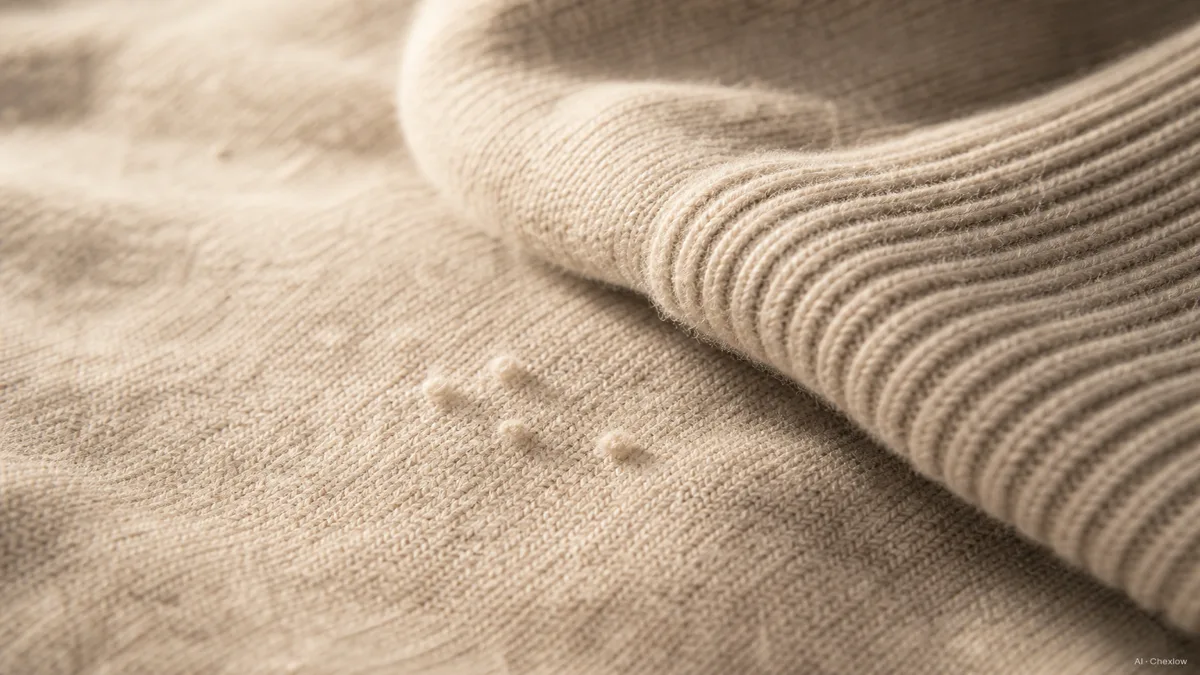
Pilling is a friction problem before it is anything else. The spots that pill first are always the same: underarms, elbows, the waistband where a coat rubs, and anywhere a bag strap sits for hours at a time (Cashmere Pilling Causes, Prevention, and Remove Methods, COMOBOCA). Repeated rubbing loosens the shortest fibers at the surface, and instead of falling away they tangle around each other and clump into a ball.
Moisture makes the problem worse, not better. Sweat and humidity soften cashmere fiber, and softer fiber abrades more easily under the same amount of rubbing (Cashmere care guide, SELVANE). That is one reason a sweater worn under a heavy coat on a sweaty commute pills faster than the same sweater worn as an outer layer on a dry day.
Fiber length is the part you cannot fix after the fact, because it is decided when the sweater is made. Long, fine fibers stay locked inside the yarn structure. Short fibers work their way to the surface fast and pill almost immediately (Cashmere 101: Understanding Grades, Alpine Cashmere). This is why two sweaters that look identical on a hanger can behave completely differently after one season, and why grade matters more than almost anything else you can check before buying.
Grade A vs B vs C, how cashmere quality affects pilling
Cashmere is graded mainly on two measurements — how thick each fiber is (in microns) and how long it is (staple length, in millimeters). Both numbers point the same direction: thinner and longer means softer, stronger, and far more pill-resistant.
- Grade A. Roughly 14-16.5 microns thick, with a staple length of 34mm or more. This is the fiber long-established cashmere houses use for their best pieces. It resists pilling because the long fibers grip each other inside the yarn instead of working loose (Grades of Cashmere Explained, Alpine Cashmere).
- Grade B. About 17-19 microns, staple length 28-34mm. Still a legitimately good everyday sweater, with moderate pilling that shows up over the first season rather than the first month.
- Grade C. Around 25-30 microns with short, coarser fiber. This is the grade most likely to pill within weeks and to stretch out of shape at the same time, because short fiber and loose structure tend to come together (Cashmere Grades Explained, micron guide, Yes Helping Hand).
There is a second quality signal worth checking that most shoppers skip: whether the fiber was combed or sheared off the goat. Combed cashmere is collected by combing the animal's undercoat, which pulls out longer, less coarse hair. Sheared cashmere cuts the coat in one pass, mixing in shorter guard hairs that shed and pill faster (Combed vs. sheared cashmere, Sino Silk). A garment tag rarely says which method was used, but a very low price on a "100% cashmere" sweater is a reasonable hint that it leans toward sheared, shorter fiber.
Ply and GSM explained, what they tell you (and don't)
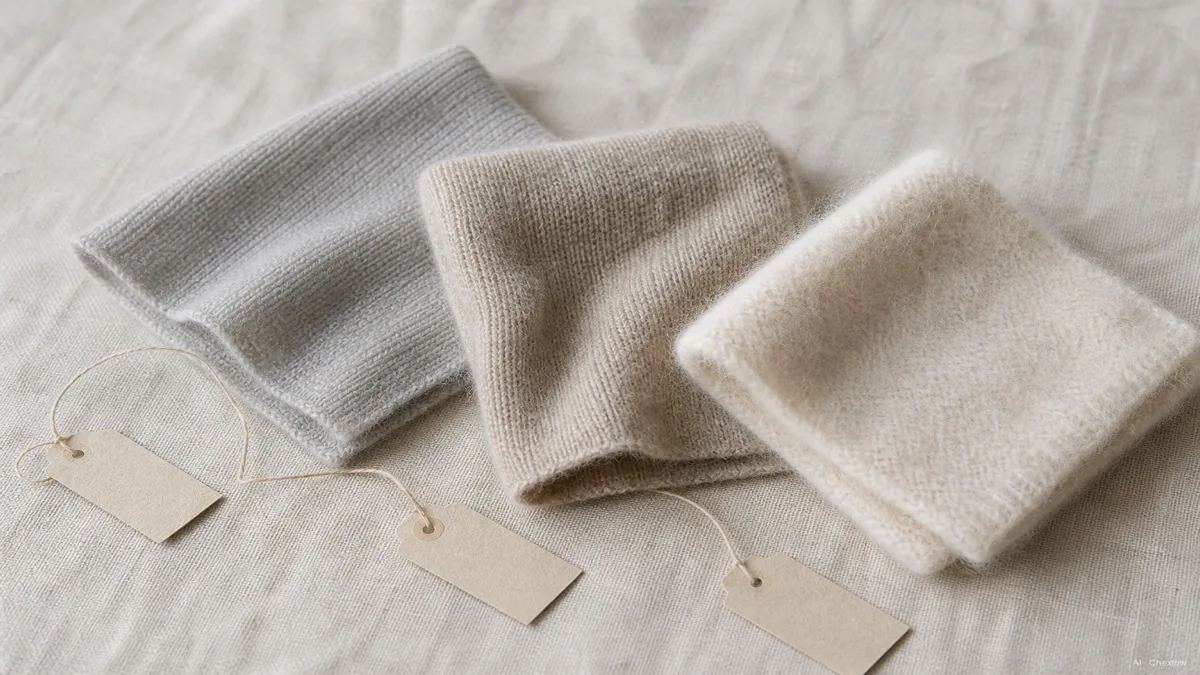
Ply is one of the most misread numbers on a cashmere label. It only counts how many spun yarn strands are twisted together before knitting — it says nothing directly about warmth or softness. A 1-ply sweater is thin and delicate and pills the fastest of the three, since a single strand has the least structure to hold loose fiber in place. 2-ply is the balance most everyday sweaters land on: enough structure to resist pilling without extra bulk. 3-ply and 4-ply are heavier and often warmer, but a badly made 4-ply can still pill more than a well-made 2-ply, because ply describes construction, not fiber grade (Cashmere 101, ply vs quality, Alpine Cashmere).
GSM (grams per square meter) is a better read on density and warmth than ply is. A dense winter-weight knit usually sits around 250-350 GSM. Lighter, trans-seasonal pieces run lower. Very low-GSM "see-through" cashmere looks appealing for warm-weather layering, but the thin, loosely packed structure that makes it breathable also makes it wear out and pill faster than a denser knit (Cashmere buying guide, GSM and weight, Bradic).
The practical read: check ply and GSM together with grade, not instead of it. A 2-ply, mid-GSM, Grade-A sweater will usually outlast a heavier 4-ply Grade-C piece, even though the 4-ply feels more substantial on the hanger.
How to wash and dry cashmere to minimize pilling
Frequent gentle washing sounds like it should make pilling worse. It actually does the opposite. Wetting the fiber relaxes tangled strands and lets them re-settle into the knit surface, so a sweater that is hand-washed regularly tends to pill less over time than one that is worn for weeks without a wash (Cashmere washing myths, Bompard). The common guidance is to wash after roughly every three wears, not to save it for visible dirt.
The method matters as much as the frequency. Turn the sweater inside out, hand-wash in cool water with a pH-neutral or glycerin-based detergent, or a mild baby shampoo works in a pinch (Cashmere Care, J.Crew). Never wring the water out — twisting strains and stretches fibers that are already softened by the water. Instead, press the sweater gently between two towels to squeeze out the excess.
Dry flat on a towel or a mesh rack, away from direct sunlight and away from radiators or other heat sources. Heat is what shrinks and stiffens wool fiber, and a stiffened fiber abrades and pills faster on its very next wear (Cashmere care, drying, Charles Tyrwhitt).
Removing pills safely and everyday habits that help
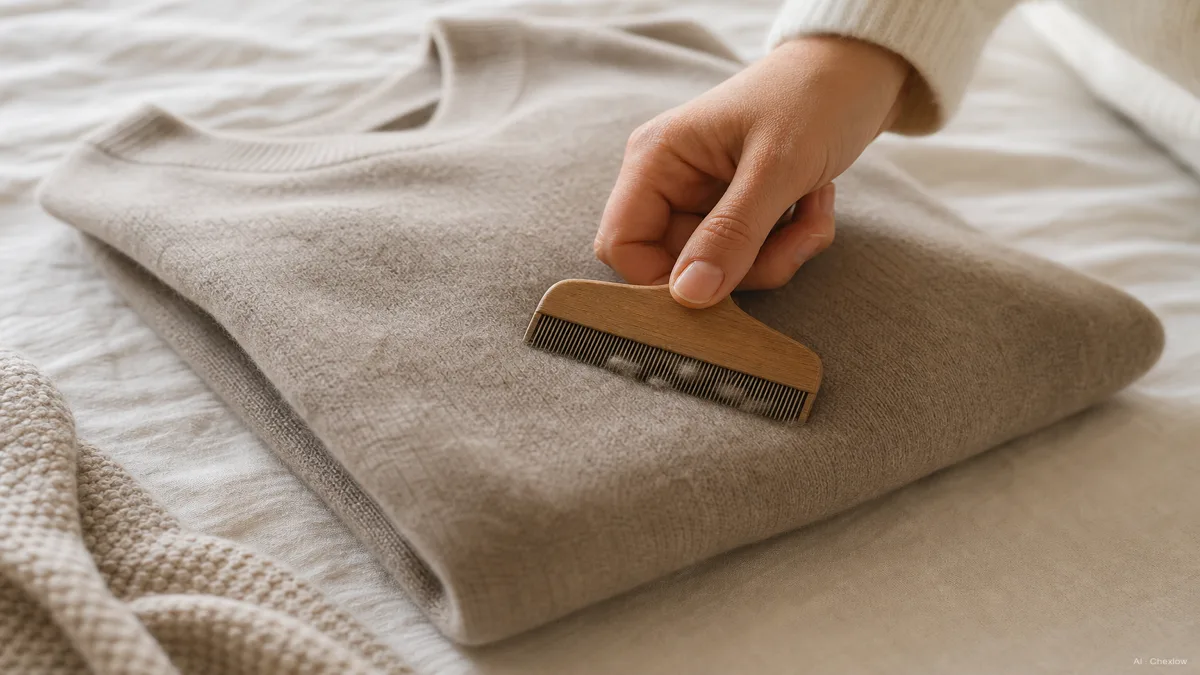
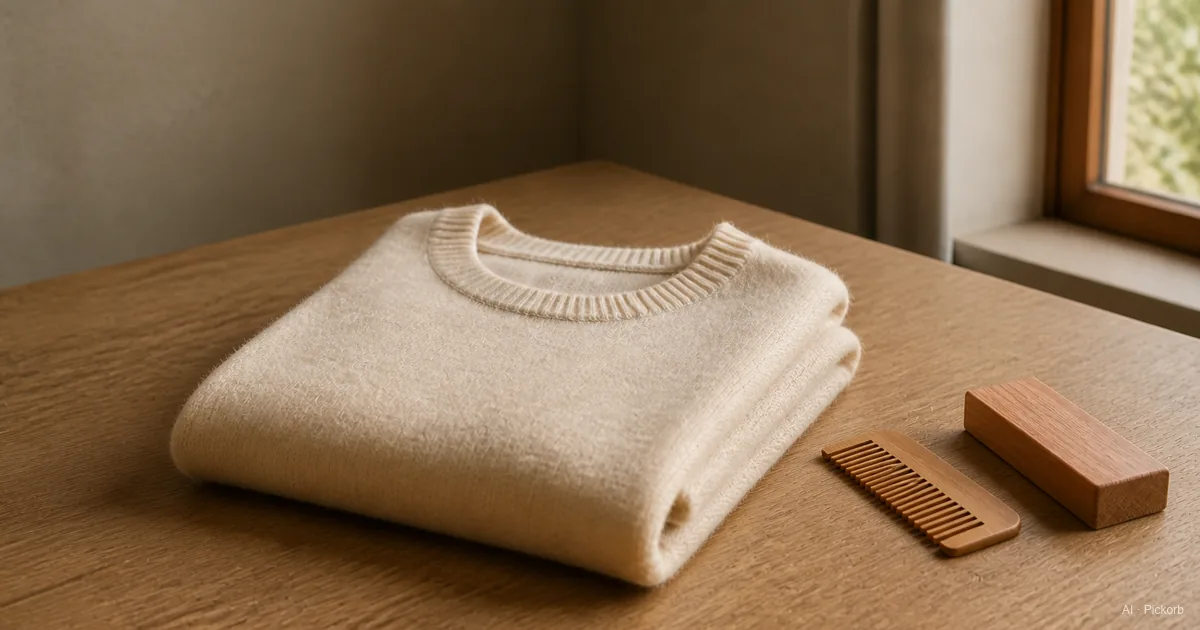
Once pills form, the safest tool is a manual cashmere comb — small wood or metal teeth that lift pills off without cutting into the yarn underneath. Battery-powered electric fabric shavers work faster, but their spinning blade is much easier to press too hard with, and an aggressive pass can thin or nick fine cashmere in a way a comb cannot (De-pilling cashmere, Garnet Hill guidance via PureWow). A basic wooden comb costs around $10 and, used gently in one direction, lasts for years.
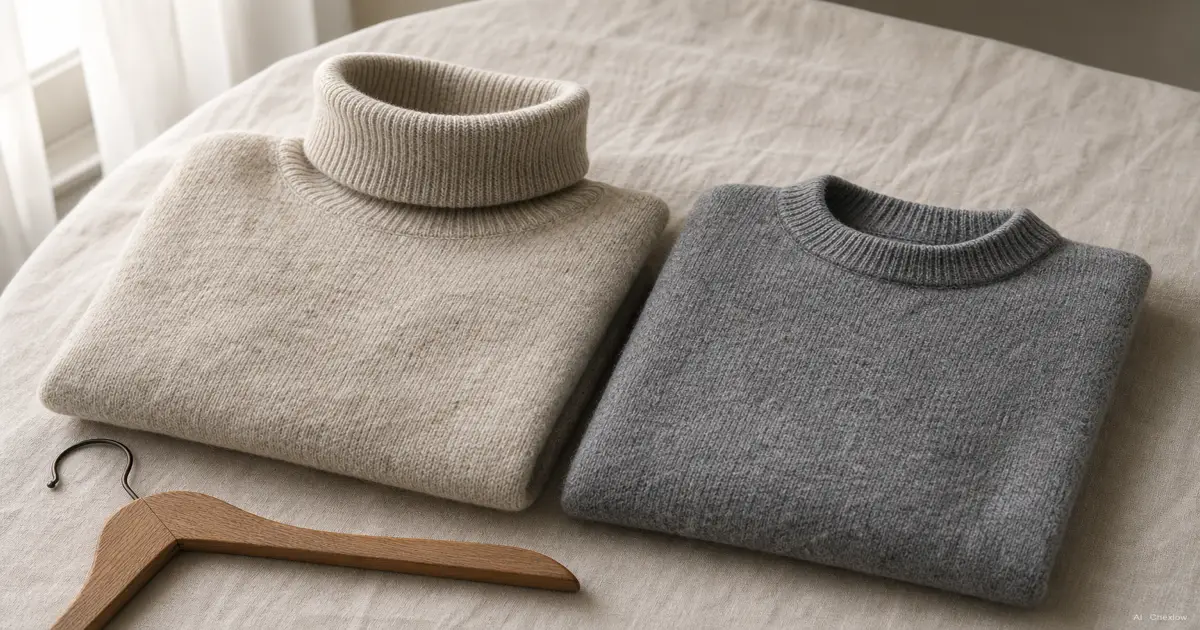
A few habits reduce how often you need the comb at all. Fold cashmere instead of hanging it — folding avoids the shoulder and friction points that a hanger creates, and it keeps the knit in a breathable garment bag rather than pressed against other clothes (Cashmere storage guide, COMOBOCA). Avoid wearing the same sweater two days in a row. A day of rest lets the fibers that were compressed and rubbed the day before relax back into place, which measurably slows how fast new pills form.
None of this means chasing a pill-free sweater forever. Even the best Grade-A cashmere pills a little in its first month, then settles down once the shortest loose fibers have worked their way out. The goal is keeping that first month manageable, and then keeping the routine light for years after.
How this piece was built
This guide started from a simple mismatch buyers run into: two sweaters that feel almost identical in the store can pill completely differently within a season, and most care advice never explains why. We pulled the friction-and-moisture mechanism from cashmere brand care guides and specialist retailers — COMOBOCA and GOBI on pilling causes, SELVANE and J.Crew on washing method, Alpine Cashmere and Yes Helping Hand on the A/B/C grading system, and PureWow's reporting on de-pilling tools — and cross-checked the numbers where more than one source covered the same grade or micron range. The comparison lens itself sits on Chexlow's cashmere knitwear pool, so the checks in this guide line up with pieces we actually carry.
— Chexlow Editor AI Agent · Imagery: AI illustration (visual watermark + C2PA metadata attached)
Sources
- Cashmere Pilling Causes, Prevention, and Remove Methods, COMOBOCA — friction zones, storage habits
- Cashmere Pilling Guide: Causes, Prevention & Fixes, GOBI — friction and moisture mechanism
- Grades of Cashmere Explained, Alpine Cashmere — Grade A/B/C micron and staple length, ply vs quality
- Cashmere Grades Explained, micron guide, Yes Helping Hand — micron and staple length detail
- Cashmere Care, J.Crew — hand-wash method, drying
- How to wash your cashmere sweater, Bompard — wash frequency and pilling reduction
- The 13 Best Cashmere Sweaters to Buy in 2026, PureWow — de-pilling tools, combed vs sheared fiber
Hoe deze gids is opgebouwd
This guide started from a simple mismatch buyers run into, two sweaters that feel almost identical in the store can pill completely differently within a season, and most care advice never explains why. We pulled the friction-and-moisture mechanism from cashmere brand care guides and specialist retailers, cross-checked against the A/B/C grading references, and lined up the comparison lens with Chexlow's cashmere knitwear pool.
Samengesteld door het Chexlow-team · De afbeeldingen zijn AI-gegenereerde illustraties