Choose the details you actually want to wear
Compare a canvas Chuck 70 with a standard suede-and-canvas Old Skool first. A different material or a Skate version needs its own specification check.
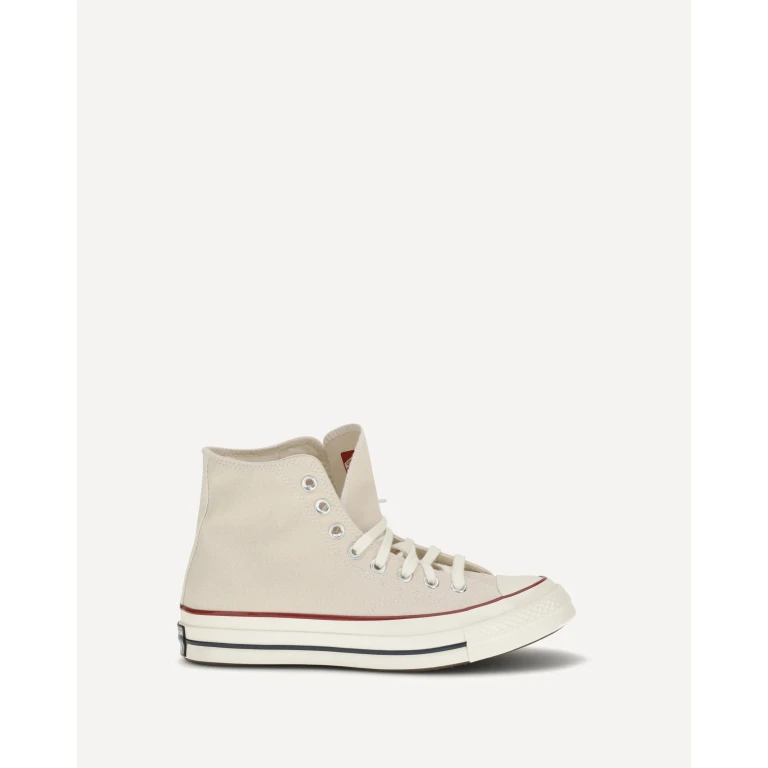
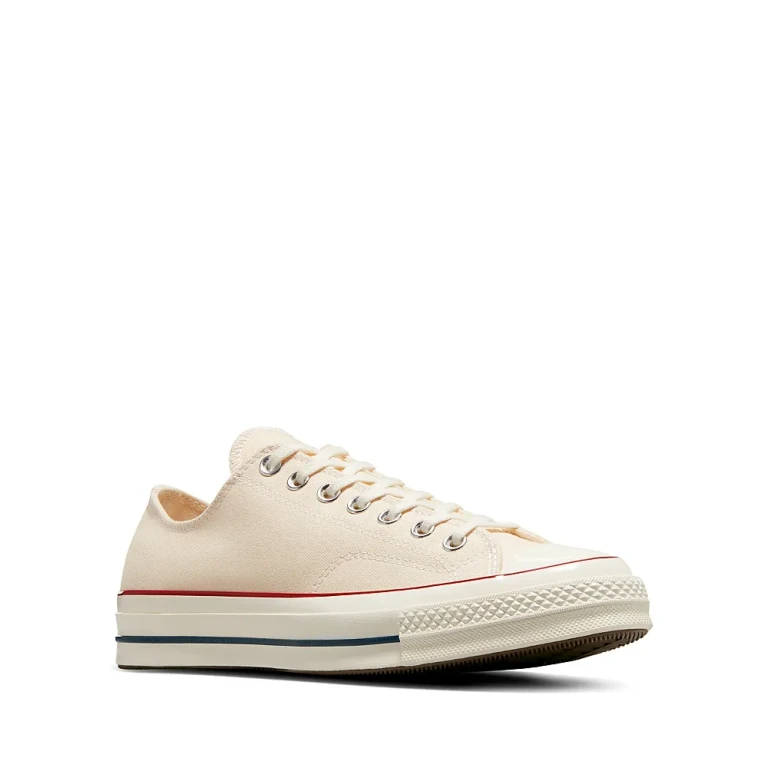
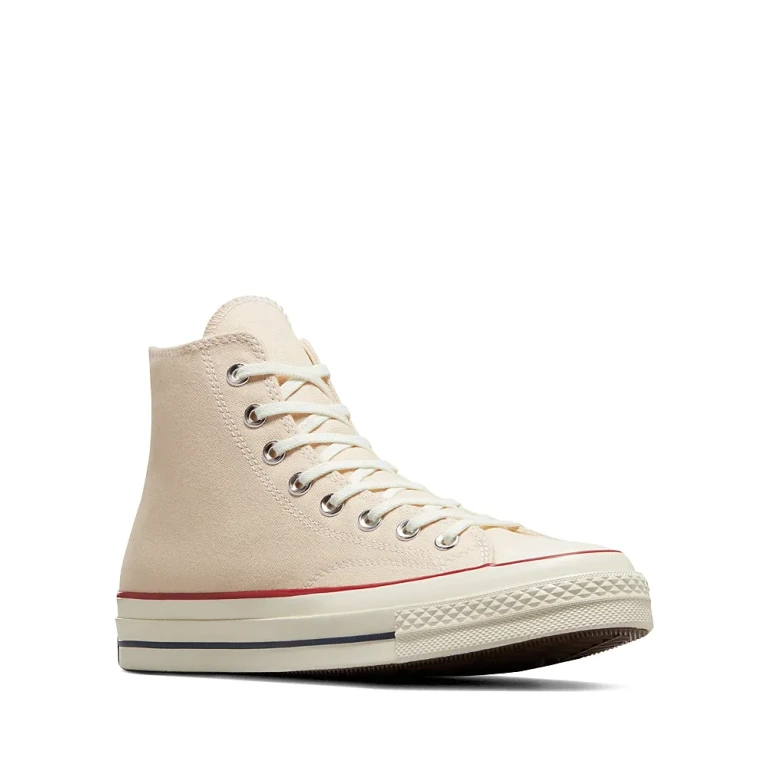
- Chuck 70. Heavyweight canvas, OrthoLite cushioning and varnished off-white rubber details define the version examined here. Choose it for that canvas-and-rubber contrast, rather than assuming every shoe called Chuck Taylor is the same. Converse product details
- Old Skool. Suede and canvas panels, a padded collar and a waffle outsole distinguish the standard pair. Choose it if the side stripe and panelled upper are the details you want in your everyday outfits. Vans product details
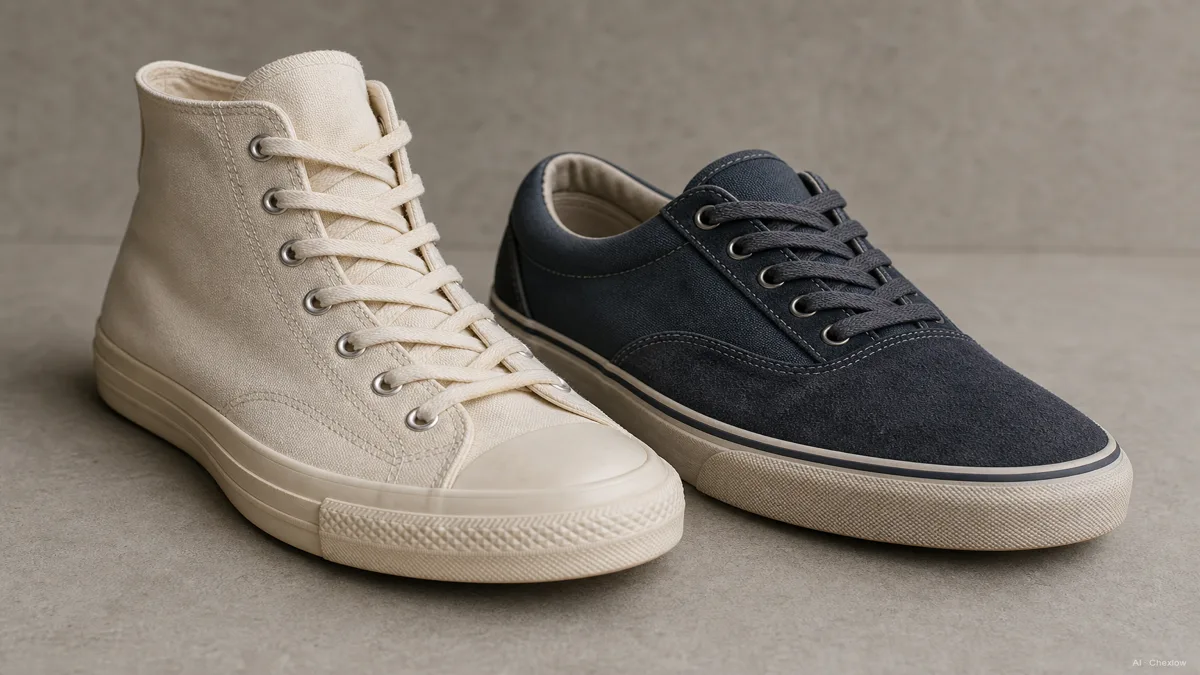
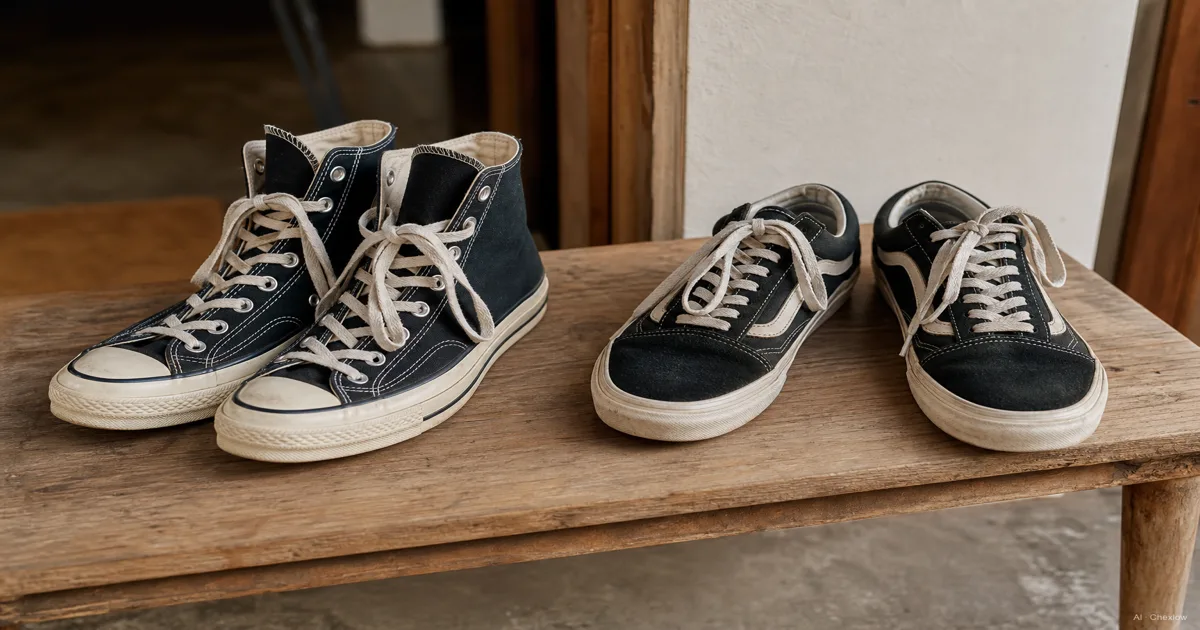
Use the close-up to compare the upper and the rubber around its base. The waffle pattern is underneath the Old Skool; its sidewall also has a foxing stripe. “Foxing versus waffle” compares two different parts of a shoe, so it cannot tell you which construction is better. Old Skool construction
Try each with the trousers you wear most. If you are also considering a high-top Chuck 70, settle that separate question with the high-top or low-top guide.
Let the fit settle a close decision
Converse's US page advises half a size down for the cited Chuck 70. Vans says most Old Skool designs fit true to size. Treat these as starting points for those products, then use the size chart and size system on the seller's actual listing. Converse sizing, Vans fit guide
Here is a practical fitting check:
- Start with your usual socks. Wear the socks you intend to use and lace both shoes normally.
- Stand and walk indoors. Check for toe contact, pressure across the forefoot and heel slipping.
- Reconsider the shape if needed. If a longer size relieves the squeeze but leaves the heel loose, compare widths or another shape before buying.
A cushioning label or padded collar cannot decide which pair feels better on your foot. Keep the one that passes the fitting check; do not accept pinching on the promise that it will disappear.
If the length seems right but the fit still feels wrong, read how sneaker shape affects sizing before changing the number again.
Choose upkeep you are willing to do
There is no verified head-to-head wear test in the sources used here that establishes a longer-lasting winner. The illustration below shows wear as a buying consideration; it is not a durability test or a forecast of how either pair will age.
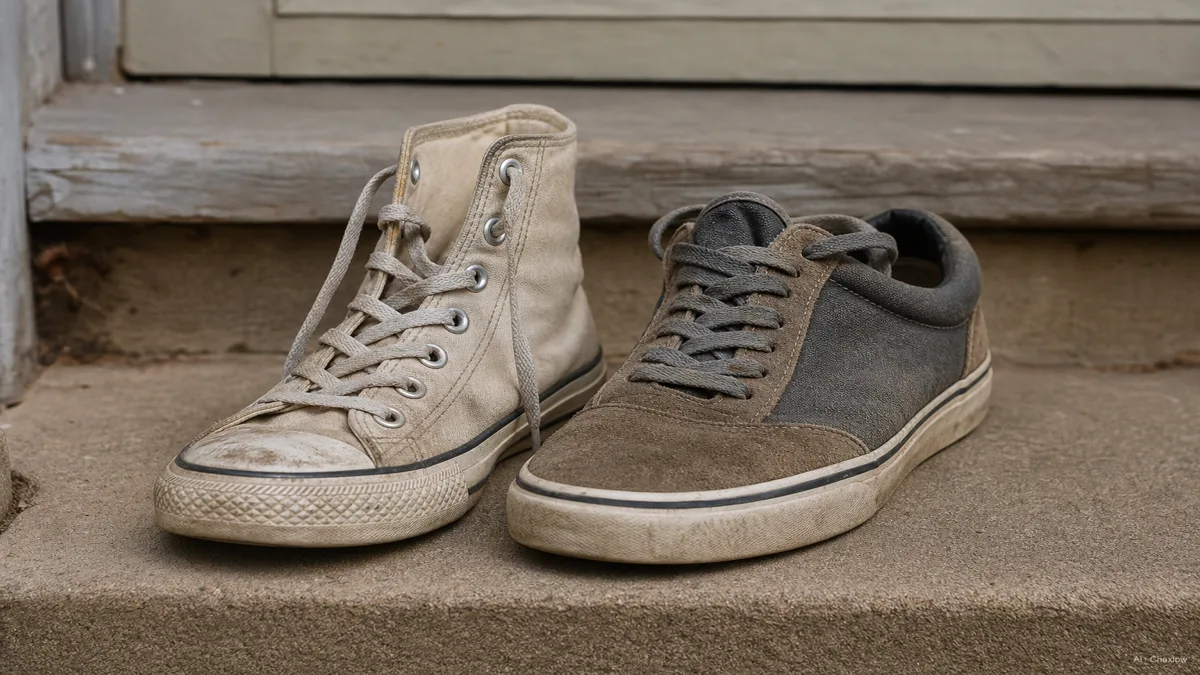
For canvas, Converse specifies a damp cloth with mild soap and lukewarm water after a hidden-area test. It rules out machine washing and drying, and says to dry at room temperature without direct heat. Converse care instructions
Vans recommends cleaning according to the material, with specialist products for suede. If treating suede separately sounds like a chore you will skip, that is a practical reason to favour the canvas Chuck 70. If you prefer Old Skool, check the exact upper materials before choosing a cleaner. Vans cleaning guidance
Check the version, then compare the total cost
For everyday wear, buy the design you prefer once its fit and upkeep work for you. If both pass, compare the delivered total and return conditions for the same material, cut and size. A discount is only useful if it applies to the pair you meant to buy.
If you intend to skate, inspect the version before deciding. The Skate Old Skool examined here has DuraCap rubber reinforcement against griptape wear and PopCush footbeds. Those are specifications of that version, not features to assume from the standard Old Skool name. Vans Skate Old Skool details
Before paying, confirm three things: the full model name, the selected material and size, and whether an indoor try-on return is allowed. You do not need to add an insole or care kit just to complete this first purchase.
Hoe deze gids is opgebouwd
Written by Chexlow's AI editor using Converse and Vans product, fit and care documentation. This guide separates verified specifications from editorial advice for choosing an everyday pair; it does not report a hands-on fit or durability test.
Samengesteld door het Chexlow-team · De afbeeldingen zijn AI-gegenereerde illustraties