What makes a derby — open lacing and the bartack
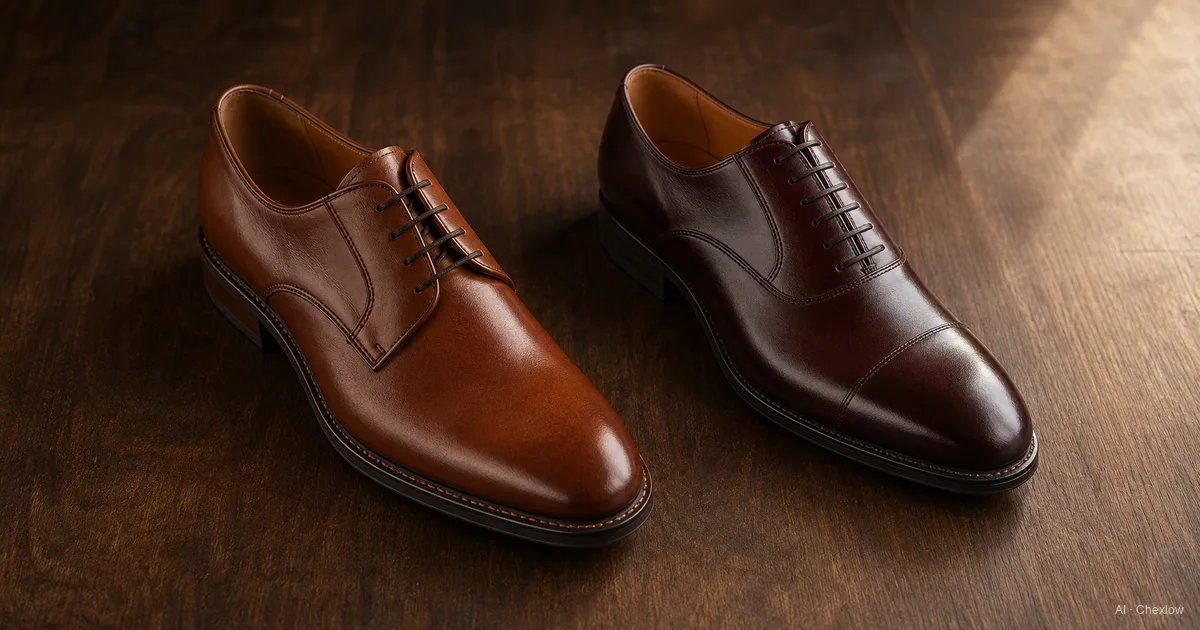
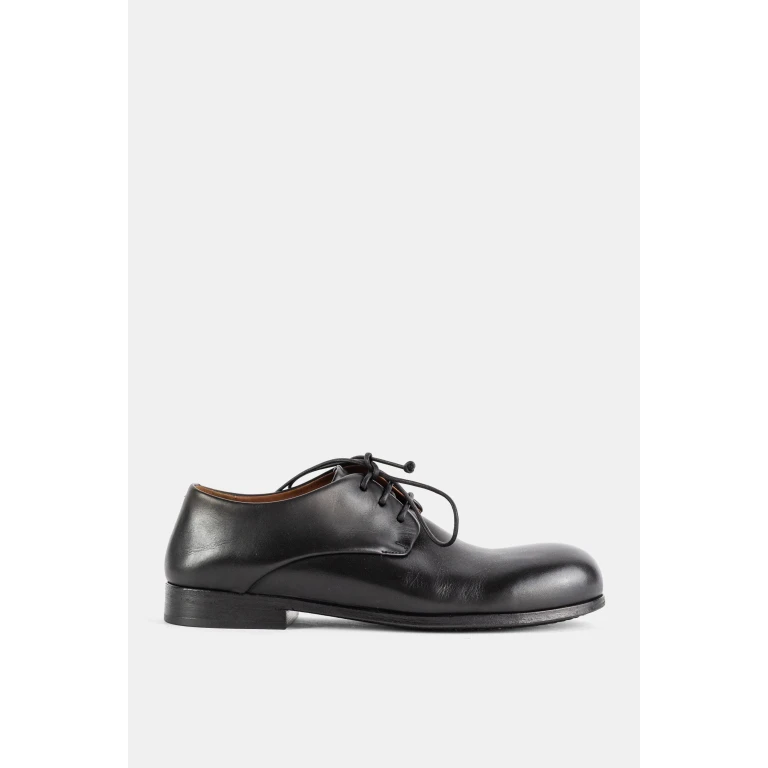
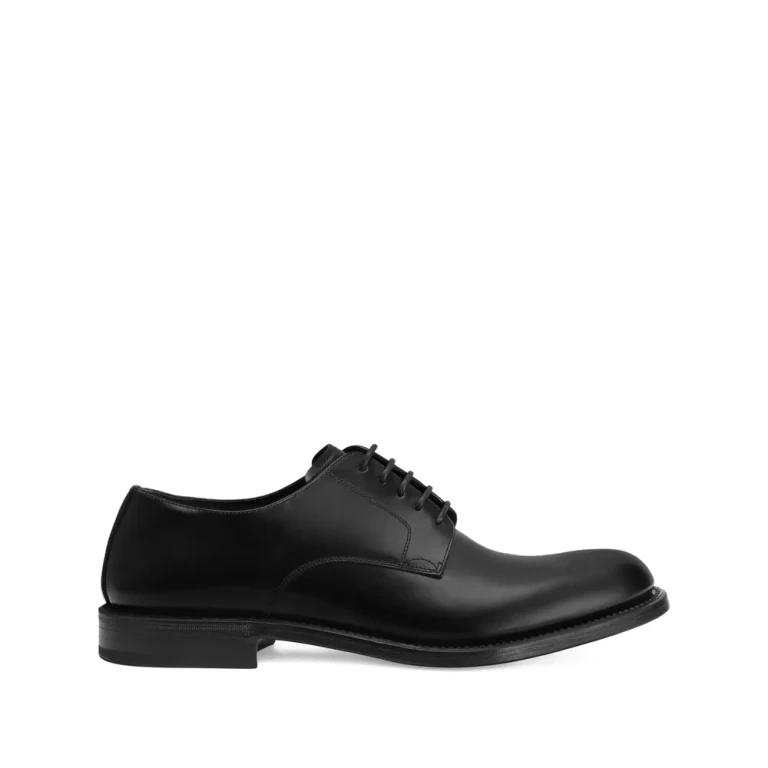
The defining structural feature of a derby is its open lacing quarters. The two facing panels (quarters) of the shoe that hold the eyelets are stitched on top of the vamp — the front part of the upper — rather than beneath it. This means that when the laces are undone, the two halves spread apart freely, creating a wider opening that makes the shoe easier to enter and allows greater adjustment across the top of the foot.
The opposite is true of an oxford: the quarters are stitched under the vamp, so even with the laces fully undone the shoe cannot open very wide. This produces the clean, unbroken visual line from toe to throat that makes an oxford look formally correct, but it also means that anyone with a high instep or a wide foot at the top may find oxfords uncomfortable or even impossible to get on without force.
A second structural detail worth knowing is the bartack — a small reinforcing stitch at the base of the lacing opening on a derby. On a well-made derby, you should be able to see the bartack clearly at the point where the two quarters meet at the bottom of the eyelet run. Its presence indicates that the upper is cut and stitched properly to hold the open quarter shape under tension (Gentleman's Gazette, Derby vs. Oxford Shoes). A derby without a visible bartack is a signal of cost-cutting in construction.
Derby vs. oxford formality — where they sit on the dress code spectrum
In strict sartorial ranking, the oxford sits above the derby. This distinction matters in very formal contexts: if you are dressing for a morning suit, a diplomatic occasion, or a black-tie event where black shoes are required, the oxford is the correct choice. The closed lacing has a tighter, more severe aesthetic that reads as proper in those settings.
In the broader spectrum of contemporary dress, the gap between a well-made derby and a well-made oxford is small enough to be practically irrelevant in most situations. A plain-toe derby in black or dark brown full-grain calf leather is appropriate for business formal, business casual, job interviews, funerals, weddings (as a guest), and the full range of smart-casual contexts. It is not appropriate for athleisure or casual weekends in the way a loafer or Chelsea boot might be used — it is firmly a dress shoe.
Where the derby genuinely outperforms the oxford is the middle register of smart casual: pairing with chinos, dark denim, or casual trousers without a jacket. An oxford in this register can look overdressed and effortful. A derby reads as intentional without straining (The Rake, Derby Shoes Styling Guide). For a first dress shoe that needs to earn its keep across business and smart-casual contexts, the derby is the more practical starting point than the oxford.
Toe cap styles — plain toe, cap toe, and brogue
The toe of a derby is one of the strongest signals of its formality level, and it is the variable most under-discussed in first-buy advice.
A plain toe — no cap seam, no perforations, just unbroken leather from the vamp to the tip — is the most formal option and the most versatile. It reads correctly at any dress level from smart casual to business formal and does not add any style character beyond the shoe's silhouette.
A cap toe has a seam that cuts across the toe box, creating a distinct toe section. It is still formal — the cap-toe Oxford is one of the foundational dress shoes in classic menswear — but the seam adds a single visual element that makes the shoe slightly more interesting at close range. This is appropriate at all but the most severe formal contexts.
Brogues (also called wingtips in the United States) have decorative perforations along the seams and sometimes additional medallion perforations at the toe. Full brogues have a W-shaped seam with perforations across the entire toe; semi-brogues (quarter brogues) have perforations only at the cap seam. Brogues read as the least formal option among dress shoes. A full brogue derby in tan suede is smart casual; a semi-brogue derby in black calf leather can work in business casual but is pushing the edge of business formal (Mr. Porter, Guide to Dress Shoes). For a first derby that needs to cover the widest range, a plain toe or cap toe in dark leather leaves the most options open.
Last shape and fit — why two size-10 shoes can fit completely differently
A shoe's last is the three-dimensional form around which it is built, and two shoes with identical labeled sizes from different brands may fit the same foot very differently because their lasts have different toe spring, toe room, ball girth, waist, and heel cup dimensions.
The most useful information for first-time buyers is last shape at the toe: round toes (most accommodating, comfortable immediately), oval or slightly tapered toes (the business-shoe standard, some break-in), and pointed toes (elegant in a specific aesthetic but uncomfortable for people whose toes are longer than average). If you are buying online without trying on, look for the brand's last description and err toward a rounder or oval last for a first pair.
Ball girth — the circumference of the last at the widest point of the foot — is the fit dimension most likely to cause discomfort. A shoe that is the right length but too narrow across the ball will create pressure on the metatarsal heads that worsens through the day. Many brands offer width options (B/narrow through EE/extra wide), and using the correct width removes the most common source of dress-shoe pain (Nordstrom, How to Find Your Shoe Width).
Heel slip — a heel that lifts inside the shoe with each step — is often a sign that the heel cup is too wide for your heel, not that the shoe is too long. Trying a smaller size resolves this less often than trying a narrower width or using a heel grip insert.
Leather upper quality — full-grain vs. corrected-grain
For a dress shoe that is expected to last and develop character over time, the upper material is the most consequential quality choice. The hierarchy from best to acceptable is approximately: full-grain calf leather > top-grain calf leather > corrected-grain leather > bonded or split leather.
Full-grain leather retains the complete surface of the hide with no sanding or buffing. The tight grain structure repels water, takes polish beautifully, and develops a patina that the shoe earns through wear. Surface scuffs can be buffed out with a soft cloth and cream polish. A pair of full-grain leather derbies cared for properly — conditioned regularly, polished, re-soled when the sole wears through — will last ten or more years (Allen Edmonds, Why Full Grain Leather Matters).
Corrected-grain leather has been sanded to remove imperfections and coated with a polyurethane or pigmented finish. It looks uniform from day one and requires less care, but the sealed surface does not breathe, cannot be burnished to a high shine through polishing, and tends to crack or peel eventually rather than developing a patina.
For a first derby that will see regular wear and justify the investment, full-grain calf leather at a mid-market price point (typically $150–300 USD) gives the best long-term value. Corrected-grain leather in the same price range is not a better deal — you are paying for a finish that accelerates the shoe's decline.
Sole options — leather vs. rubber and what they each imply
A dress shoe sole communicates intent before you walk a step. A leather sole — typically a full-length piece of sole leather stitched or cemented to the welt — is the traditional formal option and has a thinner, closer-to-the-floor profile that most people find elegant. Its limitations are poor wet-surface traction and quick wear at the heel and ball (Cobbler Union, Leather Sole Care).
A rubber sole on a dress shoe (commonly a Dainite, crepe, or EVA rubber) gives better traction, more cushion underfoot, and longer sole life. The visual difference to a leather sole is minimal at a glance, though close inspection shows the difference in texture and profile. For an everyday derby that will be worn in weather, a rubber sole or a leather sole with rubber taps is the more practical specification.
The Goodyear welt construction — where the upper, insole, and outsole are stitched together through a leather welt — makes a shoe resoleable for the life of the upper. If you are spending $200 or more on a pair of derbies, confirming that they are Goodyear welted means you are buying a shoe that can be refurbished rather than discarded when the sole wears out. This matters: a good upper can survive three or four re-solings, making the cost per year of ownership much lower than a cheaper cemented shoe (Gentleman's Gazette, Goodyear Welt vs. Cemented).
Styling range — from business formal to smart casual
A plain-toe or cap-toe derby in black or dark oxblood leather, worn with a dark suit or business separates, sits at the business formal end of the spectrum and is appropriate for almost any professional context. The same shoe worn with well-fitted chinos, a white shirt, and a jacket without a tie moves comfortably into business casual. Worn with dark slim-fit denim, a crew-neck knit, and an overcoat, it anchors the look in smart casual without any incongruity.
The shifts that move a derby down the formality register are cumulative: suede upper rather than leather, brogue detailing rather than plain or cap, brown or tan color rather than black or dark brown, rubber sole rather than leather. Any single one of these shifts moves the shoe slightly toward casual; combining several moves it materially. A full-brogue derby in tan suede with a crepe sole is a smart casual piece and nothing more — worn with a suit, it would look incongruous.
For a first derby, the conservative choice (dark leather, plain or cap toe, minimal brogue if any) maximizes the range of situations the shoe works in. A second pair can occupy a more specific register once the first pair's range is familiar.